
On This Day
September 14 in History
On the morning of 14 September 1814, after watching the British bombardment of Fort McHenry through the night, Francis Scott Key saw the American flag still flying and began the poem that became 'The Star-Spangled Banner', the national anthem of the United States. September 14 is also the day Napoleon entered Moscow, President McKinley died of his wounds, and the Soviet probe Luna 2 reached the Moon.
Choose another date: open the On This Day calendar to browse events, births and deaths for any day of the year.
At a Glance
- The setting
- The British bombardment of Fort McHenry, Baltimore, during the War of 1812, 13–14 September 1814
- The author
- Francis Scott Key, a Maryland lawyer detained aboard a British truce ship while negotiating a prisoner's release
- The poem
- First titled 'Defence of Fort M'Henry'; printed within days and set to the tune of 'To Anacreon in Heaven'
- The flag
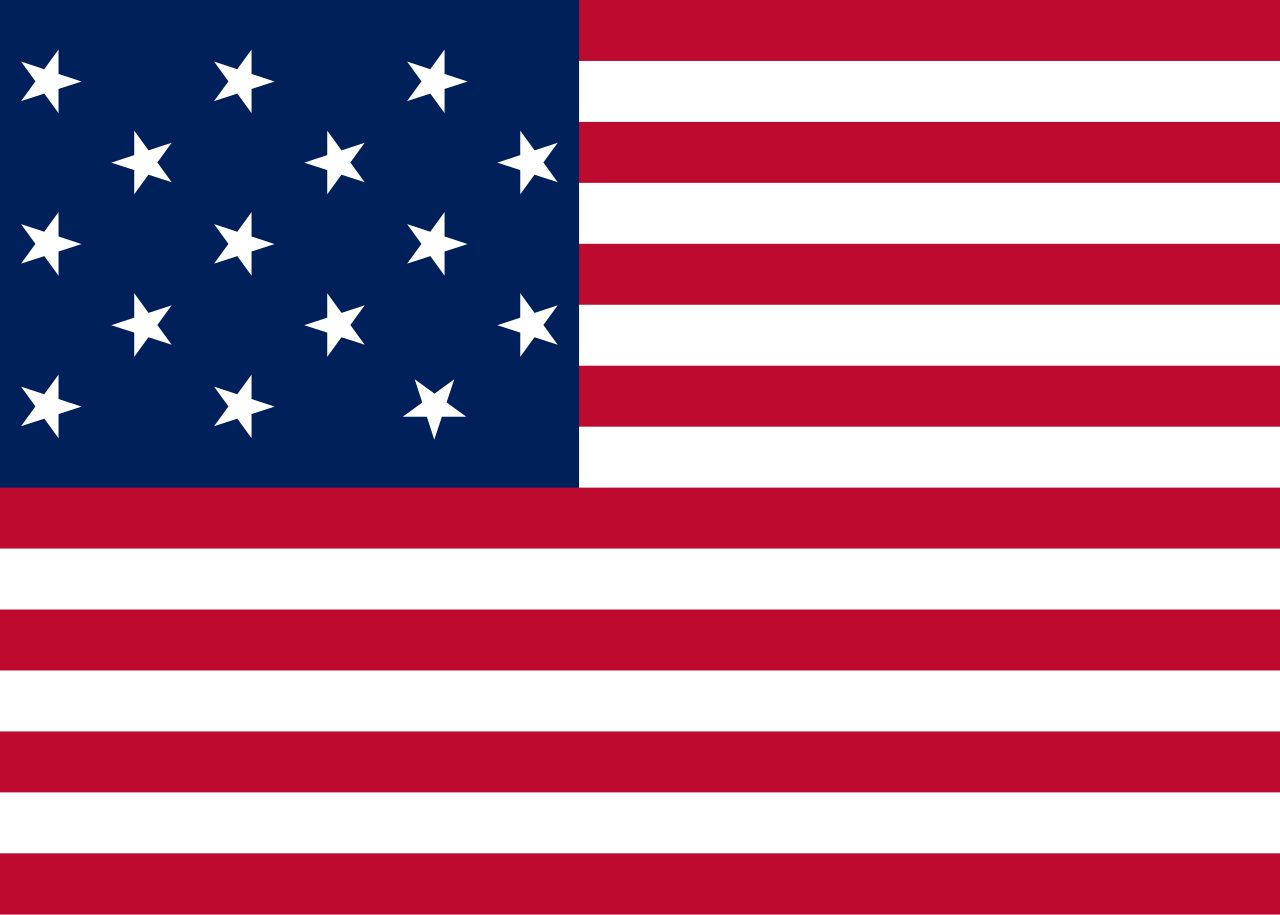
- A garrison flag of 15 stars and 15 stripes, 30 by 42 feet, sewn by Mary Young Pickersgill; it survives at the Smithsonian
- The anthem
- Adopted as the national anthem of the United States by Congress in 1931, more than a century later
Events on this day
- 1741George Frideric Handel completes his oratorio Messiah in London, finishing the score just 24 days after he began it.
- 1752Britain and its colonies switch to the Gregorian calendar: Wednesday 2 September is followed by Thursday 14 September, dropping eleven days.
- 1812Napoleon Bonaparte's Grande Armée enters Moscow a week after Borodino, finding the city largely evacuated; fires soon consume much of it.
- 1814Francis Scott Key, watching the flag over Fort McHenry at dawn, begins the poem that becomes 'The Star-Spangled Banner' — the featured story above.
- 1847US forces under General Winfield Scott enter and occupy Mexico City, raising the American flag over the National Palace in the Mexican-American War.
- 1862Confederate forces hold the passes of South Mountain in Maryland against Union attacks, buying Robert E. Lee a day to concentrate before Antietam.
- 1959The Soviet probe Luna 2 strikes the Moon, the first human-made object to reach the lunar surface.
- 1975Elizabeth Ann Seton is canonised by Pope Paul VI, becoming one of the first American-born Catholic saints.
- 1985The Golden Girls debuts on American television, beginning a seven-year run for its four older women leads.
- 1994With its players on strike, Major League Baseball cancels the rest of its season, including the World Series, for the first time since 1904.
Born on this day
- 1769Alexander von Humboldt — Prussian naturalist and explorer whose travels in the Americas founded much of modern geography and ecology.
- 1849Ivan Pavlov — Russian physiologist whose experiments on conditioned reflexes in dogs reshaped the study of learning.
- 1879Margaret Sanger — American nurse and reformer who founded the birth-control movement in the United States.
- 1886Jan Masaryk — Czechoslovak diplomat and foreign minister, son of the state's founder, whose 1948 death remains debated.
- 1983Amy Winehouse — English singer-songwriter whose album Back to Black made her a defining voice of her generation.
Died on this day
- 1321Dante Alighieri — Italian poet of the Divine Comedy, who died at Ravenna on the night of 13–14 September, as Britannica notes the date.
- 1901William McKinley — 25th president of the United States, dead of gangrene eight days after being shot by an anarchist at Buffalo.
- 1927Isadora Duncan — American dancer and pioneer of modern dance, strangled when her long scarf caught in the wheel of a car at Nice.
- 1982Grace Kelly — American film star turned Princess Grace of Monaco, dead at 52 of injuries from a car crash above Monte Carlo.
- 2009Patrick Swayze — American actor, star of Dirty Dancing and Ghost, dead at 57 after a long illness.
The featured story: Francis Scott Key writes 'The Star-Spangled Banner', 14 September 1814
Francis Scott Key was in the worst seat in Baltimore. A 35-year-old Maryland lawyer, he had boarded a British vessel under a flag of truce to negotiate the release of an American prisoner, Dr William Beanes. The release was granted, but Key had seen too much of the fleet's dispositions to be let ashore before the attack, so he watched the assault on his own city from the deck of a truce ship in the harbour, as British bomb vessels pounded Fort McHenry through the night of 13–14 September 1814. Through the rain and smoke he could see the fort's flag only in flashes, by the light of the rockets and bursting shells.
At dawn the firing stopped, and in the clearing air Key saw that the flag still flew — not the smaller storm flag of the night, but, as the Smithsonian's account describes, the great garrison banner, 30 by 42 feet, sewn by the Baltimore flagmaker Mary Young Pickersgill, with 15 stars and 15 stripes for the 15 states of the Union. Fort McHenry had held, and the British, unable to pass the harbour defences, withdrew. Key began writing on the spot, drafting verses on the back of a letter; the poem, titled 'Defence of Fort M'Henry', was finished in Baltimore and in print within days.
The words were fitted to a tune Americans already knew — 'To Anacreon in Heaven', a London gentlemen's club song — and as 'The Star-Spangled Banner' the song spread through the nineteenth century, sung at public occasions and adopted by the armed services. Its official crowning came late: only on 3 March 1931 did Congress make it the national anthem of the United States. The flag itself survived in the keeping of the fort commander's family, who cut souvenir fragments from it over the years — one star was cut away and never recovered — before it passed to the Smithsonian, where it is now preserved in its own gallery at the National Museum of American History.
Key's poem has four verses, though only the first is sung as the anthem, and its author — a slaveholder who as a lawyer both defended and prosecuted enslaved people — remains a contested figure. But the scene the song fixes is exact: a lawyer on an enemy ship, a flag made by a Baltimore widow's workshop, and a dawn inspection on 14 September 1814 that told him, before any dispatch could, that the fort and the city had survived the night.
Why this date matters
September 14 is a day of things seen at dawn and things ending in the dark. Key saw his flag at first light in 1814; the same date brought Napoleon's hollow triumph in an empty, burning Moscow, the death of a shot president in 1901, and a Soviet machine's silent arrival on the Moon in 1959. It is also, by the calendar's own accident, a date Britain manufactured in 1752, when eleven days were simply deleted and the 14th followed the 2nd — a reminder that even the days themselves are human inventions, filled afterwards with flags, poems and departures.
Sources
- Encyclopaedia Britannica — On This Day: September 14
- HISTORY — This Day in History: September 14
- Smithsonian Magazine — The Real Story Behind the Star-Spangled Banner
- HISTORY — Hollywood star and real-life princess Grace Kelly dies (September 14, 1982)
The facts on this page were checked against these sources on 19 November 2026. The History Trail's permanent pages are researched and written for this site; the live profiles elsewhere on The History Trail are assembled automatically from Wikipedia and Wikidata.
About the Author
Researched and written by the The History Trail Editorial Team — the accountable editorial function behind this site's permanent story pages. The team works from the published sources cited on each page; it does not invent historians, reviewers or credentials, and it corrects errors openly.
Fact Check
Every load-bearing fact on this page traces to one of the sources listed above, and significant claims link to their source in the text. Our checking method is described on the methodology page; errors can be reported via the corrections page.
Sources & Citations
Cite this page as: The History Trail Editorial Team, The History Trail — this article's title, publication and update dates are shown beneath its headline. The full source list appears under Sources above; the site's source standards are on the sources page.