
On This Day
November 27 in History
On 27 November 1895, at the Swedish-Norwegian Club in Paris, Alfred Nobel — the Swedish chemist and arms manufacturer who had invented dynamite — signed his third and final will, leaving the bulk of his fortune to endow annual prizes for those who 'shall have conferred the greatest benefit to humankind'. The Nobel Prizes were born in that signature. November 27 is also the day Pope Urban II launched the First Crusade in 1095, the French fleet was scuttled at Toulon in 1942, and Bruce Lee and Jimi Hendrix were born.
Choose another date: open the On This Day calendar to browse events, births and deaths for any day of the year.
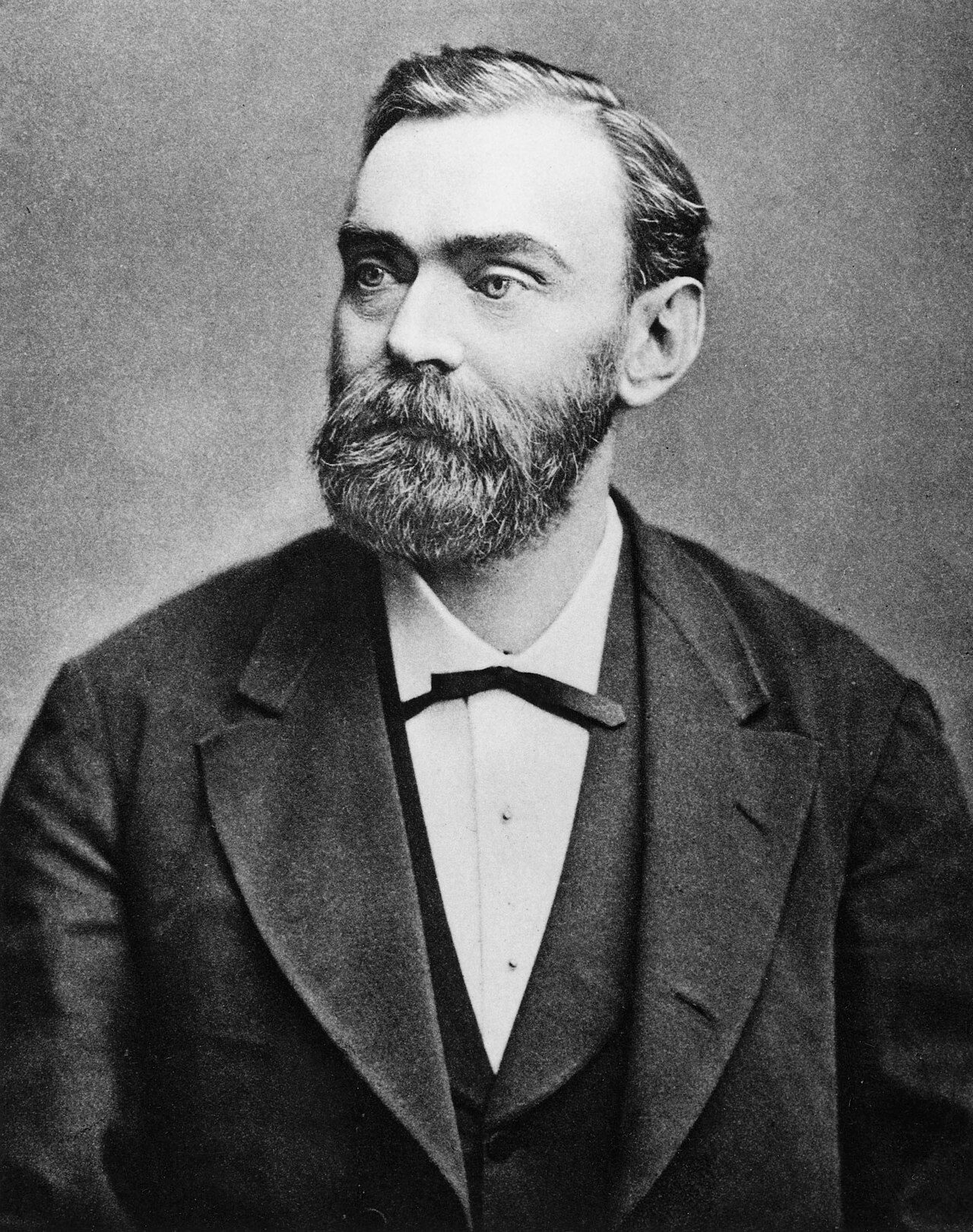
At a Glance
- The testator
- Alfred Bernhard Nobel, 62, inventor of dynamite and owner of an international explosives and armaments empire
- The place
- The Swedish-Norwegian Club in Paris, where Nobel kept a home; the will was witnessed by four Swedes
- The bequest
- The bulk of his estate — some 31 million Swedish kronor — to a fund whose interest would be divided into five equal prizes
- The five prizes
- Physics, chemistry, physiology or medicine, literature, and peace; economics was added only in 1968
- The executors
- Two young Swedes, Ragnar Sohlman and Rudolf Lilljequist, who fought for five years to make the will effective
- The first awards
- The first Nobel Prizes were presented on 10 December 1901, the fifth anniversary of Nobel's death
Events on this day
- 1095At the Council of Clermont in France, Pope Urban II calls on Christians to take up arms to recover the Holy Land — the appeal that launches the First Crusade.
- 1582A marriage licence is issued in Worcester for William Shakespeare and Anne Hathaway; the couple marry within days, he aged 18, she 26.
- 1703The Great Storm of 1703, the most violent recorded in southern England, finally dies away after days of destruction; deaths at sea and ashore are estimated in the thousands.
- 1868Lieutenant Colonel George Armstrong Custer's 7th Cavalry attacks Black Kettle's Cheyenne village on the Washita River at dawn, killing the peace chief and many of his people.
- 1895Alfred Nobel signs his last will in Paris, leaving his fortune to found the Nobel Prizes — the featured story above.
- 1924The first Macy's Christmas Parade — later the Macy's Thanksgiving Day Parade — is held in New York City, with live animals from Central Park Zoo.
- 1942The French fleet at Toulon is scuttled by its own crews — more than 70 warships sunk — to prevent its seizure by German forces.
- 1978San Francisco mayor George Moscone and supervisor Harvey Milk are assassinated at City Hall by former supervisor Dan White.
- 2005In Amiens, France, surgeons led by Bernard Devauchelle and Jean-Michel Dubernard perform the first partial face transplant, on Isabelle Dinoire.
- 2017Clarence House announces the engagement of Prince Harry and the American actor Meghan Markle.
Born on this day
- 1701Anders Celsius — Swedish astronomer who devised the temperature scale that bears his name.
- 1746Robert R. Livingston — American Founding Father, chancellor of New York, who helped draft the Declaration of Independence.
- 1874Chaim Weizmann — chemist and Zionist leader who became the first president of Israel.
- 1940Bruce Lee — Hong Kong-American martial artist and film star born in San Francisco.
- 1942Jimi Hendrix — American guitarist whose reinvention of the electric guitar defined an era of rock.
- 1955Bill Nye — American science educator known to generations of students as 'Bill Nye the Science Guy'.
Died on this day
- 8 BCHorace — Roman lyric poet of the Odes and the Ars Poetica, originator of 'carpe diem'.
- 511Clovis I — king of the Franks, whose conquests and conversion founded the Frankish kingdom in Gaul.
- 1895Alexandre Dumas fils — French novelist and playwright, author of The Lady of the Camellias, dead the same day Nobel signed his will.
- 1978Harvey Milk — San Francisco supervisor and one of the first openly gay elected officials in the United States, assassinated at 48.
- 1978George Moscone — mayor of San Francisco, assassinated alongside Harvey Milk at City Hall.
The featured story: Alfred Nobel signs his will, 27 November 1895
Nobel's fortune was built on controlled explosions. The son of a Swedish engineer, he had patented dynamite in 1867, built factories across Europe, acquired the Bofors armaments works, and held more than 350 patents; by the 1890s he was one of the richest men alive, unmarried, childless, and increasingly reflective about what his name would mean. A spur came in 1888, when a brother died and a French newspaper, confusing the two, published Alfred's obituary under the headline 'The merchant of death is dead'. Nobel, reading his own reputation in print, had eight years to decide whether to accept it.
His first two wills had left much of the estate to family and institutions. The third, drafted in Swedish and signed in Paris on 27 November 1895, was radically simpler and bolder: after specific legacies, the whole of the remaining fortune was to form a fund, invested in safe securities, whose annual interest would be distributed as prizes to those who during the preceding year had conferred the greatest benefit to humankind — in physics, chemistry, physiology or medicine, literature, and, in the clause that surprised everyone, peace, to be awarded by a committee of the Norwegian parliament. Nationality was expressly irrelevant: the most worthy person should receive the prize, 'whether he be Scandinavian or not'.
Nobel died of a cerebral haemorrhage at his villa in San Remo on 10 December 1896, and the will's opening detonated a second career's worth of conflict. Relatives contested it; the Swedish king disapproved of the peace prize going to Norway; the institutions named as awarders had never been consulted and hesitated to accept; and the fortune was entangled in companies and lawsuits across a dozen countries. His executors, the 26-year-old engineer Ragnar Sohlman and Rudolf Lilljequist, spent five years liquidating assets, fending off claims and negotiating the Nobel Foundation into existence, which was finally established in 1900.
The first prizes were awarded on 10 December 1901 — to Röntgen in physics, van 't Hoff in chemistry, Behring in medicine, Prudhomme in literature, and, in peace, jointly to Henri Dunant, founder of the Red Cross, and the campaigner Frédéric Passy. The institution Nobel improvised in a one-page document has since survived two world wars, the addition of an economics prize in 1968, and endless argument about its choices — argument that is itself the point. The merchant of death bought himself a second name: the prizes, not the dynamite, are what the world now means by Nobel.
Why this date matters
November 27 is a day of calls to action and of men deciding what their lives were for. A pope summons Europe to a crusade in 1095; a fleet's crews sink their own ships rather than surrender them in 1942; an assassin murders two elected officials in San Francisco in 1978; and between those violences sits the quietest consequential act on this page — a rich man at a club in Paris signing a page of Swedish that redirected his fortune from explosives to honour. The day also produced two of the twentieth century's most imitated performers, Bruce Lee and Jimi Hendrix, born two years apart.
Sources
- Encyclopaedia Britannica — On This Day: November 27
- HISTORY — What Happened on November 27
- Nobel Prize — Alfred Nobel's will
- Encyclopaedia Britannica — Nobel Prize
The facts on this page were checked against these sources on 19 November 2026. The History Trail's permanent pages are researched and written for this site; the live profiles elsewhere on The History Trail are assembled automatically from Wikipedia and Wikidata.
About the Author
Researched and written by the The History Trail Editorial Team — the accountable editorial function behind this site's permanent story pages. The team works from the published sources cited on each page; it does not invent historians, reviewers or credentials, and it corrects errors openly.
Fact Check
Every load-bearing fact on this page traces to one of the sources listed above, and significant claims link to their source in the text. Our checking method is described on the methodology page; errors can be reported via the corrections page.
Sources & Citations
Cite this page as: The History Trail Editorial Team, The History Trail — this article's title, publication and update dates are shown beneath its headline. The full source list appears under Sources above; the site's source standards are on the sources page.