
On This Day
May 19 in History
On the morning of 19 May 1536, Anne Boleyn — the queen for whom Henry VIII had broken with Rome — was beheaded by a French swordsman on Tower Green, seventeen days after her arrest, on charges of adultery, incest and treason that most historians consider fabricated. May 19 is also the day England was declared a Commonwealth, New England's Dark Day fell, and both Malcolm X and Pol Pot were born.
Choose another date: open the On This Day calendar to browse events, births and deaths for any day of the year.
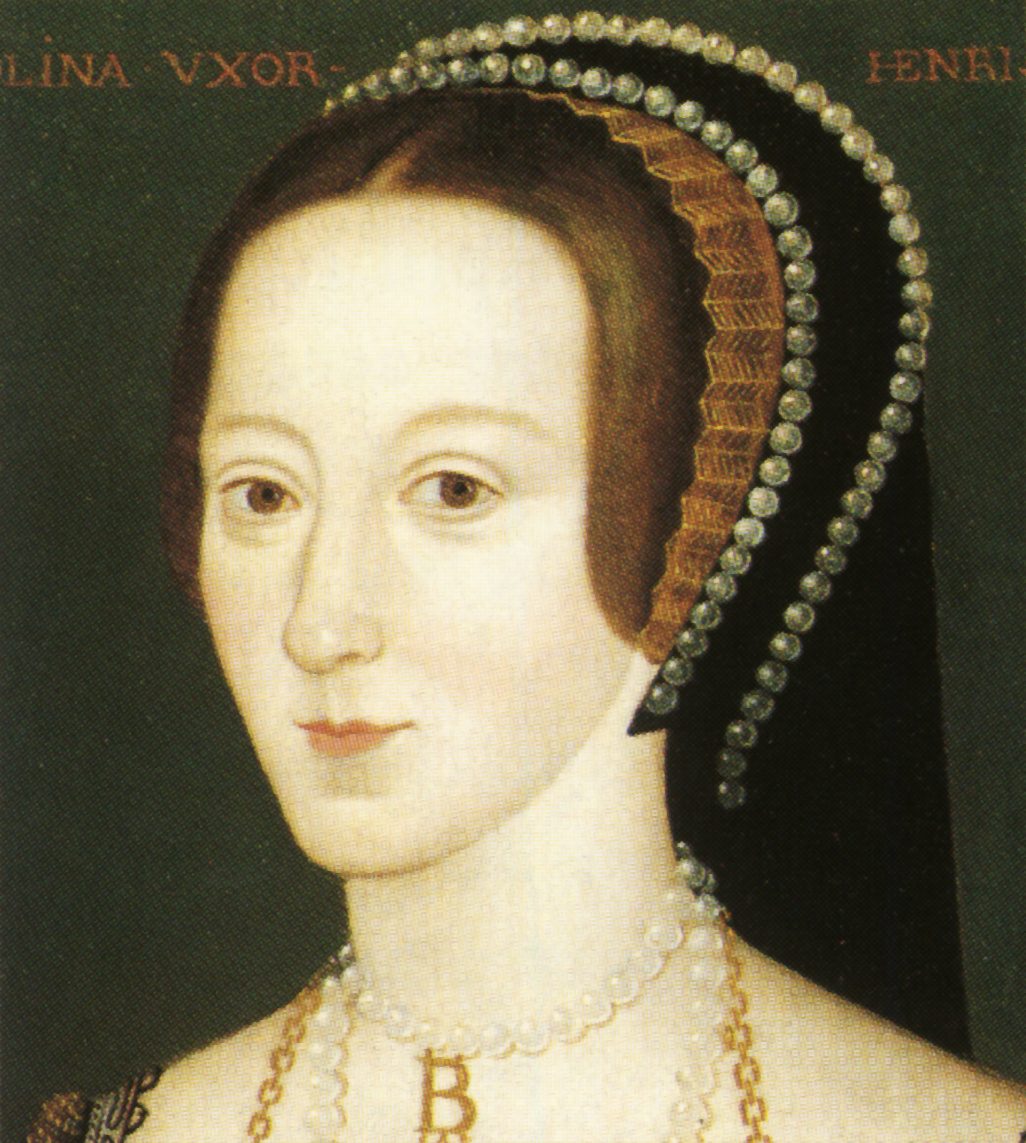
At a Glance
- The queen
- Anne Boleyn, crowned 1533, second wife of Henry VIII and mother of the future Elizabeth I
- The arrest
- 2 May 1536 — taken to the Tower as Thomas Cromwell's case of adultery, incest and treason is assembled
- The trial
- 15 May 1536 — convicted by a jury of peers presided over by her uncle, the Duke of Norfolk
- The execution
- 19 May 1536, Tower Green — beheaded with a sword by the executioner of Calais, a mercy in place of the axe
- The sequel
- Her marriage is annulled on 17 May; Henry is betrothed to Jane Seymour the day after the execution
- The verdict of history
- Most historians judge the charges fabricated; her daughter Elizabeth reigns for forty-five years
Events on this day
- 1536Anne Boleyn, second queen of Henry VIII, is beheaded on Tower Green — the featured story above.
- 1649Parliament passes the act declaring England a Commonwealth, four months after the execution of Charles I.
- 1743Jean-Pierre Christin proposes the centigrade temperature scale with 0 at water's freezing point and 100 at boiling, inverting Celsius's original scale.
- 1780New England's Dark Day: smoke from forest fires, fog and cloud darken the sky so completely that candles are lit at noon.
- 1802Napoleon Bonaparte establishes the Legion of Honour, France's highest order of merit, open in principle to all ranks and professions.
- 1897Oscar Wilde is released from Reading Gaol after two years' hard labour, and leaves immediately for France, never to return.
- 1910Earth passes through the tail of Halley's Comet, an event preceded by worldwide alarm and brisk sales of 'comet pills'.
- 1962Marilyn Monroe sings 'Happy Birthday' to President John F. Kennedy at a Madison Square Garden gala, ten days before his actual birthday.
- 1971The Soviet Union launches Mars 2, the first spacecraft to reach the surface of Mars, though it crashes on arrival.
- 2018Prince Harry marries Meghan Markle at St George's Chapel, Windsor, in a ceremony watched around the world.
Born on this day
- 1795Johns Hopkins — Baltimore merchant and philanthropist whose bequest founded the university and hospital that bear his name.
- 1861Nellie Melba — Australian soprano, one of the first recording stars, commemorated in peach Melba and Melba toast.
- 1890Ho Chi Minh — Vietnamese revolutionary who led his country to independence and became North Vietnam's first president.
- 1925Malcolm X — American minister and human-rights activist, born Malcolm Little in Omaha, Nebraska.
- 1925Pol Pot — Cambodian schoolteacher who became leader of the Khmer Rouge and architect of the Cambodian genocide.
- 1945Pete Townshend — English guitarist and songwriter of The Who.
- 1948Grace Jones — Jamaican singer, model and actress of striking androgynous style.
Died on this day
- 1536Anne Boleyn — queen of England, executed at about 35; see the featured story above.
- 1795James Boswell — Scottish writer whose Life of Samuel Johnson set the standard for biography.
- 1898William Ewart Gladstone — four-time British prime minister, dead at 88 at Hawarden Castle.
- 1935T. E. Lawrence — 'Lawrence of Arabia', dead at 46 from injuries in a motorcycle crash in Dorset.
- 1994Jacqueline Kennedy Onassis — former first lady of the United States, dead of cancer in New York at 64.
The featured story: Anne Boleyn is executed, 19 May 1536
On the morning of 19 May 1536, Anne Boleyn walked from her rooms in the Tower of London to a scaffold built on Tower Green, dressed in a dark gown with an ermine mantle, and knelt before an executioner who had been brought specially from Calais. Henry VIII had granted his second queen one mercy: a swordsman instead of the clumsy axe. She spoke briefly to the small crowd, commending the king as 'a good, a gentle and sovereign lord' — whether from conviction or to protect her daughter, no one can say — and then, with a single stroke, she was dead. She had been queen for just under three years, and arrested for seventeen days.
The fall was as fast as the rise had been slow. Henry had pursued Anne for seven years, breaking England's obedience to Rome and divorcing Catherine of Aragon to marry her, and she was crowned in 1533, pregnant with the child who proved to be Elizabeth. But the son Henry needed never came: after Elizabeth there were miscarriages, the last, in January 1536, of a male foetus. Within weeks of Catherine's death that same month, Anne's position collapsed. Henry's chief minister Thomas Cromwell built the case against her — adultery with five men, including her own brother George, and plotting the king's death — charges most historians now regard as fabricated, constructed from court gossip, a musician's confession extracted under threat, and dates that in many instances cannot have been true.
The machinery moved without pause. Anne was arrested on 2 May, after a May Day joust at which Henry had abruptly ridden away; tried on 15 May before a jury of peers presided over by her own uncle, the Duke of Norfolk, and including a former suitor; convicted unanimously; and sentenced to burn or be beheaded at the king's pleasure. The five men accused with her died on Tower Hill on 17 May, the day her marriage was annulled — legally erasing the union for which a church had been broken. Henry was betrothed to Jane Seymour the day after the execution and married to her within a fortnight.
Anne's afterlife has reversed her judges' verdict. Her daughter Elizabeth became the defining monarch of the age, and Anne herself has been steadily rehabilitated — from the scheming temptress of Catholic polemic to a serious religious reformer, a patron of evangelical clergy and English scripture, whose real offence was probably political: she had made too many enemies and failed at the one task that mattered to Henry. She was buried in an arrow chest in the chapel of St Peter ad Vincula, a few yards from the scaffold. Every year, on 19 May, a basket of roses appears on her memorial — sent, by tradition, anonymously.
Why this date matters
May 19 is a date of reputations made and unmade by other people's stories. Anne Boleyn dies on it convicted of crimes she almost certainly did not commit, in a narrative written by her enemies; Malcolm X and Pol Pot are born on it on the same day in 1925, two men who would write themselves into history in opposite inks; Jacqueline Kennedy, who understood better than anyone how a story is staged, dies on it in 1994. Even the sky joins in: on this date in 1780 New Englanders read the noon darkness as an omen and argued about what it meant. May 19 belongs to the interpreters as much as to the interpreted.
Sources
- Encyclopaedia Britannica — On This Day: May 19
- HISTORY — What Happened on May 19
- HISTORY — Anne Boleyn, second wife of King Henry VIII, is executed
- Encyclopaedia Britannica — Anne Boleyn
The facts on this page were checked against these sources on 19 November 2026. The History Trail's permanent pages are researched and written for this site; the live profiles elsewhere on The History Trail are assembled automatically from Wikipedia and Wikidata.
About the Author
Researched and written by the The History Trail Editorial Team — the accountable editorial function behind this site's permanent story pages. The team works from the published sources cited on each page; it does not invent historians, reviewers or credentials, and it corrects errors openly.
Fact Check
Every load-bearing fact on this page traces to one of the sources listed above, and significant claims link to their source in the text. Our checking method is described on the methodology page; errors can be reported via the corrections page.
Sources & Citations
Cite this page as: The History Trail Editorial Team, The History Trail — this article's title, publication and update dates are shown beneath its headline. The full source list appears under Sources above; the site's source standards are on the sources page.