
On This Day
July 7 in History
On 7 July 2005 four suicide bombers attacked London's Underground and a bus in the morning rush hour, killing 52 people and injuring more than 700 — the worst single terrorist atrocity on British soil. July 7 is also the day sliced bread was first sold in 1928, Sandra Day O'Connor was nominated to the Supreme Court in 1981, and Andy Murray won Wimbledon in 2013.
Choose another date: open the On This Day calendar to browse events, births and deaths for any day of the year.
At a Glance
- The attacks
- Four suicide bombs: three on Underground trains at about 8:50 a.m., and one on a number 30 bus in Tavistock Square at 9:47 a.m.
- The toll
- 52 people killed besides the four bombers; more than 700 injured
- The bombers
- Four British citizens: Mohammad Sidique Khan, Shehzad Tanweer, Jermaine Lindsay and Hasib Hussain
- The deadliest blast
- The Piccadilly line train between King's Cross and Russell Square, where 26 people were killed
- The day before
- London had won the right to host the 2012 Olympic Games on 6 July 2005; the G8 summit was opening in Scotland
- The memorial
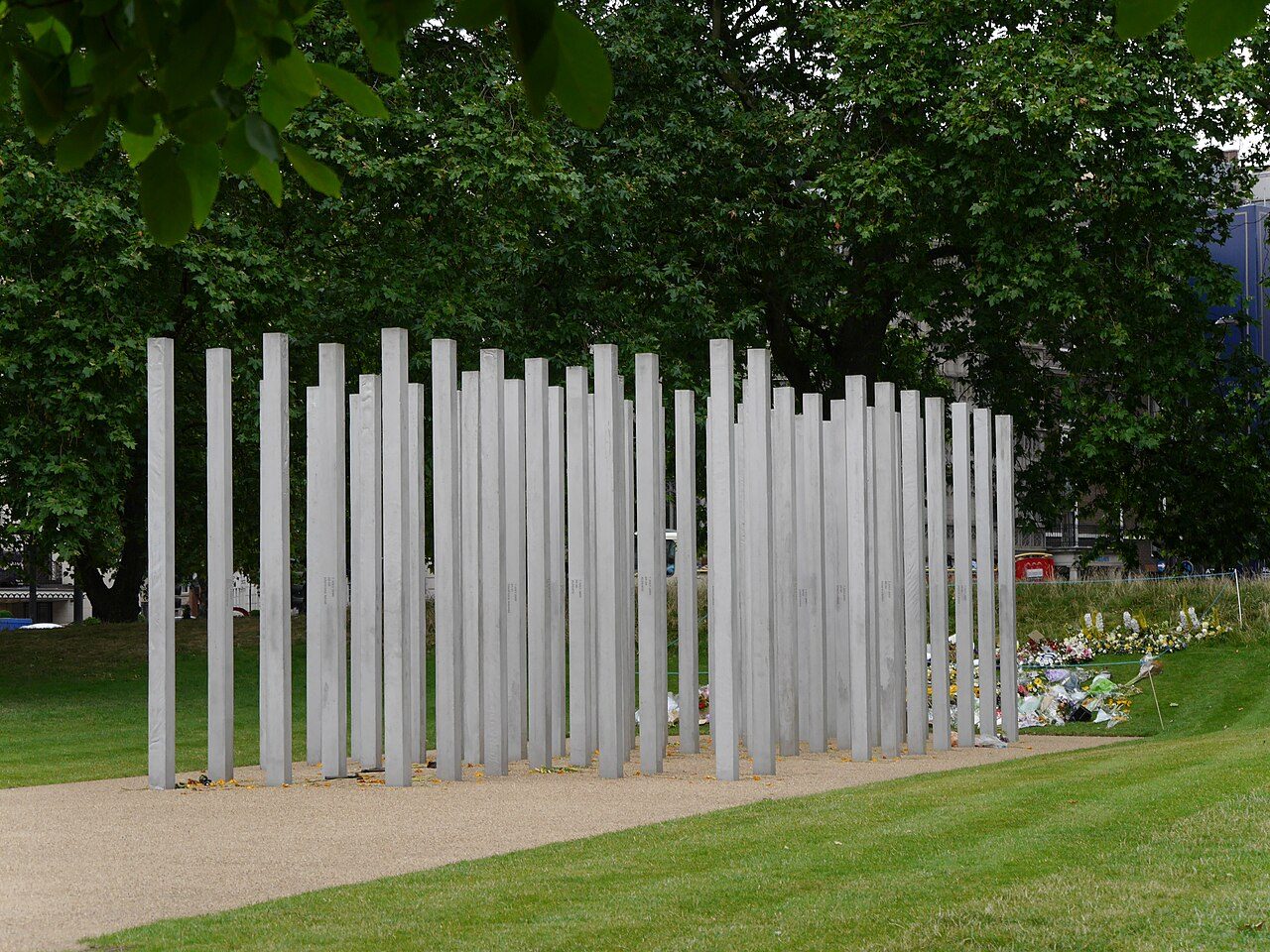
- 52 stainless-steel pillars in Hyde Park, unveiled on 7 July 2009, one for each victim
Events on this day
- 1456A retrial in Rouen annuls the verdict against Joan of Arc and declares her innocent, twenty-five years after she was burned at the stake.
- 1865Four of the conspirators in the assassination of Abraham Lincoln, among them Mary Surratt, are hanged in Washington — Surratt the first woman executed by the U.S. federal government.
- 1928Sliced bread is sold for the first time, by the Chillicothe Baking Company in Missouri, using Otto Rohwedder's machine — the original 'best thing since sliced bread'.
- 1930Construction begins on Boulder Dam, soon renamed Hoover Dam, across the Colorado River between Nevada and Arizona.
- 1981President Ronald Reagan nominates Sandra Day O'Connor to the U.S. Supreme Court; she becomes its first woman justice.
- 1985Boris Becker, aged 17 and unseeded, wins the Wimbledon men's singles title, the youngest champion in the tournament's history to that date.
- 2005Four suicide bombers attack London's transport network, killing 52 people — the featured story above.
- 2013Andy Murray wins Wimbledon, ending Britain's 77-year wait for a men's singles champion.
- 2021Haiti's president, Jovenel Moïse, is assassinated by gunmen at his home in Port-au-Prince.
Born on this day
- 1887Marc Chagall — Russian-French artist whose floating lovers and village scenes made him a master of modern art.
- 1906Satchel Paige — American baseball pitcher, a legend of the Negro leagues who reached the majors at an age officially given as 42.
- 1907Robert A. Heinlein — American science-fiction author of Stranger in a Strange Land and Starship Troopers.
- 1940Ringo Starr — English musician, drummer of the Beatles, born Richard Starkey in Liverpool.
- 1949Shelley Duvall — American actress of The Shining and Annie Hall.
- 1980Michelle Kwan — American figure skater, five-time world champion and two-time Olympic medallist.
Died on this day
- 1307Edward I — king of England, conqueror of Wales and 'Hammer of the Scots', dead at Burgh by Sands while marching north again.
- 1930Arthur Conan Doyle — Scottish writer, creator of Sherlock Holmes, dead at 71.
- 1967Vivien Leigh — English actress, Oscar winner for Gone with the Wind and A Streetcar Named Desire.
- 2006Syd Barrett — English musician, founding singer and songwriter of Pink Floyd.
The featured story: the 7 July 2005 London bombings, 7 July 2005
On the morning of 7 July 2005, during the London rush hour, four suicide bombers attacked the city's transport network. According to the official account later given to Parliament, three bombs exploded within a minute of each other, at about 8:50 a.m., on Underground trains: on the Circle line between Liverpool Street and Aldgate, at Edgware Road, and on the Piccadilly line between King's Cross and Russell Square, where the tunnel was deep and the damage worst. Just under an hour later, at 9:47, a fourth bomb exploded on a number 30 bus in Tavistock Square.
The four attacks killed 52 people besides the bombers themselves and injured more than 700. The bombers were four British citizens — Mohammad Sidique Khan, Shehzad Tanweer, Jermaine Lindsay and Hasib Hussain — acting in the name of an extremist ideology; the official account describes the attacks as the worst single terrorist atrocity on British soil. London's transport system was shut down, mobile networks failed under the load, and thousands of commuters walked home across the city that evening. Rescue work in the deep Piccadilly line tunnel, where the wreckage lay between two stations, went on in darkness and heat, and the last of the injured were brought up hours after the blast.
The timing sharpened the shock. The day before, London had won its bid to host the 2012 Olympic Games, and crowds had celebrated in Trafalgar Square; on 7 July itself, the leaders of the G8 were gathering for their summit at Gleneagles in Scotland. The bombings interrupted the summit — Prime Minister Tony Blair left it briefly to return to London — and turned a week planned as a celebration of the city's future into an emergency.
The attacks changed British security permanently: armed policing, surveillance powers and counter-radicalisation programmes all expanded in their wake, and the inquests and official reports ran for years. On the fourth anniversary, 7 July 2009, a permanent memorial was unveiled in Hyde Park: 52 stainless-steel pillars, one for each victim, grouped in four clusters for the four attacks. London marks the date each year with ceremonies at the memorial and a silence across the transport network that was attacked.
Why this date matters
July 7 is London's day in this calendar twice over: the morning its transport network was attacked in 2005, and the date of two Wimbledon breakthroughs, Becker's at seventeen in 1985 and Murray's drought-ending win in 2013. Around those, the date collects verdicts reversed and precedents set — Joan of Arc cleared a generation too late, the first woman put forward for America's highest court, bread sold sliced for the first time. The pattern is the public moment: trials, nominations, championships and atrocities, all things that happened in front of a crowd and changed what the crowd believed was possible. It is a date that measures how quickly a city's ordinary morning can become its defining one — and how deliberately it chooses, afterwards, what to build in Hyde Park to remember it by.
Sources
- Encyclopaedia Britannica — On This Day: July 7
- HISTORY — This Day in History: July 7
- UK Parliament, Hansard — The Official Account of the Bombings in London on 7th July 2005
- City of London — 7 July anniversary
- Encyclopaedia Britannica — On This Day podcast: July 7
The facts on this page were checked against these sources on 19 November 2026. The History Trail's permanent pages are researched and written for this site; the live profiles elsewhere on The History Trail are assembled automatically from Wikipedia and Wikidata.
About the Author
Researched and written by the The History Trail Editorial Team — the accountable editorial function behind this site's permanent story pages. The team works from the published sources cited on each page; it does not invent historians, reviewers or credentials, and it corrects errors openly.
Fact Check
Every load-bearing fact on this page traces to one of the sources listed above, and significant claims link to their source in the text. Our checking method is described on the methodology page; errors can be reported via the corrections page.
Sources & Citations
Cite this page as: The History Trail Editorial Team, The History Trail — this article's title, publication and update dates are shown beneath its headline. The full source list appears under Sources above; the site's source standards are on the sources page.