
On This Day
July 10 in History
On 10 July 1940 the Battle of Britain began: the Luftwaffe opened its campaign to destroy the RAF, attacking Channel convoys and ports, and met a radar-directed defence that would hold until October. July 10 is also the day Telstar, the first active communications satellite, was launched in 1962, and the birthday of Tesla, Proust and Calvin. The date also saw Vichy France established on the very same day, two futures for Europe declared within hours of each other.
Choose another date: open the On This Day calendar to browse events, births and deaths for any day of the year.
At a Glance
- The battle
- 10 July to 31 October 1940, between the German Luftwaffe and the Royal Air Force
- The aim
- Germany had to destroy RAF Fighter Command before it could invade Britain in Operation Sea Lion
- The defence
- The Dowding System: Chain Home radar feeding a filter room that directed Hurricane and Spitfire squadrons onto raids
- The first day
- Attacks on Channel shipping and ports; by British records the RAF lost seven aircraft, the Luftwaffe thirteen
- The Few
- Just under 3,000 Fighter Command aircrew, from Britain, the Commonwealth and occupied Europe
- Named in advance
- Churchill, 18 June 1940: 'The Battle of France is over. I expect the Battle of Britain is about to begin.'
Events on this day
- 1460At the Battle of Northampton, Yorkist forces capture King Henry VI during the Wars of the Roses, seizing control of the English government.
- 1645Parliament's New Model Army destroys the last Royalist field army at Langport in Somerset, effectively deciding the English Civil War.
- 1778France declares war on Britain in support of the American colonies, turning the Revolutionary War into a world war.
- 1890Wyoming is admitted to the Union as the forty-fourth state — the first in which women could vote on equal terms with men.
- 1940The Battle of Britain begins with Luftwaffe attacks on Channel shipping and ports — the featured story above.
- 1940The Vichy government is established in France under Marshal Pétain, as the French parliament votes full powers to him after the armistice with Germany.
- 1943Allied forces land in Sicily in Operation Husky, the first great amphibious return to Axis-held Europe.
- 1962Telstar 1 is launched, the first active communications satellite; built by Bell Labs for AT&T, it relays the first live transatlantic television pictures and the first telephone calls via space.
Born on this day
- 1509John Calvin — French theologian of the Reformation, whose Institutes and Geneva church shaped Protestantism worldwide.
- 1856Nikola Tesla — Serbian-American inventor and electrical engineer, pioneer of alternating current; born in Smiljan, in modern Croatia.
- 1871Marcel Proust — French novelist, author of In Search of Lost Time, the great novel of memory.
- 1943Arthur Ashe — American tennis champion and civil-rights advocate, the first Black man to win Wimbledon and the US Open.
Died on this day
- 138Hadrian — Roman emperor, builder of the wall across northern Britain and consolidator of the empire's frontiers.
- 1851Louis Daguerre — French artist and inventor of the daguerreotype, the first practical photographic process.
- 2015Omar Sharif — Egyptian actor of Lawrence of Arabia and Doctor Zhivago, dead of a heart attack in Cairo at 83.
The featured story: the Battle of Britain begins, 10 July 1940
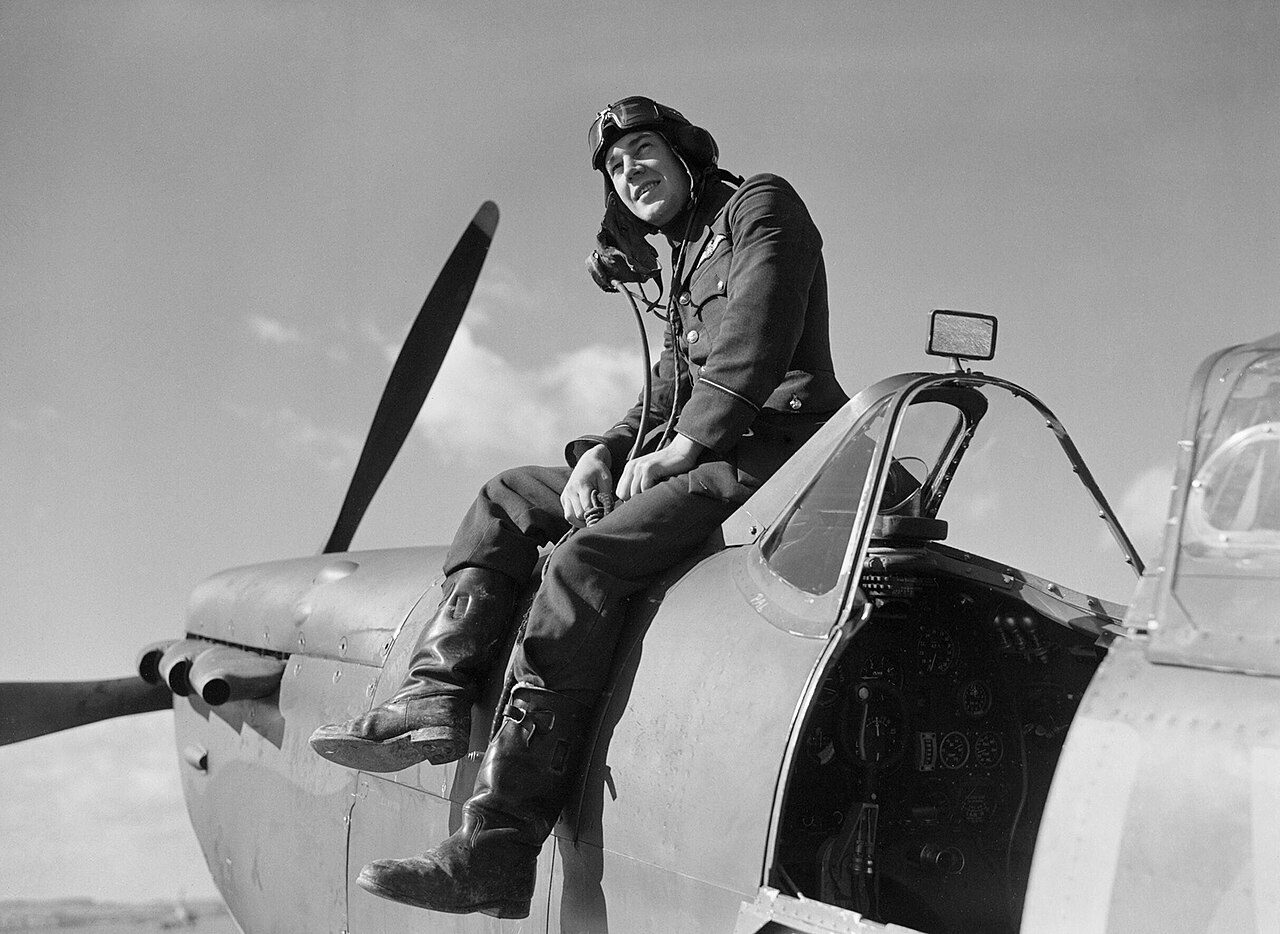
On 10 July 1940, German bombers and fighters attacked British shipping in the Channel and ports along the south coast in force, in what the Royal Air Force's official history takes as the opening day of the Battle of Britain. France had fallen in June; Britain stood alone in western Europe, and before Germany could invade across the Channel, the Luftwaffe had first to destroy the RAF. The battle that began on 10 July would run, by the official dating, until 31 October 1940, and it was fought almost entirely in the air.
Britain's defence rested on a system as much as on aircraft. Air Chief Marshal Hugh Dowding's Fighter Command combined Hurricane and Spitfire squadrons with the world's first integrated air-defence network: Chain Home radar stations along the coast fed a central filter room, which directed controllers to scramble fighters onto incoming raids — the Dowding System. It meant the RAF's outnumbered pilots were rarely caught on the ground and rarely wasted on empty sky, though on 10 July itself the day's fighting was over convoys: in the largest Channel dogfight yet seen, the RAF lost seven aircraft and the Luftwaffe thirteen, by British records. The system's economy was its genius: radar and the Observer Corps meant fighters could wait on the ground, engines off, until a raid's course was certain, conserving the two resources Fighter Command could least replace — aircraft and trained pilots.
Winston Churchill had named the battle before it began. In his speech of 18 June 1940, as France collapsed, he told the Commons: 'The Battle of France is over. I expect the Battle of Britain is about to begin.' The fighting escalated through August and into September, when the Luftwaffe shifted from airfields to London and the Blitz began; on 15 September, the day of the heaviest attacks on the capital, the RAF inflicted losses heavy enough that two days later Hitler postponed the invasion, Operation Sea Lion, indefinitely.
Just under 3,000 aircrew flew for Fighter Command during the battle — Churchill's 'Few' — drawn not only from Britain but from across the Commonwealth and from the air forces of occupied Europe, Poles and Czechs prominent among them. The RAF's victory was the first major defeat inflicted on Nazi Germany, and it kept Britain in the war as the base from which the Atlantic was contested and, eventually, western Europe liberated. The battle's dates, 10 July to 31 October, are still the RAF's official frame for its most famous fight.
Why this date matters
July 10 is a day when wars turned. Langport finished a civil war in 1645; Northampton changed a king's captivity in 1460; France's entry in 1778 made America's war a world war; and in 1940 two opposite futures for France and Britain were set on the same date — Vichy at home, resistance in the Channel sky. The day also launched Telstar and admitted Wyoming. Its pattern is the pivot: battles and decisions after which the direction of a much larger story could be read, even by those living it, as settled or newly open. Few dates hold two enemy capitals' destinies in a single entry, as this one does with London and Vichy in 1940.
Sources
- Encyclopaedia Britannica — On This Day: July 10
- HISTORY — This Day in History: July 10
- RAF Museum — The Battle of Britain, 1940
- Australian War Memorial — Battle of Britain
- Encyclopaedia Britannica — Omar Sharif
The facts on this page were checked against these sources on 19 November 2026. The History Trail's permanent pages are researched and written for this site; the live profiles elsewhere on The History Trail are assembled automatically from Wikipedia and Wikidata.
About the Author
Researched and written by the The History Trail Editorial Team — the accountable editorial function behind this site's permanent story pages. The team works from the published sources cited on each page; it does not invent historians, reviewers or credentials, and it corrects errors openly.
Fact Check
Every load-bearing fact on this page traces to one of the sources listed above, and significant claims link to their source in the text. Our checking method is described on the methodology page; errors can be reported via the corrections page.
Sources & Citations
Cite this page as: The History Trail Editorial Team, The History Trail — this article's title, publication and update dates are shown beneath its headline. The full source list appears under Sources above; the site's source standards are on the sources page.