
On This Day
February 16 in History
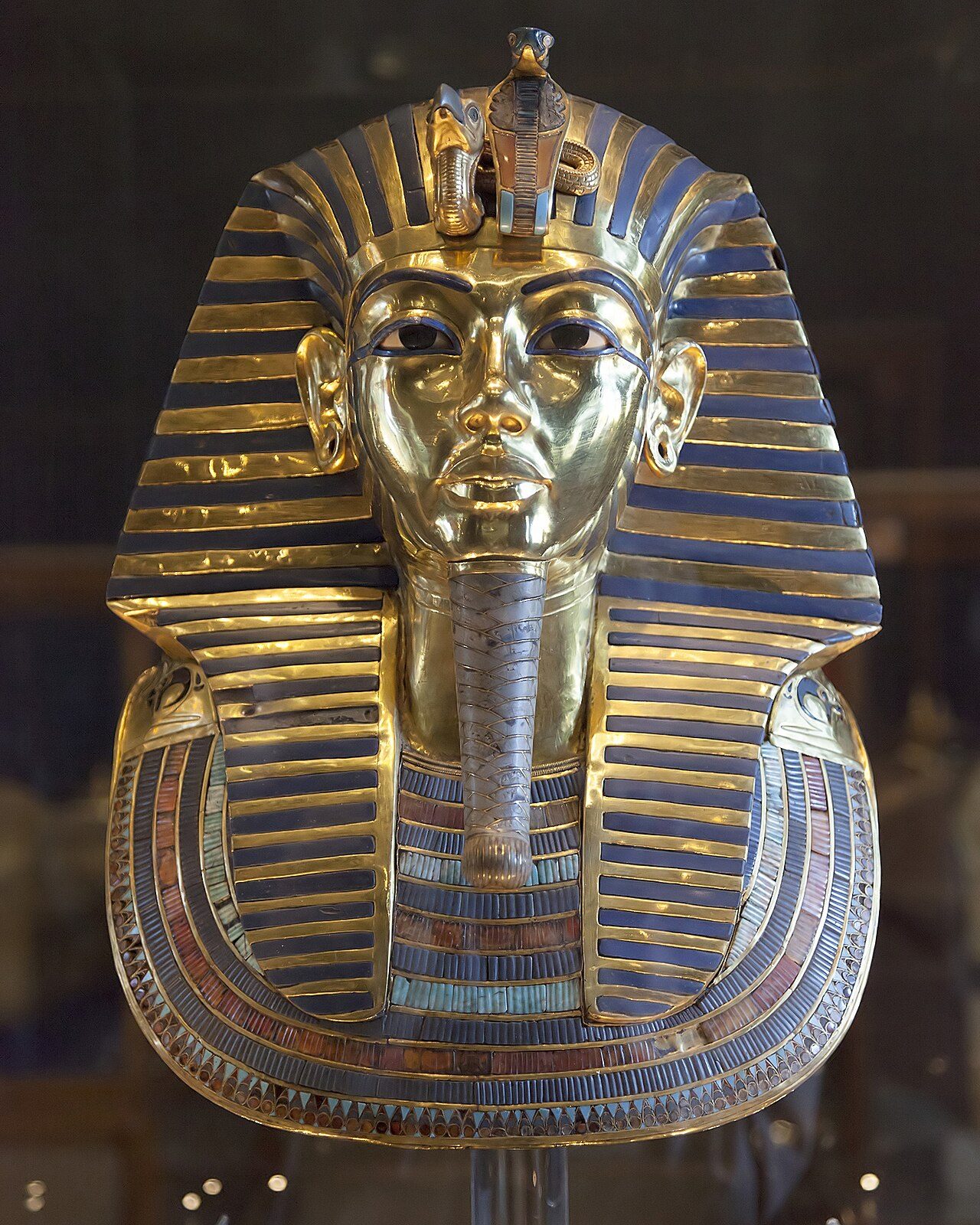
On 16 February 1923 the archaeologist Howard Carter broke the seal on the burial chamber of the Egyptian king Tutankhamun, in the first royal tomb of the pharaonic age found almost intact. Behind the doorway stood gilded shrines around a stone sarcophagus that held the king's nested coffins and his gold mask. February 16 is also the day Castro became Cuba's premier, the Kyoto Protocol took effect, and the first American 911 call was placed.
Choose another date: open the On This Day calendar to browse events, births and deaths for any day of the year.
At a Glance
- The tomb
- KV62 in the Valley of the Kings, found in November 1922 by Howard Carter's team, funded by Lord Carnarvon
- The steps
- A stairway and two sealed doorways lead first to an antechamber crowded with furniture, chariots and treasure
- The unsealing
- 16 February 1923 — Carter opens the sealed doorway into the burial chamber before an invited audience
- Inside
- Four gilded wooden shrines, one inside another, enclosing a quartzite sarcophagus and three nested coffins
- The king
- Tutankhamun, who reigned about 1332–1323 BC and died in his late teens; his gold funerary mask becomes the find's emblem
- Why it matters
- The only pharaonic tomb found nearly intact — more than 5,000 objects, catalogued over ten years
Events on this day
- 1804Lieutenant Stephen Decatur leads a daring night raid into Tripoli harbour and burns the captured American frigate Philadelphia during the First Barbary War.
- 1861President-elect Abraham Lincoln, travelling to his inauguration, stops at Westfield, New York, to meet 12-year-old Grace Bedell, whose letter had advised him to grow a beard.
- 1918The Council of Lithuania proclaims the country's independence, restoring a Lithuanian state after more than a century of Russian rule.
- 1923Howard Carter unseals the burial chamber of Tutankhamun — the featured story above.
- 1937DuPont chemist Wallace Carothers patents nylon, the first fully synthetic fibre.
- 1945American paratroopers drop onto Corregidor Island at the mouth of Manila Bay and begin recapturing it from Japanese forces.
- 1949The first Knesset, Israel's parliament, opens in Jerusalem.
- 1959Fidel Castro is sworn in as prime minister of Cuba, six weeks after the fall of the Batista dictatorship.
- 1968The first 911 emergency call in the United States is placed, in Haleyville, Alabama.
- 2005The Kyoto Protocol, the international treaty to cut greenhouse-gas emissions, enters into force, eight years after its adoption.
- 2005The National Hockey League cancels its entire 2004–05 season over a labour dispute, a first in North American professional sport.
- 2024Russian opposition leader Alexei Navalny dies in an Arctic penal colony, where he is serving a long sentence for opposing Vladimir Putin's regime.
Born on this day
- 1620Frederick William, the Great Elector — ruler who rebuilt Brandenburg after the Thirty Years' War and laid the foundations of Prussian power.
- 1834Ernst Haeckel — German biologist who named thousands of species and popularised Darwin's ideas in Germany.
- 1838Henry Adams — American historian, author of the classic autobiography The Education of Henry Adams.
- 1893Katharine Cornell — one of the most celebrated American stage actresses of the mid-20th century.
- 1903Edgar Bergen — American ventriloquist and radio star, voice of Charlie McCarthy.
- 1941Kim Jong Il — second supreme leader of North Korea, who succeeded his father Kim Il Sung in 1994.
- 1959John McEnroe — American tennis champion, winner of seven Grand Slam singles titles and famous for his on-court temper.
Died on this day
- 1907Giosuè Carducci — Italian poet, the first Italian to win the Nobel Prize in Literature, dead at 71.
- 1990Keith Haring — American pop artist whose dancing figures filled New York's subways and streets, dead of AIDS-related illness at 31.
- 2016Boutros Boutros-Ghali — Egyptian diplomat, secretary-general of the United Nations from 1992 to 1996, dead at 93.
- 2024Alexei Navalny — Russian anti-corruption campaigner and opposition leader, dead in a Siberian penal colony at 47.
The featured story: Tutankhamun's burial chamber is unsealed, 16 February 1923
In November 1922, in the Valley of the Kings, Howard Carter's workmen uncovered a step cut into the rock — then a stairway, then a sealed door. Carter, an English archaeologist funded by the Earl of Carnarvon, had searched the valley for six seasons and was on his last. Behind the first door lay a rubble-filled corridor; behind a second, a chamber glittering with objects — beds, boxes, chariots, statues — where, in Carter's famous exchange with Carnarvon, asked if he could see anything, he answered: Yes, wonderful things. That was the antechamber. The tomb's heart still lay behind another sealed wall, guarded by two life-size statues of the king.
On 16 February 1923, before officials and invited guests, Carter dismantled that wall. The room beyond was almost filled by an immense gilded shrine — and inside it, the excavators would find, were three more shrines nested one within another, like boxes in a puzzle, and within them a sarcophagus of yellow quartzite. The burial chamber's painted walls showed the young king, dead around the age of eighteen more than three thousand years earlier, in the company of gods. Almost alone among the tombs of the pharaohs, this one had survived with its royal burial essentially intact, its two ancient robberies long ago resealed by necropolis officials.
The unsealing was only the beginning of the work. The shrines had to be taken apart piece by piece inside a room barely larger than they were; the sarcophagus lid was raised a year later, in February 1924, revealing the nested coffins — the innermost of solid gold — and in 1925 the king's mummy, wearing the gold mask that has since become the most famous object in archaeology. In total the tomb held more than five thousand items, and Carter's team spent a decade photographing, conserving and cataloguing them before the last objects left for Cairo.
Why does one tomb matter so much? Because Egyptology had known the great pharaohs mostly through robbed and empty chambers. Tutankhamun was a minor king — a boy who reigned about 1332–1323 BC and died young — but his burial preserved, complete, the equipment an Egyptian king was sent into eternity with: furniture, weapons, food, jewellery, shrines and a solid-gold coffin. The find of 1922–23, and the chamber opened on 16 February, turned a footnote king into the face of ancient Egypt, and set the standard of slow, scientific excavation that the science still follows.
Why this date matters
February 16 has a taste for sealed rooms opening. Carter opens Tutankhamun's chamber in 1923; the Knesset opens in Jerusalem in 1949; a president-elect stops a train in 1861 to thank a schoolgirl for his beard. It is also a day of modern systems switching on — nylon patented in 1937, the 911 service in 1968, the Kyoto Protocol in force in 2005 — and of a closed system reasserting itself, with Alexei Navalny's death in a penal colony in 2024. The date's deepest note is patience rewarded: a door unopened for three thousand years, and an archaeologist who had waited six seasons to open it.
Sources
- Encyclopaedia Britannica — On This Day: February 16
- HISTORY — What Happened on February 16
- Encyclopaedia Britannica — Tutankhamun
The facts on this page were checked against these sources on 19 November 2026. The History Trail's permanent pages are researched and written for this site; the live profiles elsewhere on The History Trail are assembled automatically from Wikipedia and Wikidata.
About the Author
Researched and written by the The History Trail Editorial Team — the accountable editorial function behind this site's permanent story pages. The team works from the published sources cited on each page; it does not invent historians, reviewers or credentials, and it corrects errors openly.
Fact Check
Every load-bearing fact on this page traces to one of the sources listed above, and significant claims link to their source in the text. Our checking method is described on the methodology page; errors can be reported via the corrections page.
Sources & Citations
Cite this page as: The History Trail Editorial Team, The History Trail — this article's title, publication and update dates are shown beneath its headline. The full source list appears under Sources above; the site's source standards are on the sources page.