
On This Day
December 8 in History
On the night of 8 December 1980, John Lennon was shot and killed outside the Dakota, his apartment building on New York's Upper West Side, by Mark David Chapman — a fan for whom he had signed an album cover just hours earlier. The murder of the 40-year-old former Beatle, three weeks after his comeback album, stunned the world and ended the musical partnership that had defined a generation. December 8 is also the day America declared war on Japan in 1941, and the day three republics signed the Soviet Union out of existence in 1991.
Choose another date: open the On This Day calendar to browse events, births and deaths for any day of the year.
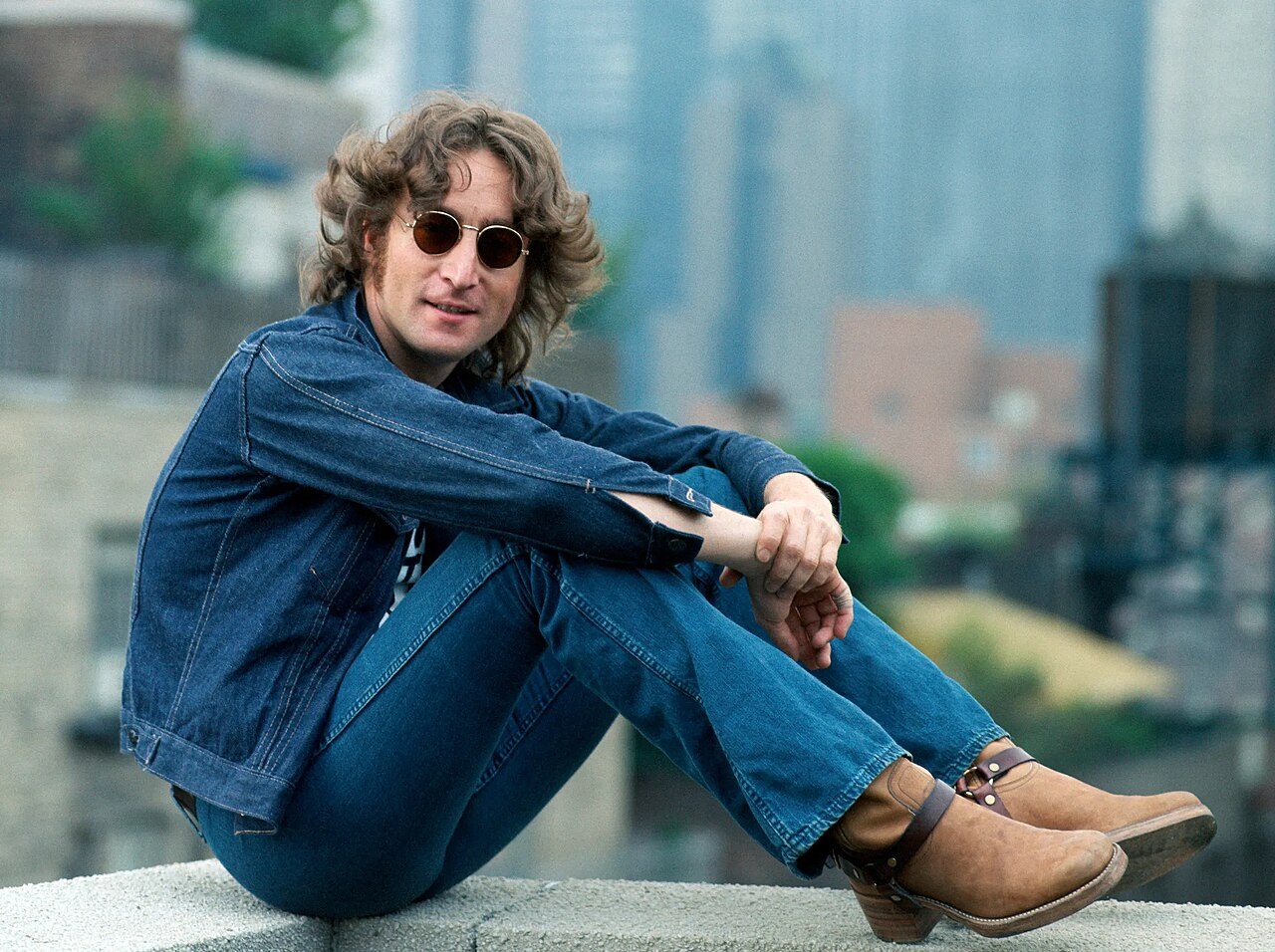
At a Glance
- The day
- 8 December 1980 — Lennon spends it at a Rolling Stone photo shoot with Annie Leibovitz and a recording session for Yoko Ono's 'Walking on Thin Ice'
- The killer
- Mark David Chapman, 25, a former security guard from Hawaii, who had waited outside the Dakota with a copy of Double Fantasy for Lennon to sign — which Lennon did, at about 5 p.m.
- The shooting
- About 10:50 p.m., as Lennon and Ono return home, Chapman fires five shots; four strike Lennon in the back
- The end
- Rushed to Roosevelt Hospital in a police car, Lennon is pronounced dead on arrival at about 11:15 p.m., aged 40
- The sentence
- Chapman pleads guilty to second-degree murder and receives 20 years to life; he has been denied parole repeatedly since 2000
- The memorial
- Strawberry Fields, the Central Park garden opposite the Dakota, with its single-word 'Imagine' mosaic, is dedicated to Lennon in 1985
Events on this day
- 1854Pope Pius IX proclaims the dogma of the Immaculate Conception in the bull Ineffabilis Deus, defining a central article of Roman Catholic belief.
- 1863President Abraham Lincoln issues his Proclamation of Amnesty and Reconstruction, offering pardons to Confederates who swear loyalty and setting his 'ten percent' plan for readmitting Southern states.
- 1941A day after Pearl Harbor, President Franklin D. Roosevelt addresses Congress — 'Yesterday, December 7, 1941, a date which will live in infamy' — and Congress declares war on Japan, the Senate unanimously and the House 388–1, pacifist Jeannette Rankin casting the only no vote.
- 1953President Dwight D. Eisenhower delivers his 'Atoms for Peace' address to the United Nations, proposing that nuclear powers pool atomic material for peaceful uses under international supervision.
- 1980John Lennon is shot dead outside the Dakota in New York — the featured story above.
- 1987Ronald Reagan and Mikhail Gorbachev sign the Intermediate-Range Nuclear Forces Treaty in Washington, the first agreement to abolish an entire class of nuclear weapons.
- 1991The leaders of Russia, Ukraine and Belarus sign the Belovezha Accords in a Belarusian forest lodge, declaring that the Soviet Union 'has ceased to exist' and founding the Commonwealth of Independent States in its place.
- 2004Former Pantera guitarist 'Dimebag' Darrell Abbott is shot dead on stage in Columbus, Ohio, by a deranged fan who kills three others before being shot by police.
Born on this day
- 65 BCHorace — Roman lyric poet of the Odes, whose phrases — carpe diem, dulce et decorum est — entered the bloodstream of Western literature.
- 1832Bjørnstjerne Bjørnson — Norwegian novelist, playwright and Nobel laureate who wrote the words of Norway's national anthem.
- 1925Sammy Davis, Jr. — American singer, dancer and actor, the complete entertainer of the Rat Pack era.
- 1943Jim Morrison — American singer and poet of the Doors, rock's self-styled Lizard King.
- 1966Sinéad O'Connor — Irish singer whose voice and defiance made 'Nothing Compares 2 U' a global anthem and a flashpoint of controversy.
Died on this day
- 1903Herbert Spencer — English philosopher who coined 'survival of the fittest' and tried to extend evolution into a system of all knowledge.
- 1978Golda Meir — Israel's first woman prime minister, who led the country through the Yom Kippur War, dead in Jerusalem at 80.
- 1980John Lennon — founder of the Beatles and the defining songwriter of his generation, murdered at 40; see the featured story above.
- 2019Caroll Spinney — American puppeteer who played Big Bird and Oscar the Grouch on Sesame Street for nearly fifty years.
The featured story: John Lennon is murdered, 8 December 1980
John Lennon's last day was, by his recent standards, an ordinary working one — which was itself the news. After five years retired at home in the Dakota, raising his son Sean and baking bread, the 40-year-old had returned to music that autumn with Double Fantasy, the album he and Yoko Ono made as a dialogue between husband and wife. On 8 December 1980 he sat for Annie Leibovitz's Rolling Stone cover shoot — the famous image of him curled, naked, against a clothed Ono — recorded a long radio interview, and in the early evening left for the Record Plant studio to work on Ono's song 'Walking on Thin Ice'. Outside the Dakota's archway, as he left, he stopped to sign an album for a quiet young fan who had been waiting much of the day.
The fan was Mark David Chapman, 25, a former security guard from Honolulu who had flown to New York with a .38 revolver and a paperback of The Catcher in the Rye, and who had been stalking Lennon for days. Psychiatrists would later describe him as borderline psychotic, a Beatles fan turned against his idol — enraged, prosecutors argued, by Lennon's wealth, his 'more popular than Jesus' remark of 1966 and the godlessness of songs like 'Imagine', and hungry for the fame of killing a famous man. He had shaken hands with Lennon and taken the signed Double Fantasy. Then he stayed, waiting in the shadows of the archway for the couple to come home.
They returned at about 10:50 p.m. Ono walked ahead; Lennon followed, carrying cassettes. Chapman called out 'Mr. Lennon?', took a combat stance and fired five hollow-point bullets. Four hit Lennon in the back. The Dakota's doorman and concierge raised the alarm; there was no ambulance wait — arriving police officers lifted Lennon into the back of a squad car and raced him to Roosevelt Hospital on West 59th Street, but the wounds were unsurvivable, and he was pronounced dead on arrival at about 11:15 p.m. Chapman did not run. He dropped the gun, took out his copy of Salinger, and was reading it calmly when police arrived; he offered no resistance and said he was sure they knew what he had done.
The news broke to much of America through a football game: Howard Cosell, commentating on Monday Night Football, interrupted the play to announce that John Lennon had been shot and killed — 'an unspeakable tragedy', confirmed by ABC News. Crowds began gathering outside the Dakota within the hour and stayed for days, singing. Chapman pleaded guilty against his lawyer's advice and was sentenced to 20 years to life; eligible for parole since 2000, he has been refused again and again, and remains in prison. Lennon was cremated, with no funeral; Ono asked the world instead for ten minutes of silence the following Sunday, which millions observed. Across Central Park West, the city later gave him Strawberry Fields — a quiet garden whose mosaic says, in one word, what he had asked everyone to do.
Why this date matters
December 8 is a date on which the twentieth century keeps turning. In 1941 it is the day America enters the world war, almost unanimously; in 1987 the day the superpowers first agree to destroy nuclear weapons rather than merely limit them; in 1991 the day the Soviet Union is signed out of existence in a forest. And in 1980 it is the day the century's popular music loses its most restless voice — not to age or excess, the usual rock obituaries, but to a stranger with a signed album, waiting in an archway.
Sources
- Encyclopaedia Britannica — On This Day: December 8
- HISTORY — What Happened on December 8
- HISTORY — John Lennon shot (December 8, 1980)
- U.S. Department of State, Office of the Historian — Declaration of a State of War with Japan, December 8, 1941
The facts on this page were checked against these sources on 19 November 2026. The History Trail's permanent pages are researched and written for this site; the live profiles elsewhere on The History Trail are assembled automatically from Wikipedia and Wikidata.
About the Author
Researched and written by the The History Trail Editorial Team — the accountable editorial function behind this site's permanent story pages. The team works from the published sources cited on each page; it does not invent historians, reviewers or credentials, and it corrects errors openly.
Fact Check
Every load-bearing fact on this page traces to one of the sources listed above, and significant claims link to their source in the text. Our checking method is described on the methodology page; errors can be reported via the corrections page.
Sources & Citations
Cite this page as: The History Trail Editorial Team, The History Trail — this article's title, publication and update dates are shown beneath its headline. The full source list appears under Sources above; the site's source standards are on the sources page.