
On This Day
December 5 in History
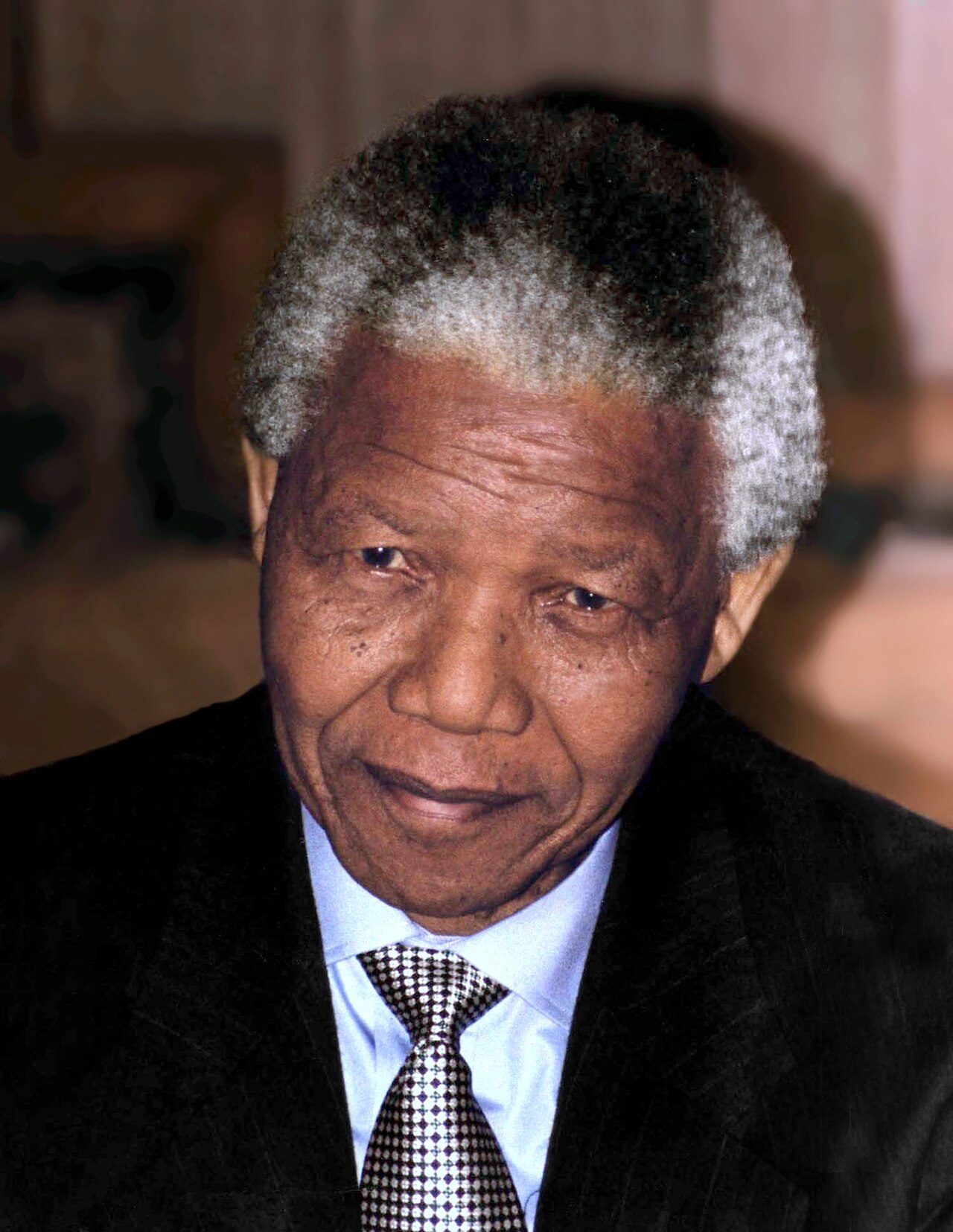
On 5 December 2013 Nelson Mandela died at his home in Johannesburg, aged 95 — the former political prisoner who walked free in 1990, shared the Nobel Peace Prize, and led South Africa from apartheid to its first democratic election as its first Black president. The announcement by President Jacob Zuma — 'Our nation has lost its greatest son' — set off mourning on every continent. December 5 is also the day Prohibition ended in America, the Mary Celeste was found sailing empty, and London's Great Smog descended.
Choose another date: open the On This Day calendar to browse events, births and deaths for any day of the year.
At a Glance
- Born
- 18 July 1918, Mvezo, in South Africa's Eastern Cape; trained as a lawyer and cofounded the ANC Youth League
- Imprisoned
- 1962–1990 — 27 years, most of them on Robben Island, after conviction for sabotage against the apartheid state
- Freed
- 11 February 1990, walking hand in hand with Winnie Mandela before the world's cameras
- The prize
- Nobel Peace Prize 1993, shared with F. W. de Klerk for the peaceful termination of the apartheid regime
- President
- 1994–1999 — elected in South Africa's first democratic election and inaugurated on 10 May 1994; served a single term by choice
- Died
- 5 December 2013, at home in Houghton, Johannesburg, aged 95, after a long lung illness; announced by President Jacob Zuma
Events on this day
- 1776Five students at the College of William and Mary found Phi Beta Kappa at Raleigh's Tavern in Williamsburg — the first Greek-letter fraternity and later America's premier academic honour society.
- 1848President James K. Polk confirms to Congress that gold has been found in California, turning rumour into the Gold Rush that transforms the American West.
- 1872The brigantine Mary Celeste is found drifting in the Atlantic near the Azores — seaworthy, cargo intact, her crew of seven, her captain and his family all vanished without a trace or an agreed explanation, in the sea's most famous mystery.
- 1876Fire breaks out during a performance at the Brooklyn Theatre in New York; nearly 300 people die, many trampled in the panic — one of the worst theatre disasters in American history.
- 1933Utah becomes the 36th state to ratify the Twenty-first Amendment, ending national Prohibition in the United States after thirteen years and repealing the Eighteenth Amendment outright.
- 1945Five U.S. Navy torpedo bombers — Flight 19 — disappear on a training mission off Florida, feeding the legend of the Bermuda Triangle; a rescue seaplane sent after them is lost as well.
- 1952A thick, coal-smoke fog settles over London for five days. The Great Smog is blamed for at least 4,000 deaths in the weeks that follow and drives Britain toward clean-air law.
- 1955The AFL and CIO merge in New York to form the AFL-CIO under George Meany, uniting some 15 million American trade unionists in a single federation.
- 1978The Soviet Union and Afghanistan sign a treaty of friendship in Moscow — the legal pretext Moscow will cite a year later when it invades to prop up Kabul's communist government.
- 2013Nelson Mandela dies in Johannesburg at 95 — the featured story above.
Born on this day
- 1782Martin Van Buren — eighth president of the United States, the first president born an American citizen, and the political organiser behind the Democratic Party.
- 1890Fritz Lang — Austrian-born director of Metropolis and M, a master of German Expressionist cinema who remade himself in Hollywood film noir.
- 1901Walt Disney — American animator and producer whose studio turned Mickey Mouse into the foundation of a global entertainment empire.
- 1901Werner Heisenberg — German physicist of the uncertainty principle, born the same day as Disney, who led Germany's wartime nuclear programme and won the Nobel Prize in Physics at 31.
Died on this day
- 1784Phillis Wheatley — the first African American author to publish a book of poetry, enslaved in Boston and celebrated in London, dead in poverty at about 31.
- 1791Wolfgang Amadeus Mozart — Austrian composer of more than 600 works, dead in Vienna at 35 with his Requiem unfinished.
- 1870Alexandre Dumas — French novelist of The Count of Monte Cristo and The Three Musketeers, the most widely read French author of his century.
- 1926Claude Monet — founder of French Impressionism, dead at 86 at Giverny among the water lilies he had painted for thirty years.
- 2002Roone Arledge — American television executive who created Monday Night Football and Wide World of Sports and remade both sports and news broadcasting.
- 2013Nelson Mandela — anti-apartheid leader and South Africa's first democratically elected president, dead at 95; see the featured story above.
The featured story: Nelson Mandela dies, 5 December 2013
He had been ill for a long time, and the world had been rehearsing its grief for months. Nelson Mandela had been in and out of hospital through 2013 with a recurring lung infection — a legacy of the tuberculosis he contracted during 27 years in apartheid's prisons — and on the night of 5 December 2013 he died at home in Houghton, Johannesburg, in the company of his family. He was 95. Just before midnight, President Jacob Zuma announced it on national television: 'He is now resting. He is now at peace. Our nation has lost its greatest son. Our people have lost a father.' Within hours, mourners were singing outside the house, and tributes were arriving from virtually every government on earth.
The life being mourned had traced the whole arc of his country's tragedy and rescue. Born in 1918 in the village of Mvezo, Mandela trained as a lawyer in Johannesburg, cofounded the African National Congress Youth League in 1944, and rose through the Defiance Campaign of the 1950s. After the Sharpeville massacre he helped found the ANC's armed wing, Umkhonto we Sizwe; arrested in 1962, he was sentenced to life imprisonment at the Rivonia Trial in 1964, telling the court he was prepared to die for a democratic and free society. He spent eighteen years breaking rocks on Robben Island, then years more at Pollsmoor and Victor Verster prisons — while outside, his name, banned from print in South Africa, became the world's shorthand for resistance to apartheid.
What made him singular was what happened next. Released on 11 February 1990 by President F. W. de Klerk, Mandela chose negotiation over vengeance at the moment of his greatest leverage. Through four years of talks shadowed by political violence, he and de Klerk steered South Africa to its first universal election — work recognised by their shared Nobel Peace Prize in 1993. On 27 April 1994 Mandela voted for the first time in his life, at 75; on 10 May he was inaugurated as president, with his former jailers among the guests. His single term was devoted less to policy than to the harder work of holding a frightened, divided country together — the Truth and Reconciliation Commission, the 1995 Rugby World Cup final at which he wore the Springbok jersey of the old enemy, and the simple, radical act of retiring voluntarily in 1999.
In retirement he became the world's elder statesman — campaigning against AIDS, mediating in Burundi and elsewhere, and gently rebuking the powerful, including over the Iraq War. His death on 5 December 2013 closed the century's most consequential biography: a man the South African state had labelled a terrorist, buried ten days later at Qunu as a head of state, mourned by presidents and kings at a memorial service in a Johannesburg stadium. The date of his death has itself entered the calendar — the day the world stopped, briefly, to remember what one prisoner's patience had made possible.
Why this date matters
December 5 is a date of endings that clear the air — sometimes literally. Prohibition, America's thirteen-year experiment in legislated temperance, is repealed; a poisoned fog begins the week that teaches Britain to clean its skies; the Mary Celeste sails on without her crew, an ending no one has ever explained. And in 2013 the date carries the century's most mourned ending of all: the death of a man whose own ending — prison behind him, power voluntarily surrendered — had been a beginning for his country.
Sources
- Encyclopaedia Britannica — On This Day: December 5
- HISTORY — What Happened on December 5
- Encyclopaedia Britannica — Nelson Mandela
- HISTORY — South African president Nelson Mandela dies at 95 (December 5, 2013)
The facts on this page were checked against these sources on 19 November 2026. The History Trail's permanent pages are researched and written for this site; the live profiles elsewhere on The History Trail are assembled automatically from Wikipedia and Wikidata.
About the Author
Researched and written by the The History Trail Editorial Team — the accountable editorial function behind this site's permanent story pages. The team works from the published sources cited on each page; it does not invent historians, reviewers or credentials, and it corrects errors openly.
Fact Check
Every load-bearing fact on this page traces to one of the sources listed above, and significant claims link to their source in the text. Our checking method is described on the methodology page; errors can be reported via the corrections page.
Sources & Citations
Cite this page as: The History Trail Editorial Team, The History Trail — this article's title, publication and update dates are shown beneath its headline. The full source list appears under Sources above; the site's source standards are on the sources page.