
On This Day
April 23 in History
On 23 April 1616 William Shakespeare died in Stratford-upon-Avon, in the town where, by long tradition, he had also been born on the same date 52 years earlier. The most influential writer in the English language thus began and ended on a single square of the calendar. April 23 is also St George's Day, the day New Coke launched to disaster in 1985, and the day Hank Aaron hit the first of his 755 home runs.
Choose another date: open the On This Day calendar to browse events, births and deaths for any day of the year.
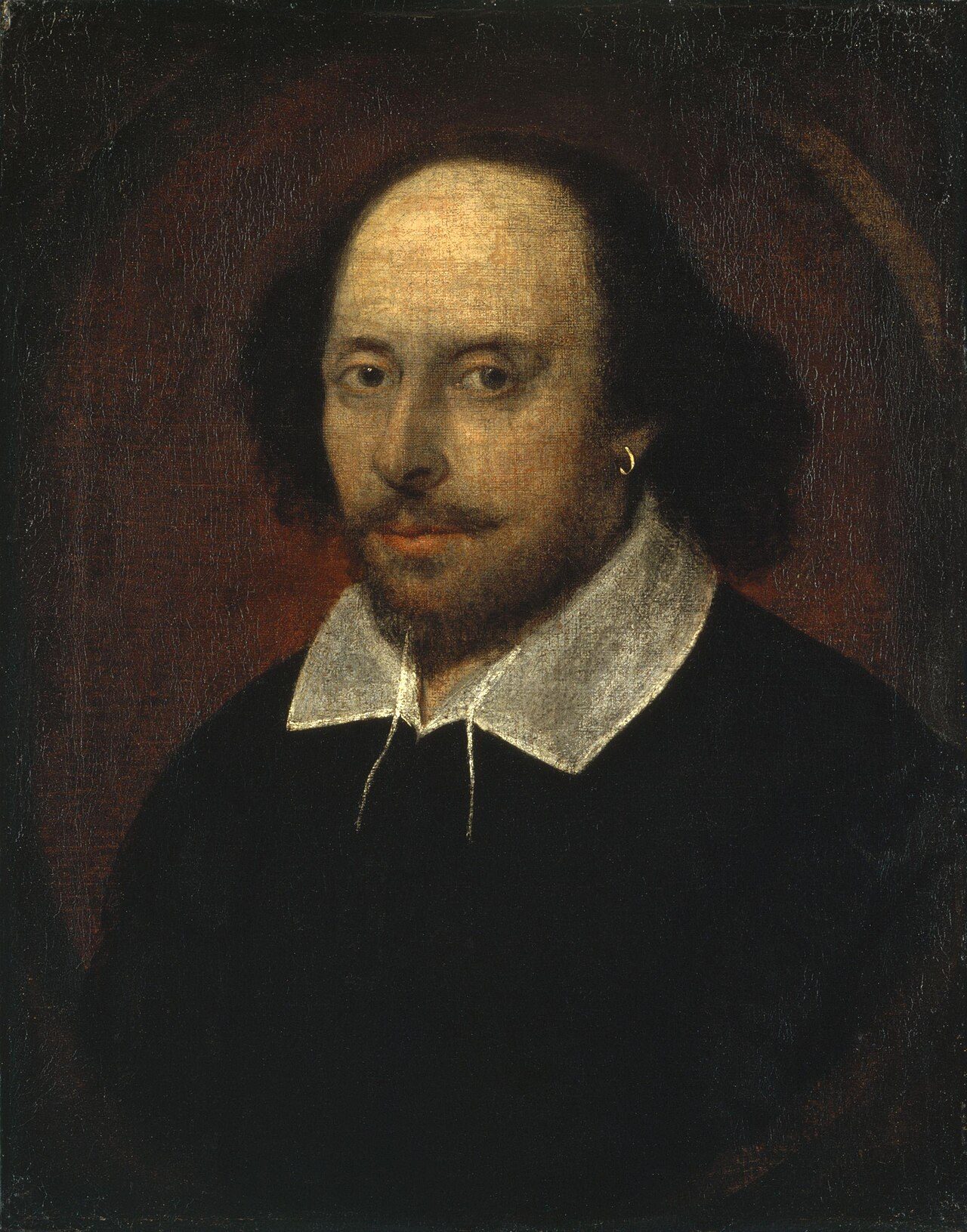
At a Glance
- Born
- Traditionally 23 April 1564, Stratford-upon-Avon; he was baptised there on 26 April 1564
- Died
- 23 April 1616, Stratford-upon-Avon, aged 52; the cause of his death is not recorded
- The work
- Some 37 plays and 154 sonnets are attributed to him, from Hamlet and Macbeth to Romeo and Juliet
- Buried
- In Holy Trinity Church, Stratford, beneath a stone warning would-be movers of his bones with a curse
- The same day
- Miguel de Cervantes had died in Madrid the day before by the modern calendar — Spain and England then used different calendars
- The afterlife
- Within seven years his friends published the First Folio (1623), preserving 18 plays that might otherwise have been lost
Events on this day
- 1014Brian Boru, high king of Ireland, is killed after his forces defeat a Norse-Irish army at Clontarf, outside Dublin.
- 1564By tradition, William Shakespeare is born in Stratford-upon-Avon; his baptism is recorded three days later.
- 1616William Shakespeare dies in Stratford-upon-Avon — the featured story above.
- 1778John Paul Jones leads sailors from the USS Ranger in a night raid on Whitehaven, England — a rare American attack on the British home coast.
- 1931Warner Bros. releases The Public Enemy, the film that makes James Cagney a star and sets the template for the gangster movie.
- 1945President Harry Truman bluntly warns Soviet foreign minister Vyacheslav Molotov to honour agreements on Poland — an early flashpoint of the Cold War.
- 1954Hank Aaron of the Milwaukee Braves hits the first home run of his major-league career; he will finish with 755.
- 1961Judy Garland performs at Carnegie Hall in a comeback concert often called the greatest night in show-business history.
- 1969Sirhan Sirhan is sentenced to death for assassinating Robert F. Kennedy; the sentence is later commuted to life in prison.
- 1984American health officials announce that researchers have identified the virus that causes AIDS, later named HIV.
- 1985The Coca-Cola Company replaces its 99-year-old formula with New Coke; the backlash forces the original's return, as Coca-Cola Classic, after 79 days.
Born on this day
- 1564William Shakespeare — playwright and poet, by tradition born this day in Stratford-upon-Avon (see the featured story).
- 1791James Buchanan — 15th president of the United States, the only bachelor to hold the office, whose term ended as the Union broke apart.
- 1858Max Planck — German physicist who founded quantum theory and won the Nobel Prize in Physics in 1918.
- 1936Roy Orbison — American singer of 'Oh, Pretty Woman', famed for his soaring, operatic voice.
Died on this day
- 1616William Shakespeare — the Bard himself, in Stratford at 52 (see the featured story).
- 1915Rupert Brooke — English poet of 'The Soldier', dead of blood poisoning on a hospital ship off Skyros, days before the Gallipoli landings, at 27.
- 1998James Earl Ray — convicted assassin of Martin Luther King Jr., dead in prison in Nashville at 70.
- 2007Boris Yeltsin — first president of post-Soviet Russia, who steered its chaotic transition from communism, dead at 76.
The featured story: William Shakespeare dies in Stratford, 23 April 1616
Almost everything about Shakespeare's death is ordinary, and that is part of its fascination. In the spring of 1616 he was 52, wealthy by Stratford standards, semi-retired from the London stage to New Place, the second-largest house in his home town. His will, revised that March, left his wife Anne the famous 'second best bed' and divided a comfortable estate of houses, land and shares. On 23 April — St George's Day, England's national feast — he died; the parish register of Holy Trinity Church records his burial two days later. No cause of death was recorded; fever, and a drinking bout with Ben Jonson and Michael Drayton, are later guesses, nothing more.
The symmetry that made the date immortal is tradition rather than record. Shakespeare's baptism is documented — 26 April 1564 — but his birth date is not; because infants were usually baptised within days, and because 23 April was St George's Day, posterity settled on 23 April as his birthday. It may even be true. What is certain is that the coincidence proved irresistible: England's patron saint's day, the birth and the death of England's national poet, folded into one date that Stratford now celebrates every year with processions to the church where he lies.
He died famous but not yet monumental. Shakespeare the industry — the edited texts, the biographies, the global cult — was built by other hands: first by his fellow actors John Heminges and Henry Condell, who in 1623 published the First Folio of his plays and saved eighteen of them, including Macbeth, The Tempest and Twelfth Night, from likely oblivion. Through the eighteenth century his reputation climbed past every rival; by the nineteenth he was simply 'the Bard', translated into every major language, his phrases — from 'break the ice' to 'wild-goose chase' — dissolved into everyday English.
The grave itself carries his last joke, or warning. The stone over it in Holy Trinity's chancel bears a verse curse on anyone who moves his bones — a real fear in an age when charnel houses emptied old graves. No one has dared test it: when researchers proposed examining the remains, the church refused, and a 2016 radar survey that suggested the skull might be missing only deepened the mystery. The playwright who wrote more memorably about death than anyone — Hamlet with Yorick's skull in hand — keeps his own, or does not, undisturbed.
Why this date matters
No date in the calendar is so completely owned by one man. April 23 gave England its patron saint's feast and, by a tradition too perfect to surrender, both the arrival and the departure of its greatest writer — a man whose death in a provincial town in 1616 passed with a single line in a parish register. The day's other entries orbit at a distance: a high king falls at Clontarf, a virus is named, a soft drink fails. All of them are footnotes to the Stratford churchyard.
Sources
- Encyclopaedia Britannica — On This Day: April 23
- HISTORY — What Happened on April 23
- The Coca-Cola Company — New Coke: The Most Memorable Marketing Blunder Ever?
- Encyclopaedia Britannica — Ferdinand Magellan
The facts on this page were checked against these sources on 19 November 2026. The History Trail's permanent pages are researched and written for this site; the live profiles elsewhere on The History Trail are assembled automatically from Wikipedia and Wikidata.
About the Author
Researched and written by the The History Trail Editorial Team — the accountable editorial function behind this site's permanent story pages. The team works from the published sources cited on each page; it does not invent historians, reviewers or credentials, and it corrects errors openly.
Fact Check
Every load-bearing fact on this page traces to one of the sources listed above, and significant claims link to their source in the text. Our checking method is described on the methodology page; errors can be reported via the corrections page.
Sources & Citations
Cite this page as: The History Trail Editorial Team, The History Trail — this article's title, publication and update dates are shown beneath its headline. The full source list appears under Sources above; the site's source standards are on the sources page.