
Things
Paris
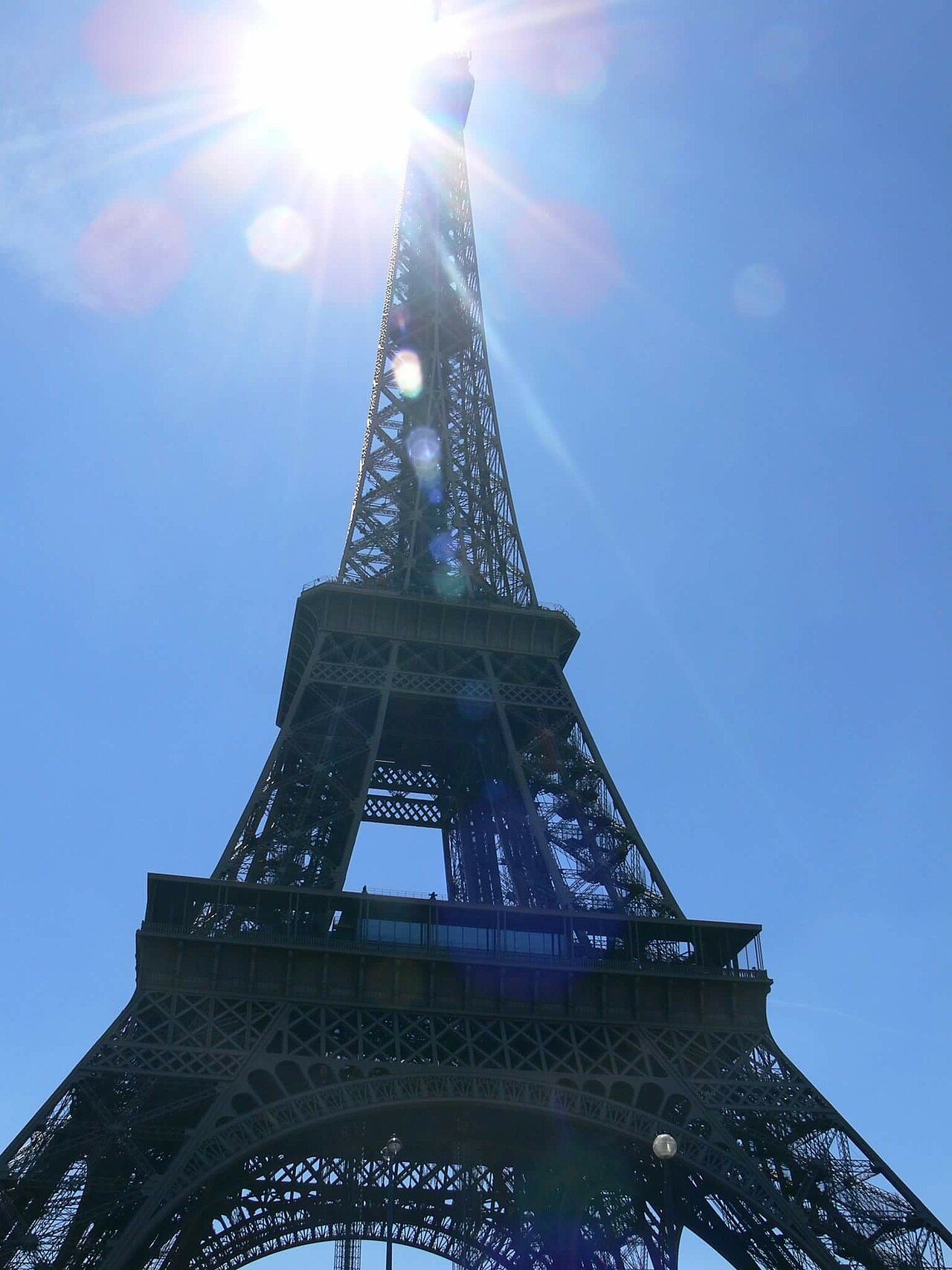
Paris is the capital of France, a city that began as the Roman town of Lutetia on an island in the Seine, became the seat of French kings, was rebuilt under Napoleon III by Baron Haussmann between 1853 and 1870, and is symbolised by the Eiffel Tower - a temporary exhibition structure of 1889 that radio saved from demolition.
At a Glance
- First settlement
- The Parisii, a Gallic tribe, settled on the Ile de la Cite; Rome developed the town as Lutetia in the 1st century BCE
- Capital
- Clovis made Paris his capital around 508; Hugh Capet's accession in 987 firmly established its preeminence, Britannica notes
- The river
- The Seine flows about 8 miles (13 km) through the city; the Ile de la Cite is its historic nucleus
- Haussmann
- Georges-Eugene Haussmann, prefect of the Seine 1853-1870, cut wide tree-lined avenues and built new water, drainage, parks and lighting systems
- Eiffel Tower
- Built for the 1889 Exposition Universelle under a 20-year land permit; saved by its use as a wireless telegraphy antenna
- Arrondissements
- The city comprises 20 arrondissements, numbered in a spiral from the centre
Introduction
Britannica calls Paris one of the world's most important cities, nicknamed the City of Light. That reputation rests on a very old site: people were living where Paris now stands by about 7600 BCE, along the Seine some 233 miles upstream from the English Channel. The modern city spread from one island, the Ile de la Cite, beyond both banks of the river. Its history falls into three acts: a Roman and medieval capital, a revolutionary city repeatedly rebuilt by its rulers, and Haussmann's nineteenth-century transformation, which still dictates how Paris looks.
This page follows the documented record - Lutetia, the Frankish and Capetian capital, the Revolution, Haussmann, and the Eiffel Tower's improbable survival. It is a history of the city, not a guide to visiting it.
Lutetia and the Making of a Capital
The Parisii, a Gallic tribe, settled on the Ile de la Cite in the third century BCE, at a crossing of water and land routes. Rome conquered Gaul in the first century BCE, and under Roman administration, Britannica notes, the original site on the island was designated the capital of the Parisii tribe and territory. The Roman town, Lutetia, spread to the Left Bank, with baths, an amphitheatre and a forum. The name Paris, from the Parisii, gradually replaced Lutetia in late antiquity.
The Frankish king Clovis I had taken Paris by 494 and later made his capital there. Under Hugh Capet (987-996) and the Capetian dynasty, Britannica says, the preeminence of Paris was firmly established, and Paris became the political and cultural hub as modern France took shape. Because France became highly centralised, Paris drew to itself much of the talent of the provinces - a pattern that has never ended. The Ile de la Cite remained the seat of authority, crowned by Notre-Dame Cathedral, begun in 1163; the Left Bank became the seat of intellectual life and the Right Bank the heart of economic life.
Revolution, Napoleon and Haussmann's Rebuilding
Paris was also, repeatedly, a city of revolt. Britannica lists 1358, 1588, 1648, 1789, 1830, 1848 and 1871 among the years when contending powers produced great violence in its streets. The Revolution of 1789 began with the storming of the Bastille, a royal fortress in the east of the city, on 14 July 1789, and Paris remained the stage on which French regimes rose and fell for a century. Napoleon Bonaparte crowned himself emperor at Notre-Dame in 1804 and gave the city triumphal monuments, above all the Arc de Triomphe, commissioned in 1806.
The decisive rebuilding came under his nephew. Napoleon III appointed Georges-Eugene Haussmann prefect of the Seine in 1853, and Haussmann held the post until 1870. Britannica credits him with transforming Paris from its ancient character to the one it still largely preserves. He cut wide, straight, tree-lined avenues through the chaotic mass of small streets, connecting the railway terminals and making rapid movement across the city possible for the first time. The purposes, Britannica notes, were partly economic, partly aesthetic - more light and unified order - and partly military, removing the narrow streets where rebel barricades could be built. He also built new systems of water supply and drainage, opened parks on the English model at Boulogne and Vincennes, increased streetlights and sidewalks, demolished most private buildings on the Ile de la Cite, and oversaw the Opera and the Les Halles market. His handling of public money drew growing criticism, and a liberal government dismissed him in 1870 - but the boulevards, stone facades and parks of his Paris endure.
The Eiffel Tower: Built to Come Down
The tower that now symbolises Paris was designed as a temporary centrepiece. It was built for the Exposition Universelle of 1889, the world's fair marking the centenary of the Revolution, by Gustave Eiffel's company, to designs by his engineers Maurice Koechlin and Emile Nouguier with architect Stephen Sauvestre. When it opened it was the tallest human-made structure in the world, at 300 metres. Yet, the tower's official history records, Eiffel had only a 20-year permit to use the land: the tower was to revert to the City of Paris on 1 January 1910, and demolition was a real prospect - in 1906 the city had destroyed the vast Galerie des Machines from the same exhibition for want of a use.
Radio saved it. Eiffel deliberately sought scientific uses for his tower. On 5 November 1898 Eugene Ducretet made the first radio contact in Morse code between the tower and the Pantheon, four kilometres away. Eiffel offered the tower to Captain Gustave Ferrie of the military telegraphy service and financed an antenna at its summit; by 1908 signals reached 6,000 kilometres, and in 1909 a permanent station was built under the Champ de Mars. The tower's strategic interest was confirmed, and Eiffel's concession was extended for another 70 years from 1 January 1910. During the First World War, German messages were intercepted from its summit. The temporary tower had become indispensable infrastructure - and then, simply, Paris.
Timeline
- c. 250 BCE
The Parisii, a Gallic tribe, settle on the Ile de la Cite at a crossing of the Seine.
- 1st century BCE
Under Roman rule the town of Lutetia, capital of the Parisii, spreads from the island to the Left Bank.
- 494-508
The Frankish king Clovis I takes Paris and makes it his capital.
- 987
Hugh Capet becomes king; under the Capetians the preeminence of Paris as France's capital is firmly established.
- 1163
Construction of Notre-Dame Cathedral begins on the Ile de la Cite.
- 14 July 1789
The storming of the Bastille opens the French Revolution in Paris.
- 1853-1870
As prefect of the Seine, Baron Haussmann rebuilds Paris with wide avenues, parks, sewers and water systems under Napoleon III.
- 1871
The Paris Commune rules the city briefly after the Franco-Prussian War and is suppressed with heavy bloodshed.
- 1889
The Eiffel Tower opens as the centrepiece of the Exposition Universelle, under a permit lasting only 20 years.
- 5 November 1898
The first radio contact by Morse code is made between the Eiffel Tower and the Pantheon.
- 1 January 1910
Instead of demolition, Eiffel's concession is extended by 70 years because of the tower's military radio value.
Significance
Paris matters because centralisation made it France in miniature: government, finance, publishing, fashion and universities concentrated in one small city of 41 square miles. Haussmann's rebuilding also set a precedent for twentieth-century urban planning, Britannica notes, influencing cities worldwide - for better in its light, air, water and movement, and for worse in its demolitions and displacement of the poor. The uniform stone boulevards he imposed are now so identified with Paris that it is hard to remember they were once a controversial act of state power.
Myths and disputes
Was the Eiffel Tower always meant to be permanent? No. The 20-year permit is documented in the tower's own official history, and the near-demolition was real: the city destroyed the neighbouring Galerie des Machines in 1906 for want of a use. What saved the tower was not affection - many Parisians still disliked it - but utility, first wireless telegraphy and then broadcasting. Claims that the tower was saved by its beauty reverse the record; the beauty was argued about for decades, while the antenna was decisive within years.
Haussmann's Paris is disputed differently. Admirers credit him with light, sanitation and order; critics stress the medieval quarters demolished, the working-class residents pushed outward, and the enormous loans raised with little parliamentary control, which Britannica records as the criticism that ended his career in 1870. Both accounts are documented: the boulevards are at once a public-health triumph and an instrument of military and social control - Haussmann's purposes included making barricades harder to build.
Legacy
Paris's legacy is the template of the modern capital: a Roman island nucleus, a medieval cathedral, royal and imperial monuments, and a nineteenth-century street plan copied worldwide. Its 20 arrondissements still spiral outward from the Ile de la Cite where the Parisii settled. And its symbol is a piece of exhibition engineering that survived by becoming a radio mast - a reminder that what a city keeps is not always what it planned to keep.
Sources
- Encyclopaedia Britannica - Paris
- Encyclopaedia Britannica - Georges-Eugene, Baron Haussmann
- Eiffel Tower official site - How radio saved the Eiffel Tower from destruction
- Encyclopaedia Britannica - New York City (for the 1930-31 height succession)
The facts on this page were checked against these sources on 19 November 2026. The History Trail's permanent pages are researched and written for this site; the live profiles elsewhere on The History Trail are assembled automatically from Wikipedia and Wikidata.
About the Author
Researched and written by the The History Trail Editorial Team — the accountable editorial function behind this site's permanent story pages. The team works from the published sources cited on each page; it does not invent historians, reviewers or credentials, and it corrects errors openly.
Fact Check
Every load-bearing fact on this page traces to one of the sources listed above, and significant claims link to their source in the text. Our checking method is described on the methodology page; errors can be reported via the corrections page.
Sources & Citations
Cite this page as: The History Trail Editorial Team, The History Trail — this article's title, publication and update dates are shown beneath its headline. The full source list appears under Sources above; the site's source standards are on the sources page.