
Things
Rome
Rome is the capital of Italy and one of the oldest inhabited cities in Europe, standing on the Tiber River. Tradition dates its founding by Romulus to 753 BCE - a legend, not a documented event. The documented city grew from hilltop villages into the capital of a Republic, then an Empire, then the seat of the papacy, and became capital of united Italy in 1871.
At a Glance
- Traditional founding
- 21 April 753 BCE, by Romulus according to legend; archaeology shows gradual growth from hilltop villages
- Republic
- Traditionally founded in 509 BCE, when kings were replaced by elected magistrates, consuls and the Senate
- Empire
- Established in 27 BCE, when Octavian took the title Augustus after the civil wars that followed Julius Caesar's assassination
- The river
- The Tiber, about 15 miles (24 km) inland from the Tyrrhenian Sea; the site commanded a convenient river crossing
- Papal city
- Seat of the Roman Catholic Church; the popes ruled the Papal States, including Rome, until 1870
- Capital of Italy
- Italian troops entered Rome on 20 September 1870; the capital moved from Florence to Rome in 1871
- UNESCO
- The Historic Centre of Rome was inscribed on the World Heritage List in 1980 and extended in 1990
Introduction
Britannica calls Rome the Eternal City: once the capital of an ancient republic and empire that defined the Western world, then the seat of the Roman Catholic Church, and today the capital of Italy. Few cities have been a capital three times over - of an empire, of a church that claimed universal authority, and of a modern nation state - on the same hills, above the same river crossing.
This page separates legend from record. The founding story is presented as legend. What follows - Republic, Empire, papal city and the capital of 1871 - is documented history, though Britannica warns that the earliest centuries were written down long afterwards and mix fact with invention.
Origins: Villages on the Tiber Hills
Rome stood where it did for practical reasons. Britannica notes that the site, 12 miles inland from the sea on the Tiber, commanded a convenient river crossing and lay on a route from the Apennines to the sea, at the meeting point of three peoples: Latins, Etruscans and Sabines. Early Rome borrowed from both its neighbours - its alphabet came through the Etruscans from the Greeks, and officials' insignia, including the fasces and the purple-bordered toga, were Etruscan in origin.
Archaeology shows not a single foundation but a gradual coalescence: hilltop villages on the Palatine, Capitoline and neighbouring hills, inhabited from around the early first millennium BCE, growing together into a city. UNESCO summarises the traditional account carefully: Rome was founded on the banks of the Tiber in 753 BCE, according to legend, by Romulus and Remus, and was first the centre of the Republic, then of the Empire, and in the fourth century became the capital of the Christian world. The sequence is right; the founders are legend, a distinction the Myths section examines.
Republic and Empire
Roman tradition dates the Republic to 509 BCE, when the last king was expelled and rule by elected magistrates began: two consuls serving together for a year, advised by the Senate, with assemblies of the people voting. Britannica dates the arc plainly - the regal period began in 753 BCE, the Republic in 509, the Empire in 27 BCE. Under the Republic, Rome conquered Italy, defeated Carthage in the three Punic Wars (264-241, 218-201 and 149-146 BCE), and absorbed the Greek east. Unlike Greek city-states, Rome incorporated conquered peoples into its political system, eventually granting citizenship widely - one reason, Britannica argues, for its success as an imperial power.
The Republic destroyed itself in civil wars. Julius Caesar's dictatorship and assassination in 44 BCE were followed by further war, ending with his adopted son Octavian's victory over Mark Antony. In 27 BCE Octavian took the name Augustus and became, in Britannica's words, the first Roman emperor, his regime outwardly preserving republican forms. At its height the Empire embraced England, Europe west of the Rhine and south of the Danube, most of Asia west of the Euphrates, northern Africa and the Mediterranean islands. Its lasting effects include the Romance languages descended from Latin, Roman law - codified in the sixth century - and roads, aqueducts and city planning across three continents. The Western Empire ended in the fifth century CE; the Eastern, Byzantine Empire endured until 1453.
Papal Rome and the Road to 1871
Ancient Rome was followed, UNESCO notes, by Christian Rome, built on top of the ancient city and reusing its spaces and materials. From the fourth century Rome was the seat of the pope, and in time the capital of the Papal States across central Italy. Britannica records the medieval paradox: physically mutilated and economically paralysed by the late Middle Ages, Rome nevertheless remained a world power as an idea - the fountainhead of Christianity. From the fifteenth century the popes renewed the city in Renaissance and Baroque art, rebuilding St Peter's Basilica and reshaping squares that still define the centre.
Rome was the last city to join a united Italy, and it did so only under duress, Britannica says. The Kingdom of Italy was proclaimed in 1861 with Rome declared its intended capital, but the pope still ruled the city, protected by French troops. When France withdrew them for the Franco-Prussian War, Italian troops entered Rome through a breach at Porta Pia on 20 September 1870. Pope Pius IX withdrew into the Vatican and declared himself a prisoner there. In 1871 the capital moved from Florence to Rome. The Church's refusal to accept the loss was settled only in 1929, when the Lateran Treaty recognised Vatican City as a sovereign state. Rome became capital of the Italian Republic after the referendum of 1946.
Timeline
- 21 April 753 BCE (traditional)
According to legend, Romulus founds Rome on the Palatine Hill; the date follows the chronology of the writer Varro.
- 509 BCE (traditional)
The last king is expelled and the Republic begins, governed by elected magistrates, consuls and the Senate.
- 264-146 BCE
The three Punic Wars against Carthage end with Rome dominant in the western Mediterranean.
- 44 BCE
Julius Caesar is assassinated; civil wars follow that destroy the Republic.
- 27 BCE
Octavian takes the title Augustus and becomes the first Roman emperor.
- 476 CE
The last Western Roman emperor, Romulus Augustulus, is deposed; the Eastern Empire continues from Constantinople.
- 756-1870
The popes rule Rome as part of the Papal States; Renaissance and Baroque rebuilding transforms the Christian city.
- 20 September 1870
Italian troops enter Rome through the breach at Porta Pia, ending the Papal States.
- 1871
Rome becomes the capital of the Kingdom of Italy, the seat of government moving from Florence.
- 1929
The Lateran Treaty between Italy and the Holy See creates Vatican City and settles the Roman Question.
- 1946
Italy votes to become a republic; Rome remains its capital.
Significance
Rome's significance is that its institutions outlived its power. Roman law formed the basis for legal codes in continental Europe and beyond; Latin became the Romance languages and the language of the Western Church; and the idea of a republic shaped modern representative democracies. The papal city then preserved the ancient one: churches built from temples, obelisks re-erected in Christian squares, and a pilgrimage capital that kept Rome a world centre through centuries when its population had collapsed. UNESCO inscribes the historic centre for this stratification - three millennia in one urban fabric.
Myths and disputes
Was Rome founded by Romulus on 21 April 753 BCE? As a documented event, no - and this page presents it throughout as legend. The story is famous: Romulus and his twin Remus, sons of Mars and Rhea Silvia, were exposed on the Tiber, suckled by a she-wolf, and quarrelled over their new city, ending with Remus's murder and Rome named for Romulus. Britannica explains why it cannot be read as record: the regal period and early Republic are the most poorly documented periods of Roman history, because accounts were written much later. Rome's first native historian, Fabius Pictor, wrote during the Second Punic War, centuries afterwards, and Livy, writing under Augustus, blended some facts with much fiction. The 753 date itself was computed by Varro in the first century BCE, with a rival ancient date of 752 BCE also in official use.
Archaeology tells a quieter story that partly rhymes with the legend. Smithsonian Magazine reports excavations in the Roman Forum finding a stone wall and pottery dated to the ninth or early eighth century BCE - settlement at least a century before the traditional founding, with people on the Palatine by the tenth century BCE. Rome was not founded on a day; it grew, over generations, from villages that later Romans compressed into a single founder, a single date and a single act of fratricide.
Legacy
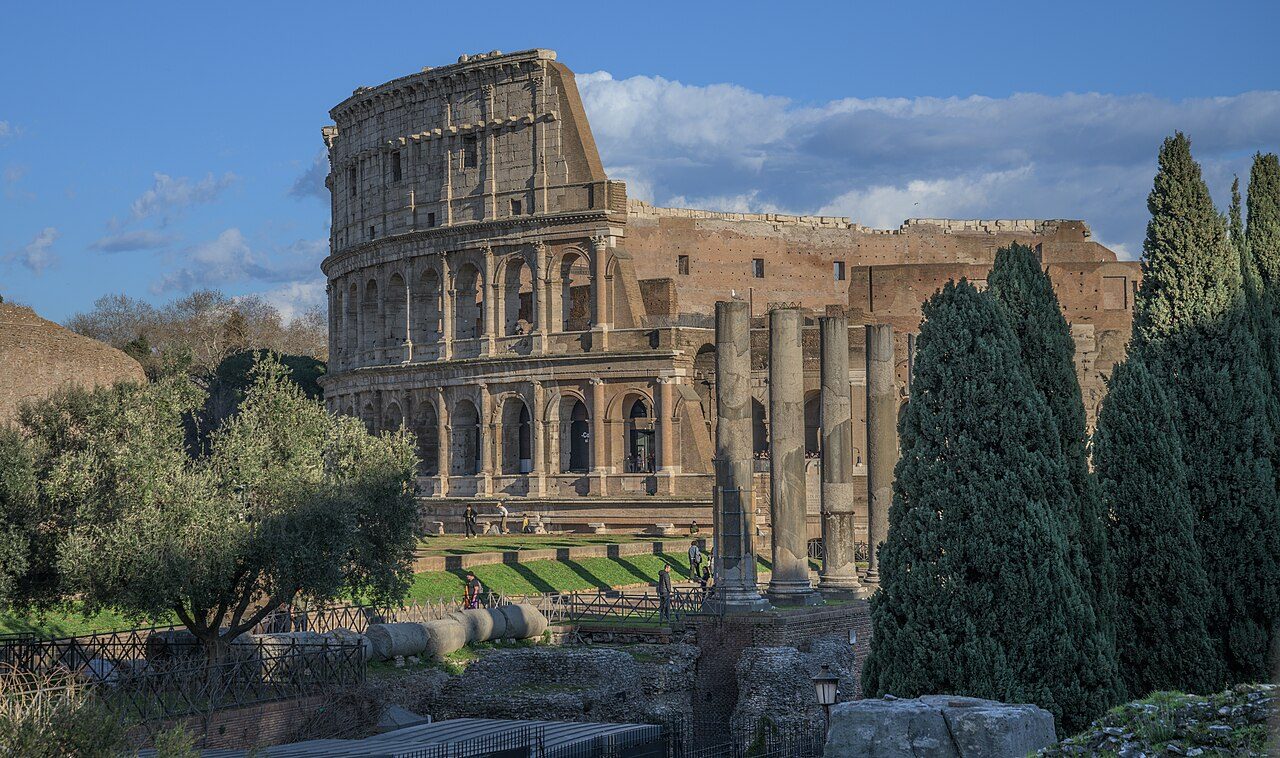
Modern Rome lives inside its past more completely than any other great capital. The Colosseum and Forum stand beside Renaissance churches and Baroque fountains; the Vatican, an independent state, sits within Italy's capital. Abroad, Rome's legacy is written into languages, laws, calendars and alphabets derived from its empire. The Eternal City is a nickname, but it records a fact: from the villages on the Tiber hills to the republic of 1946, the site has never been abandoned, only rebuilt.
Sources
- Encyclopaedia Britannica - Rome
- Encyclopaedia Britannica - Ancient Rome
- UNESCO World Heritage Centre - Historic Centre of Rome
- Smithsonian Magazine - Ancient Walls Show That Rome Is Older Than Legend
The facts on this page were checked against these sources on 19 November 2026. The History Trail's permanent pages are researched and written for this site; the live profiles elsewhere on The History Trail are assembled automatically from Wikipedia and Wikidata.
About the Author
Researched and written by the The History Trail Editorial Team — the accountable editorial function behind this site's permanent story pages. The team works from the published sources cited on each page; it does not invent historians, reviewers or credentials, and it corrects errors openly.
Fact Check
Every load-bearing fact on this page traces to one of the sources listed above, and significant claims link to their source in the text. Our checking method is described on the methodology page; errors can be reported via the corrections page.
Sources & Citations
Cite this page as: The History Trail Editorial Team, The History Trail — this article's title, publication and update dates are shown beneath its headline. The full source list appears under Sources above; the site's source standards are on the sources page.