
Things
Tennis
Tennis is a racket-and-ball game played over a net on a rectangular court, in singles or doubles, and it descends from jeu de paume, a 12th- to 13th-century French handball game: it became the indoor game of real tennis, was reinvented outdoors as lawn tennis in the 1870s, was standardised at Wimbledon in 1877, and became a fully professional world sport when the Open Era began in 1968.
At a Glance
- What it is
- Singles or doubles played with strung rackets over a net; points are scored 15, 30, 40, game, a scoring system inherited from real tennis
- Ancestor
- Jeu de paume, game of the palm, a French handball game of the 12th-13th centuries played first with the bare hand
- Indoor parent game
- Real tennis (court tennis in the US, royal tennis in Australia), the complex walled-court game from which lawn tennis borrowed its scoring
- Modern launch
- Major Walter Clopton Wingfield published the first book of lawn tennis rules in 1873 and patented his game in 1874; the officially recognised centenary was celebrated in 1973
- Standard court
- Set at Wimbledon in 1877: a rectangular court 78 feet (23.8 m) long by 27 feet (8.2 m) wide for singles
- Governing body
- The International Tennis Federation (ITF), founded in 1913 as the International Lawn Tennis Federation, sanctions the rules worldwide
- Open Era
- From April 1968, when professionals were admitted to the major championships, beginning with the British Hard Courts at Bournemouth
Introduction
Few sports carry their ancestry as openly as tennis. Its scoring - 15, 30, 40, game, with deuce and advantage - makes no sense as an invention and every sense as an inheritance, and its name in Britain is still formally lawn tennis, a fossil of the Victorian gardens where the modern game was born. Britannica traces the line in one sentence: a French handball game became a complex indoor racket game, and that game, moved outdoors onto grass in the 1870s, became the tennis played by millions today. Each stage left something in the modern sport.
Jeu de Paume and Real Tennis
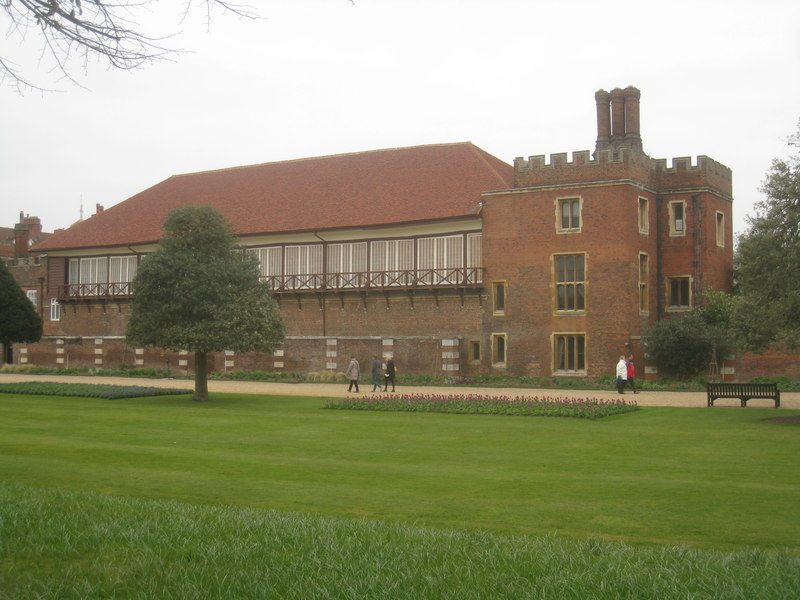
The root game is jeu de paume, game of the palm, played in northern France in the 12th and 13th centuries. The ball was struck first with the bare hand, then with a glove, and by the 16th century with rackets, at which point the game began to be called tennis - plausibly from the French tenez, take it, called by the server. Played indoors in purpose-built courts with sloping roofs, galleries and openings that formed part of the game, it developed into real tennis: a demanding, intricate sport patronised by kings, including Henry VIII, whose court at Hampton Court still hosts it. Real tennis is still played to a limited degree, as court tennis in the United States and royal tennis in Australia, under rules the Marylebone Cricket Club codified in the 19th century.
Real tennis was, however, a game for the few: its courts were expensive, its rules complex and its skills slow to learn. What the 19th century wanted was the essence of it - racket, ball and net - in a form any household could set up on a lawn. Two technical changes helped: J. M. Heathcote, a distinguished real tennis player, developed a better ball of rubber covered with white flannel, suited to bouncing on grass.
Wingfield, Gem and the Lawn Game of 1873
The invention of modern tennis has been much disputed, and Britannica gives the official answer with its caveats attached. The officially recognised centenary of the game in 1973 commemorated its introduction by Major Walter Clopton Wingfield in 1873: he published the first book of rules that year, in a booklet called Sphairistike, or Lawn Tennis, and took out a patent on his game in 1874. Wingfield sold boxed sets - net, rackets, balls and instructions - for garden parties, and his court was hourglass-shaped, probably to distinguish it for patent purposes from ordinary rectangular courts.
But similar games were played earlier. Historians have concluded that the first tennis club was established by Harry Gem and several associates in Leamington in 1872, and Gem and his friend Augurio Perera had been playing a lawn version, drawing on rackets and Basque ball games, at Edgbaston from the late 1850s. Wingfield's achievement was therefore commercial and codifying rather than wholly original: he packaged and publicised a game several Victorians were converging on. The Marylebone Cricket Club, then the governing body of real tennis, issued a standardised set of lawn tennis rules in 1875, and the hourglass court disappeared.
Wimbledon Standardises the Game, and the World Adopts It
The decisive institution was the All England Croquet Club at Wimbledon, which set aside a lawn for tennis, found it so popular that it renamed itself the All England Croquet and Lawn Tennis Club, and in 1877 held a championship. Its subcommittee of three fixed the rectangular court at 78 feet by 27 feet, adapted real tennis scoring of 15, 30, 40, game, and allowed the server two chances to serve. Britannica notes that these major decisions remain part of the modern rules. Twenty-two men entered; Spencer Gore won.
The game spread with remarkable speed. The Scottish Championships followed in 1878 and the Irish in 1879; the first United States championship was held in 1880 and the U.S. National Lawn Tennis Association founded in 1881; a women's championship was introduced at Wimbledon in 1884 and in the United States in 1887; the first French Championships were held in 1891 and the Australian Championships in 1905. The International Lawn Tennis Federation, now the ITF, was founded in 1913 to govern the game internationally. For its first nine decades, however, the great championships remained amateur, and the best players who turned professional were exiled from them - a contradiction that could not last.
Timeline
- 12th-13th centuries
Jeu de paume, a handball game played with the palm, develops in northern France.
- 16th century
Rackets come into use and the indoor game develops into real tennis, played in walled courts by kings and courtiers.
- 1872
Harry Gem and associates establish a lawn tennis club at Leamington - identified by historians as the first tennis club.
- 1873-1874
Major Walter Clopton Wingfield publishes the first book of lawn tennis rules (1873) and patents his game, Sphairistike (1874).
- 1875
The Marylebone Cricket Club publishes a standardised set of rules for lawn tennis.
- 1877
The All England Club holds the first Wimbledon Championships; its committee fixes the 78 by 27 foot court and 15-30-40 scoring still used today.
- 1881
The U.S. National Lawn Tennis Association is founded and the first official US national championship is played at Newport, Rhode Island.
- 1884
A women's championship is introduced at Wimbledon; Maud Watson is its first champion.
- 1913
The International Lawn Tennis Federation, now the ITF, is founded.
- April 1968
The Open Era begins: the British Hard Courts at Bournemouth is the first open tournament, won by Ken Rosewall and Virginia Wade.
- 2007
Wimbledon pays equal prize money to men and women, the last of the four major championships to do so.
Significance
Tennis matters in sporting history as the garden game that became a global profession without losing its club origins. Britannica dates its most rapid growth to the late 1960s, when the major championships opened to professionals, and to the 1970s, when television, expanding professional circuits and famous rivalries broadened its appeal, while metal racket frames from 1967 and the oversized head of 1976 transformed equipment. The four championships of Australia, France, Britain and the United States - the Grand Slam events - became the sport's peaks, and tournaments now offer tens of millions of dollars in prize money annually.
Questions readers ask
Did Wingfield invent tennis? Not single-handedly. The official centenary credited him, and his 1873 rule book and 1874 patent were the game's public launch, but Gem and Perera were playing a lawn game earlier, real tennis supplied the scoring and strokes, and the MCC and the All England Club wrote the rules that actually survived. Wingfield is best described as the game's packager and publicist.
Why 15, 30, 40? The scoring was adapted directly from real tennis by the Wimbledon committee of 1877, as Britannica records; its deeper origin in the older game is itself debated, with clock-face and monetary explanations both offered and neither proven. What is documented is the inheritance, not the ultimate origin.
Why is it called lawn tennis if it is played on clay and hard courts? Because the Victorian game was played on grass, and Britain kept the formal name even as surfaces multiplied; Wimbledon alone among the four majors still plays on grass.
Legacy
The legacy is a sport played on public courts in almost every country, governed by an international federation, and still recognisably the game standardised in 1877: the same court dimensions, the same inherited scoring, the same two chances to serve. Real tennis survives alongside it on a few dozen courts worldwide, a living fossil of the parent game. Between the monks' palm game and the modern professional tour, tennis shows how sports actually evolve - not by single invention, but by inheritance, adaptation and, in Wingfield's case, a well-timed patent and a boxed set.
Sources
- Encyclopaedia Britannica - Tennis
- Encyclopaedia Britannica - What Is the Open Era in Tennis?
- The Championships, Wimbledon (AELTC) - History
- Encyclopaedia Britannica - All England Lawn Tennis and Croquet Club
The facts on this page were checked against these sources on 19 November 2026. The History Trail's permanent pages are researched and written for this site; the live profiles elsewhere on The History Trail are assembled automatically from Wikipedia and Wikidata.
About the Author
Researched and written by the The History Trail Editorial Team — the accountable editorial function behind this site's permanent story pages. The team works from the published sources cited on each page; it does not invent historians, reviewers or credentials, and it corrects errors openly.
Fact Check
Every load-bearing fact on this page traces to one of the sources listed above, and significant claims link to their source in the text. Our checking method is described on the methodology page; errors can be reported via the corrections page.
Sources & Citations
Cite this page as: The History Trail Editorial Team, The History Trail — this article's title, publication and update dates are shown beneath its headline. The full source list appears under Sources above; the site's source standards are on the sources page.