
Things
Olympic Games
The Olympic Games are the world's foremost sports competition: an athletic festival held at Olympia in honour of Zeus, traditionally first recorded in 776 BCE, abolished near the end of the 4th century CE, and revived in Athens in 1896 after about 1,500 years through Pierre, baron de Coubertin's campaign.
At a Glance
- Ancient home
- Olympia in the Peloponnese, Greece, a sanctuary of Zeus where the Games were held every four years
- Traditional first Games
- 776 BCE, when Coroebus (Koroibos) of Elis, a cook, won the stade footrace, the only event
- Ancient end
- Officially abolished about 393-394 CE because of pagan associations, under the Christian Roman emperors
- Reviver
- Pierre, baron de Coubertin, whose 1894 Sorbonne congress founded the International Olympic Committee
- First modern Games
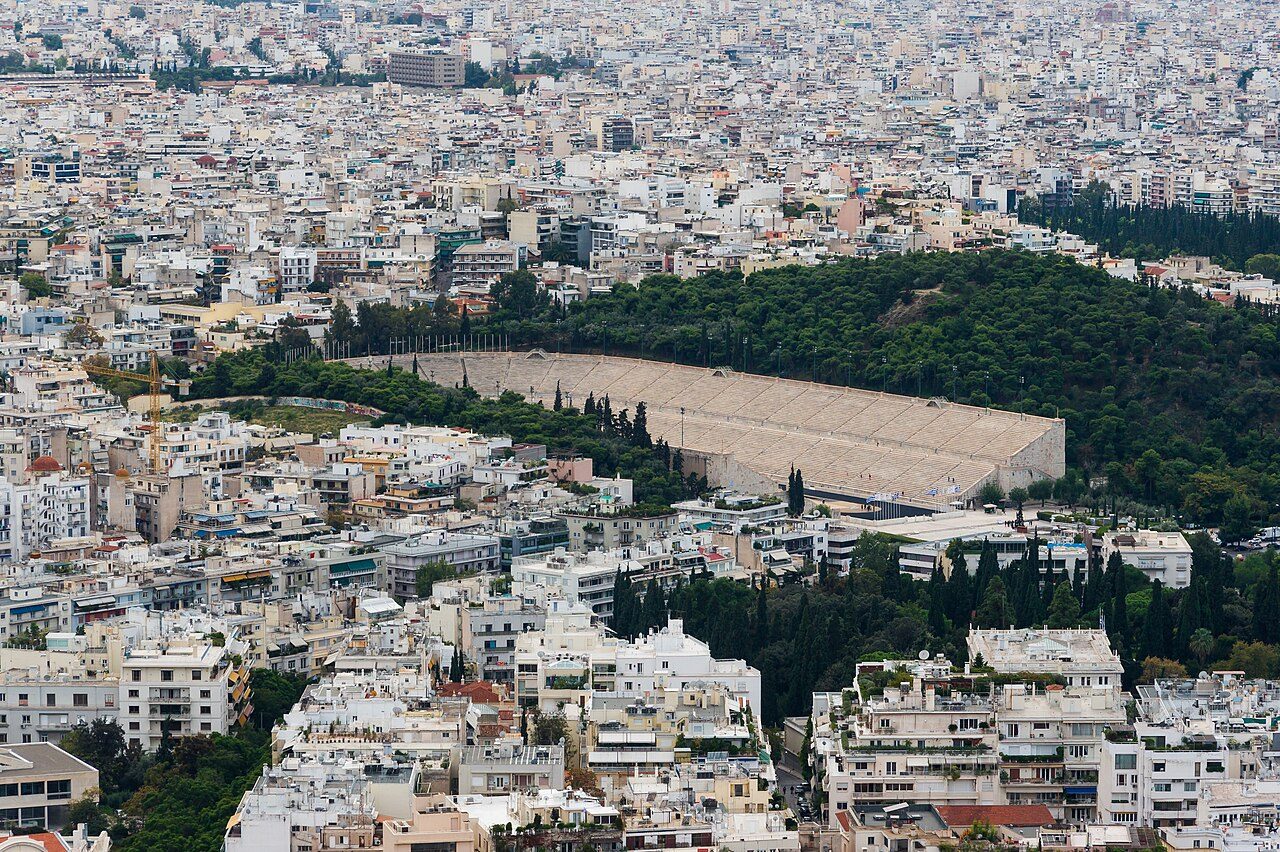
- Athens, 6-15 April 1896, in the marble Panathenaic Stadium; Britannica and Olympics histories record athletes from 14 nations
- Winter Games
- First held separately in 1924 at Chamonix, France; Summer and Winter Games have been staggered every two years since 1994
- Women
- Women first competed at the modern Games in Paris in 1900; by Paris 2024 women were 49.2 percent of athletes, Britannica records
Introduction
Every four years, in summer and in winter in alternating cycles, thousands of athletes gather under one flag of five rings to contest the same title their predecessors chased at Olympia nearly 2,800 years ago. Britannica calls the Games the world's foremost sports competition, and the scale supports the claim: a festival that began with a single sprint of about 192 metres now spans dozens of sports and draws teams from more than 200 national committees.
That continuity is real but it is not unbroken. Between the last ancient Games and the first modern ones lies a silence of roughly fifteen centuries, and the modern movement that Coubertin built was a reinvention as much as a revival - international, rotating between host cities, and open, eventually, to women and to professionals in a way Olympia never was.
Olympia: A Religious Festival With Races
Olympia was not a city but a sanctuary in the northwestern Peloponnese, sacred to Zeus, and the Games were an intrinsic part of a religious festival held in his honour by the city-state of Elis. Britannica notes that by the end of the 6th century BCE at least four Greek festivals had achieved major importance - the Olympic, Pythian, Nemean and Isthmian Games - and that Olympia's were the most famous. So central were they that later Greek historians measured time in Olympiads, the four-year intervals between Games.
The programme grew slowly from that single stade race. A two-length race, the diaulos, was added in 724 BCE, a long-distance race four years later, and wrestling and the five-event pentathlon in 708 BCE. Boxing followed in 688 BCE, chariot racing soon after, and in 648 BCE the pankration, a no-holds-barred combat allowing everything except biting and eye-gouging. There were no team games and no ball games. Competition was technically restricted to freeborn Greeks, the prize at Olympia itself was only a wreath, and most leading competitors were in practice professionals who trained full time and won lavish rewards at other festivals and from their home cities.
The Long Gap and the Revival
The Games faded as Greece came under Roman rule from the 2nd century BCE, and they were officially abolished about 400 CE because of their pagan associations - the last recorded celebration is usually placed in 393 CE under Theodosius I. For the next millennium and a half Olympia slept, until German archaeologists excavated its ruins in the 19th century and small precursor festivals, including the Wenlock Olympian Games in England and Evangelos Zappas's sponsored Games in Athens, showed an appetite for revival.
The organiser who turned appetite into institution was Pierre de Coubertin. A French educator who believed international sport could educate and reconcile nations, he made a public call for revival in 1892 that, Britannica records, initially fell on deaf ears. He persevered: a second congress at the Sorbonne in Paris in June 1894 founded the International Olympic Committee and resolved to hold the first modern Games in Athens. Coubertin served as IOC president from 1896 to 1925.
Athens 1896 and the Marathon
The Games of April 1896 were held in the refurbished Panathenaic Stadium, built entirely of marble. James Connolly of the United States won the triple jump to become the first modern Olympic champion, and the emotional centre of the Games was a new race invented for the occasion: the marathon, run over roughly 40 kilometres from Marathon to Athens. The Greek Spyridon Louis won it and became a national hero. The standard distance of 26 miles 385 yards was only fixed later, after the London Games of 1908, and standardised in the 1920s.
From that modest start the Games grew by accretion: women first competed at Paris in 1900, in croquet, equestrian events, golf, sailing and tennis; the Winter Games began at Chamonix in 1924; the torch relay was introduced for Berlin in 1936. The Games were cancelled by two world wars - 1916, 1940 and 1944 were lost - and after 1992 Summer and Winter editions were staggered so that an Olympic Games now occurs every two years.
Timeline
- 776 BCE (traditional)
First recorded Olympic Games at Olympia; Coroebus of Elis wins the stade, a footrace of about 192 metres and the only event.
- 708 BCE
Wrestling and the pentathlon - long jump, javelin, discus, footrace and wrestling - are added to the programme.
- 393-394 CE
The ancient Games are abolished because of their pagan associations after more than a thousand years at Olympia.
- 1892
Pierre de Coubertin makes his public call for an Olympic revival; it is initially ignored.
- 23 June 1894
The Sorbonne congress in Paris founds the International Olympic Committee and votes to stage modern Games in Athens.
- 6-15 April 1896
The first modern Olympic Games are held in Athens; Spyridon Louis wins the new marathon race.
- 1900
Women compete at the modern Games for the first time, at Paris.
- 1924
The first Winter Olympic Games are held at Chamonix, France.
- 1936
The Olympic torch relay is staged for the first time, for the Berlin Games.
- 1980 and 1984
Cold War boycotts: a US-led boycott empties Moscow 1980, and a Soviet-led boycott answers at Los Angeles 1984.
- 1994
Summer and Winter Games are staggered onto a two-year cycle, beginning with the Lillehammer Winter Games.
- 2024
Paris hosts the Summer Games a century after its 1924 edition; women are 49.2 percent of athletes, a record share.
Significance
The Games' significance is that they became the one sporting institution every nation wishes to join and many wish to host, a periodic assembly with no real parallel in politics. That prestige has made them a stage for politics too. The boycott era made the point most sharply: in 1976 almost 30 African nations stayed away from Montreal, in 1980 the United States and some 60 other countries boycotted Moscow in protest at the Soviet invasion of Afghanistan, leaving only 80 nations competing, and in 1984 the Soviet Union and 13 allies boycotted Los Angeles in reply. The Games survived the boycotts, as they survived cancellation, terrorism at Munich in 1972 and the end of official amateurism in the 1980s, when many events were opened to professionals; today the Games are open to all, including top professionals in basketball and football.
Myths and disputes
Was there a first Games in 776 BCE? That date is traditional, not proven. Britannica states plainly that the first champion listed in the records was Coroebus in 776 BCE, and that notions the Olympics began much earlier are founded on myth, not historical evidence; one legend credits Heracles, son of Zeus, with founding them. Scholars have proposed starting dates from 884 to 704 BCE. This page therefore gives 776 BCE as the traditional and conventional date, as the brief for the ancient record requires.
Did Pheidippides run from Marathon to Athens, cry victory and die? As told, that is legend. Herodotus, writing closest to the Battle of Marathon in 490 BCE, records a runner - Philippides, later corrupted to Pheidippides - sent from Athens to Sparta, a run of about 150 miles, to ask for help before the battle, and records no death. The Marathon-to-Athens death run appears only in writers some 600 years later, and Tufts University's ancient Olympics project notes that later sources confused Pheidippides with another runner, Eukles, who was said to have announced the victory and died. The marathon race of 1896 was a modern invention inspired by the legend, proposed by the French scholar Michel Breal; no race longer than about three miles existed at ancient Olympia.
Legacy
The legacy is a vocabulary the whole world shares: Olympiad, stadium itself - from that first stade race - and the idea that rivals can meet under shared rules and part in peace. Olympia is now an archaeological site, the Panathenaic Stadium still hosts the flame handover, and the marathon of 1896 has become a mass ritual in cities worldwide. The festival Coubertin revived as an amateur gathering of gentlemen now anchors the global sporting calendar, and its ancient original, a religious festival with a single footrace, remains the measure of how far a simple idea - run, in honour of a god, every four years - can travel.
Sources
- Encyclopaedia Britannica - Olympic Games
- HISTORY - 6 Times the Olympics Were Boycotted
- Tufts University, Perseus Project - Ancient Olympics FAQ: Where did the marathon come from?
- Foundation of the Hellenic World - Olympic Games: Boycott
- Encyclopaedia Britannica - The History of the Olympic Games
The facts on this page were checked against these sources on 19 November 2026. The History Trail's permanent pages are researched and written for this site; the live profiles elsewhere on The History Trail are assembled automatically from Wikipedia and Wikidata.
About the Author
Researched and written by the The History Trail Editorial Team — the accountable editorial function behind this site's permanent story pages. The team works from the published sources cited on each page; it does not invent historians, reviewers or credentials, and it corrects errors openly.
Fact Check
Every load-bearing fact on this page traces to one of the sources listed above, and significant claims link to their source in the text. Our checking method is described on the methodology page; errors can be reported via the corrections page.
Sources & Citations
Cite this page as: The History Trail Editorial Team, The History Trail — this article's title, publication and update dates are shown beneath its headline. The full source list appears under Sources above; the site's source standards are on the sources page.