
Things
Iron
Iron's first chapter fell from the sky: the oldest known iron objects, beads buried at Gerzeh in Egypt about 3200 BC and the dagger in Tutankhamun's tomb, were hammered from meteorites. Smelted iron followed only around 1200 BC, named an age, and, recast as cheap steel after 1856, built the industrial world.
At a Glance
- First iron
- Meteoritic: nine beads at Gerzeh, Egypt (about 3200 BC), and Tutankhamun's dagger, confirmed meteoritic by analysis in 2016
- The Hittite evidence
- A 13th-century BC royal letter shows iron as a controlled Hittite commodity; the older claim of a total Hittite monopoly is not supported
- Iron Age begins
- Large-scale smelted-iron production from about 1200 BC, amid the Late Bronze Age collapse; why it spread is still debated
- Why it won
- Iron ore is abundant almost everywhere, unlike bronze's scarce tin - once mastered, iron was cheap and could not be monopolised
- Industrial iron
- Coke smelting from 1709 made cast iron plentiful; iron framed the early Industrial Revolution
- Steel breakthrough
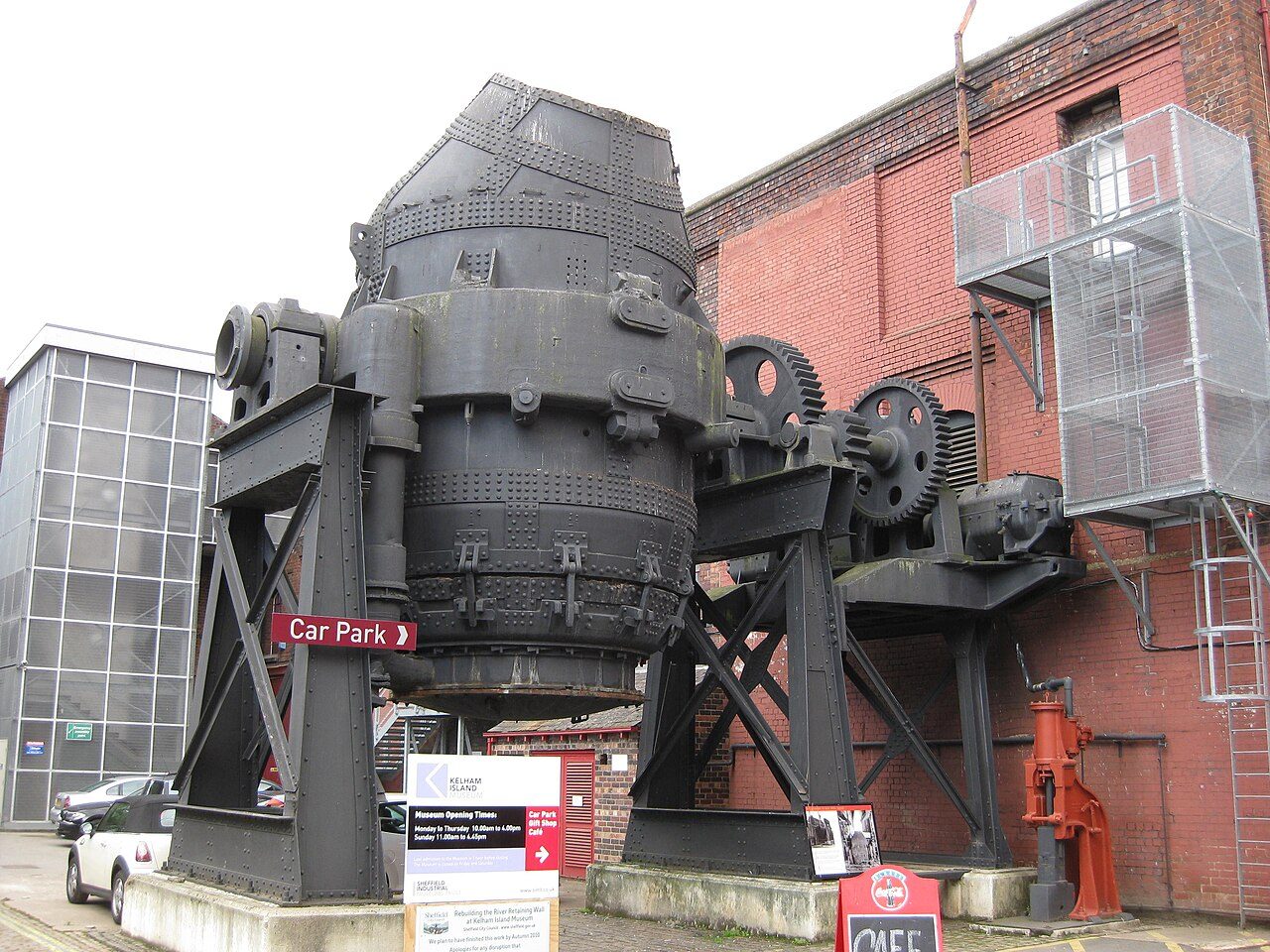
- The Bessemer converter (patented 1856; Kelly working independently from 1847) made steel cheap enough for rails and buildings
Introduction
Iron is the opposite of a precious metal: it rusts, it is everywhere in the ground, and for thousands of years it was hard to make well. Yet its history bends the human story twice - first when rare iron fell out of the sky and was treasured like a gem, and again when smelted iron became common enough to name an age after, to arm farmers with cheap tools, and finally, as steel, to build the industrial world.
This page follows the documented evidence: meteoric iron in Bronze Age Egypt, the contested place of the Hittites, the slow Iron Age transition whose causes scholars still debate, and the nineteenth-century steel breakthroughs that changed what could be built.
Iron From the Sky
Before anyone could smelt iron from ore, usable iron arrived in meteorites - an iron-nickel alloy that could be hammered without any furnace. The oldest known Egyptian iron objects are nine small beads from Gerzeh, dated to about 3200 BC, carefully hammered from meteoritic iron, as studies reported in 2013 confirmed. Egyptian language itself kept the memory: iron was called, in effect, metal of the sky, and researchers note that ancient Egyptians attributed great value to meteoritic iron for precious objects.
The most famous survivor is a dagger from the tomb of Tutankhamun, who died in the 14th century BC. Found in the mummy's wrappings in 1925, its blade long puzzled scholars because it had not rusted like ordinary iron. In 2016, X-ray fluorescence analysis published in Meteoritics and Planetary Science showed the blade contains about 10.8 per cent nickel and 0.58 per cent cobalt - a composition that strongly supports a meteoritic origin, Smithsonian Magazine reported. Whether the dagger was made in Egypt or imported from Anatolia as a royal gift remains unresolved.
The Hittites and the Iron Age Transition
Older textbooks credited the Hittites of Anatolia with inventing ironworking and guarding it as a monopoly until their empire fell about 1200 BC, whereupon the secret escaped. Modern evidence supports a more careful claim. Iron objects, and references to iron in texts, occur across the Bronze Age Near East, and much of that early iron appears to be meteoritic rather than smelted. A genuine Hittite document does survive: a 13th-century BC letter in which King Hattusili III tells an Assyrian king that good iron is not at present available in his storehouse at Kizzuwatna and that he will send iron when production is complete. The letter proves iron was a controlled royal commodity worth diplomatic correspondence; it does not prove a world monopoly, and scholars today generally treat the monopoly story as an overstatement.
What is not disputed is the timing of the change. Large-scale production of smelted iron begins around 1200 BC, as the Late Bronze Age world collapsed, and iron tools and weapons then spread through the Mediterranean and South Asia over the following centuries, reaching northern Europe by about 500 BC. Why it spread is debated. Anthony Snodgrass influentially argued that disruption of trade and a shortage of tin - bronze's scarce ingredient - forced smiths toward iron; once tin flowed again, improved steelmaking and iron's cheapness kept it ahead. Others stress iron ore's sheer abundance, the collapse of palace economies that had controlled bronze, or gradual improvements in carburising and quenching that made iron genuinely better, not merely available. The honest summary is that iron won for several reasons, in different proportions in different places.
From Iron Age to Steel Age
For most of its history, iron came from bloomeries: small furnaces that produced a spongy lump of iron to be hammered into wrought iron, while cast iron and steel - iron with a controlled amount of carbon - stayed expensive specialities. Coke-fired blast furnaces in eighteenth-century Britain made cast iron abundant, and iron framed the early Industrial Revolution's bridges, rails and engines, but steel remained costly enough to reserve for tools, springs and blades.
The break came in 1856, when Henry Bessemer in Sheffield patented a converter that blew air through molten pig iron, burning out impurities and producing steel in minutes. Britannica notes the process was conceived independently and almost concurrently by William Kelly in the United States, who had begun experiments in 1847, and that Robert Forester Mushet's additions made it reliable. The volume of low-cost steel that followed revolutionised building construction and replaced iron in railroad rails; the open-hearth process, developed in the 1860s, later overtook it. Steel - iron, finally mastered - became the skeleton of skyscrapers, ships and modern railways.
Timeline
- About 3200 BC
Nine iron beads are buried at Gerzeh, Egypt - hammered from meteoritic iron, the oldest known Egyptian iron objects.
- 14th century BC
Tutankhamun is buried with an iron dagger whose nickel-rich blade analysis in 2016 showed to be meteoritic.
- 13th century BC
Hattusili III of the Hittites writes to Assyria that good iron is not currently available in his storehouse - iron as a royal commodity.
- About 1200 BC
Large-scale smelted-iron production begins amid the Late Bronze Age collapse; the Iron Age opens in the Near East.
- About 500 BC
Ironworking reaches northern Europe, having spread through the Mediterranean, Central and South Asia.
- 1709
Abraham Darby smelts iron with coke at Coalbrookdale, freeing British ironmaking from charcoal.
- 1847-1856
William Kelly in America and Henry Bessemer in Sheffield independently develop the air-blast converter for mass steel.
- 1856
Bessemer patents his process; low-cost steel soon replaces iron in rails and transforms construction.
- 1860s
The open-hearth process is developed; it eventually overtakes the Bessemer converter as the dominant steelmaking method.
- 2016
X-ray fluorescence results confirm the meteoritic composition of Tutankhamun's iron dagger blade.
Significance
Iron's significance is democratic in a way gold's never was. Bronze had depended on tin, a rare metal traded over long distances and controlled by palaces; iron ore is common almost everywhere, so once the technique was learned, no king could corner it. Cheap iron put metal edges in ordinary farmers' hands, and cheap steel later put metal frames under ordinary cities. The same abundance explains iron's late start: its ores need hotter, more complicated working than copper or bronze, so the commonest useful metal was among the last to be mastered.
Myths and disputes
Three claims on this page are deliberately hedged. First, the Hittite monopoly: the evidence shows Hittite kings controlled and traded iron, not that they alone possessed it, and retellings that add Hittite furnaces deliberately stalling a rival go beyond the surviving letter. Second, early iron was not automatically better than bronze: plain iron is softer than good bronze, and only carburised, quenched steel clearly surpasses it, which is one reason the transition took centuries. Third, even meteoritic identifications can be argued over - nickel can leach away as objects corrode, so some objects once classed as meteoritic, or as smelted, remain contested between laboratories.
Bessemer's priority is a smaller version of the same lesson: the converter carries his name, but Britannica records Kelly's independent, earlier experiments and the essential contributions of Mushet and others. Invention, like the Iron Age itself, was a process, not a moment.
Legacy
Iron gave its name to an age, a revolution and a vocabulary - ironclad, ironworks, the Iron Curtain - because for three thousand years it has been the metal ordinary life is built from. Its oldest chapter is also its strangest: the first iron anyone treasured did not come out of the ground at all, but fell from the sky into the hands of people who, as the Egyptian phrase remembered, knew exactly where it had come from.
Sources
- Smithsonian Magazine - King Tut's Dagger Was Made From a Meteorite
- Meteoritics and Planetary Science via Politecnico di Torino - The Meteoritic Origin of Tutankhamun's Iron Dagger Blade
- Encyclopaedia Britannica - Bessemer Process
- National Geographic - How Did Ancient Cultures First Discover Iron? It Fell From the Sky
- Royal Society of Chemistry - Evolution and Understanding of the d-block Elements in the Periodic Table
The facts on this page were checked against these sources on 19 November 2026. The History Trail's permanent pages are researched and written for this site; the live profiles elsewhere on The History Trail are assembled automatically from Wikipedia and Wikidata.
About the Author
Researched and written by the The History Trail Editorial Team — the accountable editorial function behind this site's permanent story pages. The team works from the published sources cited on each page; it does not invent historians, reviewers or credentials, and it corrects errors openly.
Fact Check
Every load-bearing fact on this page traces to one of the sources listed above, and significant claims link to their source in the text. Our checking method is described on the methodology page; errors can be reported via the corrections page.
Sources & Citations
Cite this page as: The History Trail Editorial Team, The History Trail — this article's title, publication and update dates are shown beneath its headline. The full source list appears under Sources above; the site's source standards are on the sources page.