
Things
Euro
The euro is the only major currency that began life invisible. Launched on 1 January 1999 as numbers in bank accounts, it existed for three years before a single note or coin circulated — then, on one New Year's Day in 2002, it became the cash of more than 300 million people.
At a Glance
- Launched
- 1 January 1999 (non-cash); notes and coins from 1 January 2002
- Symbol and code
- €; EUR
- Legal basis
- Maastricht Treaty (signed 1992), creating economic and monetary union
- Central bank
- European Central Bank, Frankfurt — established 1 June 1998
- First members
- 11 countries in 1999; Greece joined 2001, making 12 for the cash launch
- Banknotes
- €5 to €200 in the current series (€500 last issued 2019)
- Coins
- 1 cent to €2; common side plus a national side
- Membership
- 21 EU countries as of Bulgaria's adoption on 1 January 2026
Introduction
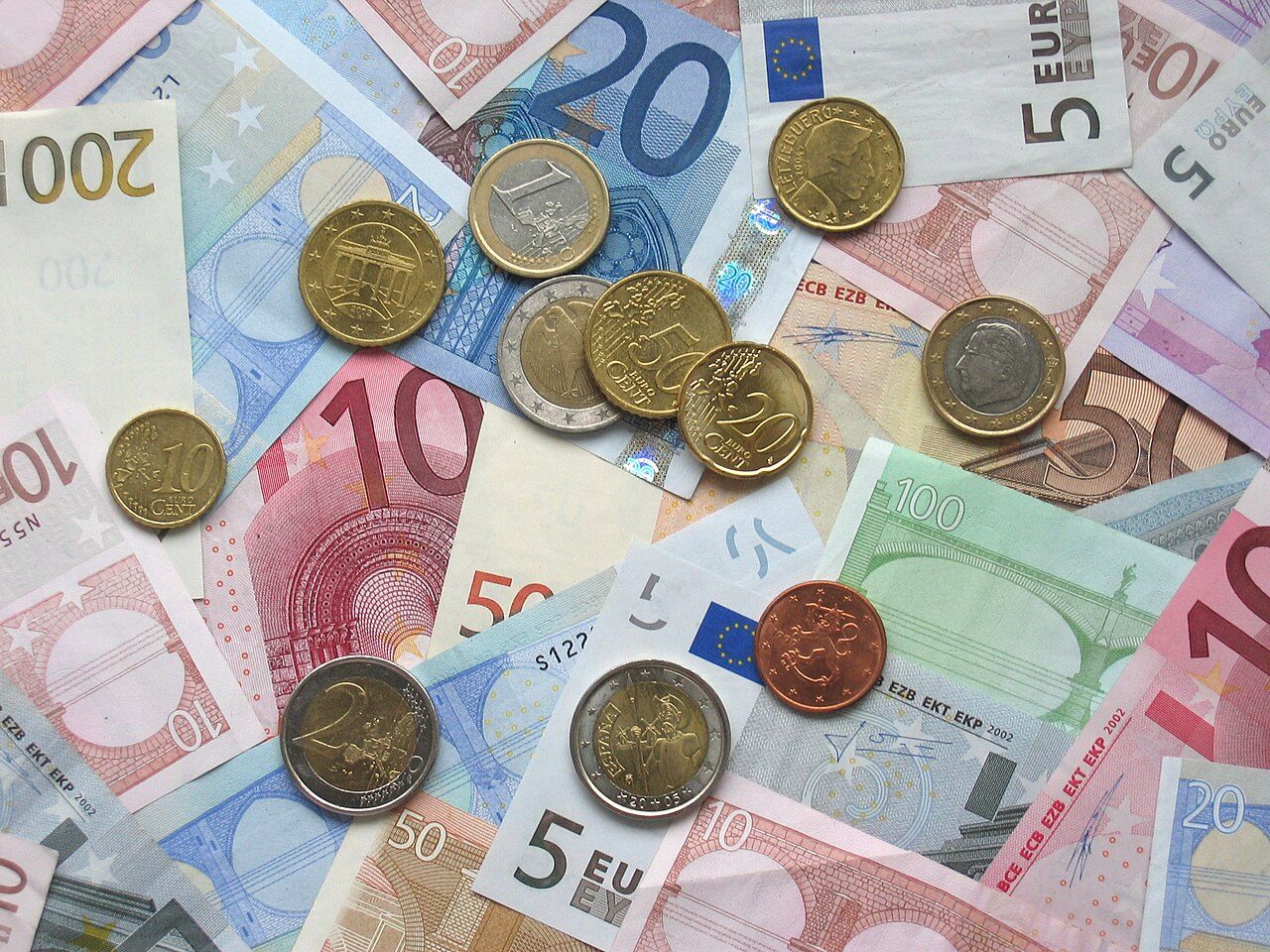
The euro is the monetary unit and currency of the European Union, represented by the symbol €. It was introduced as a non-cash monetary unit on 1 January 1999, and euro notes and coins appeared in participating countries on 1 January 2002. After 28 February 2002 the euro was the sole currency of twelve EU member states, and their national currencies — mark, franc, lira and the rest — ceased to be legal tender. No changeover on this scale had ever been attempted.
The scale of the physical operation matched the ambition. The European Central Bank coordinated production of an initial supply of roughly 15 billion banknotes and tens of billions of coins, distributed to banks and retailers months in advance. When cash day came, the great majority of cash machines across the euro area were dispensing euros within days. A currency designed by committee, treaty and printing works had to survive contact with every shop, taxi and market stall in twelve countries at once — and largely did.
Background
The euro's origins lie in the Maastricht Treaty, agreed in 1991 and signed in 1992, in which the twelve member countries of the European Community created an economic and monetary union with a common unit of exchange. The treaty built on the earlier European Currency Unit, the ecu, and set strict convergence criteria for joining: budget deficits no higher than 3 per cent of GDP, public debt under 60 per cent of GDP, and inflation and exchange rates held within tight bands. Several states exceeded the debt limit — Italy and Belgium were above 120 per cent — but were admitted on the strength of their efforts to reduce it.
Institutions followed the treaty. The European Central Bank was established on 1 June 1998, based in Frankfurt, as an independent body to manage the new currency, and the name 'euro' had been adopted by the European Council in 1995. Banknote design was settled by competition in 1996: the winning designs, by Austrian artist Robert Kalina, depicted no real people or places — instead, stylised windows, gateways and bridges from seven ages of European architecture, imagery every member state could share.
The Cash Changeover of 2002
On 1 January 2002 euro notes and coins entered circulation in twelve countries with a combined population of 308 million - Austria, Belgium, Finland, France, Germany, Greece, Ireland, Italy, Luxembourg, the Netherlands, Portugal and Spain. The European Central Bank calls it the world's largest ever monetary changeover. Production had begun in July 1999 at fifteen printing works; by launch, 14.89 billion banknotes, with a face value of some 633 billion euros, and around 52 billion coins, produced by sixteen mints from 250,000 tonnes of metal, were ready. Cash was supplied to banks from September 2001 and then to retailers, so that by 3 January 96 per cent of cash dispensers were issuing euros, and within a week more than half of all cash transactions were in the new currency.
Dual circulation followed, for up to two months: people could pay in euros or in marks, francs, lire and the rest, and by 1 March 2002 the euro was sole legal tender, with more than 6 billion national banknotes and close to 30 billion national coins withdrawn. Later joiners repeated the exercise on a smaller scale - Croatia on 1 January 2023, which took the euro area to twenty countries, and Bulgaria on 1 January 2026, the twenty-first. On 1 January 2027 the cash changeover reaches its twenty-fifth anniversary: a quarter of a century in which the currency has only gained members, and lost none.
Timeline
- 1992
The Maastricht Treaty is signed, committing members to economic and monetary union and a single currency.
- 1995
The European Council adopts the name 'euro' for the new currency.
- 1996
A design competition selects Robert Kalina's architectural designs for the banknotes; coin designs pair a common side with national sides.
- 1 June 1998
The European Central Bank is established in Frankfurt to manage the coming currency.
- 1 January 1999
The euro launches in eleven countries as a non-cash currency, replacing the ecu at one-to-one; national exchange rates are locked permanently.
- 1 January 2001
Greece, having overhauled its economy, joins as the twelfth member.
- 1 January 2002
Euro notes and coins enter circulation in twelve countries — the largest cash changeover in history.
- 28 February 2002
National notes and coins cease to be legal tender; the euro stands alone.
- 2007–2015
Slovenia, Cyprus, Malta, Slovakia, Estonia, Latvia and Lithuania adopt the euro in succession.
- 2013–2019
The Europa series of banknotes is introduced denomination by denomination, adding a portrait of Europa and new security features; the €500 note is last issued in 2019.
- 1 January 2023
Croatia adopts the euro; Bulgaria follows on 1 January 2026, bringing the euro area to 21 EU countries.
- 1 January 2027
The twenty-fifth anniversary of euro cash falls due: twenty-five years since notes and coins entered circulation in twelve countries.
Significance
Supporters argued that a single currency would boost trade by eliminating exchange-rate fluctuations and transaction costs across Europe, and the euro quickly became the world's second most important currency, used for savings, trade and debt far beyond its borders. It is also the national currency, by agreement, of Andorra, Monaco, San Marino and Vatican City, and is used unilaterally in Montenegro and Kosovo. For the citizens of the euro area, it made a continent legible: prices from Lisbon to Helsinki could be compared at a glance, and borders stopped meaning a bureau de change.
The design choices carried the politics. Banknotes identical in every country, showing imaginary bridges rather than national heroes, announced that this money belonged to no single nation; coins compromised, with one common European side and one national side chosen by the issuing state. Even the € symbol — drawn from the Greek letter epsilon, with two parallel lines for stability — was chosen to speak of Europe and steadiness at once. The euro was engineered as an argument for union that people would handle every day.
Questions readers ask
Did the euro make everything more expensive? Many people felt that it did. In Germany the new money was nicknamed the teuro, a pun on teuer, meaning expensive, and the Bundesbank records that soon after the cash launch about 70 per cent of survey respondents said they had little or no trust in the euro. Traders in some sectors did use the changeover to reprice, and some everyday items did rise noticeably.
The measured evidence, however, is much narrower than the perception. Studies by the European Central Bank and the Bundesbank found that price rises around the changeover were concentrated in a few sectors, above all frequently bought small items, while aggregate inflation was largely unaffected; other forces, including cold winter weather and rises in taxes on energy, tobacco and insurance, explained much of the increase people saw in January 2002. Because shoppers judge inflation by the prices they meet every day, the perception of a general rise long outlasted the small measured effect - a gap researchers have studied ever since.
Legacy
The euro's legacy is still being written, but its central achievement is fixed: a multinational currency, run by a shared central bank, that survived its changeover, enlargement from eleven to twenty-one states, and the sovereign-debt crisis of the 2010s without losing a member. It turned monetary union from a treaty aspiration into small change — the most widely handled symbol of European integration in existence.
It also reset expectations of what a currency can be. The denarius spread by conquest and the dollar by national conversion; the euro spread by negotiation, criteria and consent, including referendums that sometimes said no — Denmark voted against joining in 2000, and Britain never did. That a currency could be adopted voluntarily, state by state, over a quarter of a century, is the euro's real novelty in monetary history.
Sources
- European Central Bank - How the Euro Became Our Money
- European Central Bank - Initial Changeover (2002)
- European Commission - EU Countries and the Euro
- Deutsche Bundesbank - Euro Cash Turns 20
- Eurostat - Glossary: Euro Area
- Encyclopaedia Britannica - Euro
The facts on this page were checked against these sources on 19 November 2026. The History Trail's permanent pages are researched and written for this site; the live profiles elsewhere on The History Trail are assembled automatically from Wikipedia and Wikidata.
About the Author
Researched and written by the The History Trail Editorial Team — the accountable editorial function behind this site's permanent story pages. The team works from the published sources cited on each page; it does not invent historians, reviewers or credentials, and it corrects errors openly.
Fact Check
Every load-bearing fact on this page traces to one of the sources listed above, and significant claims link to their source in the text. Our checking method is described on the methodology page; errors can be reported via the corrections page.
Sources & Citations
Cite this page as: The History Trail Editorial Team, The History Trail — this article's title, publication and update dates are shown beneath its headline. The full source list appears under Sources above; the site's source standards are on the sources page.