
Things
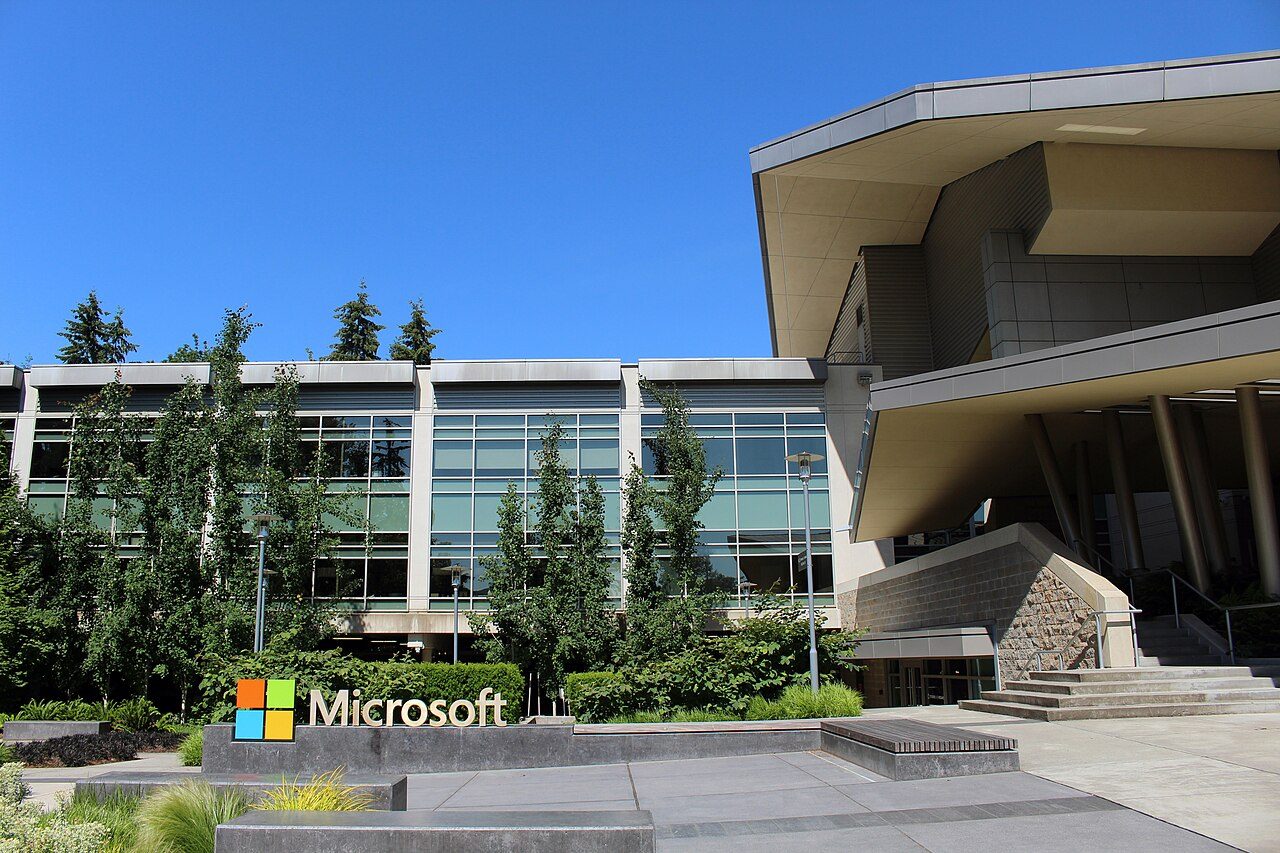
Microsoft
Microsoft is an American technology company founded on 4 April 1975 in Albuquerque, New Mexico, by Bill Gates and Paul Allen, to sell a version of the BASIC programming language for the Altair 8800 microcomputer. Its nonexclusive licence to supply MS-DOS for the IBM PC in 1981, and the later triumph of Windows, made software the centre of the personal-computing industry.
At a Glance
- Founded
- 4 April 1975, in Albuquerque, New Mexico, by Bill Gates and Paul Allen
- The name
- A joining of microcomputer and software; first styled Micro-Soft, a name Allen suggested
- First product
- A BASIC interpreter for the Altair 8800, the kit microcomputer on the January 1975 cover of Popular Electronics
- The turning point
- The 1980-81 IBM deal: Microsoft supplied MS-DOS for the IBM PC under a nonexclusive licence, leaving it free to license DOS to other makers
- MS-DOS
- Not written from scratch: Microsoft purchased an operating system from another company, modified it and renamed it
- Windows
- Released in 1985 as a graphical interface; version 3.0 (1990) won a wide following, and Windows 95 fully integrated DOS and Windows
- Headquarters
- Albuquerque (1975), then Bellevue, Washington (1979), then Redmond, Washington (1986), the year the company went public
Introduction
Britannica describes Microsoft as an American multinational technology company founded in 1975 and headquartered in Redmond, Washington, which initially gained dominance in the operating systems market during the 1980s and 1990s with MS-DOS and Windows. A company started by two Seattle friends to sell one small program for one hobbyist machine became, within twenty years, supplier of the software on nearly every personal computer in the world.
Microsoft's history matters beyond one company's fortunes: it is where the personal computer's centre of gravity moved, from the machine to the program every machine shared.
Origins: A Magazine Cover and a Language for the Altair
The Computer History Museum records the starting point precisely. The Altair 8800 kit was introduced as the cover story of the January 1975 edition of Popular Electronics: a machine built around an Intel 8080 processor, with 256 bytes of memory, sold in kit form for 397 dollars. Bill Gates, then a student at Harvard, and his school friend Paul Allen, then working for Honeywell near Boston, saw the cover in Harvard Square and recognised the gap: the machine had no easy way to be programmed.
Their answer was to adapt BASIC, a popular programming language used on large computers, for the Altair. The museum preserves the result: the first BASIC interpreter written for the MITS Altair, its paper tape signed by Gates, "Bill Gates Paul Allen MITS Altair 2 Mar 75." MITS, the Altair's maker in Albuquerque, agreed to distribute Altair BASIC. On 4 April 1975 Gates and Allen founded their company in Albuquerque, deriving its name, Britannica records, from microcomputer and software: first styled Micro-Soft, Allen suggesting the name and Gates as chief executive. Gates left Harvard, Allen left MITS in 1976, and in 1979 Microsoft moved to Bellevue, Washington, near the founders' home city of Seattle. By the end of 1978, HISTORY records, its sales had topped one million dollars.
The IBM Deal and MS-DOS: The Contract That Made a Standard
In 1980 International Business Machines, then the dominant company in computing, asked Microsoft to produce the operating system for its first personal computer, the IBM PC. Microsoft did not have one ready. Britannica's account is blunt: Microsoft purchased an operating system from another company, modified it, and renamed it MS-DOS, Microsoft Disk Operating System, released with the IBM PC in 1981. Britannica's biography of Allen adds his part: he was influential in securing a nonexclusive licence for DOS in 1980 and in brokering the rights, the following year, to provide the renamed MS-DOS for IBM's machines.
The word nonexclusive is the hinge of the story. Because Microsoft kept the right to license MS-DOS to others, the system escaped the IBM PC itself. Thereafter, Britannica records, most manufacturers of personal computers licensed MS-DOS, generating vast revenues for Microsoft; by the early 1990s it had sold more than 100 million copies and defeated rival operating systems such as CP/M, which it displaced in the early 1980s. A generation of makers built machines to a standard Microsoft owned.
Windows and the Office: From Text Commands to a Graphical World
MS-DOS demanded typed commands. In 1985 Microsoft released Windows, with a graphical user interface of drop-down menus, scroll bars and other features, as HISTORY describes it. The breakthrough came with the third version: Britannica records that Windows 3.0, released in 1990, gained a wide following, that by 1993 its versions were selling at one million copies a month, and that nearly 90 percent of the world's personal computers ran on a Microsoft operating system. In 1995 Windows 95 for the first time fully integrated MS-DOS with Windows and, in Britannica's judgement, effectively matched in ease of use Apple Computer's Mac operating system; HISTORY adds that it introduced the Start menu and sold seven million copies in its first five weeks.
Around the operating system, Microsoft also became the leader in productivity software such as word processing and spreadsheet programs, outdistancing longtime rivals Lotus and WordPerfect, in Britannica's account. It had gone public in 1986, the year it moved to Redmond, and by the late 1980s, HISTORY records, it was the world's biggest PC software company based on sales.
Timeline
- January 1975
Popular Electronics puts the Altair 8800 on its cover; Gates and Allen set out to write BASIC for it.
- 4 April 1975
Gates and Allen found Microsoft in Albuquerque, New Mexico, to sell Altair BASIC; the name joins microcomputer and software.
- 1979
Microsoft moves from Albuquerque to Bellevue, Washington, near the founders' home city of Seattle.
- 1980
IBM asks Microsoft to provide the operating system for its planned personal computer; Allen helps secure a nonexclusive DOS licence.
- 1981
The IBM PC is released with MS-DOS, Microsoft's renamed and modified version of a purchased operating system.
- 1983
Paul Allen resigns from Microsoft after a diagnosis of Hodgkin disease, while remaining on its board.
- 1985
Microsoft releases Windows, a graphical interface for its operating system, with menus and scroll bars.
- 1986
Microsoft moves its headquarters to Redmond, Washington, and goes public at 21 dollars a share.
- 1990
Windows 3.0 gains a wide following; within three years nearly 90 percent of the world's PCs run a Microsoft system.
- 1995
Windows 95 fully integrates MS-DOS and Windows and introduces the Start menu; Internet Explorer appears the same year.
- 1998-2001
The United States sues Microsoft over antitrust violations; a breakup order is overturned on appeal and the case is settled.
Significance
Microsoft's significance in computing history is the licensing model made dominant. Before it, software was often bundled with, or written for, a particular machine. Microsoft sold the same BASIC, then the same DOS, then the same Windows to many competing manufacturers at once, so the software layer became standard while the hardware beneath it became interchangeable - the foundation on which the modern software industry was built.
The scale followed from the standard. An operating system on nearly 90 percent of the world's PCs by 1993 gave one company extraordinary influence - and extraordinary scrutiny. Its growth drew complaints alleging violations of United States antitrust law; a Justice Department investigation ended in a 1994 settlement, a federal judge in 1999 found the company in violation of the Sherman Antitrust Act and ordered its breakup, and in 2001 an appeals court overturned the breakup order while still finding it had illegally tried to maintain a monopoly, as Britannica records.
Myths and disputes
Did Microsoft write MS-DOS itself? No. The popular picture of Gates and Allen coding the system that conquered the world is wrong in the case that mattered most: Britannica records that Microsoft purchased an operating system from another company, modified it and renamed it MS-DOS. Microsoft's skill in the deal was commercial as much as technical - securing a licence that left it free to sell the same system to every other manufacturer.
Did Gates and Allen invent BASIC? No. BASIC was an existing, popular language on large computers; their achievement, a real one, was adapting it to a machine with 256 bytes of memory and getting it to market first. Nor was Windows an instant triumph or, at first, a complete operating system: the 1985 release was a graphical layer over DOS, the wide following arrived only with version 3.0 in 1990, and DOS and Windows were fully integrated only in 1995. Allen's departure is often retold as a founders' quarrel: Britannica records that he resigned in 1983 after a diagnosis of Hodgkin disease, remaining on the board; he died in Seattle on 15 October 2018.
Legacy
The Computer History Museum notes that the fledgling company Gates and Allen founded went on to deliver the IBM PC's operating system, the Word word processor and Windows, and that Gates stepped down as chief executive in 1999, succeeded by Steve Ballmer. The company founded in Albuquerque in 1975 continued as a defining institution of the computer age.
Its deepest legacy is a habit of thought. Millions of people who have never heard of the Altair 8800 still live in the world the IBM deal created: they buy a machine from one company and expect the software on it to be the same as on every other machine, because one supplier's system became the common standard. That expectation began with a paper tape carried to Albuquerque in March 1975.
Sources
- Encyclopaedia Britannica - Microsoft Corporation
- Encyclopaedia Britannica - Paul Allen
- Computer History Museum - This Day in History: Bill Gates Born
- Computer History Museum - Collection Highlights: First BASIC Interpreter Written for the MITS Altair
- Smithsonian National Museum of American History - Interview with Bill Gates
- HISTORY - Microsoft founded, April 4, 1975
The facts on this page were checked against these sources on 19 November 2026. The History Trail's permanent pages are researched and written for this site; the live profiles elsewhere on The History Trail are assembled automatically from Wikipedia and Wikidata.
About the Author
Researched and written by the The History Trail Editorial Team — the accountable editorial function behind this site's permanent story pages. The team works from the published sources cited on each page; it does not invent historians, reviewers or credentials, and it corrects errors openly.
Fact Check
Every load-bearing fact on this page traces to one of the sources listed above, and significant claims link to their source in the text. Our checking method is described on the methodology page; errors can be reported via the corrections page.
Sources & Citations
Cite this page as: The History Trail Editorial Team, The History Trail — this article's title, publication and update dates are shown beneath its headline. The full source list appears under Sources above; the site's source standards are on the sources page.