
Comparisons
iPhone vs Game Boy
One was a grey brick that played games and nothing else; the other merged a phone, an iPod and the internet. Both rewired what a pocket machine is for.
iPhone
The phone that swallowed the camera, the map and the games console
- Unveiled
- 9 January 2007, Macworld, San Francisco
- On sale
- 29 June 2007, United States
- Launch price
- $499 (4 GB) and $599 (8 GB), with a two-year contract
- Display
- 3.5-inch multi-touch screen, 480 × 320 pixels
- Maker
- Apple, introduced by Steve Jobs
- Described by Apple as
- A phone, a widescreen iPod and an internet communicator in one
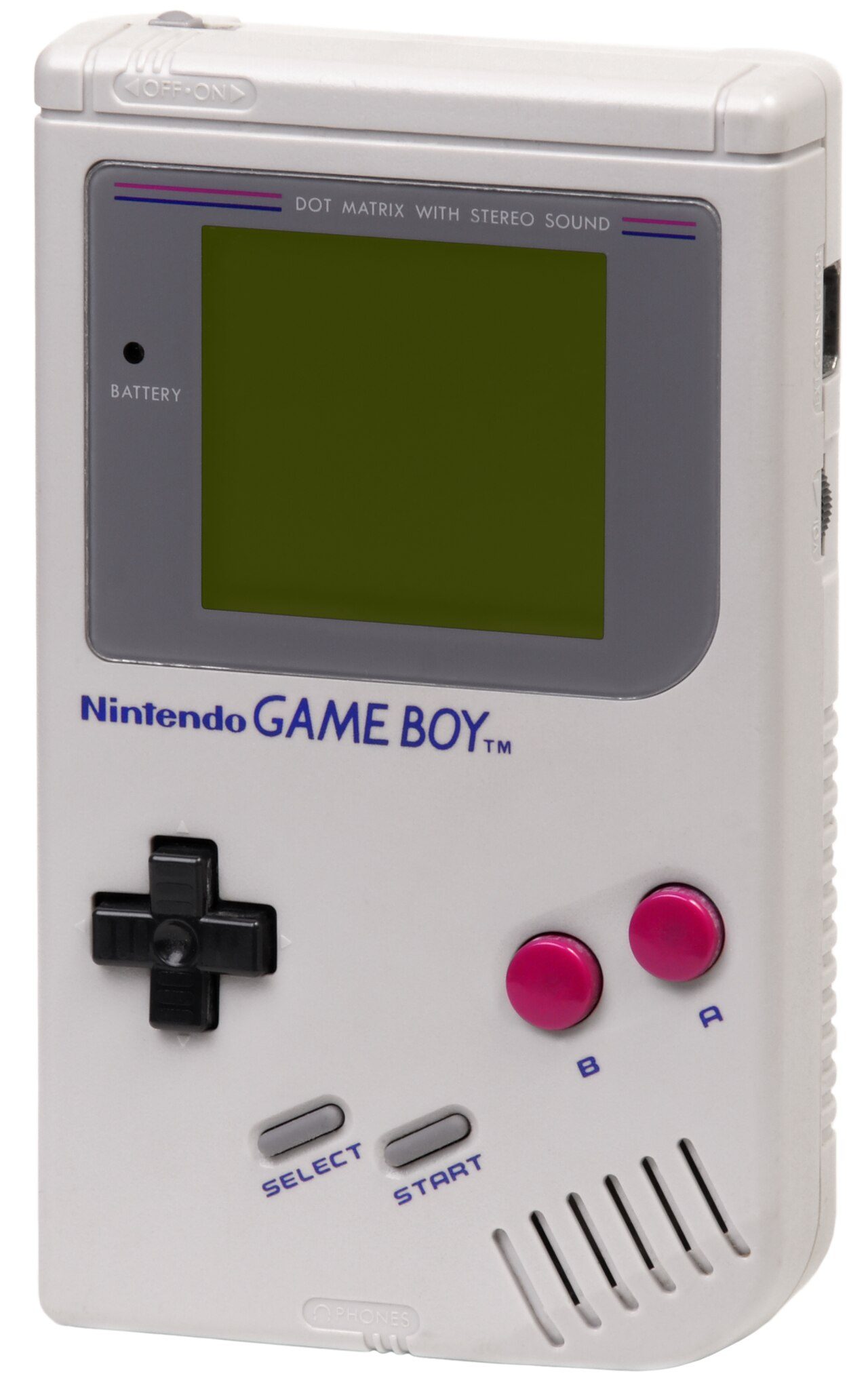
Game Boy
The deliberately underpowered brick that owned handheld gaming for a decade
- Launched
- 21 April 1989 in Japan; 31 July 1989 in North America
- Launch price
- US$89.99 in North America
- Display
- Monochrome LCD in four shades, 160 × 144 pixels
- Power
- Four AA batteries
- Maker
- Nintendo, designed by Gunpei Yokoi's R&D1 team
- Family sales
- 118.69 million, including the Game Boy Color
Both subjects of this comparison are introduced above, side by side, before either story begins.
Introduction
Put the original iPhone and the original Game Boy side by side and they look like opposites. Nintendo's machine was deliberately behind the times: a monochrome screen when colour rivals existed, modest processing power, and a single job to do. Apple's was a deliberate leap ahead, a computer with a touchscreen where a keypad should be, launched with the claim that it was five years ahead of any other phone. Yet the two devices won in strikingly similar ways.
Each succeeded because its maker understood what the pocket is for. The Game Boy treated portability as battery life, toughness and price — a machine a child could drop, feed with AA batteries and play for a journey. The iPhone treated portability as connection: the whole internet, your music and your phone calls in one slab of glass. One defined handheld gaming; the other absorbed handheld gaming into something bigger. Comparing them shows how the meaning of 'portable' changed in eighteen years.
Side by Side: Like for Like
| Compared | iPhone | Game Boy |
|---|---|---|
| Era | 2007, the mobile internet arrives | 1989, the cartridge age goes portable |
| Launch price | $499 / $599 with a two-year contract | US$89.99 |
| Display | 3.5-inch colour multi-touch, 480 × 320 pixels | Monochrome four-shade LCD, 160 × 144 pixels |
| Main control | Fingers on glass; almost no physical buttons | D-pad, buttons and a cartridge slot |
| Power source | Built-in rechargeable battery | Four replaceable AA batteries |
| Connectivity | Mobile phone network, Wi-Fi and the open web | A link cable to a second Game Boy |
| Software | Built-in applications and web software at launch; no cartridges | Interchangeable game cartridges, including Tetris and Pokémon |
| Early sales | More than 1.4 million sold by November 2007 | One million sold within weeks of the US launch |
| Cultural role | Redefined the phone and created the app-era template | Made gaming truly portable and a fixture of childhood |
| Why its first form ended | Replaced within a year by the faster iPhone 3G | The original design ran, with revisions, until the family ended in 2003 |
| Legacy | Every modern smartphone follows its touchscreen pattern | The benchmark every handheld since has been judged against |
Like for like: every row compares the same measure for both subjects, on the basis stated in the row.
The iPhone story
On 9 January 2007, on stage at Macworld in San Francisco, Steve Jobs introduced the iPhone as three products in one: a revolutionary mobile phone, a widescreen iPod with touch controls, and a breakthrough internet communications device with desktop-class email, web browsing, search and maps. The radical step was the interface. Almost every physical button disappeared, replaced by a large multi-touch display worked with the fingers, and software that scrolled, zoomed and typed on glass.
When it went on sale in the United States on 29 June 2007, queues formed at Apple stores, and by November more than 1.4 million had been sold; Time magazine named it the invention of the year. The original model looks limited now — 4 or 8 gigabytes of storage, no App Store at launch, third-party software arriving only through the web browser — but its template proved decisive. The smartphone that followed, from Apple and everyone else, was essentially this device, improved: a pocket computer whose screen is the product.
The Game Boy story
The Game Boy came from Nintendo's Research and Development 1 team under Gunpei Yokoi, whose design philosophy favoured inventive uses for proven, inexpensive technology over raw power. Launched in Japan on 21 April 1989, it sold out its initial production run of 300,000 units within two weeks. In North America it arrived bundled with Tetris, a pairing so effective that the puzzle game and the grey brick became inseparable; 40,000 units sold on the American release day and a million within weeks.
Colour rivals from Sega and Atari offered prettier pictures and lost, because they drained batteries in hours while the Game Boy played on and on from four AAs. Longevity did the rest: a vast games library, the Game Boy Pocket revision in 1996, and the Pokémon phenomenon late in its life carried the family — including the Game Boy Color of 1998 — to 118.69 million units sold before production ended in 2003. The Science Museum still uses it to anchor its gaming trail: the handheld that dominated the 1990s.
Historical Significance
The two machines divide the historical honours rather than contesting a single prize. The Game Boy's significance is cultural: cheaper, tougher and longer-lasting on a set of batteries than any rival, it made electronic play a fixture of childhood and set the benchmark every handheld since has been judged against.
The iPhone's significance is structural. It did not just improve the telephone; it folded whole product categories — the handheld games machine among them, along with the camera, the music player and the map book — into a general-purpose pocket computer, and every modern smartphone still follows its touchscreen pattern. One machine perfected a category; the other absorbed categories. Both changed what a pocket is for.
Sources
- Apple Newsroom — Apple Reinvents the Phone with iPhone (9 January 2007 press release)
- HISTORY — Steve Jobs debuts the iPhone
- Science Museum Blog — Gaming tour at the Science Museum (Game Boy)
- Wikipedia — Game Boy (launch, price and sales figures)
The facts on this page were checked against these sources on 18 November 2026. The History Trail's permanent pages are researched and written for this site; the live profiles elsewhere on The History Trail are assembled automatically from Wikipedia and Wikidata.
About the Author
Researched and written by the The History Trail Editorial Team — the accountable editorial function behind this site's permanent story pages. The team works from the published sources cited on each page; it does not invent historians, reviewers or credentials, and it corrects errors openly.
Fact Check
Every load-bearing fact on this page traces to one of the sources listed above, and significant claims link to their source in the text. Our checking method is described on the methodology page; errors can be reported via the corrections page.
Sources & Citations
Cite this page as: The History Trail Editorial Team, The History Trail — this article's title, publication and update dates are shown beneath its headline. The full source list appears under Sources above; the site's source standards are on the sources page.