
Years
1923 in History
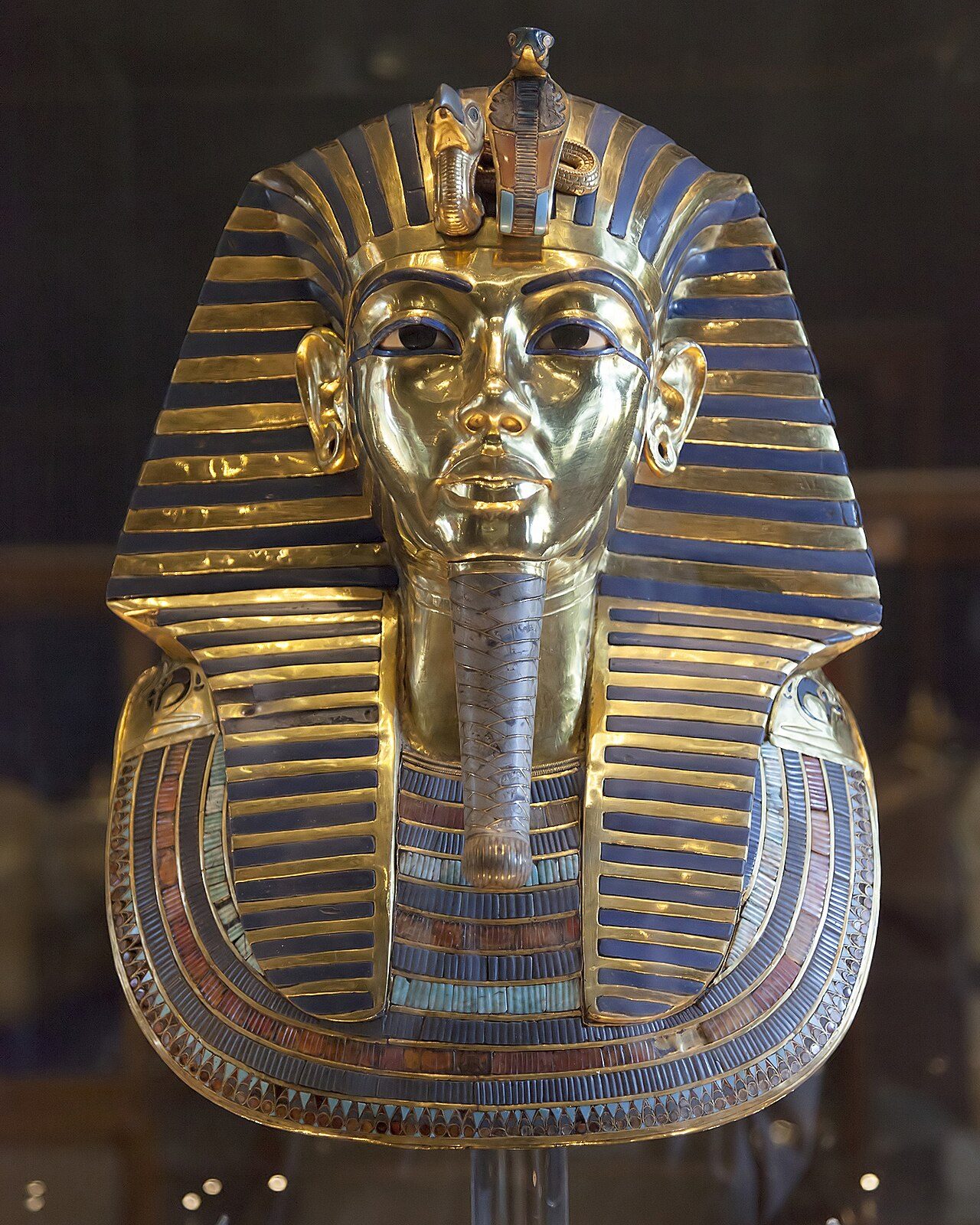
1923 is remembered above all for 16 February, when Howard Carter unsealed the burial chamber of Tutankhamun in the Valley of the Kings — the only pharaonic tomb found nearly intact, its golden shrines nested around the king's sarcophagus. The same year proclaimed the Republic of Turkey, brought the British Mandate for Palestine into force, devastated Tokyo and Yokohama in the Great Kanto earthquake, and saw Hitler's first, failed attempt to seize power in Munich.
At a Glance
- Defining event
- Howard Carter unseals Tutankhamun's burial chamber, 16 February — the only pharaonic tomb found nearly intact
- New state
- The Republic of Turkey is proclaimed on 29 October, with Mustafa Kemal as its first president
- Disaster
- The Great Kanto earthquake, 1 September: more than 100,000 dead in Tokyo and Yokohama
- Legal instrument
- The British Mandate for Palestine comes into force, 29 September
- Warning sign
- Hitler's Beer Hall Putsch fails in Munich, 8–9 November
- Founded
- Walt and Roy Disney found the Disney Brothers Cartoon Studio in Hollywood, 16 October
The defining story: wonderful things behind a sealed door
In November 1922, in the Valley of the Kings, Howard Carter's workmen had uncovered a stairway and a sealed door, and behind a second door a chamber glittering with objects — beds, boxes, chariots, statues. Asked by his patron, the Earl of Carnarvon, whether he could see anything, Carter answered with the most famous words in archaeology: yes, wonderful things. That was only the antechamber. The tomb's heart still lay behind another sealed wall, guarded by two life-size statues of the king, and Carter, an English archaeologist funded by Carnarvon, had searched the valley for six seasons and was on his last.
On 16 February 1923, before officials and invited guests, Carter dismantled that wall. The room beyond was almost filled by an immense gilded shrine — and inside it, the excavators would find, were three more shrines nested one within another, like boxes in a puzzle, and within them a sarcophagus of yellow quartzite holding the king's nested coffins and his gold mask. The burial chamber's painted walls showed the young king, dead around the age of eighteen more than three thousand years earlier, in the company of gods. Almost alone among the tombs of the pharaohs, this one had survived with its royal burial essentially intact, its two ancient robberies long ago resealed by necropolis officials.
While Egypt's past was being opened, the map drawn after the First World War was still being finished. On 24 July the Treaty of Lausanne settled the borders of the new Turkish republic and ended the last conflict of the war era; on 29 October the Grand National Assembly proclaimed the Republic of Turkey itself, with Mustafa Kemal — later Atatürk — as its first president. The same autumn, on 29 September, the British Mandate for Palestine came into force: approved by the League of Nations in 1922, it charged Britain with establishing a Jewish national home in Palestine while safeguarding the rights of its existing inhabitants — the dual obligation that defined the next twenty-five years.
The year's other forces were darker and louder. On 1 September the Great Kanto earthquake, magnitude 7.9, struck Tokyo and Yokohama at lunchtime; Britannica and other sources put the dead at more than 100,000. In the United States, President Warren G. Harding died in office on 2 August and Calvin Coolidge was sworn in the next day. In Munich on 8 November, Adolf Hitler launched the Beer Hall Putsch, his failed first attempt to seize power; police and troops crushed it the following day, killing sixteen Nazis and four officers. And on 16 October, in Hollywood, Walt and Roy Disney founded the Disney Brothers Cartoon Studio — the seed of the Walt Disney Company.
Timeline of 1923
- 1 February
Benito Mussolini's Blackshirt paramilitaries are officially transformed into a national militia, the Voluntary Fascist Militia for National Security.
- 13 February
The New York Renaissance, the first all-Black professional basketball team, is organised.
- 16 February
Howard Carter unseals the burial chamber of Tutankhamun, revealing the nested golden shrines around the king's sarcophagus.
- 27 May
Henry Kissinger is born — the German-born American statesman who became a central figure of Cold War diplomacy.
- 24 July
The Treaty of Lausanne is signed, settling the borders of the new Turkish republic and ending the last conflict of the First World War era.
- 2 August
Warren G. Harding, 29th president of the United States, dies in office; Calvin Coolidge is sworn in as president the next day.
- 1 September
The Great Kanto earthquake, magnitude 7.9, devastates Tokyo and Yokohama at lunchtime; the dead are put at more than 100,000.
- 29 September
The British Mandate for Palestine comes into force, charging Britain with establishing a Jewish national home while safeguarding the rights of existing inhabitants.
- 16 October
Walt and Roy Disney found the Disney Brothers Cartoon Studio in Hollywood — the seed of the Walt Disney Company.
- 29 October
The Grand National Assembly proclaims the Republic of Turkey, with Mustafa Kemal — later Atatürk — as its first president.
- 8 November
Adolf Hitler launches the Beer Hall Putsch in Munich, his failed first attempt to seize power in Germany; it is crushed the next day.
- 20 November
Garrett Morgan patents the three-position traffic signal.
- 24 December
President Calvin Coolidge lights the first National Christmas Tree on the Ellipse in Washington, decorated with 2,500 electric bulbs.
Why 1923 still matters
Tutankhamun's tomb changed archaeology's public standing forever. It was the first — and remains the only — pharaonic burial found nearly intact, and its excavation, photographed and reported worldwide, made Egyptology a popular passion and Carter's methodical, decade-long clearance a standard for the science. The gold mask that lay inside the innermost coffin became the single most recognisable object of the ancient world, and the tomb's contents still anchor arguments about heritage, museums and who owns the past.
The year's paperwork proved as consequential as its gold. Lausanne closed the First World War's last conflict and recognised a Turkish republic that endures a century later; the Mandate for Palestine wrote two promises into one law, and the tension between them shaped the Middle East for the rest of the century. In Munich, the failed putsch taught Hitler the lesson he acted on a decade later — that power would have to be taken legally, from inside — and the year that opened a tomb also founded, in a Hollywood studio, the company that would define popular storytelling.
Even the year's catastrophes redirected history. The Kanto earthquake's destruction of Tokyo and Yokohama forced Japan to rebuild its capital in modern form, and its death toll — more than 100,000 by the sources this page rests on — made it one of the deadliest disasters of the century. 1923 was a hinge year: the old world's gold coming out of the ground, the post-war world's borders going onto paper, and its dangers already visible to anyone watching Munich.
1923 on The History Trail
A pharaoh's tomb and a mandate's first day are this year's featured stories on The History Trail, with the earthquake and the putsch beside them.
- February 16 in History — Howard Carter unseals Tutankhamun's burial chamber in 1923 — wonderful things behind a sealed door.
- September 29 in History — The British Mandate for Palestine comes into force in 1923.
- September 1 in History — The Great Kanto earthquake devastates Tokyo and Yokohama in 1923.
- November 8 in History — Hitler launches the Beer Hall Putsch in Munich in 1923, on the day Röntgen discovered X-rays in 1895.
- October 29 in History — The Republic of Turkey is proclaimed in 1923, on the date of the 1929 Wall Street Crash.
- Tokyo — The city the Great Kanto earthquake devastated in 1923, and its long history.
Sources
- Encyclopaedia Britannica — On This Day: February 16
- Encyclopaedia Britannica — On This Day: July 24
- Encyclopaedia Britannica — On This Day: September 29
- Encyclopaedia Britannica — On This Day: September 1
- Encyclopaedia Britannica — On This Day: October 29
- Encyclopaedia Britannica — On This Day: November 8
- Encyclopaedia Britannica — On This Day: October 16
The facts on this page were checked against these sources on 19 November 2026. The History Trail's permanent pages are researched and written for this site; the live profiles elsewhere on The History Trail are assembled automatically from Wikipedia and Wikidata.
About the Author
Researched and written by the The History Trail Editorial Team — the accountable editorial function behind this site's permanent story pages. The team works from the published sources cited on each page; it does not invent historians, reviewers or credentials, and it corrects errors openly.
Fact Check
Every load-bearing fact on this page traces to one of the sources listed above, and significant claims link to their source in the text. Our checking method is described on the methodology page; errors can be reported via the corrections page.
Sources & Citations
Cite this page as: The History Trail Editorial Team, The History Trail — this article's title, publication and update dates are shown beneath its headline. The full source list appears under Sources above; the site's source standards are on the sources page.