
Things
University of Oxford
The University of Oxford is a collegiate research university in Oxford, England. The university describes itself as the oldest university in the English-speaking world - a claim this page attributes to Oxford rather than asserts - and its own history gives the evidence beneath it: no clear date of foundation, but teaching in some form in 1096, and rapid development from 1167.
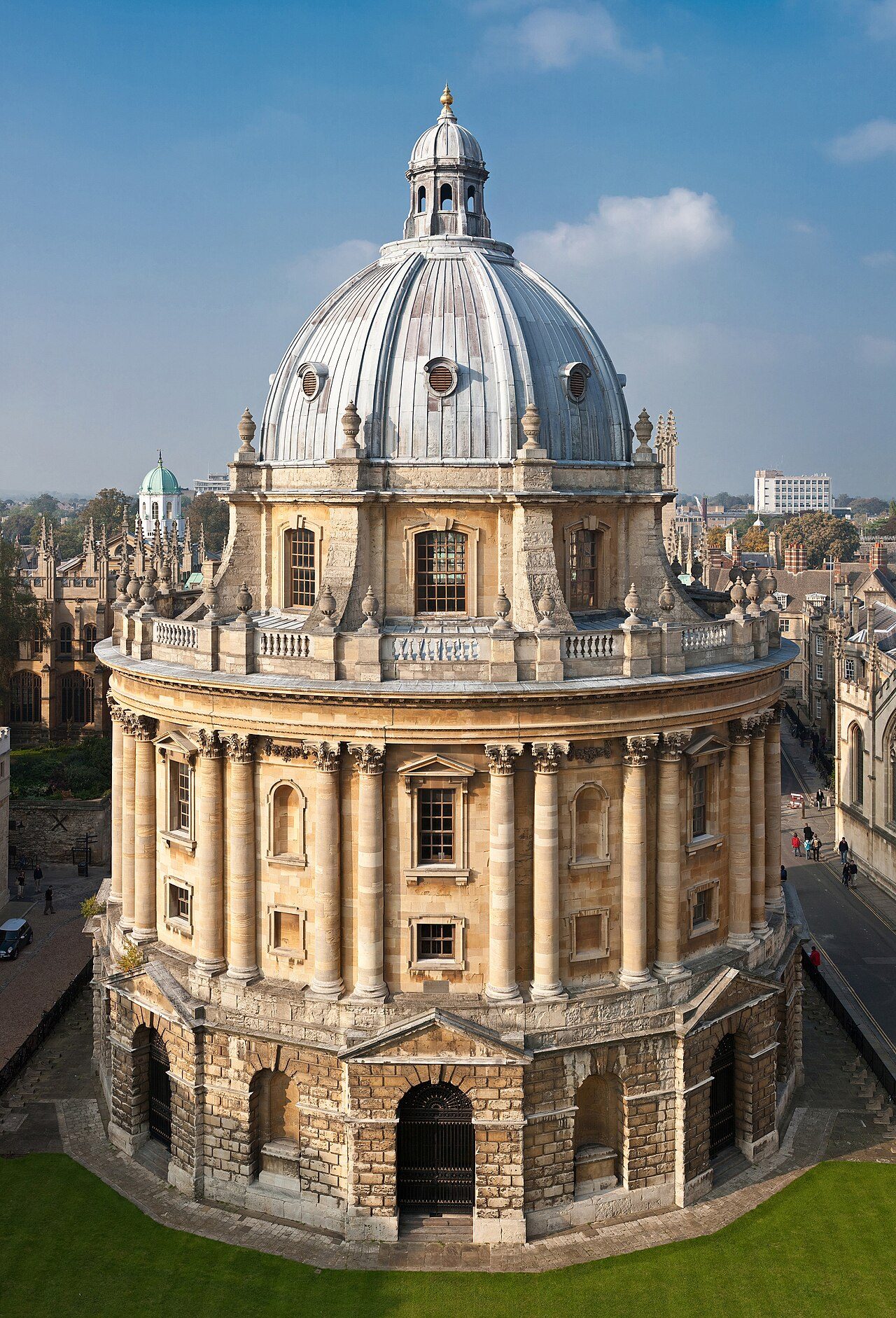
At a Glance
- Teaching evidence
- 1096 - teaching existed at Oxford in some form, according to the university's own history; there is no clear date of foundation
- The claim
- Oxford describes itself as the oldest university in the English-speaking world, with nine centuries of continuous existence
- The growth point
- 1167, when Henry II banned English students from attending the University of Paris, following a quarrel with Thomas Becket
- Government
- The title of Chancellor was conferred in 1214; in 1231 the masters were recognised as a universitas, or corporation
- Oldest colleges
- University College (1249), Balliol (about 1263) and Merton (1264), established between 1249 and 1264
- The library
- The Bodleian Library, refounded by Sir Thomas Bodley, formally opened on 8 November 1602
- Women
- Women studied at Oxford from 1878, but were admitted as full members of the university, and to degrees, only from 1920
Introduction
Oxford is not one institution so much as a federation. The central university awards the degrees, runs the examinations and maintains the great libraries and laboratories, while the teaching and much of the daily life of students belong to self-governing colleges, the oldest of them founded in the thirteenth century. A student belongs to both at once, and undergraduate teaching still centres on the tutorial: a conversation, Oxford explains, normally between two or three students and their tutor, offering personalised attention from academic experts.
That structure was never designed at a stroke. It accumulated over nine centuries, through royal quarrels, town riots, religious revolutions and reforms that arrived, for women's degrees, eight hundred years after teaching began.
Origins: Teaching Before a University
The university's own history is candid about its beginnings: there is no clear date of foundation, but teaching existed at Oxford in some form in 1096. What turned a town with teachers into a university was an accident of politics. Oxford developed rapidly from 1167, when Henry II banned English students from attending the University of Paris following a quarrel with Thomas Becket, and English scholars came home. In 1188 the historian Gerald of Wales gave a public reading to the assembled Oxford dons, and around 1190 Emo of Friesland arrived as the first known overseas student, the first of its international scholarly links.
By 1201 the university was headed by a magister scholarum, on whom the title of Chancellor was conferred in 1214, and in 1231 the masters were recognised as a universitas or corporation - the legal form of a university, arrived at a century after the teaching it governed.
Riots, a Chancellor and the First Colleges
Oxford's scholars lived in a town that did not always want them. Town-and-gown disputes escalated in 1209, when some Oxford academics fled to Cambridge and established what became the University of Cambridge. At Oxford itself, thirteenth-century rioting between town and gown hastened the establishment of halls of residence, and those halls were succeeded by the first colleges: endowed houses where fellows and students lived, ate and studied under a master.
Established between 1249 and 1264, University, Balliol and Merton Colleges are the oldest, as both Oxford and Britannica record - Britannica calls them endowed boarding houses for impoverished scholars, and lists University College, founded in 1249, as the earliest. Within a century the institution they anchored had, in Oxford's words, achieved eminence above every other seat of learning: in 1355 Edward III paid tribute to it for its invaluable contribution to learning.
Faith, Science and Slow Reform
Oxford's next centuries were fought over religion and knowledge alike. John Wyclif, a fourteenth-century master of Balliol, campaigned for a Bible in English against the wishes of the papacy. In the sixteenth century Henry VIII forced the university to accept his divorce from Catherine of Aragon, and the Anglican churchmen Cranmer, Latimer and Ridley were tried for heresy and burnt at the stake in the city. In 1602 the university's decayed library was formally reopened under the name of its refounder, Sir Thomas Bodley - the Bodleian Library, still the university's main research library. During the Civil War the university was Royalist, and Charles I held a counter-Parliament in its Convocation House; in the late seventeenth century the philosopher John Locke, suspected of treason, was forced to flee the country.
The eighteenth century brought Edmond Halley, professor of geometry, predicting the return of the comet that bears his name, and the prayer meetings of John and Charles Wesley that laid the foundations of Methodism. From 1833 the Oxford Movement sought to revitalise the Catholic aspects of the Anglican Church, and in 1860 the new University Museum hosted the famous debate between Thomas Huxley, champion of evolution, and Bishop Wilberforce.
Reform for half the population came last and slowest. Academic halls for women were established from 1878, and Lady Margaret Hall and Somerville welcomed their first students in 1879, but women studied without membership or degrees for four decades. Only in 1920 were women admitted as full members of the university: the first matriculation ceremony took place on 7 October 1920, and the first degrees were awarded a week later. By 1986 all of Oxford's men's colleges admitted women, and since 2008, Oxford records, all colleges have admitted men and women.
Timeline
- 1096
Teaching exists at Oxford in some form - the earliest evidence the university claims, with no clear date of foundation.
- 1167
Henry II bans English students from the University of Paris; Oxford develops rapidly as scholars return.
- 1188
Gerald of Wales gives a public reading to the assembled Oxford dons.
- 1209
After disputes with the town, some Oxford academics flee to Cambridge and establish what becomes the University of Cambridge.
- 1214
The title of Chancellor is conferred on the university's head; in 1231 the masters are recognised as a universitas.
- 1249-1264
University, Balliol and Merton Colleges are established - Oxford's oldest colleges.
- 1355
Edward III pays tribute to the university for its invaluable contribution to learning.
- 8 November 1602
The Bodleian Library, refounded by Sir Thomas Bodley, formally opens.
- 1833
The Oxford Movement begins, seeking to revitalise the Catholic aspects of the Anglican Church.
- 1860
Thomas Huxley and Bishop Wilberforce debate evolution at the new University Museum.
- 1879
Lady Margaret Hall and Somerville welcome their first women students, who cannot yet take degrees.
- 1920
Women are admitted as full members of the university and are awarded degrees for the first time.
Significance
Oxford's significance is partly sheer survival - nine centuries of continuous teaching in one small city - and partly the export of its forms. The collegiate university, in which self-governing residential colleges are woven through a central degree-giving institution, and the tutorial, in which a student's work is argued over weekly with an expert, became reference models for higher education across the English-speaking world. Its oldest offshoot is a rival: Cambridge exists because Oxford's scholars walked out in 1209, and the two universities have defined each other ever since.
In the twentieth and twenty-first centuries Oxford added major research capacity in the sciences, including medicine, and during 2020-22 its researchers stood, in the university's account, at the centre of the response to COVID-19, developing a vaccine and identifying treatments. The medieval federation had become a modern research university without ceasing to be a federation.
Myths and disputes
Did Alfred the Great found Oxford? A fourteenth-century chronicler, Ranulf Higden, wrote that the university was founded in the ninth century by Alfred - a story believed for centuries and now considered apocryphal. The documented record starts where Oxford itself starts it: teaching in 1096, rapid growth from 1167, a chancellor by 1214. There was no founder and no founding charter, which is why its age is stated as evidence of teaching, not a foundation date.
Which is the oldest college? Oxford's own history declines to choose, listing University, Balliol and Merton together as the oldest, established between 1249 and 1264. Britannica names University College, founded in 1249, as the earliest. Balliol's rival claim rests on a different measure: a community of scholars on its present site without interruption since about 1263. The dispute is real but narrow - all three colleges are thirteenth-century, and the argument is over which kind of beginning counts.
And the famous claim itself needs its exact wording. Oxford describes itself as the oldest university in the English-speaking world - not the oldest university in the world, a title belonging to Bologna, founded in 1088. Stated with its attribution and its evidence, the claim is a matter of record; stated without them, it becomes a slogan.
Legacy
Oxford's legacy is a working institution that still runs on medieval parts: colleges that govern themselves, a chancellor whose title dates to 1214, a library refounded in 1602, and tutorials that remain, in the university's own description, central to its teaching. Around those survivals it built the apparatus of a modern research university - laboratories, medical science and, in 2020, a vaccine developed at speed in a pandemic. The place that cannot name its own birthday has outlasted nearly every institution founded since.
Sources
- University of Oxford - Our history
- Encyclopaedia Britannica - Oxford
- University of Oxford - Personalised learning: tutorials
- Bodleian Libraries, University of Oxford - Education and Activism: Women at Oxford, 1878-1920
- Bodleian Library - The Bodleian Library: history and visitor information
The facts on this page were checked against these sources on 19 November 2026. The History Trail's permanent pages are researched and written for this site; the live profiles elsewhere on The History Trail are assembled automatically from Wikipedia and Wikidata.
About the Author
Researched and written by the The History Trail Editorial Team — the accountable editorial function behind this site's permanent story pages. The team works from the published sources cited on each page; it does not invent historians, reviewers or credentials, and it corrects errors openly.
Fact Check
Every load-bearing fact on this page traces to one of the sources listed above, and significant claims link to their source in the text. Our checking method is described on the methodology page; errors can be reported via the corrections page.
Sources & Citations
Cite this page as: The History Trail Editorial Team, The History Trail — this article's title, publication and update dates are shown beneath its headline. The full source list appears under Sources above; the site's source standards are on the sources page.