
Things
Pizza
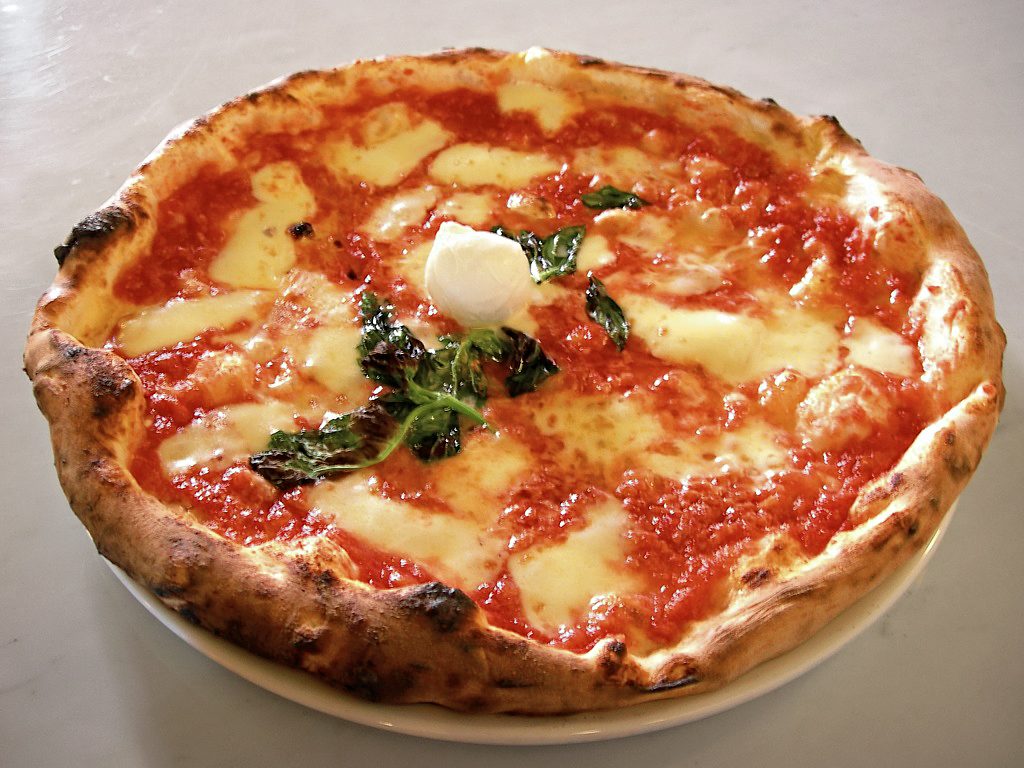
Pizza is a flat, leavened dough base topped with tomato and cheese and baked hot and fast - and it was created in Naples in the 18th and 19th centuries as the cheap street food of the working poor. From there it travelled with Italian emigrants to New York, boomed across America after 1945, and conquered the world, while Naples' own pizza-making craft was inscribed by UNESCO in 2017 as part of humanity's intangible heritage.
At a Glance
- What it is
- A flat base of leavened wheat dough topped with tomato, cheese and other ingredients, baked at high temperature, traditionally in a wood-fired oven
- Where it was born
- Naples, Italy, where it took modern form in the 18th and early 19th centuries as the cheap food of the working poor
- The word
- First recorded in 997, in a Latin document from Gaeta in southern Italy
- The first pizzeria
- Antica Pizzeria Port'Alba in Naples, making pizza for street sellers from 1738 and a sit-down pizzeria from 1830, is often cited as the world's first
- The Margherita letter
- The 1889 letter thanking Raffaele Esposito for pizza for Queen Margherita is disputed by historians; its seal and handwriting do not match genuine royal correspondence
- America
- Gennaro Lombardi opened the first licensed US pizzeria in New York in 1905; pizza boomed nationally after 1945 and the big chains followed from 1958
- UNESCO
- In 2017 UNESCO inscribed the art of the Neapolitan pizzaiuolo - the craft, not the dish - as Intangible Cultural Heritage of Humanity
Introduction
Pizza began as the food of people with almost nothing. In the crowded streets of 18th- and 19th-century Naples, the working poor - porters, labourers, messengers, many without kitchens of their own - bought folded rounds of baked dough, topped with whatever was cheap: lard, garlic, oil, anchovies, and eventually tomato. It was sold from stalls and carried through the streets warm, it needed no plate and no cutlery, and respectable Naples looked down on it. That despised street food is now eaten on every continent, in chains, in frozen form and in wood-fired restaurants that treat its making as an art - an art UNESCO formally listed as part of humanity's heritage in 2017.
Flatbreads Before Pizza
Topped flatbreads are far older than pizza. Ancient Egyptians, Greeks and Romans all baked flat rounds of dough with oil, herbs and other toppings, and Naples itself was founded by Greek settlers around 600 BCE. These are pizza's background, not pizza itself: the combination that defines the modern dish - a leavened wheat base, tomato, and cheese, baked fast and hot - could not exist before the tomato, an American plant, reached Europe in the 16th century and was slowly accepted as food.
Even the word is medieval. The term pizza is first recorded in 997, in a Latin document from Gaeta in southern Italy, where pizzas were owed as part of a tenant's dues. What those pizzas were, no one can say precisely - but they were not the tomato-topped dish of Naples, which still lay centuries in the future.
Naples: The Food of the Working Poor
Modern pizza took shape in Naples in the 18th and early 19th centuries. The city was one of Europe's largest and poorest; its working poor, the lazzaroni, lived outdoors as much as indoors and needed a meal that was cheap, fast and filling. Pizza fitted exactly. Vendors baked it in wood-fired ovens and sold it in portions cut to the size a buyer could afford, folded into four so it could be eaten walking - pizza a portafoglio, wallet pizza.
In 1830 the Antica Pizzeria Port'Alba, which had made pizzas for street sellers since 1738, opened with tables and seated service. It is often cited as the world's first pizzeria - a claim best stated carefully, since pizza had been baked and sold in Naples for decades before anyone sat down to eat it in a dedicated shop. What Port'Alba marks is pizza's step from street stall to institution. Through the 19th century toppings settled into the familiar pattern, with the marinara (tomato, garlic, oregano, oil) and the tomato-and-mozzarella pizza becoming Naples' classics.
Timeline
- 997
The word pizza appears in a Latin document from Gaeta, Italy - centuries before the tomato reached Europe.
- 16th century
Tomatoes arrive in Europe from the Americas; long treated with suspicion, they slowly enter southern Italian cooking.
- 1738
The Port'Alba oven in Naples is making pizzas for street sellers, according to the pizzeria's own history.
- 1830
Antica Pizzeria Port'Alba opens as a sit-down pizzeria, often cited as the first pizzeria in the world.
- 1889
The date of the famous letter thanking pizzaiolo Raffaele Esposito for pizzas served to Queen Margherita - a document historians now dispute.
- 1905
Gennaro Lombardi opens his licensed pizzeria at 53 1/2 Spring Street, New York - the first pizzeria in the United States.
- After 1945
American servicemen return from Italy with a taste for pizza; pizzerias spread across the United States beyond Italian neighbourhoods.
- 1958-1960
Pizza Hut (1958), Little Caesars (1959) and Domino's (1960) are founded; the chain era begins, alongside frozen pizza.
- 1984
The Associazione Verace Pizza Napoletana is founded in Naples to define and protect true Neapolitan pizza.
- 7 December 2017
UNESCO inscribes the art of the Neapolitan pizzaiuolo on its Representative List of the Intangible Cultural Heritage of Humanity.
America Makes It Bigger
Pizza crossed the Atlantic with Italian emigration. Britannica notes that 4 million of the 20 million immigrants who came to the United States between 1880 and 1920 were Italian, bringing their taste for pizza with them. At first they made it at home and sold it from unlicensed venues; in 1905 Gennaro Lombardi, a Neapolitan immigrant, opened G. Lombardi's in New York, the first licensed pizzeria in the United States. American pizzerias added an innovation of their own: the slice, a single serving a busy worker could eat on the go.
For decades pizza remained largely an Italian-American food. Its national boom came after the Second World War: American servicemen who had served in Italy came home with the taste acquired, and in the postwar suburbs Italian-American families carried pizza to the wider nation. The chains industrialised it - Pizza Hut in 1958, Little Caesars in 1959, Domino's in 1960 - while frozen pizza put it in every supermarket. Pizza became, for a time, more American than Italian, before travelling onward to become a global standard with local forms everywhere, from Chicago deep-dish to toppings Naples never imagined.
Significance
Pizza's significance is the journey from stigma to symbol. A food once dismissed as the disgusting habit of the Neapolitan poor became Italy's most famous dish, America's favourite takeaway and a worldwide platform on which every culture writes its own version. It is also a case study in how migration transforms food: the dish the world knows was shaped as much in New York as in Naples.
Naples, meanwhile, reclaimed its own. The Associazione Verace Pizza Napoletana, founded in 1984, codified the true Neapolitan method. In 2017 UNESCO inscribed the art of the Neapolitan pizzaiuolo - not the dish, but the craft: the four phases of preparing the dough and baking it in a wood-fired oven, the skills passed from master to apprentice in the bottega. UNESCO records about 3,000 pizzaiuoli in Naples, and notes the art fosters social gatherings and exchange between generations. Two million people had signed the petition supporting the bid.
Myths and disputes
Was pizza Margherita invented for a queen in 1889? The story is famous: Queen Margherita, visiting Naples, tired of French court food, asked for the local speciality; pizzaiolo Raffaele Esposito made three pizzas, and the one she liked best - tomato, mozzarella and basil, in the red, white and green of the Italian flag - took her name. The proof offered is a letter dated 11 June 1889 from Camillo Galli, head of the royal household's table services, thanking Esposito, which still hangs at Pizzeria Brandi.
Historians dispute that letter, and this page flags the story as legend, not established fact. In a 2014 study in the journal Food, Culture and Society, the food historian Zachary Nowak compared the letter with Galli's genuine correspondence and found its stamped, off-centre royal seal matched no official seal of the period and its handwriting did not match Galli's; he found no archival record of such a letter being sent, and proposed it was produced in the 1930s, when Esposito's in-laws, the Brandi family, were promoting the pizzeria. The pizza itself is older than the story in any case: tomato, mozzarella and basil toppings were described in Naples decades before 1889. A royal visit may lie somewhere behind the tale - but the document that is supposed to prove it does not withstand scrutiny.
Legacy
Pizza's legacy is double. Globally, it is the world's most adaptable fast food, rebuilt in every country that adopted it and returned to Italy itself in new forms. In Naples, it is a guarded craft, with written rules, certified makers and a UNESCO listing that protects the pizzaiuolo's art rather than any recipe. The street food of the poor now carries both futures at once: the frozen pizza in a supermarket freezer, and the apprentice in a Neapolitan bottega learning to turn a pizza in a wood-fired oven, exactly as UNESCO described.
Sources
- UNESCO Intangible Cultural Heritage - Art of Neapolitan 'Pizzaiuolo'
- Encyclopaedia Britannica - Why Is Pizza So Popular in the U.S.?
- Smithsonian Magazine - Mamma Mia!: Naples' Pizza-Making Process Gets Unesco Heritage Status
- Food, Culture and Society (Zachary Nowak) - Folklore, Fakelore, History: Invented Tradition and the Origins of the Pizza Margherita
- Associazione Verace Pizza Napoletana - La Verace Pizza nella Storia: Re Nasone e l'Antica Pizzeria Port'Alba
The facts on this page were checked against these sources on 19 November 2026. The History Trail's permanent pages are researched and written for this site; the live profiles elsewhere on The History Trail are assembled automatically from Wikipedia and Wikidata.
About the Author
Researched and written by the The History Trail Editorial Team — the accountable editorial function behind this site's permanent story pages. The team works from the published sources cited on each page; it does not invent historians, reviewers or credentials, and it corrects errors openly.
Fact Check
Every load-bearing fact on this page traces to one of the sources listed above, and significant claims link to their source in the text. Our checking method is described on the methodology page; errors can be reported via the corrections page.
Sources & Citations
Cite this page as: The History Trail Editorial Team, The History Trail — this article's title, publication and update dates are shown beneath its headline. The full source list appears under Sources above; the site's source standards are on the sources page.