
Things
Old Dongola: Lost Capital of Christian Makuria
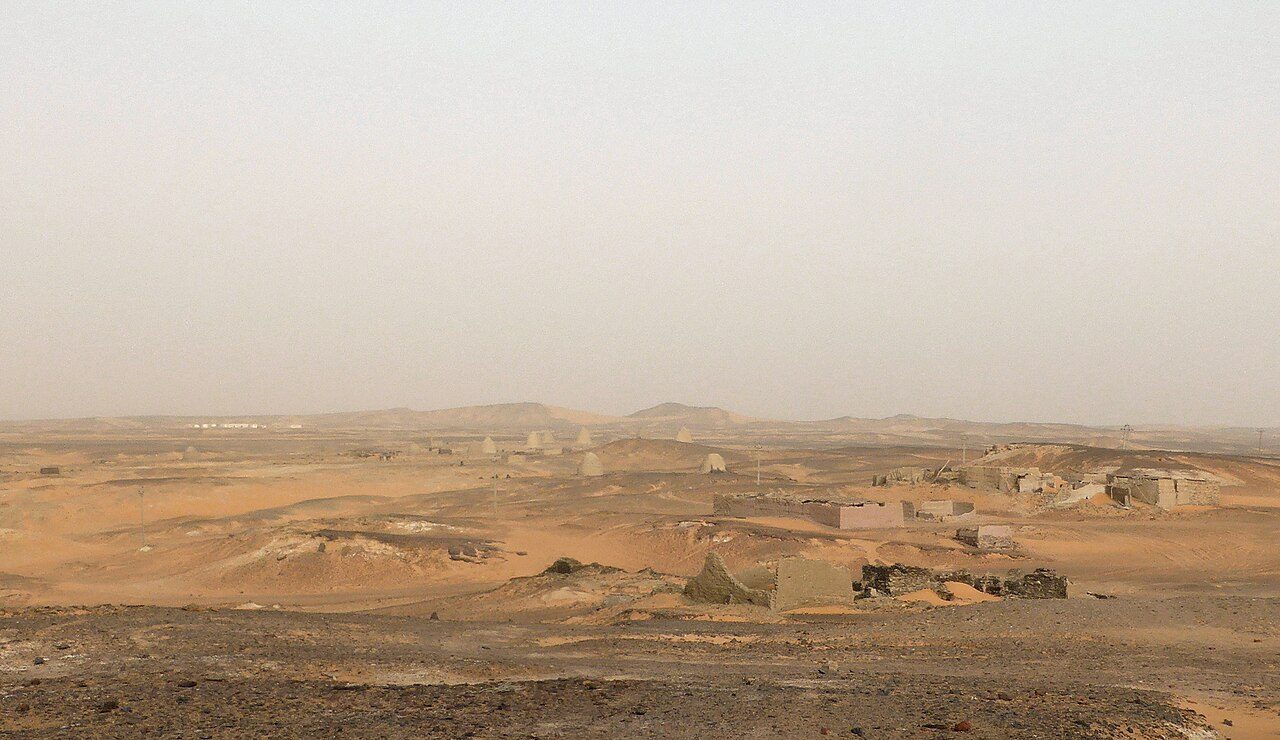
Old Dongola, on the east bank of the Nile in northern Sudan, was for some eight centuries the capital of Makuria, a Christian kingdom that traded with Egypt and Byzantium and built some of the largest churches in medieval Africa. Deserted and sand-covered, it is now being revealed by Polish and Sudanese archaeologists.
At a Glance
- Location
- East bank of the Nile, Northern State, Sudan, about 160 km southeast of modern Dongola
- Ancient name
- Tungul, in the Old Nubian language
- Role
- Capital of the Christian kingdom of Makuria, from the 5th–6th to the 14th century
- The Baqt
- Treaty with Muslim Egypt agreed in 652, which kept relations between the two states peaceful for about six centuries
- Oldest mosque in Sudan
- The Makurian Throne Hall, converted to a mosque in 1317 and used for worship until 1967
- Site area
- About 200 hectares of citadel, churches, monastery, houses and cemeteries
- Excavations
- Polish missions since 1964, today the Polish Centre of Mediterranean Archaeology, University of Warsaw, with Sudan's NCAM
- Heritage status
- On UNESCO's Tentative List since 1994
Introduction
Old Dongola — Tungul in the Old Nubian language — is a deserted city on the east bank of the Nile, about 160 kilometres southeast of the modern town of Dongola in northern Sudan. From the sixth century to the fourteenth it was the capital of Makuria, one of the Christian kingdoms of Nubia, and its ruins cover some 200 hectares: a fortified citadel with royal buildings, dozens of churches, a great monastery, painted tombs and streets of houses, all preserved beneath the desert sand.
The site matters because medieval Africa is so often known through other people's writings. At Old Dongola the evidence is the city itself: its throne hall, converted into a mosque in 1317 and still standing; its church walls painted with apostles, archangels and Nubian kings; and, since 2021, a buried church of astonishing size that may be the largest known from medieval Nubia. Polish archaeologists have worked here since 1964, today in partnership with Sudan's National Corporation for Antiquities and Museums.
A Christian Kingdom on the Nile
Dongola was founded in the fifth century as a fortress, and became a capital in the mid-sixth century, when Christian missionaries reached Nubia and Makuria adopted the new faith. The kingdom grew rich on Nile agriculture, watered by water wheels, and on trade along the river and the caravan routes that left Dongola westward for Darfur and Kordofan. Its kings dealt as powers in their own right: Makuria conducted diplomacy with Muslim Egypt, with Byzantium and, by report, with the Holy Roman Empire.
The key to that survival was the Baqt, the treaty agreed with Muslim Egypt in 652, after Arab armies first reached Nubia. Part truce, part trade agreement, it regulated relations between the two states for some six centuries — one of the longest-lived arrangements of the medieval world — protecting Makuria's independence while Muslim travellers passed, traded and even worshipped in Dongola itself. Behind that shield the capital flourished: its builders raised a two-storey throne hall in the early ninth century, and its churches and monasteries filled with wall paintings inscribed in Greek and Old Nubian.
Timeline
- 5th century
Dongola is founded as a fortress on the Nile; a royal citadel rises on the hill above the river.
- Mid-6th century
Christianity reaches Nubia, and Dongola becomes the capital of the Christian kingdom of Makuria.
- 652
Makuria and Muslim Egypt agree the Baqt, a treaty that keeps the peace, with interruptions, for about six hundred years.
- Early 9th century
The royal Throne Hall is built on the citadel — a two-storey audience hall, 12 metres high, for Makuria's kings.
- 10th–11th centuries
Dongola's churches reach their height of decoration; the apse of the great church in the citadel is painted with colossal figures believed to represent the apostles.
- 1317
The Throne Hall's upper room is converted into a mosque — today the oldest preserved mosque in Sudan.
- 14th century
Under pressure from Mamluk Egypt and internal strife, Makuria fragments; Dongola loses its capital status, though settlement continues, and flourishes again as a regional centre under the Funj from the 16th century.
- 1964
A Polish archaeological expedition begins work at Old Dongola; the mission, now run by the University of Warsaw's Polish Centre of Mediterranean Archaeology, has continued ever since.
- 1994
Old Dongola is placed on UNESCO's Tentative List for World Heritage status.
- 2021
Remote sensing reveals a huge buried church in the citadel, its apse painted with the apostles; the excavators identify it as the Great Church of Jesus.
- 2025 season
Excavators follow a monumental staircase, its walls still standing 11 metres high, down to the church's original floor; the building is estimated at 47 metres wide and 57 metres long. The results were announced in November 2026.
Why Dongola Matters
Makuria was no marginal outpost. At its height the kingdom was, in the words of the excavation's director Artur Obłuski, as large as France and Spain combined, and its capital a city of churches, palaces and painted monasteries at the meeting point of Africa, Egypt and the Mediterranean world. Dongola's art — above all its church wall paintings, some now displayed in the National Museum in Khartoum — documents a confident African Christianity that developed its own forms over eight centuries, in conversation with Byzantium but never merely copying it.
The Great Church project shows how much remains unknown. A cathedral-scale building stood at the city's heart, unsuspected until remote sensing found it in 2021 — in a capital that has been excavated for sixty years. If the mission's identification is right, the church, some 47 by 57 metres and perhaps 21 metres high, was the largest and most important in Makuria: a Nubian counterpart to Hagia Sophia, as Obłuski has put it. Only one staircase has yet reached its floor, between walls that still stand 11 metres tall.
Myths and disputes
The newest claims come with a caution attached. When the staircase discovery made international headlines in November 2026, Sudan's culture ministry clarified that the finds came from the mission's 2025 field season, not from new digging that month, and Sudanese specialists have questioned whether the building can yet be securely identified as the Great Church of Jesus, or as the city's cathedral. The excavators themselves stress that its full dimensions remain provisional until more of the building is uncovered.
An older assumption has already fallen. For decades, Old Dongola's cathedral was thought to be a church outside the city walls; the 2021 discovery moved the kingdom's religious centre into the citadel itself, beside the royal buildings. It is a useful reminder of how provisional the map of even the known city remains — and of how much of medieval Nubia still lies under the sand, waiting for the next season's work.
A Capital Still Emerging
Dongola's second life is as a research city. The current programme, the European Research Council-funded Afropolis Tungul project, aims to write the urban biography of the capital from the fourth to the fifteenth century — its environment, economy and social life — while a parallel conservation project, Baraka, is stabilising the old mosque, the building that served Dongola as a place of worship for over six hundred years and remains its most visible monument. On UNESCO's Tentative List since 1994, Old Dongola is slowly taking its place among the essential sites of medieval Africa.
Sources
- UNESCO World Heritage Centre — Old Dongola (Tentative List)
- University of Warsaw — Renovation of the oldest mosque in Sudan (PCMA UW Baraka project)
- Smithsonian Magazine — Ruins of Monumental Church Linked to Medieval Nubian Kingdom Found in Sudan
- Associated Press — Hidden cathedral floor emerges in Sudan revealing one of biggest medieval churches (via The Week)
- The Sudanist — Sudanese-Polish Expedition Uncovers More of Medieval Nubia's Great Church of Jesus at Old Dongola
The facts on this page were checked against these sources on 19 November 2026. The History Trail's permanent pages are researched and written for this site; the live profiles elsewhere on The History Trail are assembled automatically from Wikipedia and Wikidata.
About the Author
Researched and written by the The History Trail Editorial Team — the accountable editorial function behind this site's permanent story pages. The team works from the published sources cited on each page; it does not invent historians, reviewers or credentials, and it corrects errors openly.
Fact Check
Every load-bearing fact on this page traces to one of the sources listed above, and significant claims link to their source in the text. Our checking method is described on the methodology page; errors can be reported via the corrections page.
Sources & Citations
Cite this page as: The History Trail Editorial Team, The History Trail — this article's title, publication and update dates are shown beneath its headline. The full source list appears under Sources above; the site's source standards are on the sources page.