
Things
Hanukkah
Hanukkah is the eight-day Jewish Festival of Lights, beginning on the 25th of Kislev, which commemorates the Maccabean revolt against Antiochus IV and the rededication of the Temple in Jerusalem in 164 BCE. Its name means 'dedication' in Hebrew, and its candles recall a later tradition that one day's consecrated oil burned for eight.
At a Glance
- The name
- Hanukkah means 'dedication' in Hebrew — for the rededication of the Temple in 164 BCE
- When
- Eight days from the 25th of Kislev, usually falling in November or December
- The lamp
- The hanukkiah has nine branches — eight lights plus the shamash helper; the Temple menorah had seven
- The oil
- The miracle of the oil appears not in the Books of the Maccabees but in the Babylonian Talmud, centuries later
- The foods
- Latkes and sufganiyot, fried in oil, and gelt — coins, now often chocolate, for children
- Its status
- Traditionally a minor festival; its American prominence grew alongside Christmas in the nineteenth and twentieth centuries
Introduction
Hanukkah — also spelled Chanukah — is an eight-day Jewish festival that usually falls in late November or December, beginning at sundown on the 25th day of the Hebrew month of Kislev. Families light candles on a nine-branched lamp, one more each night, eat foods fried in oil, play a spinning-top game and exchange small gifts. Behind the warmth stands a war story: a revolt against a king who had seized and desecrated the Temple in Jerusalem.
The festival's Hebrew name means 'dedication', and dedication is what it celebrates — the cleansing and rededication of the Temple by the Maccabees in 164 BCE. The famous miracle of the oil, by contrast, is not in the earliest accounts at all, and part of Hanukkah's interest is watching how a military victory slowly acquired a gentler, more durable story.
Background: Desecration and Revolt
In the second century BCE, Judea lay within the Seleucid empire, and its king, Antiochus IV Epiphanes, who reigned from 175 to 164 BCE, moved against Jewish practice itself. He desecrated the Second Temple in Jerusalem, rededicating it to Zeus. The conflict he provoked was also a civil one: Britannica notes that the struggle divided zealous, traditional Jews from those who favoured assimilation into Greek culture.
Resistance began with the priest Mattathias and was led after him by his son Judas Maccabeus. After a three-year struggle, the Maccabees — the Hasmoneans — retook Jerusalem, cleansed the Temple and rededicated it on the 25th of Kislev in 164 BCE. Judas proclaimed an annual eight-day celebration from that date. The story is first told in the Books of the Maccabees, written around 150 to 100 BCE, and the dynasty the revolt founded, continued under Judas's brother Simon, kept an independent Jewish kingdom for more than a century.
The Festival and Its Customs
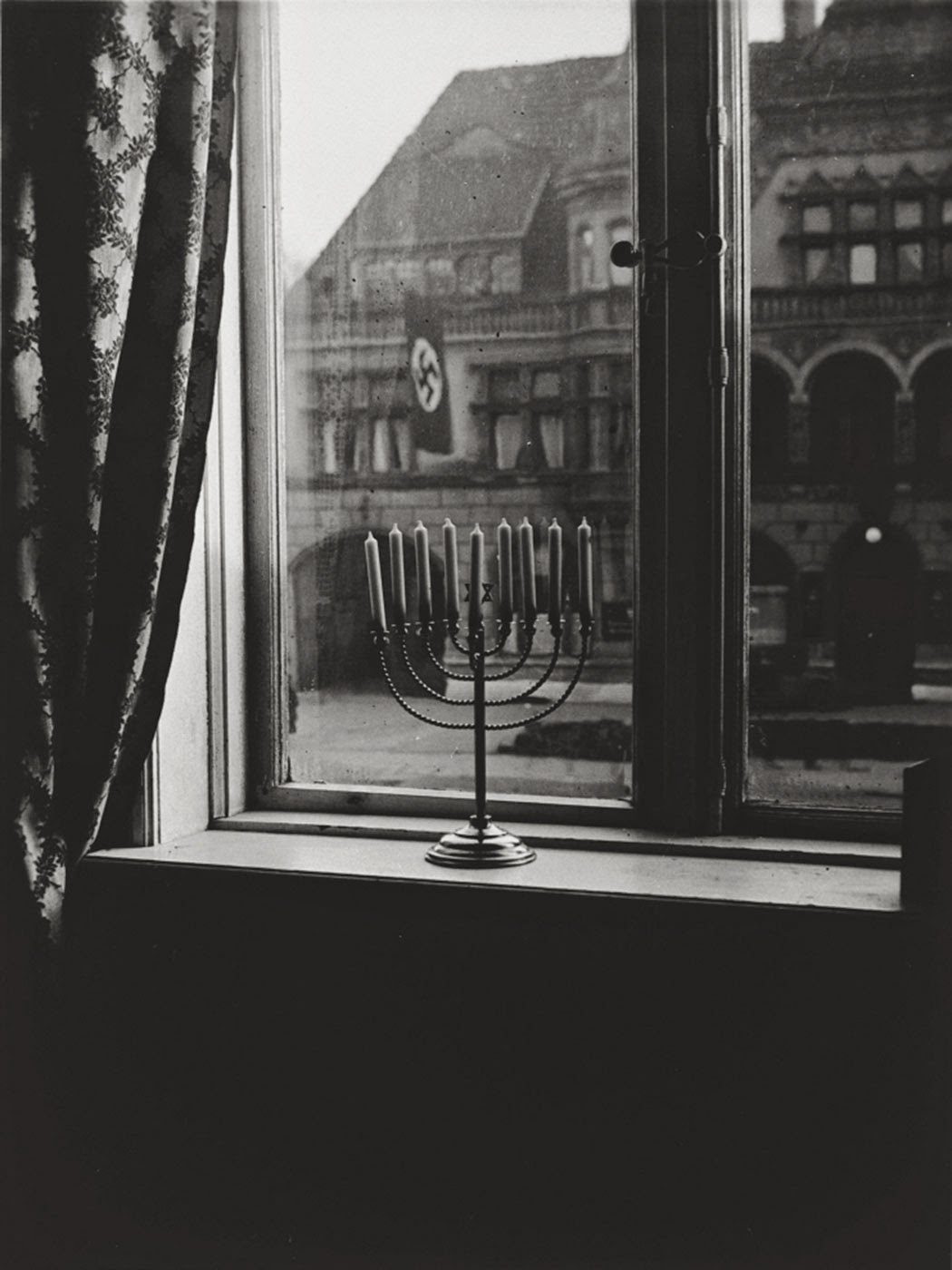
The festival's central object is often misnamed. The lamp lit at Hanukkah is a hanukkiah, with nine branches: eight lights for the eight nights and a ninth, the shamash or helper, set apart and used to kindle the others. The menorah of the ancient Temple had seven branches — a different object, lit daily by the priests. Candles are added one per night; a first-century debate between the schools of Hillel and Shammai settled the order in Hillel's favour, so the lights increase rather than diminish, and the Talmud instructs that they be placed where passers-by can see them, to publicise the miracle.
Around the candles gather the festival's pleasures. The dreidel is a four-sided spinning top used in a game played for nuts or coins; its Hebrew letters are read as 'a great miracle happened there', though historians trace the game itself to European tops of the eighteenth century, whose letters stood for German gambling terms — all, half, nothing, put in. Foods are fried in oil in memory of the oil tradition: potato latkes, served with applesauce or sour cream in Ashkenazi homes, and sufganiyot, jelly doughnuts now immensely popular in Israel. Children receive gelt — once real coins, since the 1920s often chocolate coins in gold foil.
Timeline
- 175 BCE
Antiochus IV Epiphanes becomes Seleucid king; pressure on Jewish practice in Judea intensifies.
- 164 BCE
The Maccabees retake Jerusalem and rededicate the Temple on 25 Kislev; an eight-day festival is proclaimed.
- c. 150–100 BCE
The Books of the Maccabees tell the revolt's story — with no mention of a miracle of oil.
- 93 CE
Josephus gives the festival its other name, the Festival of Lights, treating the lights as a symbol of freedom regained.
- c. 450–550 CE
The Babylonian Talmud, in Tractate Shabbat 21b, records the tradition of the single jar of oil that burned for eight days.
- 16th–19th centuries
Gelt-giving to children is recorded in Italy and Eastern Europe; the dreidel game spreads from European spinning-top games.
- Mid-19th century
In Cincinnati, Reform rabbis Isaac Wise and Max Lilienthal remake Hanukkah as a joyful, child-centred festival for American Jews.
- 1920s
American makers begin selling chocolate gelt in gold foil; gift-giving grows alongside the commercial Christmas season.
- 1979
The first annual National Menorah lighting takes place in Washington, DC, watched by millions.
Significance
Within Judaism, Hanukkah is traditionally a minor festival — it is not named in the Hebrew Scriptures, and it carries none of the work and school restrictions of Passover or Yom Kippur. Its themes, though, are major ones: religious freedom won against a powerful empire, and the rededication of what was defiled. Josephus already read its lights as a metaphor for freedom unexpectedly recovered, and later generations — including the Posner family, who set their lamp opposite a Nazi Party headquarters in 1931 — have lit them as a statement that Jewish life would continue.
Its modern scale is an American story. In the United States, Hanukkah and Passover are the two most celebrated Jewish holidays, and Hanukkah's rise tracks Christmas's: as Christmas became a commercial, child-centred season, American Jewish families and rabbis built Hanukkah up in parallel, with gifts, songs and decorations, so that Jewish children could share the winter festivities while keeping a distinct identity of their own.
Myths and disputes
Is the miracle of the oil history? Present it honestly: it is tradition, and late tradition at that. Neither the Books of the Maccabees, written within living memory of the revolt, nor Josephus, three centuries later, mentions any oil. The story — that only one undefiled jar was found, holding a single day's oil, which then burned for eight days until new consecrated oil could be prepared — is first enshrined in the Babylonian Talmud, compiled some six to seven centuries after the event. The early sources suggest a plainer explanation for the eight days: II Maccabees indicates the festival may have begun as a belated celebration of Sukkot, the eight-day autumn festival the fighters had been unable to keep during the war.
Is Hanukkah the Jewish Christmas? No — and the comparison misleads in both directions. The festivals have different origins, different theologies and different weights in their own calendars: Christmas is among Christianity's greatest feasts, while Hanukkah is a minor, post-biblical festival. What is true is narrower: in America the two holidays sit side by side in December, and Hanukkah's gift-giving, decorations and public menorahs grew up in Christmas's company. Gift-giving itself is not an old Hanukkah custom — it echoes the gifts of Purim and spread only from the 1880s, as American Jews adopted the neighbouring custom. Hanukkah did not borrow Christmas's meaning; it borrowed some of its season's wrapping.
Legacy
Hanukkah's legacy is a festival reinvented by every age that kept it: a Hasmonean victory feast, a rabbinic festival of miraculous light, an emblem of Jewish courage, and in America a household celebration of identity in a Christmas-lit season. Through each reinvention the core act stays the same — lights added night by night in the darkest part of the year, set in the window for the street to see.
Sources
- Encyclopaedia Britannica — Hanukkah
- HISTORY — Hanukkah
- HISTORY — 8 Hanukkah Traditions and Their Origins
- Bible Odyssey — Hanukkah
The facts on this page were checked against these sources on 19 November 2026. The History Trail's permanent pages are researched and written for this site; the live profiles elsewhere on The History Trail are assembled automatically from Wikipedia and Wikidata.
About the Author
Researched and written by the The History Trail Editorial Team — the accountable editorial function behind this site's permanent story pages. The team works from the published sources cited on each page; it does not invent historians, reviewers or credentials, and it corrects errors openly.
Fact Check
Every load-bearing fact on this page traces to one of the sources listed above, and significant claims link to their source in the text. Our checking method is described on the methodology page; errors can be reported via the corrections page.
Sources & Citations
Cite this page as: The History Trail Editorial Team, The History Trail — this article's title, publication and update dates are shown beneath its headline. The full source list appears under Sources above; the site's source standards are on the sources page.