
Things
Christmas Stockings
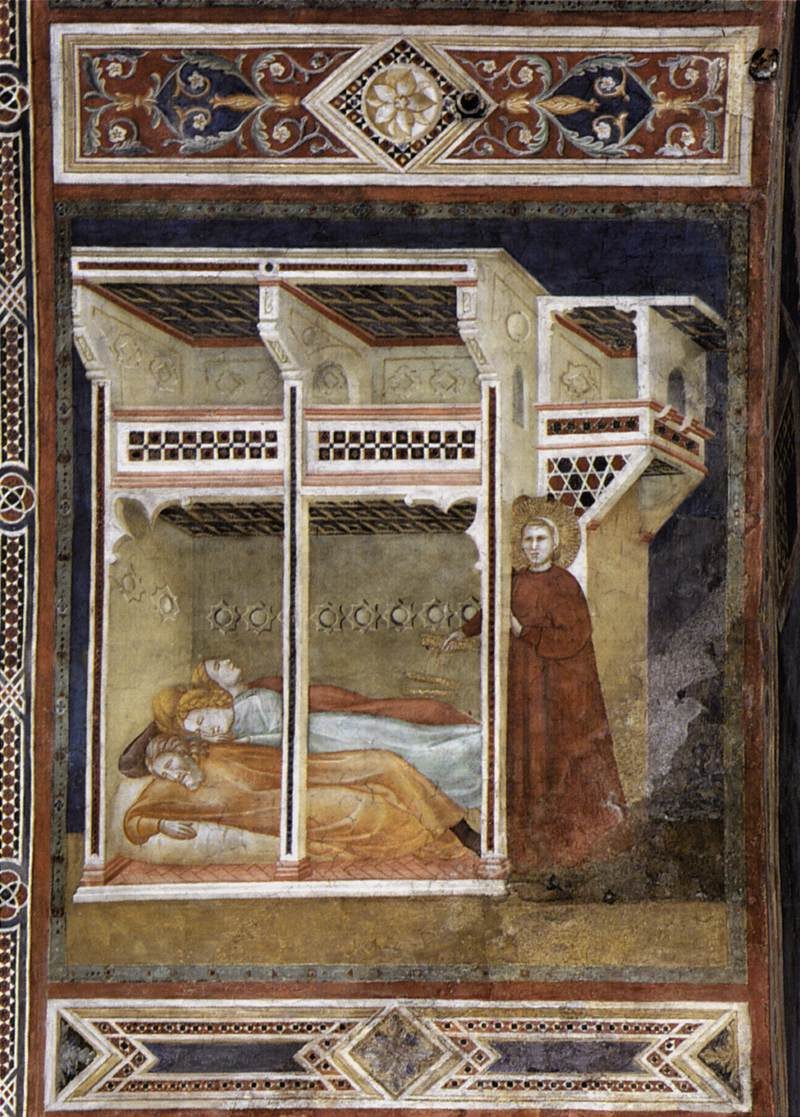
Christmas stockings come from a legend: Saint Nicholas, unwilling to give openly, filled the stockings of three poor girls - hung by the fire to dry - with gold for their dowries. A famous poem, Dutch shoes and an orange in the toe did the rest.
At a Glance
- Origin legend
- Saint Nicholas secretly filled the stockings of three poor girls - hung by the fire to dry - with gold for their dowries
- The Dutch cousin
- Children left shoes, not stockings, by the fire on St. Nicholas Eve (5-6 December) for Sinterklaas to fill
- The famous line
- "The stockings were hung by the chimney with care" - from "A Visit from St. Nicholas" (1823)
- American adoption
- Recorded in New York by Washington Irving in 1809; spread nationwide in the 19th century despite a mid-century eclipse by the Christmas tree
- The orange
- A golden stand-in for Nicholas's three balls of gold - and, in the 19th century, a rare midwinter luxury in its own right
- Today
- The home of small "stocking filler" gifts, in purpose-made oversized stockings hung by the fireplace or the bed
Introduction
Of all Christmas customs, the stocking is the humblest: an empty sock or stocking-shaped bag, hung by the fireplace or the bed on Christmas Eve and found in the morning miraculously full of small things - toys, sweets, coins, fruit. It needs no tree and no money, which is why it spread so far: a child with one spare sock could take part.
Its origin story is the most charming in the whole festival, and the least provable: a saint, a chimney, three poor sisters and bags of gold that landed, in the luckiest version, in stockings hung by the fire to dry. Smithsonian Magazine, telling the tale, calls it "obviously far-fetched" - and then notes that it is the story everyone tells. This page gives the legend in full, separates it from the documented record, and follows the stocking from Dutch shoes to the age of gift wrap.
The Legend of the Gold
The story, in its most popular form, runs like this. A recently widowed man was struggling to feed his three daughters, and though the girls were beautiful, he feared their poverty made marriage impossible - and in their world, a daughter without a dowry faced ruin. Saint Nicholas, passing through the town, heard the villagers discussing the family's plight. He wanted to help, but he knew the proud father would refuse charity offered openly.
So he came by night. In Smithsonian's telling, he slid down the chimney and filled the girls' recently laundered stockings, drying by the fire, with gold coins - and then disappeared. The girls woke to find their futures saved. Other versions have Nicholas throwing bags of gold through an open window on three successive nights, with one bag landing by happy accident in a stocking hung to dry. Either way, the machinery of the custom is complete: a secret giver, a night visit, a chimney or window, and a stocking waiting by the fire.
The tale is a variant of the dowry legend of Saint Nicholas of Myra. In art, the three bags of gold were drawn as three golden balls - the same balls that became the pawnbrokers' sign, and that an orange in a stocking would later stand in for.
Shoes, Stockings and a Poem
In the Netherlands and parts of northern Europe, children marked St. Nicholas's own feast by leaving out not stockings but shoes - by the fireplace or the door on the eve of 6 December, to be found in the morning filled with sweets, coins or small gifts. The shoe and the stocking are the same idea in different footwear: a container, left empty at night in the right place, that the secret giver fills. English-speaking tradition chose the stocking, helped by the fact that stockings were already hung by every fire to dry.
What fixed the stocking in the English-speaking Christmas was a poem. When "A Visit from St. Nicholas" appeared in 1823, it opened its famous scene with the line every child since has quoted: "The stockings were hung by the chimney with care, in hopes that St. Nicholas soon would be there." And it closed the visit the same way, with St. Nick filling all the stockings before rising up the chimney. From 1823 onward, the stocking had a canonical place - the chimney - and a canonical night, Christmas Eve.
Washington Irving had already recorded stockings hung on St. Nicholas Eve in 1809, so the poem canonised an existing Dutch custom rather than inventing one. Through the nineteenth century it spread across America and settled into its modern form: one stocking per child, holding the small gifts while the large ones went under the tree.
Timeline
- 4th century
Nicholas, bishop of Myra, wins his reputation for secret generosity; the dowry legend later attaches to his name.
- Middle Ages
The dowry story spreads with his cult; artists draw the three bags of gold as three golden balls.
- St. Nicholas Eve, 5-6 December
Dutch children leave shoes by the fire or door to be filled by Sinterklaas - the stocking's closest cousin.
- 1809
Washington Irving's Knickerbocker's History of New York records stockings hung on St. Nicholas Eve and found filled in the morning.
- 1823
"A Visit from St. Nicholas" gives the custom its immortal line: "The stockings were hung by the chimney with care."
- Mid-1800s
The New York Times reports that Christmas trees have almost completely supplanted stockings as the tradition of choice - a brief eclipse.
- 1913-14
The Dennison Manufacturing catalogue of tags and specialties shows the stocking fully commercialised as part of the wrapped Christmas.
- 1941
American soldiers at Camp Lee, Virginia, hang their Christmas stockings from their rifles.
- Today
Stockings hold the small gifts of Christmas morning in millions of homes, with an orange still tucked in the toe in many families.
Significance
The stocking is the democratic element of Christmas. The tree required money, space and a fashionable example to copy; the feast required a table; the stocking required a sock. It carried the festival's central promise - that a gift arrives in the night for every child - into cottages, tenements and barracks where no other part of the modern Christmas could reach. Its contents matched its scale: not the great present but small pleasures, traditionally topped by fruit and nuts when those were luxuries.
It also preserved the oldest idea in the Santa Claus story: the stocking is the dowry legend itself, re-enacted annually at the fireside - secret giving, at night, in memory of a bishop who insisted on not being thanked.
Myths and disputes
Did gold really land in a stocking? The stocking version of the dowry legend is, as Smithsonian says, a tale of unknown origin and date, and the chimney-and-stocking details are late embroidery on an already legendary story. In the older tellings the gold comes through a window, in bags, purses or balls; the stocking hung to dry by the fire enters as the story is retold for children. None of it is evidence about the fourth-century bishop - but it is excellent evidence about the custom's own logic, because generations clearly felt the stocking was where such a gift belonged.
Why an orange in the toe? Two explanations, probably both partly true. The symbolic one: in another telling of the legend, Nicholas left three gold balls, and the orange - round, golden and precious - is their affordable stand-in; Smithsonian calls it a budget-friendly nod to the "Miracle of the Dowries." The practical one: in nineteenth-century northern Europe and America an orange in midwinter was a rare, exotic luxury, exactly the sort of treat a stocking existed to deliver. The citrus industry then adopted the custom - campaigning by 1921 for "a Christmas orange for the toe of every Christmas stocking" - and the Depression, when an orange might be a family's one luxury, fixed it in memory.
Who wrote the poem that canonised the stocking? "A Visit from St. Nicholas" is traditionally credited to Clement Clarke Moore, but Smithsonian notes the alternative plainly: "Clement Clarke Moore (or possibly Henry Livingston Jr.)." The Livingston family's claim has never been settled, and the stocking hangs in the poem whichever man held the pen.
Legacy
The stocking has outlasted several attempts to replace it. The tree eclipsed it in the 1850s and it came back; gift wrap and the great boxed present dwarfed it in the twentieth century and it adapted, becoming the home of the "stocking fillers" - the small, witty, inexpensive gifts that many adults now say are their favourite part of Christmas morning. Manufacturers obligingly enlarged it: the modern stocking is a purpose-made, oversized, named bag that no leg could wear.
In the age of gift wrap the stocking remains the one container that is itself part of the gift-giving ritual rather than its packaging - hung empty in hope, taken down full in the morning, and folded away for next year. It is the dowry legend with the theology worn smooth: gold for girls who needed it, oranges for children who rarely tasted them, and small bright things for everyone, left in the night by a giver who is never seen.
Sources
- Smithsonian Magazine - The Legend of the Christmas Stocking
- Smithsonian Magazine - Why We Should Bring Back the Tradition of the Christmas Orange
- Encyclopaedia Britannica - St. Nicholas
- Encyclopaedia Britannica - Santa Claus
The facts on this page were checked against these sources on 19 November 2026. The History Trail's permanent pages are researched and written for this site; the live profiles elsewhere on The History Trail are assembled automatically from Wikipedia and Wikidata.
About the Author
Researched and written by the The History Trail Editorial Team — the accountable editorial function behind this site's permanent story pages. The team works from the published sources cited on each page; it does not invent historians, reviewers or credentials, and it corrects errors openly.
Fact Check
Every load-bearing fact on this page traces to one of the sources listed above, and significant claims link to their source in the text. Our checking method is described on the methodology page; errors can be reported via the corrections page.
Sources & Citations
Cite this page as: The History Trail Editorial Team, The History Trail — this article's title, publication and update dates are shown beneath its headline. The full source list appears under Sources above; the site's source standards are on the sources page.