
Things
Cancer
Cancer is not a modern disease. Egyptian physicians described tumours more than three thousand years ago, Hippocrates gave it the Greek word for crab, and for most of history it was considered incurable. Its modern story is the slow construction of oncology: pathology, epidemiology, surgery, radiation, drugs and genetics.
At a Glance
- Earliest written description
- Edwin Smith Papyrus — a bulging tumour of the breast
- Name
- From Hippocrates' Greek carcinos and carcinoma, meaning crab
- Word oncology
- From Galen's oncos, Greek for swelling
- First occupational carcinogen identified
- Soot and scrotal cancer in chimney sweeps, Percival Pott, 1775
- Scientific oncology begins
- Giovanni Morgagni's autopsy studies, 1761
- National Cancer Institute
- Created by the US National Cancer Institute Act, 1937
- First targeted therapy approval
- Trastuzumab, 1998, blocking the HER2 protein
Introduction
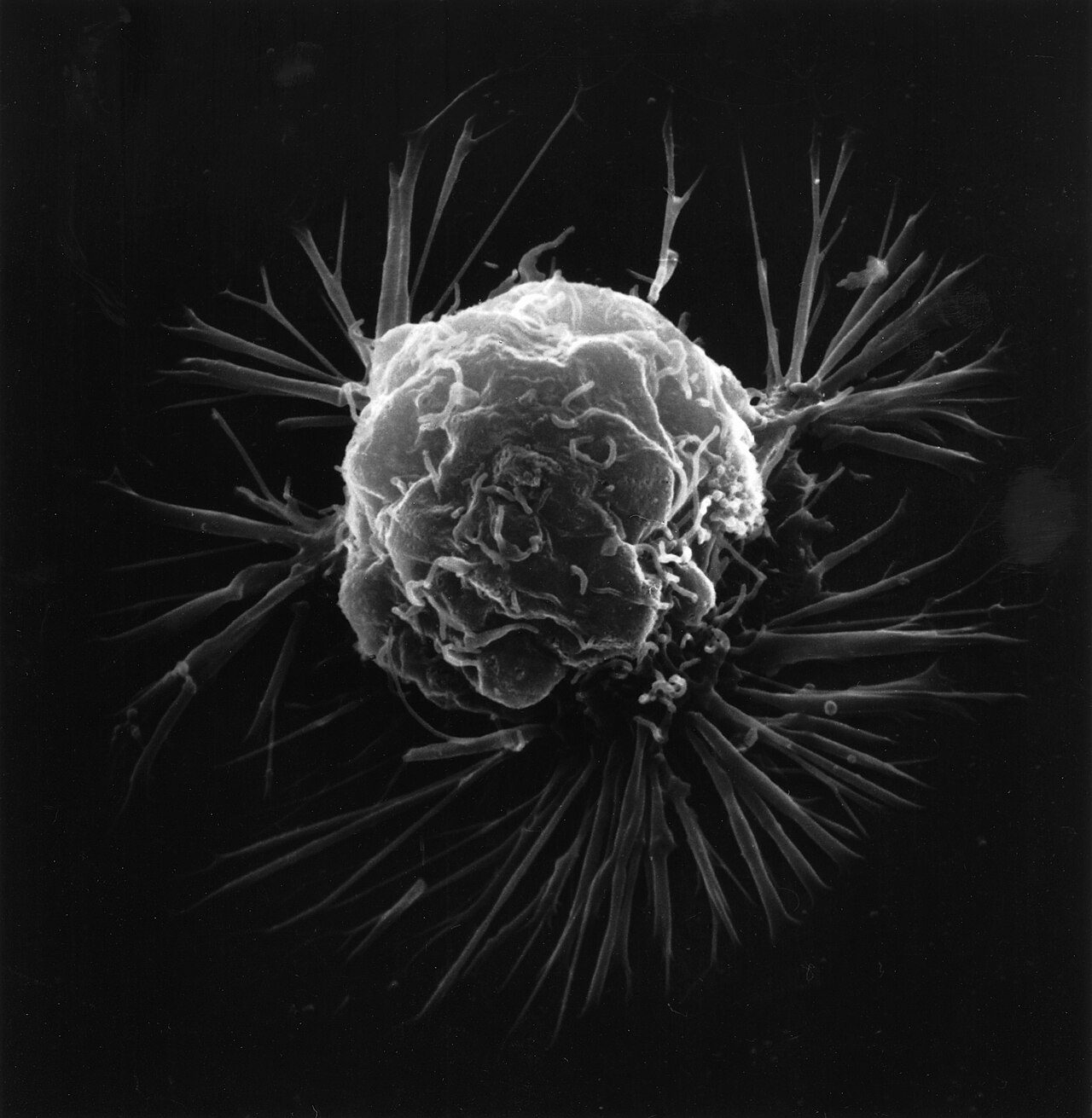
The oldest written description of cancer appears in the Edwin Smith Papyrus, which described a bulging tumour of the breast — and, in the Egyptian judgement preserved in the tradition, a disease without a treatment. Hippocrates, the Greek physician of the fifth and fourth centuries BC, used the words carcinos and carcinoma, Greek for crab, because a tumour with its radiating extensions reminded him of a crab's body and legs. The Roman physician Celsus translated the term into Latin as cancer, the word that stuck.
A century or two later Galen used oncos, Greek for swelling, for tumours in general — the root of the modern word oncology. For roughly fourteen hundred years after Hippocrates, cancer was explained by his humoral theory: an excess of black bile. That single idea, authoritative and wrong, framed everything physicians thought they knew about the disease until the age of autopsy and microscopy dismantled it.
Background
The turn came from looking inside the body. In 1761 the Italian physician Giovanni Morgagni performed systematic autopsies and linked patients' illnesses to what he found after death, founding scientific oncology. In the nineteenth century the improved microscope revealed that cancer was made of cells, that all cells come from other cells, and that cancer cells look visibly different from the normal tissue around them. Pathologists could finally examine removed tissue and tell surgeons whether a tumour had been completely excised.
At the same time, observation of whole populations began. In 1713 Bernardino Ramazzini noted that nuns rarely developed cervical cancer but had high rates of breast cancer, and wondered about lifestyle and childbearing. In 1775 the British surgeon Percival Pott described scrotal cancer in men who had worked as chimney sweeps and blamed soot — the first identification of an environmental cause of cancer, and a founding moment of epidemiology.
Timeline
- c. 1600 BC
Egyptian papyri, drawing on sources perhaps as early as 2500 BC, describe tumours and distinguish benign from malignant growths.
- 1713
Ramazzini links patterns of cancer to occupation and way of life, noting differing rates among nuns.
- 1761
Morgagni's autopsy reports connect illness to internal pathology, laying the groundwork of scientific oncology.
- 1775
Percival Pott identifies soot as the cause of scrotal cancer in chimney sweeps — the first recognised carcinogen.
- 1846
Effective anaesthesia transforms surgery, allowing tumours and lymph nodes to be removed more completely and safely.
- 1895
The discovery of X-rays leads within years to radiation being used against cancer.
- 1911
A virus is shown to cause cancer in chickens, the first evidence that viruses can drive the disease.
- 1937
The United States creates the National Cancer Institute, making cancer research a national institution.
- 1949
Nitrogen mustard, studied as a chemical agent, is approved for treating lymphoma — the birth of chemotherapy.
- 1971
President Nixon signs the National Cancer Act, launching an expanded national cancer programme.
- 1998
Trastuzumab is approved, the first targeted therapy blocking a specific growth protein, HER2, in breast cancer.
Significance
Cancer forced medicine to build several disciplines at once. Pathology grew from Morgagni's autopsies and the microscope; epidemiology from Ramazzini and Pott; public health from the recognition that soot, tobacco and later hepatitis B, Epstein-Barr virus and human papillomavirus could cause specific cancers — work that led, in the HPV case, to a preventive vaccine in 2006. The Pap test, developed in the 1920s, showed screening could cut deaths by finding disease early, and mammography followed in the 1960s.
Treatment shows the same accumulation. Surgery was first, transformed by anaesthesia and antisepsis; the radical mastectomy of the late 1800s stood for a century before trials showed breast-conserving surgery could work as well. Hormone therapy began with the observation in 1895 that removing the ovaries slowed breast cancer, and reached drug form with tamoxifen in 1977. Chemotherapy, born in 1949, produced cures in Hodgkin disease and childhood leukaemia by the 1960s and 1970s. Each advance narrowed the old verdict of incurability, cancer by cancer.
Legacy
By the mid-twentieth century molecular biology reframed cancer as a disease of damaged genes. The discovery of DNA's structure showed how mutations arise; in the 1970s researchers identified oncogenes that drive growth and tumour suppressor genes that restrain it, including later the inherited BRCA1 and BRCA2 mutations. Immunotherapy followed — interferon approved in 1986, monoclonal antibodies, checkpoint inhibitors and cell therapies — and precision medicine began matching treatment to the genes of an individual tumour rather than only to where it began.
The institutional legacy is as large: the National Cancer Institute, the SEER registry programme created after the 1971 Act, and survivorship as a recognised field, with more than 18 million cancer survivors living in the United States as of 2022. A disease once recorded in a papyrus as beyond treatment became the model for how organised science attacks a complex illness.
Sources
- National Cancer Institute (SEER Training) — Cancer: A Historic Perspective
- American Cancer Society — A Brief History of Cancer
- NobelPrize.org — The Nobel Prize in Physiology or Medicine 2008 (HPV and cervical cancer)
The facts on this page were checked against these sources on 19 November 2026. The History Trail's permanent pages are researched and written for this site; the live profiles elsewhere on The History Trail are assembled automatically from Wikipedia and Wikidata.
About the Author
Researched and written by the The History Trail Editorial Team — the accountable editorial function behind this site's permanent story pages. The team works from the published sources cited on each page; it does not invent historians, reviewers or credentials, and it corrects errors openly.
Fact Check
Every load-bearing fact on this page traces to one of the sources listed above, and significant claims link to their source in the text. Our checking method is described on the methodology page; errors can be reported via the corrections page.
Sources & Citations
Cite this page as: The History Trail Editorial Team, The History Trail — this article's title, publication and update dates are shown beneath its headline. The full source list appears under Sources above; the site's source standards are on the sources page.