
Things
Boxing
Boxing is a sport in which two contestants, matched in weight and ability, attack and defend with their fists - today wearing padded gloves, over timed rounds, under the code first set out in the Marquess of Queensberry rules. But it began as bare-fisted fighting, is depicted in the ancient world more than four thousand years ago, and was turned into a regulated sport only by written rules published in England between 1743 and 1867.
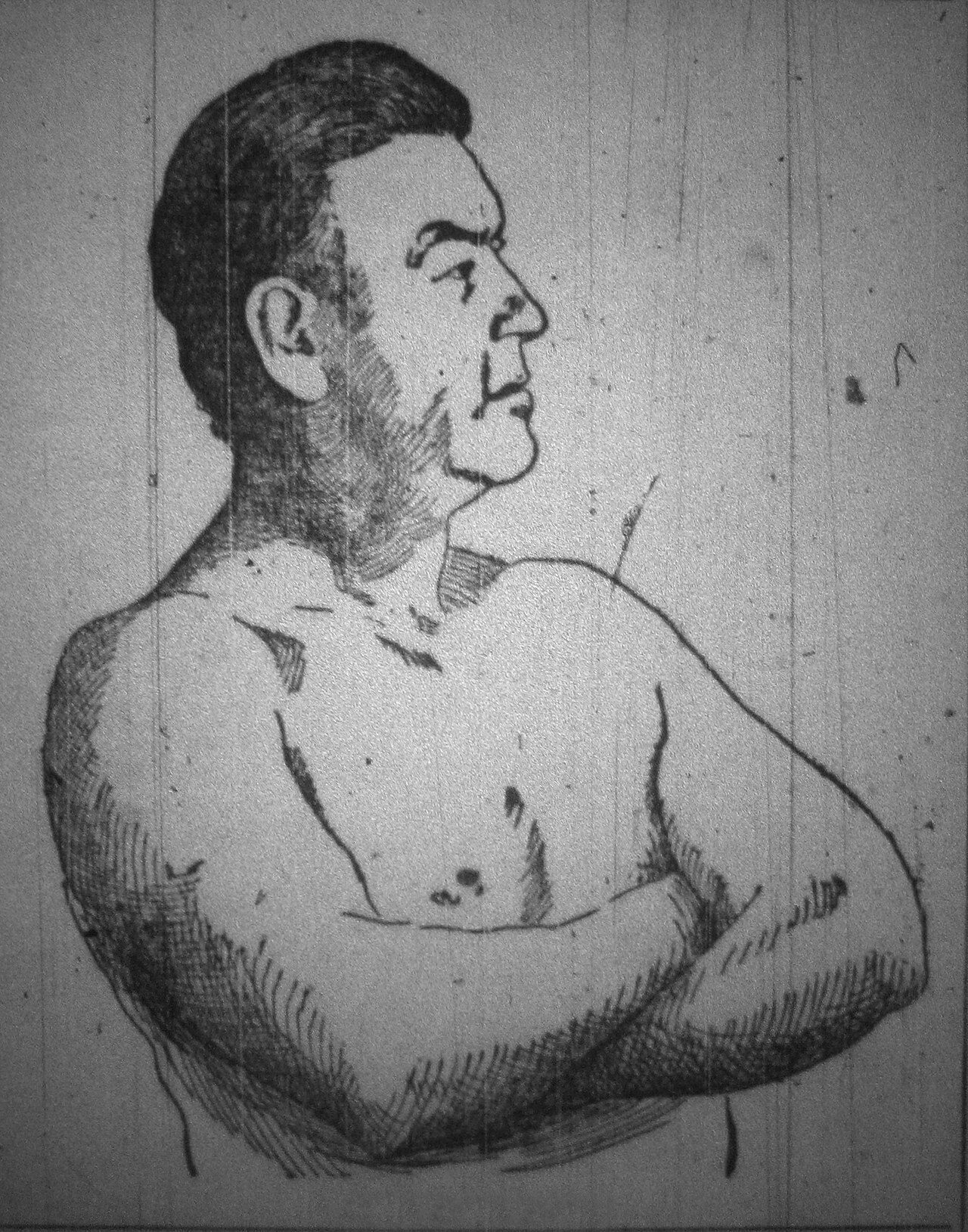
At a Glance
- What it is
- A combat sport in which two matched contestants attack and defend with the fists, usually wearing padded gloves, over timed rounds in a roped ring
- Ancient roots
- Fist-fighting is depicted in Sumerian carvings of the 3rd millennium BC; boxing was an Olympic event in Greece from 688 BC
- The Roman form
- Roman boxers wore the caestus, a leather hand covering often studded with metal, in sporting and gladiatorial arenas
- First champion of the prize ring
- James Figg, recognised as heavyweight champion from 1719, in England's bare-knuckle prizefighting era
- First written rules
- Broughton's rules, 1743, drawn up by champion Jack Broughton for his London amphitheatre; they governed boxing until 1838
- The modern code
- The Marquess of Queensberry rules, drafted by John Graham Chambers and published in 1867: gloves, three-minute rounds, one minute's rest, a ten-second count
- The transition
- Sullivan won the last sanctioned bare-knuckle title fight in 1889 (75 rounds against Kilrain) and lost the gloved title to Corbett in 1892
Introduction
Boxing is among the oldest documented sports in the world and among the most transformed. Fist-fighting appears in Sumerian carvings of the 3rd millennium BC; it was an Olympic event in ancient Greece by 688 BC; and in its Roman form, fought with a metal-studded hand covering called the caestus, it could be lethal spectacle. The modern sport is an English creation of the 18th and 19th centuries: bare-knuckle prizefighting for money, slowly bound by written rules - first Jack Broughton's in 1743, then the London Prize Ring Rules, and finally the Marquess of Queensberry rules of 1867, which required gloves, timed rounds and a ten-second count.
This page keeps to that documented history: the ancient game, the prize ring, and the transition from bare fists to gloves that made boxing a regulated sport rather than a fight to the finish.
Ancient Pugilism: Greece and Rome
The word pugilism itself records the antiquity: Britannica traces it from the Latin pugil, a boxer, related to pugnus, fist, and in turn from the Greek pyx, with clenched fist. The earliest visual evidence for boxing, Britannica notes, is in Sumerian relief carvings from the 3rd millennium BC, and a relief from Egyptian Thebes of about 1350 BC shows boxers and spectators.
Boxing became a formal Olympic event at the 23rd Olympiad in 688 BC. Greek contests had no rounds and no weight classes: a bout continued until one man held up a finger to acknowledge defeat or could not continue, and clinching was forbidden. The Greeks considered boxing the most injurious of their sports - a 1st-century BC inscription praises a pugilist with the line that a boxer's victory is gained in blood. Hand coverings hardened over time, from the ox-hide thongs of the Iliad to the Greek sharp thongs of the 4th century BC. Rome took the logic furthest: the caestus often had metal or spikes sewn into the leather, and Roman boxing was staged in gladiatorial as well as sporting arenas. With the decline of the Roman Empire, pugilism as public entertainment apparently ceased for many centuries.
The Prize Ring: Figg, Broughton and the First Rules
Boxing returned as prizefighting - fighting for money, with spectators wagering on the outcome - in England in the late 17th and early 18th centuries. The British Boxing Board of Control's history names James Figg, recognised from 1719 as the first heavyweight champion, as the era's founding figure. These early prizefights were bare-knuckle affairs with few restraints, staged in amphitheatres amid side-stakes and disputed results.
The first written code came from a champion who wanted order in his own venue. In 1743 Jack Broughton formulated rules for bouts at his London amphitheatre: they forbade hitting a man when he was down and seizing an opponent by the hair, and allowed a downed man thirty seconds to come back to the mark, helped by his handlers. Broughton's rules governed boxing until 1838, when the London Prize Ring Rules - built on Broughton's - replaced them, revised in 1853. Under those rules a round ended whenever a man went down, there was no limit to the number of rounds, and a fallen fighter had to reach the scratch mark in the centre of the ring unaided within eight seconds after his thirty seconds' rest. Fights could last for hours, and the sport remained illegal in many places even as it drew large crowds.
Timeline
- 3rd millennium BC
Sumerian relief carvings show fist-fighters - the earliest visual evidence for boxing, according to Britannica.
- 688 BC
Boxing becomes a formal event at the ancient Olympic Games, at the 23rd Olympiad.
- c. 1500 BC
A carved vase from Minoan Crete shows boxers with a stiff plate strapped to the fist - the earliest evidence of hand coverings.
- 1719
James Figg is recognised as England's first heavyweight champion of the bare-knuckle prize ring.
- 1743
Jack Broughton publishes his rules for his London amphitheatre - boxing's first written code, governing the sport until 1838.
- 1838
The London Prize Ring Rules replace Broughton's code; a round ends when a man goes down, and there is no limit on rounds.
- 1867
The Marquess of Queensberry rules are published: gloves required, three-minute rounds, one minute's rest, a ten-second count.
- 8 July 1889
John L. Sullivan beats Jake Kilrain in 75 rounds in Mississippi - the last sanctioned bare-knuckle heavyweight title fight.
- 7 September 1892
James J. Corbett defeats Sullivan in New Orleans in a gloved heavyweight title fight under the Queensberry rules.
- 1904
Boxing makes its debut at the modern Olympic Games at St Louis.
Queensberry and the Glove Transition
The code that made modern boxing was drafted not by a marquess but by a sportsman. John Graham Chambers wrote the twelve rules published in 1867 under the name and patronage of John Sholto Douglas, 9th Marquess of Queensberry. Their provisions are still the skeleton of the sport: a fair stand-up match in a roped ring of 24 feet; no wrestling or hugging; rounds of three minutes with one minute's rest; a man down must rise unaided within ten seconds; and gloves - fair-sized boxing gloves of the best quality, and new. The Board's summary notes what the code prohibited: bare-fisted fighting, wrestling, hugging, hitting a helpless opponent, and fighting to the finish.
Adoption took a generation, because the two codes coexisted. The hinge figure is John L. Sullivan, generally recognised as both the last heavyweight champion of bare-knuckle boxing and the first of the gloved era. On 8 July 1889 Sullivan defeated Jake Kilrain near Richburg, Mississippi, in the last sanctioned bare-knuckle heavyweight title fight - 75 rounds under the London Prize Ring Rules. Three years later, on 7 September 1892 in New Orleans, fighting with gloves under the Queensberry rules, Sullivan lost the heavyweight championship to James J. Corbett in the 21st round. The Board's history concludes that the Queensberry rules have remained the code governing professional boxing ever since.
Significance
Boxing's history is a case study in what written rules do to a violent pastime. Each code answered a failure of the one before: Broughton's rules stopped men being hit while down; the London rules defined the ring and the scratch; the Queensberry rules replaced unlimited endurance with timed rounds, rest, a count, and gloves - shifting the contest, in the Board's words, toward skill rather than wrestling and agility over strength. The modern structure of rounds, weight divisions and referees descends from that 19th-century paperwork.
Myths and disputes
Two common claims need care. The first is that the Marquess of Queensberry invented the rules that bear his name: he did not - John Graham Chambers drafted them, and Queensberry lent them his name and standing, which is why a prizefighting code could gain respectability. Some published histories, including the British Boxing Board of Control's own brief history, misprint the drafting date as 1857; the rules were published in 1867, and this page follows that date. The second is that gloves made boxing safe. Gloves changed the sport - protecting the hands as much as the head, and making sustained punching to the head more, not less, practical - and doctors and historians have debated their net effect ever since. What the Queensberry rules demonstrably did was regulate: they made bouts shorter, timed, refereed and decidable without a finish. That is a claim about order, not safety, and it is the one the record supports.
Legacy
Modern boxing still fights inside the Queensberry frame: padded gloves, three-minute rounds, a ten-second count, a referee in the ring, and victory by outscoring an opponent or rendering him unable to continue. It has been an Olympic sport in the modern Games since 1904. The bare-knuckle era survives as the sport's founding memory, but its defining artefact is not a fist. It is a list of twelve rules, published in 1867, that turned an outlawed prizefight into a sport the whole world could stage.
Sources
- Encyclopaedia Britannica - Boxing
- British Boxing Board of Control - A Brief History of Boxing
- The Property Chronicle - Queensberry Rules of boxing: OK or KO?
- Sportmentary - The History of Boxing
The facts on this page were checked against these sources on 19 November 2026. The History Trail's permanent pages are researched and written for this site; the live profiles elsewhere on The History Trail are assembled automatically from Wikipedia and Wikidata.
About the Author
Researched and written by the The History Trail Editorial Team — the accountable editorial function behind this site's permanent story pages. The team works from the published sources cited on each page; it does not invent historians, reviewers or credentials, and it corrects errors openly.
Fact Check
Every load-bearing fact on this page traces to one of the sources listed above, and significant claims link to their source in the text. Our checking method is described on the methodology page; errors can be reported via the corrections page.
Sources & Citations
Cite this page as: The History Trail Editorial Team, The History Trail — this article's title, publication and update dates are shown beneath its headline. The full source list appears under Sources above; the site's source standards are on the sources page.