
Things
Bohemian Rhapsody
Bohemian Rhapsody is a song by the British rock band Queen, written by Freddie Mercury and released as a single on 31 October 1975 - a 5-minute-55-second suite with no chorus, moving through ballad, opera and hard rock sections, which its record company doubted could be a hit at all. It spent nine weeks at number one in Britain, returned to number one in 1991 after Mercury's death, was revived for a new generation by the film Wayne's World in 1992, and in 2022 was selected for the United States National Recording Registry. This page traces the documented history of the recording itself: its making, its chart runs, and its afterlife.
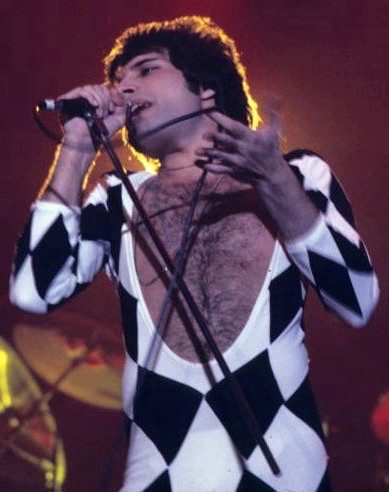
At a Glance
- What it is
- A song by Queen, written by Freddie Mercury, lead single from the album A Night at the Opera; a suite of intro, ballad, operatic passage, hard rock section and coda, with no repeating chorus
- Recorded
- From 24 August to September 1975, beginning at Rockfield Studios in Wales and working across five studios, produced by Roy Thomas Baker and Queen
- Released
- 31 October 1975, on EMI; running time 5 minutes 55 seconds
- First chart run
- Number one in the UK for nine weeks from late November 1975 (the 1975 Christmas number one); number 9 on the US Billboard Hot 100 in 1976
- Second chart run
- Reissued in December 1991 after Freddie Mercury's death as a double A-side with These Are the Days of Our Lives, it returned to UK number one for five weeks - the same recording is the only song to be UK Christmas number one twice
- Wayne's World revival
- Its car-scene appearance in the 1992 film Wayne's World took the song to number 2 in the United States in 1992, behind Kris Kross's Jump
- Preserved
- Named the top British single of all time in a 2002 Guinness World Records poll; inducted into the Grammy Hall of Fame in 2004; selected for the Library of Congress National Recording Registry in 2022
Introduction
Most hit singles are built to a formula: verse, chorus, repeat. Bohemian Rhapsody was built the other way. Mercury, who called the song a mock opera, described it as several songs he had written - some fragments dating back, he said, to when the group started - joined into one continuous piece. There is no chorus to return to. Instead the recording changes character completely several times in under six minutes, and its lyric has never been given an official explanation by its writer, who advised listeners, in words quoted by Official Charts, to listen, think about it, and make up their own minds as to what it says to them.
That refusal is part of the record's history: what follows is the verifiable story of a recording - who made it, when, what the industry thought of it, and what audiences did with it - not a decoding of its lyric.
Writing and Recording, 1975
Queen rehearsed the song for about three weeks at Penrhos Court in Herefordshire before recording began on 24 August 1975 at Rockfield Studios near Monmouth in Wales, with producer Roy Thomas Baker. Work continued into September across five studios in all - Rockfield and the London studios Roundhouse, Sarm, Scorpio Sound and Wessex. The operatic passage was built from massed vocal overdubs by Mercury, guitarist Brian May and drummer Roger Taylor, with the total number of overdubs commonly reported at around 180, bounced and re-bounced on the 24-track tape machines of the day.
The result was a suite in distinct sections: a close-harmony introduction, a piano ballad, a guitar solo, an operatic passage using deliberately bombastic, Italianate phrases, a hard rock section, and a quiet reflective coda. At 5 minutes 55 seconds it was roughly twice the length of a standard single, and it carried the ambitions of the album it led: A Night at the Opera, released on 28 November 1975, was reported at the time as one of the most expensive albums ever made.
Release: The Label's Doubts and Kenny Everett
The doubts are documented, not legendary. Official Charts records that the song's length was intimidating for radio programmers and that the record company, along with fellow musicians such as Elton John, doubted it would be a hit because, in Official Charts' summary, it went on a bit. Queen insisted on the full-length single, and its break came through radio: Capital Radio DJ Kenny Everett obtained a reel-to-reel copy before release and played it 14 times within two days, according to Official Charts, and listeners descended on record shops demanding a record they could not yet buy.
Released on 31 October 1975, Bohemian Rhapsody reached number one in Britain on the chart dated 29 November and stayed there for nine weeks, spanning Christmas and New Year - the 1975 Christmas number one. In the United States it peaked at number 9 in 1976, Queen's first American top ten hit. Its promotional film, shot to stand in for the band on television, was not the first pop promo, as Official Charts carefully notes, but it was the occasion on which the industry first clearly saw the power of the form. In 1977 the song shared the BRIT Award for Best Single at the inaugural BRITs.
Timeline
- 24 August 1975
Recording begins at Rockfield Studios, Wales, after three weeks of rehearsal at Penrhos Court; sessions continue across five studios into September.
- 31 October 1975
Bohemian Rhapsody is released as a single in the UK, after Kenny Everett's 14 pre-release plays on Capital Radio build public demand.
- 29 November 1975
The song reaches number one in the UK and holds the top spot for nine weeks, including Christmas 1975.
- 1976
The song peaks at number 9 on the US Billboard Hot 100; in Britain it is finally displaced at number one by ABBA's Mamma Mia.
- 1977
Bohemian Rhapsody shares the Best Single award at the inaugural BRIT Awards.
- 24 November 1991
Freddie Mercury dies in London, a day after publicly confirming he had AIDS.
- December 1991
Reissued as a double A-side with These Are the Days of Our Lives, with proceeds to charity, the song returns to UK number one for five weeks - Christmas number one again, with the same recording.
- 14 February 1992
The film Wayne's World opens, its car headbanging scene introducing the song to a new American generation.
- May 1992
Re-released in the United States after Wayne's World, the song peaks at number 2 on the Billboard Hot 100, held off the top by Kris Kross's Jump.
- 2002-2004
A Guinness World Records poll names it the top British single of all time (2002); it is inducted into the Grammy Hall of Fame (2004).
- December 2018
Following the biographical film Bohemian Rhapsody, the song is announced as the most-streamed song from the 20th century, passing 1.6 billion streams; its video passes one billion YouTube views in July 2019.
- 2022
The Library of Congress selects the 1975 recording for the National Recording Registry; the previous year it had been certified Diamond in the United States for 10 million units.
Significance
The song's significance is measurable in a way few recordings can match: it has been a major hit in three separate eras, with the identical recording, for three different reasons - novelty and radio demand in 1975, mourning and charity in 1991, and film-driven rediscovery in 1992, followed by a streaming-era resurgence after 2018. Official Charts notes its unique distinction of holding the UK number one spot across four different calendar years: 1975, 1976, 1991 and 1992. It also changed industry practice, proving a long, chorus-free single could top the chart and showing how a film placement could return a catalogue recording to the top.
Questions readers ask
What is the song about? Officially, nobody knows, and that is the documented answer. Mercury declined to explain it, saying, as Official Charts quotes him, that people should listen, think about it, and make up their own minds. Theories connecting the lyric to Mercury's life are speculation by others, published after the fact; they are not supported by any statement of his, and this page does not present them as fact. What can be said from the record is structural: it is a suite of contrasting sections, its title appears nowhere in its lyric - a point Official Charts itself makes - and its operatic passage is a deliberate mock opera, in Mercury's own description.
Was it the longest number one of its time? No. At 5 minutes 55 seconds it was unusually long for a single, but longer hits already existed; the Beatles' Hey Jude, at over seven minutes, had topped charts in 1968. Was its 1991 return a new version? No - the distinction it holds, the only song to be UK Christmas number one twice, belongs to exactly the same 1975 recording, reissued. And did Wayne's World rescue a forgotten song? Not in Britain, where it had just spent five weeks at number one; the film's documented effect was American, carrying a song that had peaked at number 9 in 1976 to number 2 in 1992.
Legacy
The afterlife has kept compounding. In December 2018 the song was announced as the most-streamed recording of the 20th century, with more than 1.6 billion streams across global on-demand services at that date, overtaking Nirvana's Smells Like Teen Spirit; in July 2019 its 1975 promotional film became the oldest video to pass one billion views on YouTube. In 2021 it received a Diamond certification in the United States, for 10 million units, and in April 2022 the Library of Congress added the recording to the National Recording Registry, its preservation list for recordings of cultural, historical or aesthetic significance. A single its own label feared was too long to play is now, formally, part of the recorded heritage preserved for good.
Sources
- Official Charts - Celebrating 50 years of Queen's Bohemian Rhapsody
- The Kennedy Center - On This Day in the Arts: August 24 (Queen begin recording Bohemian Rhapsody, 1975)
- ASCAP - 12 Timeless ASCAP Works Inducted Into National Recording Registry in 2022
- NME - Queen: 20 Things You Probably Never Knew About Bohemian Rhapsody
- Music Musings and Such - Is This Just Fantasy? Fifty Years Since Queen Started Recording Bohemian Rhapsody
The facts on this page were checked against these sources on 19 November 2026. The History Trail's permanent pages are researched and written for this site; the live profiles elsewhere on The History Trail are assembled automatically from Wikipedia and Wikidata.
About the Author
Researched and written by the The History Trail Editorial Team — the accountable editorial function behind this site's permanent story pages. The team works from the published sources cited on each page; it does not invent historians, reviewers or credentials, and it corrects errors openly.
Fact Check
Every load-bearing fact on this page traces to one of the sources listed above, and significant claims link to their source in the text. Our checking method is described on the methodology page; errors can be reported via the corrections page.
Sources & Citations
Cite this page as: The History Trail Editorial Team, The History Trail — this article's title, publication and update dates are shown beneath its headline. The full source list appears under Sources above; the site's source standards are on the sources page.