
Things
Black Friday
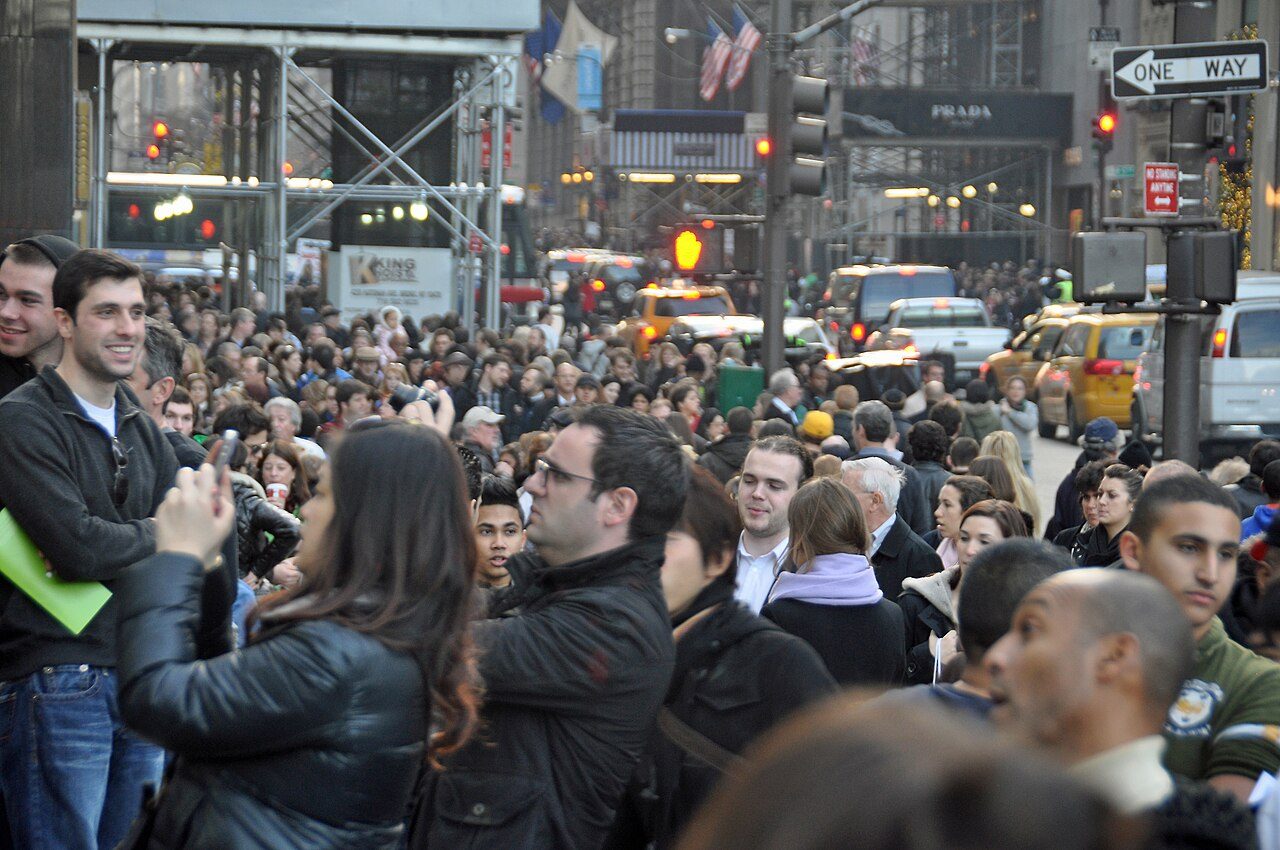
Black Friday is the Friday after Thanksgiving in the United States, and it has become one of the busiest shopping days of the year. Its name was not coined to celebrate profit: Philadelphia police invented it in the 1950s for a day of crowds, gridlock and exhausting shifts.
At a Glance
- Day
- The Friday after US Thanksgiving (the fourth Thursday in November)
- Name coined by
- Philadelphia police, in the 1950s and early 1960s, for the chaos of crowds and traffic
- Earlier use of the term
- 24 September 1869, for the crash of the US gold market — unrelated to shopping
- Retail rebranding
- Late 1980s, when merchants spread the story that the day put shops 'into the black'
- Arrival in Britain
- Amazon UK deals in 2010; Walmart-owned Asda held an in-store sale in 2013
- US online sales, 2024
- $10.8 billion spent online on Black Friday itself, according to Adobe Analytics
Introduction
Black Friday got its shopping name from Philadelphia police officers, who in the 1950s and early 1960s used it for the chaos that hit their city on the day after Thanksgiving, when suburban shoppers poured downtown to start their Christmas shopping. It is the Friday following Thanksgiving in the United States, and it has grown into one of the busiest shopping days of the year, when national chains offer limited money-saving specials in stores and online to lure in the crowds.
The name began as a complaint, not a slogan. The huge crowds meant longer shifts for police dealing with traffic jams, accidents and shoplifting, and local merchants disliked the gloomy label enough to try renaming the day 'Big Friday'. The cheerful explanation most shoppers now hear — that the day is when shops move out of the red and into the black — was attached to the name decades later, when retailers took it nationwide in the late 1980s.
Origins
The phrase itself is older than the shopping day, and its first famous use had nothing to do with shops. On Friday 24 September 1869, Wall Street financiers Jay Gould and Jim Fisk tried to corner the nation's gold market at the New York Gold Exchange, buying up gold to drive its price skyward. When President Ulysses S. Grant intervened, the scheme collapsed, the stock market plummeted and thousands of Americans were sent into bankruptcy. That disastrous day was remembered as Black Friday, but it shares only a name with the shopping event that followed almost a century later.
Retail gave the day its modern setting before it gave it a name. Thanksgiving's date was itself once moved for shoppers' sake: in 1939 President Franklin D. Roosevelt shifted the holiday a week earlier, from 30 November to 23 November, hoping to aid retail business with a longer Christmas shopping season. The experiment caused such commotion that on 26 December 1941 he signed into law a congressional resolution fixing Thanksgiving on the fourth Thursday in November. The Friday after it, already a busy shopping day, was the day Philadelphia police were soon dreading — all the more because in some years the city's Saturday Army-Navy football game added thousands more visitors to the crowds.
Timeline
- 24 September 1869
Financiers Jay Gould and Jim Fisk fail to corner the US gold market; the crash that follows is remembered as Black Friday, the term's first famous use.
- 1939
President Franklin D. Roosevelt moves Thanksgiving a week earlier, to 23 November, to lengthen the Christmas shopping season and help retailers.
- 26 December 1941
Roosevelt signs the congressional resolution fixing Thanksgiving on the fourth Thursday in November, settling the Friday that follows as the season's opening shopping day.
- 1950s
Philadelphia police are using 'Black Friday' for the day after Thanksgiving, when crowds of shoppers and football fans overwhelm the city centre.
- 1961
Philadelphia merchants try to give the day a prettier name, 'Big Friday' — the attempt fails and Black Friday sticks.
- Late 1980s
Merchants spread the name nationwide, along with a new story: that the day's sales finally put shops 'into the black' for the year.
- 2010
Amazon offers Black Friday deals in the United Kingdom, exporting the event to a country that does not celebrate Thanksgiving.
- 2013
Walmart-owned Asda holds its first in-store Black Friday sale in Britain, with deep discounts on televisions and electronics; fights break out at a number of stores.
- 2014
In Britain, police are called to at least seven Tesco stores after fights among Black Friday shoppers, and a woman is slightly injured by a falling television.
- 2024
US consumers spend $10.8 billion online on Black Friday alone, up 10.2 per cent on the year before, according to Adobe Analytics.
Significance
Black Friday became the hinge of the American retail year. Because Thanksgiving is a holiday and the Friday after it a day off for many workers, the day offered a captive audience, and stores competed to capture it first: limited specials, extended opening hours and a small number of headline bargains — the deals later nicknamed doorbusters — designed to pull a queue through the doors at opening time. For decades the day was treated as the unofficial start of the Christmas shopping season and a test of consumer confidence, and the crowds, camp-outs and occasional scuffles at the doors became part of its image.
In the last two decades the centre of gravity has moved from the shop door to the phone screen. Online Black Friday spending in the United States reached $10.8 billion in 2024, and the single frantic day has stretched into a season of rolling promotions, with companion events filling the weekend after it: Small Business Saturday, Cyber Monday and Giving Tuesday. Abroad, the event detached itself from Thanksgiving altogether. Britain imported it through Amazon in 2010 and Asda in 2013, and within a few years British retailers were running a 'Black week' of deals even though the Friday is an ordinary working day there.
Myths and disputes
One claim about Black Friday is not a disputed interpretation but a myth, and it should be stated plainly: the story that the name comes from enslaved people being sold at a discount on the day after Thanksgiving is false. The Old Farmer's Almanac, reviewing the claim that circulates on social media, states that this narrative 'has been repeatedly proven false and has no historical basis'. The documented record points elsewhere entirely: the shopping name appears in Philadelphia in the 1950s, generations after the abolition of slavery in the United States, in the mouths of police officers describing traffic and crowds.
The more respectable-sounding origin story is also wrong as an origin. Britannica states directly that the popular belief that 'Black Friday' derives from businesses operating at a loss, 'in the red', until the day after Thanksgiving puts them 'in the black' is untrue: that red-to-black narrative only spread nationwide in the late 1980s, when merchants reframed a name they had inherited. Britannica adds a further irony — in truth, most stores historically saw their largest sales not on Black Friday at all, but on the Saturday before Christmas. The 1869 gold crash, by contrast, is real history; it is simply a different Black Friday, connected to the shopping day by the name alone.
Legacy
Black Friday's legacy is a retail calendar reorganised around a single weekend, and a name so durable that it survived both the officers who coined it as a curse and the merchants who tried to rename it. It also demonstrated how far a shopping custom can travel once it is detached from its original holiday: a country without Thanksgiving adopted the day, fought over televisions in its supermarkets, and then, like the United States, largely moved the whole business online.
What remains contested is the day's meaning. For retailers it is still a headline measure of the season; for many shoppers it has become a rolling November discount season rather than one morning of queues. The name, though, keeps its original, darker flavour — a reminder that before Black Friday was a celebration of bargains, it was the day the police dreaded most.
Sources
- Encyclopaedia Britannica — Why Is It Called Black Friday?
- National Archives — Thanksgiving: Another FDR Experiment
- The Old Farmer's Almanac — Why Is It Called Black Friday?
- Marketplace — The U.K. imported Black Friday in its full glory
- Adobe News — Cyber Monday Hits Record $13.3 Billion in Online Spending (Cyber Week data, including Black Friday)
The facts on this page were checked against these sources on 19 November 2026. The History Trail's permanent pages are researched and written for this site; the live profiles elsewhere on The History Trail are assembled automatically from Wikipedia and Wikidata.
About the Author
Researched and written by the The History Trail Editorial Team — the accountable editorial function behind this site's permanent story pages. The team works from the published sources cited on each page; it does not invent historians, reviewers or credentials, and it corrects errors openly.
Fact Check
Every load-bearing fact on this page traces to one of the sources listed above, and significant claims link to their source in the text. Our checking method is described on the methodology page; errors can be reported via the corrections page.
Sources & Citations
Cite this page as: The History Trail Editorial Team, The History Trail — this article's title, publication and update dates are shown beneath its headline. The full source list appears under Sources above; the site's source standards are on the sources page.