
People
Marie Curie
Marie Curie is still the only person to have won Nobel Prizes in two different scientific categories. Working in a draughty Paris shed, she and her husband Pierre pulled two new elements out of tonnes of mining waste — and the radiation she named and studied eventually killed her.
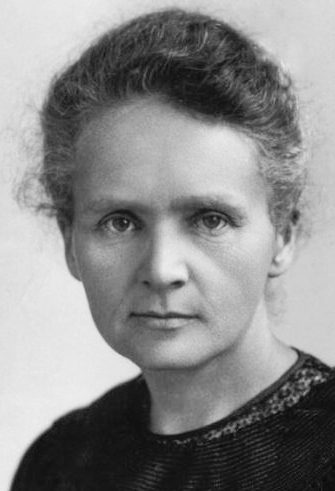
At a Glance
- Born
- 7 November 1867, Warsaw, Poland (then in the Russian Empire), as Maria Skłodowska
- Died
- 4 July 1934, near Sallanches, France, aged 66
- Elements discovered
- Polonium (named for Poland) and radium, both announced in 1898
- Nobel Prizes
- Physics 1903 (with Pierre Curie and Henri Becquerel); Chemistry 1911, hers alone
- Firsts
- First woman to win a Nobel Prize; first woman to receive a doctorate in France; first woman to teach at the Sorbonne
- War service
- Developed mobile X-ray units — the 'petites Curies' — for First World War battlefields
Introduction
Marie Curie was a Polish-born French physicist and chemist whose work on radioactivity — a word she coined — changed what scientists thought an atom was. With her husband Pierre, she discovered two new elements, polonium and radium, in 1898, and showed that radiation did not depend on how atoms were arranged in molecules: something was happening inside the atom itself, which scientists of the day believed to be inert and indivisible.
The honours followed the work. In 1903 she became the first woman to receive a Nobel Prize, sharing the Physics prize with Pierre and Henri Becquerel. In 1911 she won the Chemistry prize alone, for isolating radium. She remains the only person ever awarded Nobel Prizes in two different scientific categories, a record that has now stood for more than a century.
Background
She was born Maria Skłodowska in Warsaw in 1867, under a Tsarist regime that was trying to stamp out Polish culture. Both her parents were teachers, and the family was poor and unlucky: her mother died of tuberculosis and her oldest sister of typhus when Marie was eleven. Women were barred from university anywhere in the Russian Empire, so she made a pact with her sister Bronya — Marie would work to support Bronya's medical studies in Paris, and Bronya would then pay her way in turn.
From the age of seventeen she worked for six years as a governess and tutor, studying in her spare time, before finally enrolling at the Sorbonne at twenty-four. In Paris she met Pierre Curie, a physicist whose laboratory she worked in; they married in 1895. When Henri Becquerel discovered radiation in uranium, Curie chose it as her thesis subject — and noticed that a uranium ore was far more radioactive than its uranium content could explain. There had to be something else in the ore.
Timeline
- 1867
Born on 7 November in Warsaw, the daughter of two teachers.
- 1891
Arrives in Paris and enrols at the Sorbonne, after six years working as a governess to fund her sister's studies and then her own.
- 1895
Marries Pierre Curie, the physicist in whose laboratory she had been working.
- 1898
The Curies announce polonium, named after Marie's birth country, and then radium — two new elements found in pitchblende ore.
- 25 June 1903
Defends her doctoral thesis on radioactive substances at the Sorbonne, becoming the first woman in France to receive a doctoral degree.
- 1903
Shares the Nobel Prize in Physics with Pierre Curie and Henri Becquerel — the first Nobel Prize awarded to a woman.
- 1906
Pierre Curie is killed by a horse-drawn carriage in Paris; Marie is appointed to his professorship, the first woman to teach at the Sorbonne.
- 1911
Awarded the Nobel Prize in Chemistry, alone, for the discovery of radium and polonium and the isolation of radium.
- 1914
The Radium Institute's laboratories are completed in Paris; during the war she develops radiological cars to X-ray wounded soldiers at the front.
- 1934
Dies on 4 July of aplastic anaemia, likely caused by years of radiation exposure.
Significance
Curie's central discovery was conceptual as much as chemical. By observing radium she established that radiation was not a property of molecules but of atoms themselves — the atom was not solid, inert or indivisible after all. That single insight opened the road to nuclear physics. Her techniques for isolating radioactive isotopes, and the elements she extracted from tonnes of pitchblende in a poorly ventilated shed, gave the new science its working materials.
She also insisted that research was a public good. The Curies found that radium destroyed diseased cells faster than healthy ones, pointing to radiation as a treatment for tumours, and during the First World War she championed the use of X-rays in medicine, developing the radiological cars known as petites Curies so battlefield surgeons could X-ray wounded soldiers and operate more accurately. The Radium Institute she directed became a world centre for nuclear physics and chemistry.
Legacy
Curie died in 1934, aged 66, of aplastic anaemia, her death likely caused by the radiation she had handled for decades without protection — neither she nor Pierre had understood the danger, working for years in that shed isolating radium salts from pitchblende. In 1995 her ashes were enshrined in the Panthéon in Paris; she was the first woman to receive that honour for her own achievements. Her daughter Irène joined the Radium Institute's staff and carried the work into a second generation, herself winning a Nobel Prize. From 1922 Curie was a member of the Academy of Medicine, devoting her research to the chemistry of radioactive substances and their medical applications. The institute she founded, now the Curie Institute, still carries her name, and so does the standard her career set: two Nobel Prizes, in two sciences, won by a woman whom her birthplace would not even allow into a university.
Sources
- NobelPrize.org — Marie Curie (Women who changed science)
- Encyclopaedia Britannica — Marie Curie
- Encyclopaedia Britannica — Marie Curie summary
The facts on this page were checked against these sources on 19 November 2026. The History Trail's permanent pages are researched and written for this site; the live profiles elsewhere on The History Trail are assembled automatically from Wikipedia and Wikidata.
About the Author
Researched and written by the The History Trail Editorial Team — the accountable editorial function behind this site's permanent story pages. The team works from the published sources cited on each page; it does not invent historians, reviewers or credentials, and it corrects errors openly.
Fact Check
Every load-bearing fact on this page traces to one of the sources listed above, and significant claims link to their source in the text. Our checking method is described on the methodology page; errors can be reported via the corrections page.
Sources & Citations
Cite this page as: The History Trail Editorial Team, The History Trail — this article's title, publication and update dates are shown beneath its headline. The full source list appears under Sources above; the site's source standards are on the sources page.