
People
Leonardo da Vinci
Leonardo da Vinci, born on 15 April 1452 — the 575th anniversary of his birth falls on 15 April 2027 — painted two of the most famous pictures in the world, the Last Supper and the Mona Lisa, and left thousands of notebook pages on anatomy, water, flight and machines.
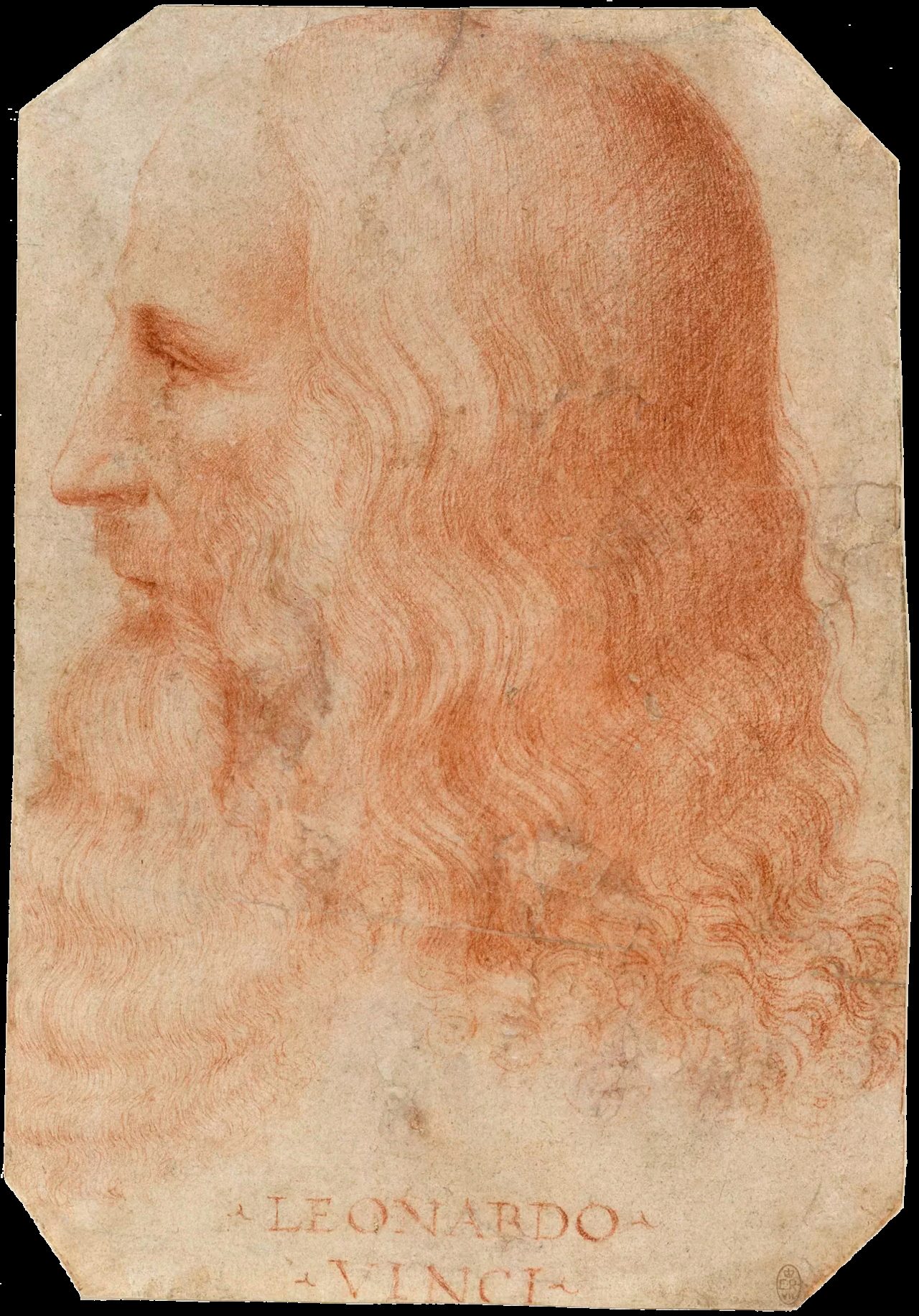
At a Glance
- Born
- 15 April 1452, Anchiano, near Vinci, Republic of Florence
- Died
- 2 May 1519, Cloux (now Clos-Lucé), France
- Training
- Apprenticed to Andrea del Verrocchio in Florence; accepted into the Florentine painters' guild in 1472
- Milan years
- 1482–99 in the service of Duke Ludovico Sforza, as 'painter and engineer of the duke'
- Masterpieces
- Last Supper (1495–98); Mona Lisa (c. 1503–19); The Virgin of the Rocks; Lady with an Ermine
- Notebooks
- Thousands of pages of drawings and notes on anatomy, engineering, hydraulics and flight — most left to his pupil Francesco Melzi
Introduction
Leonardo da Vinci was an Italian painter, draftsman, sculptor, architect and engineer whose skill and intelligence, perhaps more than that of any other figure, epitomised the Renaissance humanist ideal. His Last Supper (1495–98) and Mona Lisa (c. 1503–19) are among the most widely popular and influential paintings of the Renaissance. His notebooks reveal a spirit of scientific inquiry and mechanical inventiveness centuries ahead of its time.
The fame rests on a paradox: very few finished works. Leonardo completed only a small number of paintings in a long career, and many projects were abandoned — yet the drawings, studies and notebooks he left show a mind that treated every phenomenon as an object of knowledge. To Leonardo, sight was a person's highest sense, and saper vedere — knowing how to see — became the great theme of his studies. The Metropolitan Museum of Art counts almost 2,500 surviving drawings.
Background
Leonardo's parents were unmarried at his birth. His father, Ser Piero da Vinci, was a Florentine notary and landlord; Leonardo grew up on his father's family estate, treated as a legitimate son, and received the usual elementary education — reading, writing and arithmetic. He did not seriously study Latin, the key language of traditional learning, until much later, acquiring it on his own, and he came to higher mathematics only at thirty.
His artistic inclinations appeared early. At about fifteen his father apprenticed him to Andrea del Verrocchio, in whose renowned Florence workshop he trained in painting and sculpture as well as the technical-mechanical arts. The angel he contributed to Verrocchio's Baptism of Christ already showed his gift. In 1472 he was accepted into the painters' guild of Florence, remained in the workshop five more years, and then worked independently in Florence until 1481.
Milan: Painter and Engineer to Ludovico Sforza
In 1482 Leonardo left Florence for Milan, abandoning the unfinished Adoration of the Magi, and offered himself to Duke Ludovico Sforza not chiefly as a painter but as a military and hydraulic engineer who could also paint. The offer worked. For some seventeen years, until the French took Milan in 1499, he served the Sforza court as painter and engineer of the duke: he advised on fortifications and canals, staged court spectacles, modelled a colossal bronze horse that was never cast, and painted. The Virgin of the Rocks, begun about 1483, and the Last Supper (1495–98) both belong to these Milan years.
When Milan fell, Leonardo's career became itinerant: Mantua and Venice, a spell as military engineer to Cesare Borgia, then Florence again from 1500. There he began the Mona Lisa and the Virgin and Child with Saint Anne, and deepened the anatomical and optical studies that fill the notebooks. A second Milan period under French rule (1506–13) and three years in Rome followed, before the invitation that ended his wanderings came from France.
Timeline
- 15 April 1452
Born at Anchiano, near Vinci, the son of the notary Ser Piero da Vinci and Caterina.
- c. 1467
Apprenticed to Andrea del Verrocchio in Florence, training in painting, sculpture and the mechanical arts.
- 1472
Accepted into the painters' guild of Florence; remains with Verrocchio five more years before working independently.
- 1482
Leaves Florence for Milan, abandoning the unfinished Adoration of the Magi, and enters the service of Duke Ludovico Sforza.
- c. 1483
Begins The Virgin of the Rocks for a Milan confraternity — a commission that leads to ten years of litigation and a second version.
- 1495–98
Paints the Last Supper on the refectory wall of Santa Maria delle Grazie, Milan.
- 1500–08
Back in Florence, he begins the Mona Lisa and the Virgin and Child with Saint Anne, and pursues anatomy, optics and water studies.
- c. 1510–11
Working alongside the anatomist Marcantonio della Torre at Pavia, he produces the great anatomical sheets now in the Royal Collection.
- 1513–16
Lives in Rome under Medici patronage, increasingly occupied with science and mathematics.
- 1516–17
Accepts the French king Francis I's offer and moves to the Château of Cloux, near Amboise, for his final years.
- 2 May 1519
Dies at Cloux, aged 67, leaving most of his works to his pupil Francesco Melzi.
Significance
The Last Supper shows what Leonardo could do with a wall, a room and a moment. Commissioned for the refectory of Santa Maria delle Grazie — connecting the sacred subject directly to the monks' own communal dining — it portrays the instant when Jesus says, 'One of you will betray me.' The Metropolitan Museum notes that Leonardo, experimenting instead of using true fresco, painted in layers on the dry wall, and the surface had begun to flake within his own lifetime; its power survives its condition. Christ sits alone in transfigured serenity at the vanishing point of the room's perspective, against the Apostles' agitation.
The Mona Lisa set the standard for all future portraits: a woman the Met identifies as Lisa, wife of the Florentine merchant Francesco del Giocondo, presented with a directness and psychological presence no earlier portrait had achieved, her ambiguous half-smile built from sfumato — transitions of light and shade with no hard outline. But painting was only one outlet: in Milan he was the duke's painter and engineer, consulted on architecture, fortifications and military matters.
The Notebooks: Anatomy, Water and Flight
What Leonardo did not publish, he drew. The Royal Collection at Windsor holds nearly 600 of his drawings — the most important group in existence, it notes — bequeathed to Francesco Melzi and in royal hands by about 1690. Among them are the anatomical studies: in the winter of 1510–11, working at Pavia alongside the professor of anatomy Marcantonio della Torre, Leonardo may have dissected up to twenty bodies, recording muscles, bones, the heart and the fetus in sheets that were essentially lost to medicine, because he never published the treatise on anatomy he planned.
The same pages turn to water, geology, optics and flight. Leonardo watched birds and bats, sketched winged machines, an aerial screw, and parachute-like forms, and filled notebooks — written left-handed, in his characteristic mirror script — with designs for canals, diving apparatus and war machines. The British Museum's early silverpoint Bust of a Warrior, drawn about 1475–80, shows the other end of the career: the draftsman already fully formed before the fame.
Myths and disputes
Did Leonardo invent the helicopter, the tank and the submarine? He drew an aerial screw that resembles a helicopter rotor, an armoured, cannon-bearing vehicle often called a tank, and designs connected with diving — but a notebook sketch is not a working invention. None was built in his lifetime, none could have worked with fifteenth-century materials and power, and Leonardo presented most such sheets to patrons as proposals, not products. His real achievement is different: he treated machines as things to be analysed on paper, part by part, centuries before engineering drawing became a profession.
His mirror writing attracts similar mystery-mongering — secret codes, suppressed heresies. The practical explanations are sufficient: Leonardo was left-handed, writing right-to-left is natural for a left hand and keeps it from smudging wet ink, and he wrote conventionally when writing for others. The notebooks were working papers, not published books.
Even the Mona Lisa's sitter has attracted rival theories — that the portrait is Leonardo himself in disguise, or an idealised invention. The documented, mainstream identification is the one the Met and the Louvre follow: Lisa del Giocondo, supported by a contemporary marginal note naming her husband's commission. Alternatives persist because Leonardo kept the portrait with him, reworking it for years, and never delivered it — a mystery of behaviour, not of identity.
Legacy
Leonardo spent his last years in France at the Château of Cloux (now Clos-Lucé), near Amboise, as first painter, engineer and architect to Francis I, drawing up his will in April 1519 and leaving most of his works to his pupil Francesco Melzi, who preserved the notebooks through which much of his science is known. Many works were never finished, and even fewer have survived — the National Gallery notes that a whole industry later sprang up around the search for 'real Leonardos'. What survives is enough: a handful of paintings that reset what painting could do, and thousands of pages proving the same eye was at work on rivers, birds, muscles and machines.
Sources
- Encyclopaedia Britannica — Leonardo da Vinci
- National Gallery, London — Leonardo da Vinci (1452–1519)
- Metropolitan Museum of Art, Heilbrunn Timeline — Leonardo da Vinci (1452–1519)
- Royal Collection Trust — Leonardo da Vinci in the Royal Collection
- British Museum — Bust of a warrior in profile (Leonardo da Vinci, c. 1475–80)
- National Gallery of Canada — Leonardo da Vinci
The facts on this page were checked against these sources on 19 November 2026. The History Trail's permanent pages are researched and written for this site; the live profiles elsewhere on The History Trail are assembled automatically from Wikipedia and Wikidata.
About the Author
Researched and written by the The History Trail Editorial Team — the accountable editorial function behind this site's permanent story pages. The team works from the published sources cited on each page; it does not invent historians, reviewers or credentials, and it corrects errors openly.
Fact Check
Every load-bearing fact on this page traces to one of the sources listed above, and significant claims link to their source in the text. Our checking method is described on the methodology page; errors can be reported via the corrections page.
Sources & Citations
Cite this page as: The History Trail Editorial Team, The History Trail — this article's title, publication and update dates are shown beneath its headline. The full source list appears under Sources above; the site's source standards are on the sources page.