
On This Day
September 5 in History
In the early hours of 5 September 1972, members of the Palestinian group Black September broke into the Olympic Village in Munich, killed two members of the Israeli team and took nine more hostage. By the following night all nine were dead, in a botched rescue at an airfield outside the city — the darkest day in Olympic history. September 5 is also the day the First Continental Congress convened in 1774 and Crazy Horse was killed in 1877.
Choose another date: open the On This Day calendar to browse events, births and deaths for any day of the year.
At a Glance
- The attack
- Eight Black September militants entered the Israeli team's quarters at 31 Connollystrasse at about 4:30 a.m. on 5 September 1972
- The first victims
- Wrestling coach Moshe Weinberg and weightlifter Yossef Romano were killed resisting the intruders; nine Israelis were taken hostage
- The demand
- The release of more than 200 Palestinian prisoners held in Israel, plus the Red Army Faction leaders Baader and Meinhof
- The ending
- At Furstenfeldbruck air base that night a failed ambush ended with all nine hostages, five of the eight gunmen and a West German policeman dead
- The toll
- Eleven members of the Israeli delegation, one policeman and five attackers died in all
- The Games
- Competition was suspended for a memorial service, then resumed after a break of about 34 hours — 'The Games must go on', said IOC president Avery Brundage
Events on this day
- 1774The First Continental Congress convenes at Carpenters' Hall in Philadelphia, with 56 delegates from twelve colonies answering Britain's Coercive Acts.
- 1836Sam Houston is elected the first president of the Republic of Texas.
- 1877Oglala Lakota leader Crazy Horse is fatally bayoneted by a soldier at Fort Robinson, Nebraska, a year after the victory at the Little Bighorn.
- 1882New York City holds the first Labor Day parade in the United States, organised by the Central Labor Union.
- 1905The Treaty of Portsmouth, mediated by President Theodore Roosevelt, ends the Russo-Japanese War.
- 1957Jack Kerouac's novel On the Road is published in New York; a rave review in the New York Times makes its author famous overnight.
- 1969Lieutenant William Calley is charged with the premeditated murder of Vietnamese civilians in the My Lai massacre of March 1968.
- 1972Black September gunmen attack the Israeli team at the Munich Olympics — the featured story above.
- 1975President Gerald Ford survives an assassination attempt in Sacramento, California, when Lynette 'Squeaky' Fromme points a pistol at him and is wrestled down.
- 2006Katie Couric becomes the first woman to anchor a U.S. network evening news broadcast solo, on CBS.
- 2022Liz Truss wins the Conservative leadership election and becomes prime minister of the United Kingdom the following day.
Born on this day
- 1638Louis XIV — king of France, the 'Sun King', whose 72-year reign is the longest in European history.
- 1847Jesse James — American outlaw of the James-Younger gang, folk hero and murderer in roughly equal legend.
- 1940Raquel Welch — American actress and 1960s film star.
- 1946Freddie Mercury — British singer and frontman of Queen, born Farrokh Bulsara in Zanzibar.
- 1951Michael Keaton — American actor of Beetlejuice, Batman and Birdman.
Died on this day
- 1877Crazy Horse — Oglala Lakota war leader, killed at Fort Robinson at about 37.
- 1922Sarah Winchester — American heiress whose endlessly rebuilt San Jose mansion became the Winchester Mystery House.
- 1997Mother Teresa — Albanian-Indian nun and Nobel Peace laureate who founded the Missionaries of Charity in Calcutta, dead at 87.
The featured story: the Munich Olympics massacre, 5 September 1972
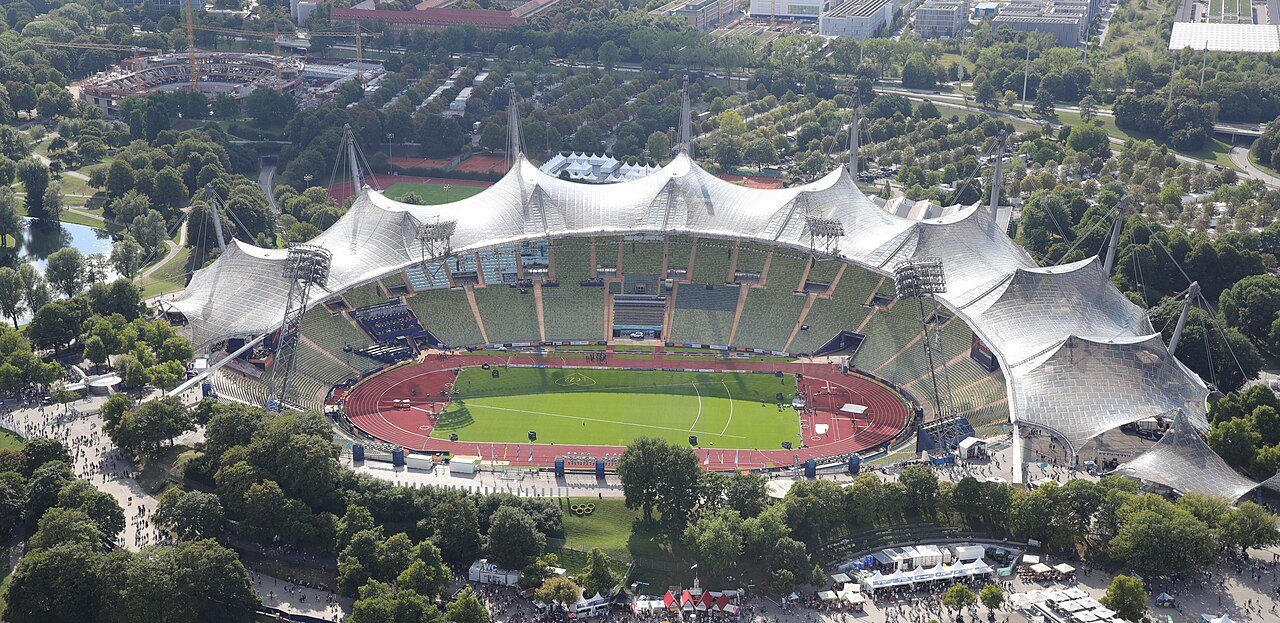
The Munich Games of 1972 were designed as an antidote: the 'cheerful Games', held in a landscaped park under a translucent tent roof, meant to show a new, open Germany a generation after Berlin 1936. Security was deliberately light and unarmed. At about 4:30 on the morning of 5 September, eight members of the Palestinian organisation Black September — named for the Jordanian army's expulsion of the Palestinian fedayeen in September 1970 — climbed the fence of the Olympic Village in tracksuits, carrying rifles in sports bags, and forced their way into the Israeli team's apartments at 31 Connollystrasse.
Two Israelis died in the first minutes. Wrestling coach Moshe Weinberg was shot fighting the intruders and forced, wounded, to lead them to his team; he tried to save his wrestlers before he was killed. Weightlifter Yossef Romano attacked an intruder with a knife and was shot, bleeding to death in front of his bound teammates. Nine hostages were held through the day while the world's television cameras — the Village was wired for the most televised Games yet — broadcast the standoff live, including the famous image of a masked gunman on the balcony. The gunmen demanded the release of more than 200 Palestinians held in Israel and of the West German terrorists Andreas Baader and Ulrike Meinhof. Israel's prime minister, Golda Meir, refused to negotiate releases; Chancellor Willy Brandt's government negotiated for time.
Late that night the gunmen and their bound hostages were flown by helicopter to Furstenfeldbruck air base, where a jet was waiting — and where West German police, with no trained counter-terrorist unit, no radios linking their snipers and too few marksmen, attempted an ambush. It collapsed into a firefight lasting more than an hour. A gunman threw a grenade into one helicopter, killing the hostages inside; the others were shot in the second helicopter. By about half past midnight all nine hostages were dead, along with five of the eight gunmen and a Munich policeman, Anton Fliegerbauer. Three gunmen were captured.
The Games were suspended for a memorial service in the stadium — the first such suspension in Olympic history — and then, after some 34 hours, IOC president Avery Brundage declared that 'the Games must go on', a decision argued over ever since. Munich changed far more than the Olympics: it exposed the unpreparedness of Western police for televised terrorism, led directly to the creation of Germany's GSG 9 counter-terrorist unit, transformed security at every later Games, and began a long Israeli campaign against those who had planned the attack. The victims were formally commemorated by the IOC only decades later; a memorial place of remembrance opened in Munich's Olympic Park in 2017, and a moment of remembrance entered the opening ceremony at Tokyo in 2021.
Why this date matters
September 5 is a day on which assemblies gather and violence answers them: a congress of colonies meets in Philadelphia in 1774 to organise resistance, trade unionists parade in New York in 1882 to claim a holiday, and in 1972 the world's greatest gathering of athletes becomes the stage for its most infamous act of terrorism. It holds a peace treaty ending one war in 1905 and a murder charge arising from another in 1969, and it took both the Sun King, born this day in 1638, and Mother Teresa, who died on it in 1997, into its keeping.
Sources
- Encyclopaedia Britannica — On This Day: September 5
- HISTORY — This Day in History: September 5
- Encyclopaedia Britannica — Munich massacre
- Wikipedia — September 5
The facts on this page were checked against these sources on 19 November 2026. The History Trail's permanent pages are researched and written for this site; the live profiles elsewhere on The History Trail are assembled automatically from Wikipedia and Wikidata.
About the Author
Researched and written by the The History Trail Editorial Team — the accountable editorial function behind this site's permanent story pages. The team works from the published sources cited on each page; it does not invent historians, reviewers or credentials, and it corrects errors openly.
Fact Check
Every load-bearing fact on this page traces to one of the sources listed above, and significant claims link to their source in the text. Our checking method is described on the methodology page; errors can be reported via the corrections page.
Sources & Citations
Cite this page as: The History Trail Editorial Team, The History Trail — this article's title, publication and update dates are shown beneath its headline. The full source list appears under Sources above; the site's source standards are on the sources page.