
On This Day
September 19 in History
On 19 September 1893 the governor of New Zealand signed the Electoral Act into law, making the colony the first self-governing country in the world where all women — including Māori women — could vote in national elections. September 19 is also the day of the Battle of Poitiers in 1356, the death of President Garfield in 1881, the Mexico City earthquake of 1985 and the discovery of Ötzi the Iceman.
Choose another date: open the On This Day calendar to browse events, births and deaths for any day of the year.
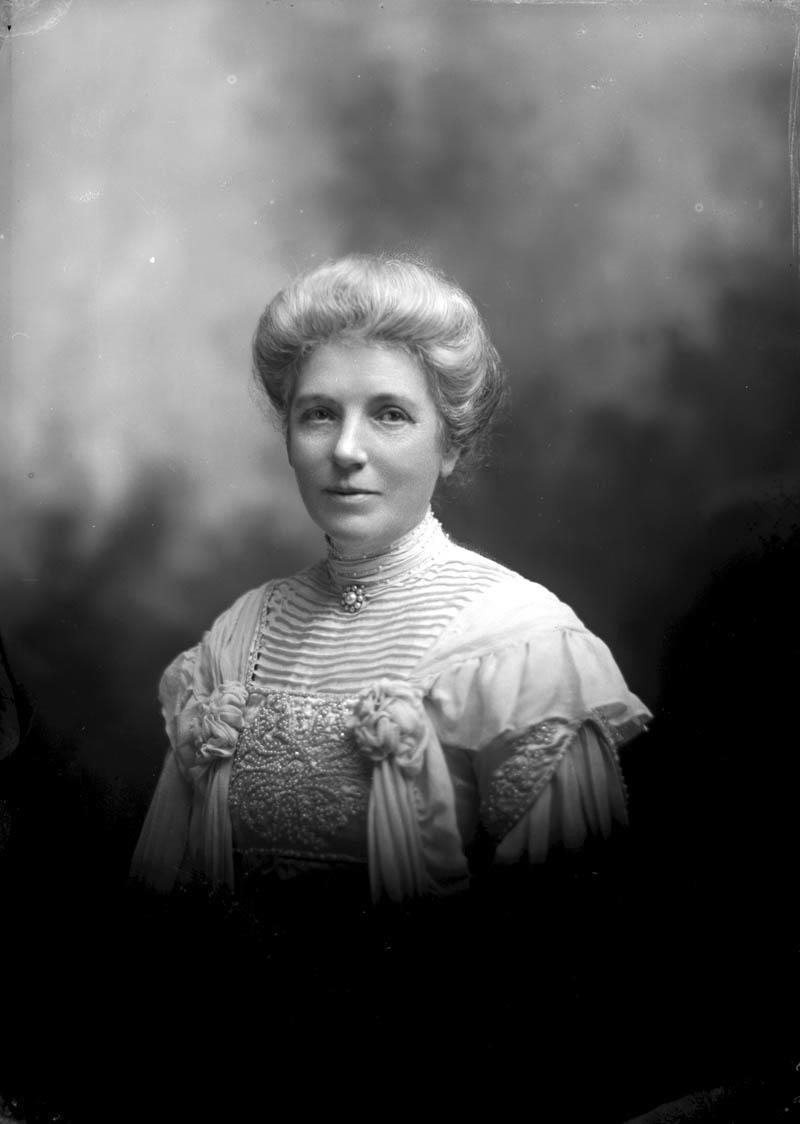
At a Glance
- The law
- The Electoral Act 1893, given assent by Governor Lord Glasgow on 19 September 1893
- The first
- New Zealand became the first self-governing country in the world to enfranchise all women for national elections
- The campaign
- Led by Kate Sheppard and the Women's Christian Temperance Union, with franchise leagues across the colony
- The petition
- The 1893 petition carried 31,872 signatures — nearly a quarter of the adult female population — on a roll more than 270 metres long
- The vote
- Women voted for the first time on 28 November 1893; 109,461 women enrolled, about 84 percent of those eligible
- The limit
- Women could vote but could not stand for Parliament until 1919; the first woman MP was elected in 1933
Events on this day
- 1356At the Battle of Poitiers, English and Welsh forces under Edward the Black Prince defeat a larger French army and capture King John II of France.
- 1777The first Battle of Saratoga is fought at Freeman's Farm in New York; the British win the ground but suffer losses they cannot replace.
- 1870Prussian-led armies complete the encirclement of Paris, beginning the four-month Siege of Paris in the Franco-Prussian War.
- 1893New Zealand's Electoral Act gives women the vote in national elections, a world first — the featured story above.
- 1957The United States detonates its first underground nuclear test, code-named Rainier, in a tunnel at the Nevada Test Site.
- 1983Saint Kitts and Nevis becomes independent of Britain, the smallest sovereign state in the Americas by population.
- 1985A magnitude-8 earthquake strikes Mexico City, killing thousands — the toll is estimated in the thousands and was long officially understated — and devastating the capital.
- 1991Hikers in the Ötztal Alps on the Austria–Italy border find a frozen body in the ice: Ötzi, a Copper Age man dead for more than 5,000 years.
Born on this day
- 1909Ferdinand Porsche — Austrian automotive engineer, founder of the Porsche company and designer of landmark cars.
- 1911William Golding — English novelist of Lord of the Flies, winner of the Nobel Prize in Literature.
- 1928Adam West — American actor, the deadpan Batman of the 1960s television series.
- 1949Twiggy — English model, born Lesley Lawson, whose look defined London fashion in the Swinging Sixties.
- 1974Jimmy Fallon — American comedian and host of The Tonight Show.
Died on this day
- 1881James A. Garfield — 20th president of the United States, who died of the wounds and infections from an assassin's bullets, eleven weeks after the shooting.
- 1935Konstantin Tsiolkovsky — Russian rocket scientist, a founding theorist of astronautics whose equations made spaceflight calculable.
- 1968Chester Carlson — American physicist who invented xerography, the dry-copying process behind the photocopier.
- 1985Italo Calvino — Italian novelist of Invisible Cities and If on a winter's night a traveller, dead at Siena on the eve of the Mexico City earthquake.
The featured story: New Zealand gives women the vote, 19 September 1893
On 19 September 1893, in Wellington, the governor, Lord Glasgow, signed a new Electoral Act into law, and a small colony at the edge of the world did something no self-governing country had done: it gave every woman the right to vote in national elections. As New Zealand's Ministry for Women records, the Act covered all adult women — including Māori women, who voted in the Māori electorates on the same terms as Māori men — at a time when the great democracies of Britain, the United States and Europe still refused women the franchise altogether, and most would go on refusing it for decades.
The victory was organised, above all, by Kate Sheppard. A Christchurch activist who became the franchise superintendent of the Women's Christian Temperance Union, Sheppard built the campaign on petitions: three great rolls of signatures in 1891, 1892 and 1893, each larger than the last. The final petition, presented to Parliament that July, carried 31,872 signatures — close to a quarter of the colony's adult women — its hundreds of sheets glued end to end, in part by Sheppard herself, into a roll more than 270 metres long that was famously unrolled across the chamber floor. Māori women campaigned in parallel: in May 1893 Meri Te Tai Mangakāhia became the first woman known to address the Māori Parliament, proposing that Māori women be granted both the vote and the right to sit.
The parliamentary fight was close and not a little theatrical. The bill passed the elected house comfortably but scraped through the upper house by 20 votes to 18 — after, as New Zealand Parliament's account tells it, some councillors who had opposed suffrage switched sides in irritation at the premier's lobbying tactics. Eighteen councillors then petitioned Lord Glasgow to withhold his assent. He signed anyway, on 19 September. Telegrams flashed the news; in Christchurch the campaigners celebrated, and Sheppard received white camellias, which became the emblem of the victory.
The proof came ten weeks later. Despite having barely two months to enrol, 109,461 women — about 84 percent of those eligible — registered, and on 28 November 1893 women voted in a national election for the first time anywhere in the world, in numbers that confounded predictions of indifference. One limit remained: women could vote but not stand for Parliament, a right withheld until 1919, and the first woman MP, Elizabeth McCombs, was elected only in 1933. But the principle had been established in law, by a signature on 19 September, and the rest of the world — Australia in 1902, Finland in 1906, Britain and the United States after the First World War — followed where New Zealand had led.
Why this date matters
September 19's pattern is the widening of who counts. At Poitiers in 1356 kings were still the currency of politics — one was captured on the field. By 1893, on the far side of the world, the decisive political act was a signature extending the vote to half of humanity, won by a roll of paper carrying the names of ordinary women. The date also holds humbler revolutions — a photocopier inventor's death, a rocket theorist's, a frozen ancestor found in the ice — and one of the century's great urban catastrophes. It is the calendar's standing proof that the franchise, once imagined as a property of gentlemen, could be remade by organisation.
Sources
- Encyclopaedia Britannica — On This Day: September 19
- HISTORY — This Day in History: September 19
- New Zealand Ministry for Women — Women's Suffrage in Aotearoa New Zealand
- New Zealand Parliament — Suffrage Day, 19 September: celebrating women's right to vote
- NZ History — Suffrage petition, 1893
The facts on this page were checked against these sources on 19 November 2026. The History Trail's permanent pages are researched and written for this site; the live profiles elsewhere on The History Trail are assembled automatically from Wikipedia and Wikidata.
About the Author
Researched and written by the The History Trail Editorial Team — the accountable editorial function behind this site's permanent story pages. The team works from the published sources cited on each page; it does not invent historians, reviewers or credentials, and it corrects errors openly.
Fact Check
Every load-bearing fact on this page traces to one of the sources listed above, and significant claims link to their source in the text. Our checking method is described on the methodology page; errors can be reported via the corrections page.
Sources & Citations
Cite this page as: The History Trail Editorial Team, The History Trail — this article's title, publication and update dates are shown beneath its headline. The full source list appears under Sources above; the site's source standards are on the sources page.