
On This Day
May 30 in History
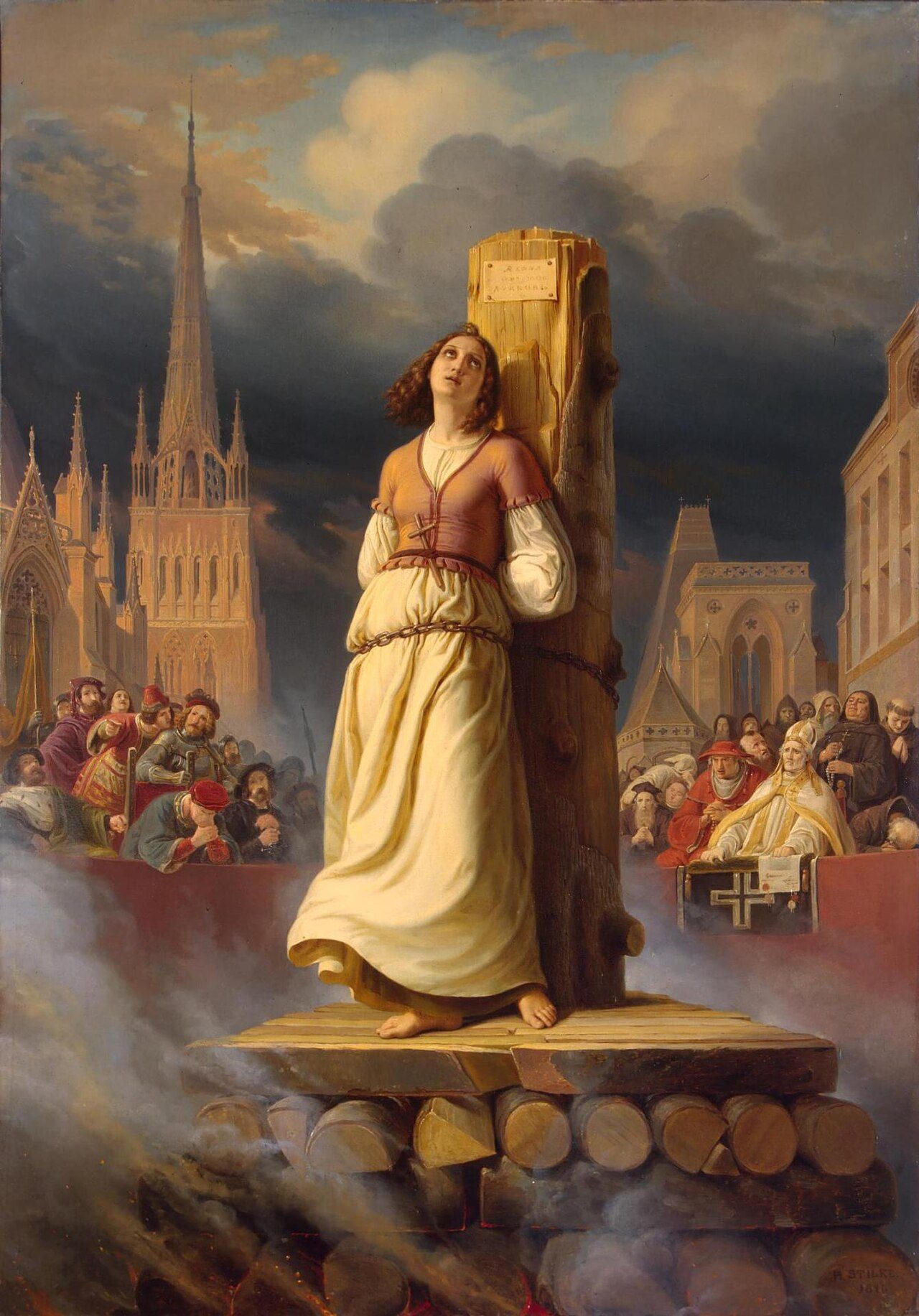
May 30 is the day Joan of Arc died. On this day in 1431, in the old market square of Rouen, the 19-year-old peasant girl who had raised the siege of Orleans and crowned a king was burned at the stake as a relapsed heretic by a church court serving her English enemies. A quarter-century later the verdict was annulled; in 1920 she was canonised, and 30 May became her feast day. The date also brought the first Indianapolis 500 in 1911 and the dedication of the Lincoln Memorial in 1922.
Choose another date: open the On This Day calendar to browse events, births and deaths for any day of the year.
At a Glance
- Date of death
- 30 May 1431, Rouen
- Born
- About 1412, Domremy, France
- Age at death
- About 19
- Military turning point
- The relief of Orleans, 1429
- Trial
- Opened at Rouen on 9 January 1431
- Verdict annulled
- 1456, by Pope Calixtus III
- Canonised
- 16 May 1920, by Pope Benedict XV
Events on this day
- 1431Joan of Arc is burned at the stake in Rouen after being convicted of heresy — the featured story above.
- 1536Henry VIII marries Jane Seymour, his third wife, eleven days after the execution of Anne Boleyn.
- 1868Decoration Day, the forerunner of Memorial Day, is observed nationally in the United States for the first time, honouring the Civil War dead.
- 1911The first Indianapolis 500 motor race is run and won by Ray Harroun.
- 1913The Treaty of London ends the First Balkan War.
- 1922The Lincoln Memorial in Washington, D.C., is dedicated, with former president William Howard Taft presiding as Chief Justice.
- 1942The Royal Air Force launches the first thousand-bomber raid of the war, against Cologne.
- 1943The All-American Girls Professional Baseball League, created to keep baseball alive during the war, plays its first games.
- 1971NASA launches Mariner 9, which becomes the first spacecraft to orbit Mars.
- 1989Protesting students raise the Goddess of Democracy statue facing the portrait of Mao in Tiananmen Square, Beijing.
- 2024Donald Trump becomes the first former US president convicted of a crime, found guilty on 34 felony counts in New York.
Born on this day
- 1846Peter Carl Fabergé — Russian goldsmith and jeweller famous for the imperial Fabergé eggs made for the Russian tsars.
- 1903Countee Cullen — American poet of the Harlem Renaissance, known for his lyrical treatment of racial themes
- 1908Mel Blanc — American voice actor, the voice of Bugs Bunny, Daffy Duck and hundreds of other cartoon characters
- 1909Benny Goodman — American clarinettist and bandleader crowned the King of Swing
Died on this day
- 1431Joan of Arc — French peasant girl who led armies to victory in the Hundred Years' War and was burned as a heretic, aged about 19
- 1593Christopher Marlowe — English playwright and poet, Shakespeare's great contemporary, killed in a Deptford tavern brawl at 29
- 1961Rafael Trujillo — dictator of the Dominican Republic for 31 years, assassinated in an ambush in Santo Domingo
- 1981Ziaur Rahman — president of Bangladesh, assassinated during an attempted military coup in Chittagong
The featured story: The Maid of Orleans dies, 30 May 1431
Joan of Arc was a peasant girl from the village of Domremy in northeastern France, born about 1412, who came to believe that saints' voices were commanding her to save her country. France in her childhood was being dismembered in the Hundred Years' War: the English and their Burgundian allies held Paris and the north, and the uncrowned dauphin, Charles, held a shrinking court south of the Loire. In 1429, at seventeen, Joan persuaded Charles's courtiers to give her troops. Dressed in armour, she led the relief of the besieged city of Orleans in a matter of days, then won a string of victories that carried Charles to Reims Cathedral to be crowned king, with Joan standing by the altar.
The triumph lasted less than a year. In May 1430 Joan was captured by Burgundian soldiers outside Compiegne and sold to the English, who were determined to destroy her reputation and, with it, the legitimacy of the king she had crowned. She was put on trial for heresy before an ecclesiastical court at Rouen, the seat of English power in France. The trial opened on 9 January 1431. The charges turned on her voices, her prophecies and, above all, her insistence on wearing men's clothing, which the court treated as defiance of God and nature.
Joan defended herself with remarkable shrewdness for months, but the outcome was arranged in advance. Threatened with the stake, she signed an abjuration and accepted a sentence of life imprisonment, agreeing to wear women's dress. Within days she had resumed male clothing, whether by her own choice, as she said, because she had been attacked in her cell, or because her guards had taken the dress away. To the court it was enough: she was a relapsed heretic. On the morning of 30 May 1431 she was taken to the Old Market square in Rouen, and burned to death before a great crowd. She was about nineteen years old.
Her enemies had miscalculated the longer game. A formal retrial a generation later examined the record, and in 1456 Pope Calixtus III annulled the verdict, declaring the original trial corrupt. Joan became the national heroine of France, a symbol claimed by monarchists, republicans and soldiers alike. On 16 May 1920 Pope Benedict XV canonised her as a saint of the Catholic Church, and her feast day was fixed on 30 May, the anniversary of her death at the stake.
Why this date matters
May 30 is a date when nations argue with their own pasts. France burns its saviour and then, across five centuries, annuls the verdict and makes her a saint. America dedicates a temple to Lincoln on the same date it first set aside to decorate the graves of its civil war, and tries a former president in a New York courtroom on it nearly five centuries after Joan. It is also a day of public spectacles that became institutions: the first Indianapolis 500, a thousand bombers over Cologne, a women's baseball league born of wartime necessity. Memory, judgment and showmanship run through the whole date.
Sources
- Encyclopaedia Britannica — On This Day: May 30
- HISTORY — This Day in History: May 30
- Encyclopaedia Britannica — Saint Joan of Arc
- Wikimedia Commons — Joan of Arc's Death at the Stake (Stilke) file page

The facts on this page were checked against these sources on 19 November 2026. The History Trail's permanent pages are researched and written for this site; the live profiles elsewhere on The History Trail are assembled automatically from Wikipedia and Wikidata.
About the Author
Researched and written by the The History Trail Editorial Team — the accountable editorial function behind this site's permanent story pages. The team works from the published sources cited on each page; it does not invent historians, reviewers or credentials, and it corrects errors openly.
Fact Check
Every load-bearing fact on this page traces to one of the sources listed above, and significant claims link to their source in the text. Our checking method is described on the methodology page; errors can be reported via the corrections page.
Sources & Citations
Cite this page as: The History Trail Editorial Team, The History Trail — this article's title, publication and update dates are shown beneath its headline. The full source list appears under Sources above; the site's source standards are on the sources page.