
On This Day
May 25 in History
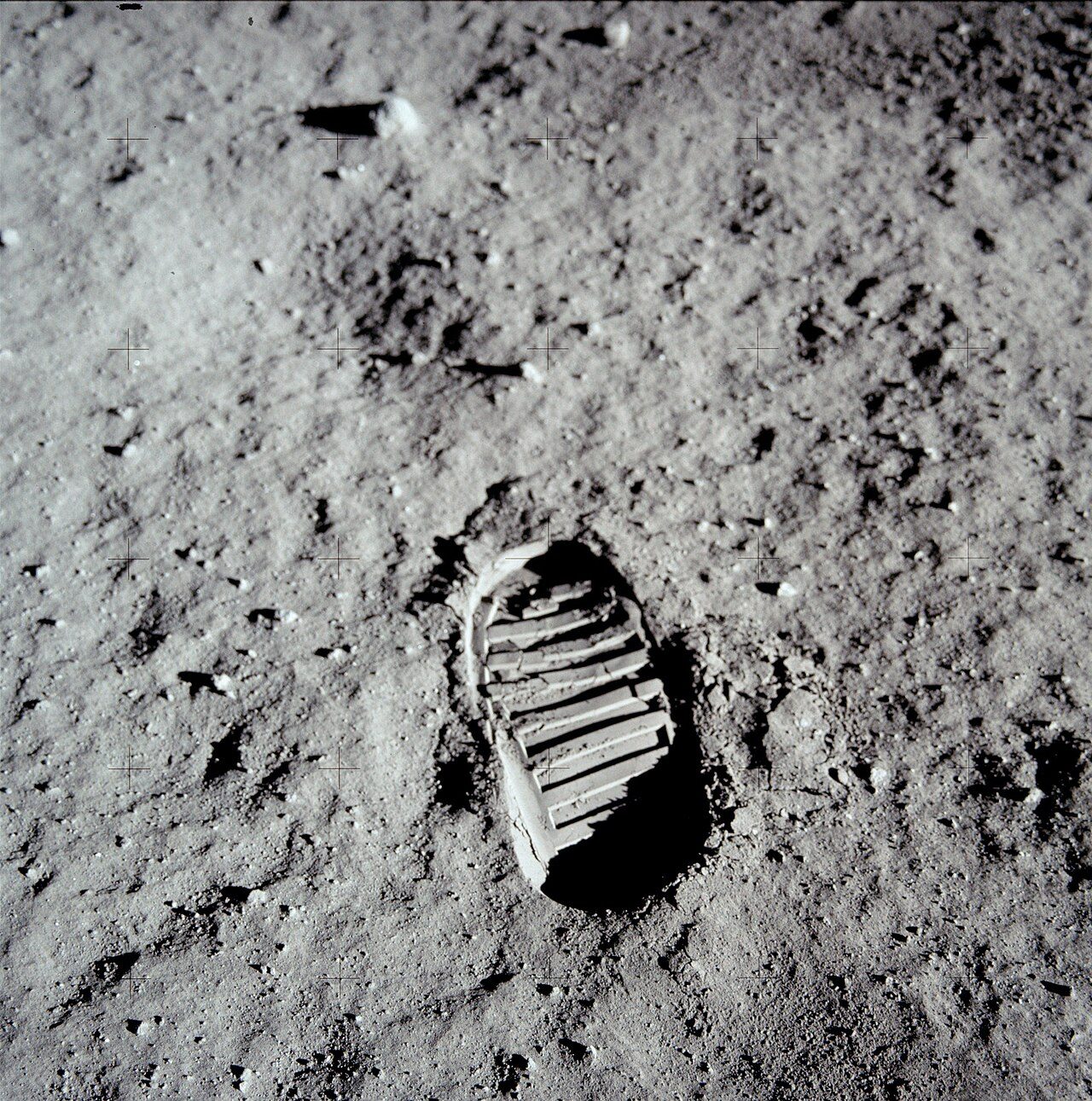
May 25 is the day America aimed at the Moon. On this day in 1961, barely a month after Yuri Gagarin became the first human in space, President John F. Kennedy stood before a joint session of Congress and committed the United States to landing a man on the Moon and returning him safely to Earth before the decade was out. Eight years later Apollo 11 kept the promise. The date also marks the opening of the Constitutional Convention in 1787, Oscar Wilde's conviction in 1895 and the killing of George Floyd in 2020.
Choose another date: open the On This Day calendar to browse events, births and deaths for any day of the year.
At a Glance
- Date
- 25 May 1961
- Speaker
- President John F. Kennedy
- Occasion
- Special address to a joint session of Congress on urgent national needs
- The goal
- Land a man on the Moon and return him safely to Earth before the decade ends
- Funding requested
- $531 million for fiscal 1962, and an estimated $7-9 billion more over five years
- Goal achieved
- 20 July 1969, by Apollo 11
Events on this day
- 1660Charles II sets sail from the Netherlands to return to England and claim the throne, restoring the monarchy.
- 1787The Constitutional Convention opens in Philadelphia, beginning the drafting of the United States Constitution.
- 1895Playwright Oscar Wilde is convicted of gross indecency in London and sentenced to two years' hard labour.
- 1935At a meet in Michigan, Jesse Owens sets three world records and ties a fourth in under an hour, one of the greatest feats in athletics.
- 1935Babe Ruth hits the 714th and final home run of his career, at Forbes Field in Pittsburgh.
- 1946Abdullah I is proclaimed king of the newly independent Hashemite Kingdom of Jordan.
- 1961President John F. Kennedy asks Congress to commit the United States to landing a man on the Moon before the end of the decade — the featured story above.
- 1977Star Wars opens in cinemas, beginning one of the most successful film franchises in history.
- 1979American Airlines Flight 191 crashes seconds after takeoff from Chicago O'Hare, killing almost 300 people in the deadliest US air disaster of its time.
- 2020George Floyd is killed by a Minneapolis police officer who kneels on his neck, sparking worldwide protests against police brutality.
Born on this day
- 1803Ralph Waldo Emerson — American essayist and philosopher who led the transcendentalist movement
- 1878Bill 'Bojangles' Robinson — American tap dancer and actor who broke racial barriers in entertainment
- 1889Igor Sikorsky — Russian-American aviation pioneer who developed the first practical helicopter
- 1939Ian McKellen — English actor celebrated for roles from Gandalf to Magneto and for his stage Shakespeare
Died on this day
- 735Bede — Northumbrian monk and scholar, the Venerable Bede, whose Ecclesiastical History is a foundation of English history
- 1919Madam C. J. Walker — American entrepreneur, born Sarah Breedlove, regarded as America's first self-made female millionaire
- 1934Gustav Holst — English composer of the orchestral suite The Planets
- 1954Robert Capa — Hungarian-American war photographer, killed by a landmine while covering the war in Indochina
- 2020George Floyd — Minneapolis man whose killing by a police officer ignited a global protest movement
The featured story: Kennedy commits America to the Moon, 25 May 1961
In the spring of 1961 the United States was losing the space race in full public view. On 12 April the Soviet Union put Yuri Gagarin into orbit, the first human in space. America's answer, Alan Shepard's 15-minute suborbital flight on 5 May, was brave but modest by comparison. President John F. Kennedy, weeks into a presidency already shaken by the failed Bay of Pigs invasion of Cuba, needed a contest America could plausibly win, and a goal bold enough to erase the impression of Soviet superiority.
Kennedy had already given his State of the Union address in January, so his appearance on 25 May 1961 was a special second message to a joint session of Congress, on what he called urgent national needs. Most of the speech dealt with defence, foreign aid and the economy. Then came the passage that defined the decade. Kennedy announced his belief that the nation should commit itself to achieving the goal, before the decade was out, of landing a man on the Moon and returning him safely to the Earth. He asked Congress for $531 million for the space programme in fiscal 1962 and an estimated seven to nine billion dollars more over the next five years, warning that no single space project would be more impressive, more expensive or more difficult.
Congress said yes, and the speech transformed NASA. The Apollo programme swelled into one of the largest peacetime undertakings in history, eventually employing hundreds of thousands of people. Kennedy returned to the theme at Rice University in 1962, but the commitment, the deadline and the money all date from the address of 25 May 1961. The president did not live to see the result: he was assassinated in Dallas in November 1963.
On 20 July 1969, with months of the decade to spare, Apollo 11's Neil Armstrong and Buzz Aldrin landed on the Moon while Michael Collins waited in orbit. The goal set in a crowded House chamber eight years earlier had been met almost to the letter, and Kennedy's deadline became the standard against which all later feats of national organisation are measured.
Why this date matters
May 25 is a date of public commitments and public reckonings. A convention opens in Philadelphia to invent a republic; a president stands in Congress to promise the Moon; a playwright is destroyed by the law of his time; and, in 2020, a killing in a Minneapolis street is witnessed by the whole world and judged by it. It is also a day of singular individual feats, Babe Ruth's last home run and Jesse Owens setting three world records in an hour. Again and again on May 25, someone steps forward, in a chamber, a stadium or a street, and the moment is recorded and remembered.
Sources
- Encyclopaedia Britannica — On This Day: May 25
- HISTORY — This Day in History: May 25
- NASA History — The Decision to Go to the Moon: President Kennedy's May 25, 1961 Speech
- John F. Kennedy Presidential Library — Special Address to Congress on Urgent National Needs, 25 May 1961
- US House of Representatives, History, Art & Archives — John F. Kennedy's Message to Congress
The facts on this page were checked against these sources on 19 November 2026. The History Trail's permanent pages are researched and written for this site; the live profiles elsewhere on The History Trail are assembled automatically from Wikipedia and Wikidata.
About the Author
Researched and written by the The History Trail Editorial Team — the accountable editorial function behind this site's permanent story pages. The team works from the published sources cited on each page; it does not invent historians, reviewers or credentials, and it corrects errors openly.
Fact Check
Every load-bearing fact on this page traces to one of the sources listed above, and significant claims link to their source in the text. Our checking method is described on the methodology page; errors can be reported via the corrections page.
Sources & Citations
Cite this page as: The History Trail Editorial Team, The History Trail — this article's title, publication and update dates are shown beneath its headline. The full source list appears under Sources above; the site's source standards are on the sources page.