
On This Day
March 27 in History
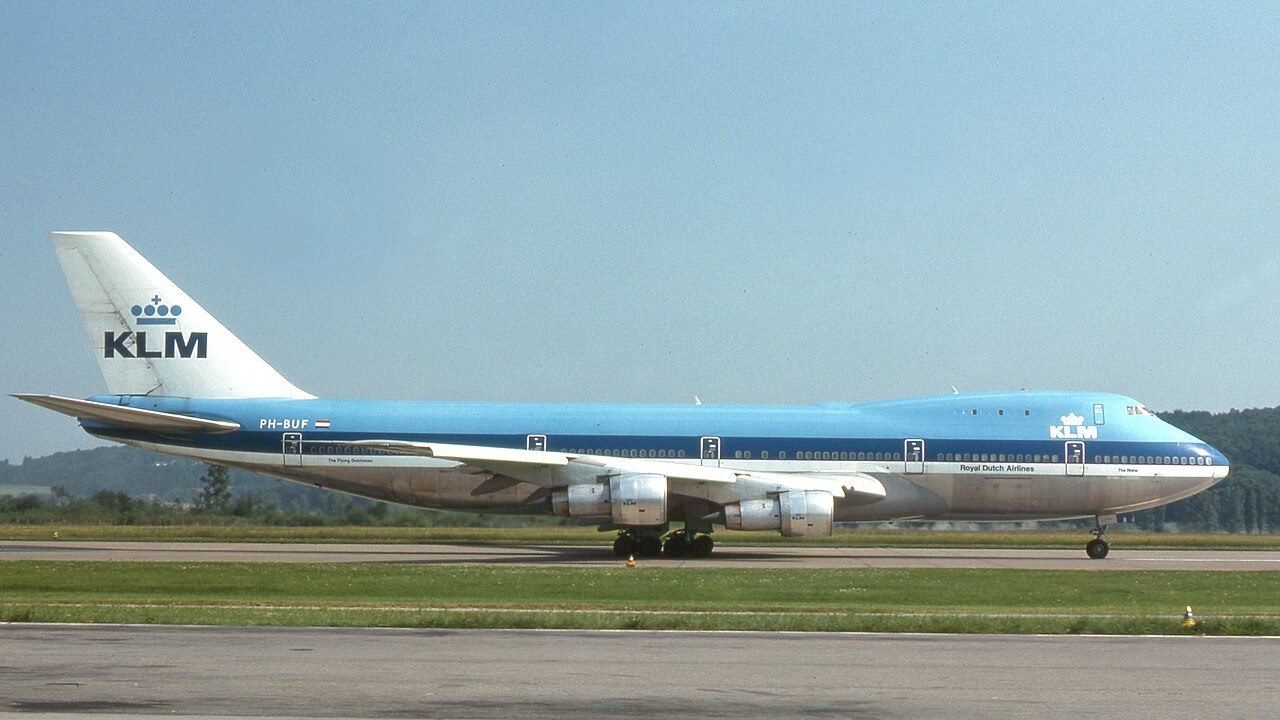
On 27 March 1977, in fog on the single runway of Los Rodeos airport on Tenerife, a KLM Boeing 747 beginning its takeoff run struck a Pan Am 747 still taxiing on the same runway. The collision and fire killed 583 people — everyone aboard the KLM jet and most of those on the Pan Am aircraft — in what remains the deadliest accident in aviation history. Neither plane was even supposed to be there. March 27 is also the day of Alaska's great Good Friday earthquake and the planting of Washington's cherry trees.
Choose another date: open the On This Day calendar to browse events, births and deaths for any day of the year.
At a Glance
- Why Tenerife
- A bomb at Gran Canaria airport, the flights' destination, diverted dozens of aircraft to the small regional airport at Los Rodeos
- The aircraft
- KLM flight 4805 from Amsterdam and Pan Am flight 1736 from Los Angeles via New York — both Boeing 747s, the largest airliners of the age
- The moment
- About 5:06 p.m., in fog so thick the tower could see neither aircraft and the crews could not see each other
- The error
- The KLM captain began takeoff without a takeoff clearance, believing he had one; a simultaneous radio call blocked the message that the runway was occupied
- The toll
- 583 dead: all 248 aboard the KLM aircraft and 335 of the 396 aboard the Pan Am; all 61 survivors were from the Pan Am jet
- The legacy
- Standard radio phraseology, strict clearance read-back and modern crew resource management all trace their modern form to Tenerife
Events on this day
- 47 BCCleopatra is restored to the throne of Egypt after the defeat and death of her brother Ptolemy XIII, beginning the last great reign of the Ptolemaic dynasty.
- 1513Juan Ponce de León sights the coast of Florida, the first recorded European landfall on what is now the mainland United States.
- 1625Charles I succeeds his father James I as king of England, Scotland and Ireland — a reign that will end in civil war and his own execution.
- 1794The United States Congress authorises a permanent navy and the building of six frigates, the foundation of the US Navy.
- 1814Andrew Jackson's American forces destroy the Creek Red Sticks at the Battle of Horseshoe Bend in Alabama, breaking their power in the Southeast.
- 1836Mexican troops execute some 400 Texan prisoners at Goliad on Santa Anna's orders, weeks after the Alamo — 'Remember Goliad' joins the Texas revolutionary cry.
- 1912The first of Washington's famous cherry trees are planted by the Tidal Basin, a gift of friendship from Japan.
- 1964The Good Friday earthquake, magnitude 9.2 — the most powerful recorded in North America — devastates south-central Alaska and kills 125 people in quake and tsunami.
- 1977Two Boeing 747s collide on the runway at Los Rodeos, Tenerife, killing 583 people — the featured story above.
- 1998The US Food and Drug Administration approves Viagra, the first oral treatment for erectile dysfunction, to enormous public attention.
Born on this day
- 1845Wilhelm Röntgen — German physicist who discovered X-rays and won the first Nobel Prize in Physics.
- 1899Gloria Swanson — American silent-film star who returned in triumph as the lead of Sunset Boulevard.
- 1912James Callaghan — British Labour politician, prime minister from 1976 to 1979.
- 1924Sarah Vaughan — American jazz singer whose voice was called one of the most wondrous of the twentieth century.
- 1963Quentin Tarantino — American film director of Pulp Fiction and Reservoir Dogs.
- 1970Mariah Carey — American singer and songwriter, among the bestselling recording artists of all time.
Died on this day
- 1378Gregory XI — the last French pope, who returned the papacy from Avignon to Rome the year before his death.
- 1625James I — king of England and (as James VI) Scotland, commissioner of the King James Bible, dead at 58.
- 1968Yuri Gagarin — Soviet cosmonaut, the first human in space, killed at 34 in a training-jet crash.
- 2002Billy Wilder — Austrian-born director of Some Like It Hot and Sunset Boulevard, dead at 95.
- 2002Dudley Moore — English comic actor and pianist, star of 10 and Arthur, dead the same day as Wilder, at 66.
The featured story: the Tenerife airport disaster, 27 March 1977
Neither aircraft belonged at Los Rodeos. On the afternoon of Sunday 27 March 1977 a bomb planted by a Canary Islands separatist group exploded at Gran Canaria airport, the destination of both flights, and the threat of a second bomb closed it. Dozens of holiday flights were diverted to Los Rodeos, the small airport serving Tenerife — a single runway, no ground radar, taxiways soon jammed with parked jumbos. Among them were KLM flight 4805, a charter from Amsterdam whose 248 passengers and crew were bound for a cruise, and Pan Am flight 1736 from Los Angeles and New York, with 396 people aboard. For hours the two 747s sat on the same crowded apron while Gran Canaria stayed shut.
When Gran Canaria reopened, the scramble to leave created the trap. Los Rodeos had no taxiway running beside its runway for much of its length, so aircraft had to taxi along the runway itself and turn around at the end. The KLM jet, refuelled and anxious about its crew's duty-time limits, taxied out first and turned into takeoff position. The Pan Am jet followed behind it on the same runway, instructed to leave by an exit the crew, in thickening fog, could not confidently identify. Fog closed in until the control tower could see nothing at all; everything now depended on radio voices, and the radio failed them three ways at once — non-standard words, accents and clipped transmissions, and, at the critical second, two callers transmitting simultaneously so that a warning became a squeal of interference in the KLM cockpit.
Believing he had been cleared, the KLM captain — the airline's chief of flight training — opened the throttles. His 747 accelerated through the fog at a Pan Am jet still on the runway, unseen until seconds before impact. The KLM crew hauled their aircraft up early; it struck the Pan Am's upper deck, lost its tail and engines, and crashed in fire. The Pan Am jet burned where it stood. All 248 people on the KLM aircraft died, and 335 of the 396 on the Pan Am; the 61 survivors, including its flight crew, escaped from the front section of the Clipper Victor. The Spanish investigation, with Dutch and American participation, fixed the probable cause on the takeoff begun without clearance, inside a system that had made that mistake easy.
Tenerife rebuilt how flying talks to itself. After 1977 the industry imposed standard phraseology worldwide — reserving the word 'takeoff' for the clearance itself — tightened read-back discipline, and, most lastingly, developed crew resource management: the doctrine that a junior officer must challenge a captain, born in part from the silence on that flight deck. The deadliest accident in aviation history involved no mechanical failure and no aircraft ever properly leaving the ground; it was a conversation that went wrong in fog, and aviation has been re-engineering the conversation ever since.
Why this date matters
March 27 is the calendar's lesson in contingency. A queen restored in 47 BC, an earthquake remaking Alaska in 1964, a bomb on one island quietly rearranging the traffic of another in 1977 — the day's events turn on small causes with vast effects, which is precisely the anatomy of its most famous event. Two airliners that should never have shared a runway met there because of a bomb, a timetable and a fog bank. History rarely announces which of its days will be case studies; this one became the textbook.
Sources
- Encyclopaedia Britannica — On This Day: March 27
- HISTORY — This Day in History: March 27
- FlySafe — Tenerife Airport Disaster (1977): What Happened & The Safety Legacy
- Aviation Safety Network (Flight Safety Foundation) — Accident Record: Boeing 747-206B PH-BUF, 27 March 1977
The facts on this page were checked against these sources on 19 November 2026. The History Trail's permanent pages are researched and written for this site; the live profiles elsewhere on The History Trail are assembled automatically from Wikipedia and Wikidata.
About the Author
Researched and written by the The History Trail Editorial Team — the accountable editorial function behind this site's permanent story pages. The team works from the published sources cited on each page; it does not invent historians, reviewers or credentials, and it corrects errors openly.
Fact Check
Every load-bearing fact on this page traces to one of the sources listed above, and significant claims link to their source in the text. Our checking method is described on the methodology page; errors can be reported via the corrections page.
Sources & Citations
Cite this page as: The History Trail Editorial Team, The History Trail — this article's title, publication and update dates are shown beneath its headline. The full source list appears under Sources above; the site's source standards are on the sources page.