
On This Day
March 20 in History
On 20 March 1852, a Boston publisher issued Harriet Beecher Stowe's Uncle Tom's Cabin in two volumes. Serialised the year before in an abolitionist newspaper, the novel sold 300,000 copies in its first year and did more than any pamphlet to turn Northern opinion against slavery. March 20 is also the day Napoleon returned to Paris in 1815 and Einstein submitted his general theory of relativity in 1916.
Choose another date: open the On This Day calendar to browse events, births and deaths for any day of the year.
At a Glance
- Author
- Harriet Beecher Stowe, a Connecticut-born writer, sister of the preacher Henry Ward Beecher
- First appearance
- Serialised in the abolitionist newspaper the National Era from June 1851
- Book publication
- Issued by John P. Jewett of Boston on 20 March 1852, in two volumes, before the serial had finished; the first printing was 5,000 copies
- Sales
- 300,000 copies sold in the United States in its first year (Smithsonian National Museum of American History)
- Spark
- Written in response to the Fugitive Slave Act of 1850, which obliged Northern citizens to help return escaped enslaved people
- Reach
- Translated across Europe, it made American slavery a subject of debate far beyond the United States
Events on this day
- 1602The Dutch East India Company is chartered in Amsterdam, becoming the world's first publicly traded company and a template for the modern corporation.
- 1815Napoleon enters Paris after escaping from Elba, beginning the Hundred Days that end at Waterloo.
- 1852Harriet Beecher Stowe's Uncle Tom's Cabin is published in book form in Boston — the featured story above.
- 1854Opponents of slavery meet at Ripon, Wisconsin, to organise what becomes the Republican Party.
- 1890Kaiser Wilhelm II dismisses Otto von Bismarck, the chancellor who had unified Germany.
- 1916Albert Einstein submits his comprehensive account of general relativity, 'The Foundation of the General Theory of Relativity', to the Annalen der Physik.
- 1922The USS Langley is commissioned — the United States Navy's first aircraft carrier.
- 1942At Terowie, South Australia, General Douglas MacArthur makes his famous promise to the Philippines: 'I shall return.'
- 1956Tunisia gains independence from France, with Habib Bourguiba as its first prime minister.
- 1995Members of the Aum Shinrikyo cult release sarin nerve gas in the Tokyo subway, killing more than a dozen people and injuring over 6,000.
- 2003The U.S.-led invasion of Iraq begins with air strikes on Baghdad in the early hours of the morning, local time.
Born on this day
- 43 BCOvid — Roman poet of the Metamorphoses, exiled by Augustus to the Black Sea.
- 1811Napoleon II — son of Napoleon Bonaparte, briefly proclaimed emperor as a small child, dead at 21 in Vienna.
- 1828Henrik Ibsen — Norwegian playwright, the father of modern drama.
- 1879Maud Menten — Canadian biochemist whose name is carried by the Michaelis–Menten equation of enzyme kinetics.
- 1904B. F. Skinner — American psychologist, the leading figure of behaviourism.
- 1928Fred Rogers — American television host who taught generations of children in Mister Rogers' Neighborhood.
- 1957Spike Lee — American filmmaker of Do the Right Thing and Malcolm X.
Died on this day
- 1413Henry IV — king of England, the first Lancastrian monarch, succeeded by his son Henry V.
- 1727Isaac Newton — English physicist and mathematician who formulated the laws of motion and universal gravitation.
- 1925George Curzon — British statesman, former viceroy of India and foreign secretary.
- 2004Queen Juliana — queen of the Netherlands from 1948 until her abdication in 1980.
- 2017David Rockefeller — American banker and philanthropist, patriarch of the Rockefeller family in his generation.
The featured story: Uncle Tom's Cabin is published, 20 March 1852
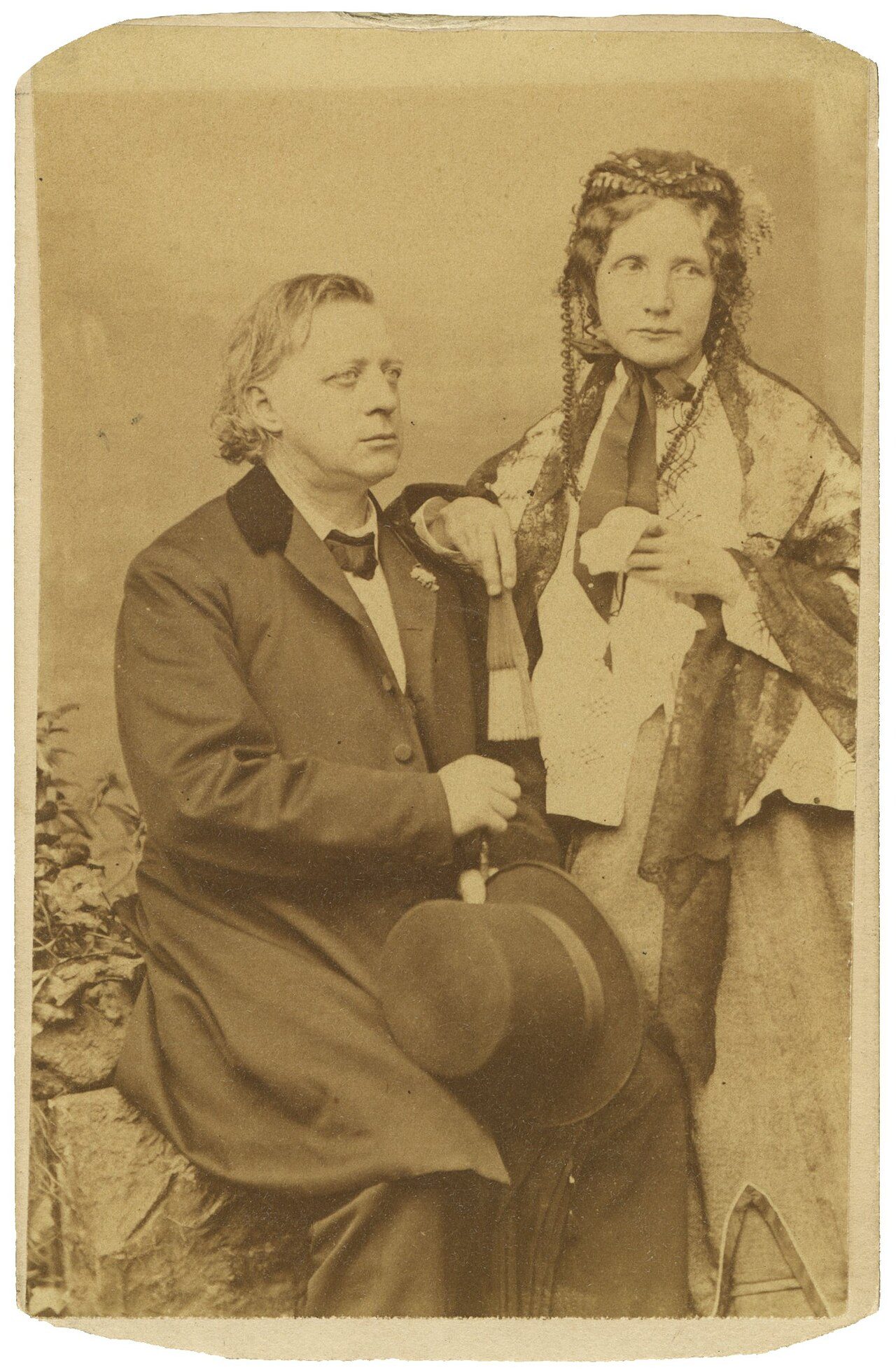
Harriet Beecher Stowe wrote Uncle Tom's Cabin in direct answer to a law. The Fugitive Slave Act of 1850 required citizens in the free states to help return escaped enslaved people to their owners, and made it a crime to shelter them. Stowe — a Connecticut-born writer from a famous preaching family, sister of the celebrated minister Henry Ward Beecher — had lived for years in Cincinnati, across the river from slaveholding Kentucky, and had seen slavery's border at close quarters. She resolved to make the North feel what it was being ordered to enforce.
The novel appeared first in instalments in the National Era, an abolitionist newspaper in Washington, beginning in June 1851, and readers waited for each week's chapter. On 20 March 1852 the Boston publisher John P. Jewett issued it in book form, in two volumes — before the newspaper serial had even finished. The first printing of 5,000 copies sold out almost at once. Within a year, the Smithsonian's National Museum of American History records, Uncle Tom's Cabin had sold 300,000 copies in the United States alone, with translations spreading it across Europe; it became the best-selling novel of the nineteenth century.
Its method was sentiment, and it was devastatingly effective. Stowe followed the enslaved Tom — sold away from his family, beaten to death by the brutal Simon Legree for refusing to betray other fugitives — and Eliza, who escapes across the breaking ice of the Ohio River with her child in her arms. Northern readers who had thought of slavery as an abstraction wept over it as a story of families torn apart, and abolition moved from the lecture hall into the drawing room. The South answered with fury, bans and a shelf of 'anti-Tom' novels defending slavery — proof, if any were needed, that the book had struck the nerve it aimed at.
The novel's legacy is double. It did more than any other single work to build the Northern opinion that, within a decade, sustained a war against slavery — yet its characters also hardened into stereotypes, and 'Uncle Tom' survives in the language as an insult for submission, a fate Stowe's defiant hero would not have recognised. Historians still argue over the book; nobody argues about its power. In 1852 it demonstrated something publishing had never seen: that a novel, written by a woman at a kitchen table, could move the politics of a continent.
Why this date matters
March 20 is the calendar's great day of returns and reckonings. Napoleon walked back into Paris in 1815 to reclaim an empire for a hundred days; MacArthur, in 1942, promised a return he would take two years to keep. Einstein returned physics to first principles in 1916 with a single paper. And in 1852 a novel returned slavery to the conscience of readers who had learned not to think about it — the return with the longest consequences of all. Even the day's violence, in Tokyo in 1995 and over Baghdad in 2003, came as a reckoning for decisions taken far from the scene. Nothing on March 20 stays buried.
Sources
- Encyclopaedia Britannica — On This Day: March 20
- HISTORY — What Happened on March 20
- Smithsonian National Museum of American History — Uncle Tom's Cabin (object record)
- Encyclopaedia Britannica — Iraq War (summary)
The facts on this page were checked against these sources on 19 November 2026. The History Trail's permanent pages are researched and written for this site; the live profiles elsewhere on The History Trail are assembled automatically from Wikipedia and Wikidata.
About the Author
Researched and written by the The History Trail Editorial Team — the accountable editorial function behind this site's permanent story pages. The team works from the published sources cited on each page; it does not invent historians, reviewers or credentials, and it corrects errors openly.
Fact Check
Every load-bearing fact on this page traces to one of the sources listed above, and significant claims link to their source in the text. Our checking method is described on the methodology page; errors can be reported via the corrections page.
Sources & Citations
Cite this page as: The History Trail Editorial Team, The History Trail — this article's title, publication and update dates are shown beneath its headline. The full source list appears under Sources above; the site's source standards are on the sources page.