
On This Day
March 13 in History
On the night of 13 March 1781, William Herschel, a musician turned astronomer working in Bath, noticed an object in the constellation Gemini that appeared on no star chart. It was Uranus — the first planet discovered since ancient times, and its discovery doubled the known size of the solar system at a stroke. March 13 is also the day Pope Francis was elected in 2013 and Encyclopaedia Britannica ended its print edition in 2012.
Choose another date: open the On This Day calendar to browse events, births and deaths for any day of the year.
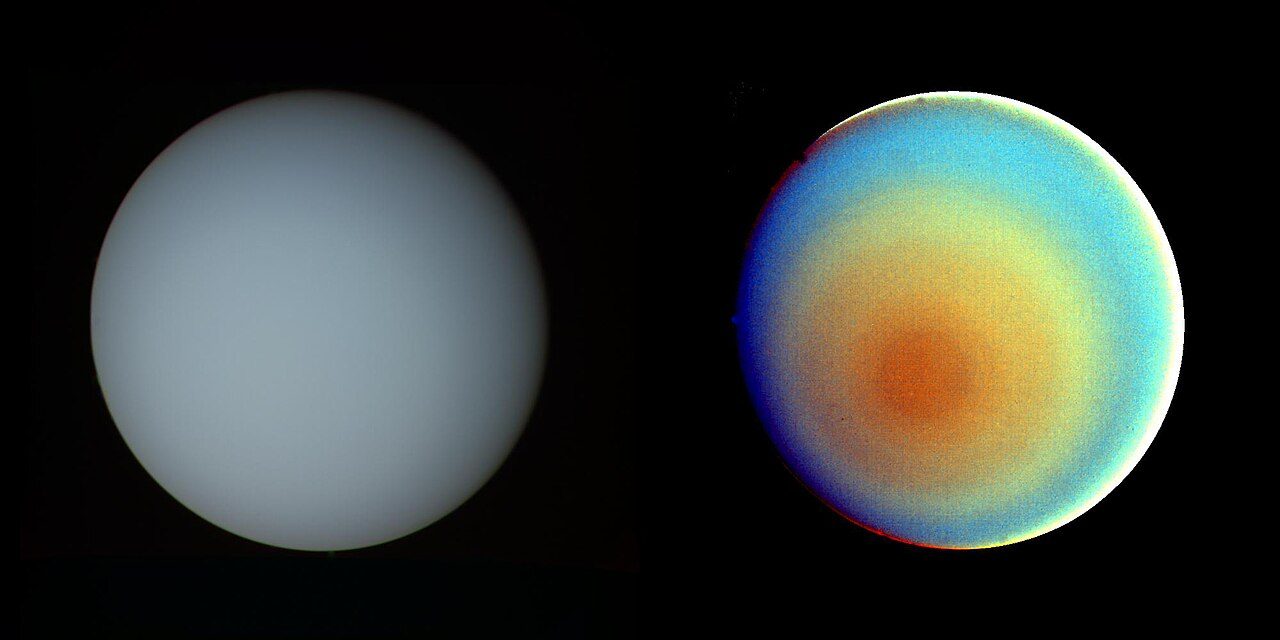
At a Glance
- Date and place
- 13 March 1781, from Herschel's garden in Bath, England, while he was surveying stars in the constellation Gemini (NASA)
- First impression
- Herschel reported the object as a probable comet — 'a curious either nebulous star or perhaps a comet'
- Recognition
- Its slow, steady motion in a near-circular orbit beyond Saturn showed it was a planet — the first found with a telescope
- The name
- Herschel proposed naming it for King George III; astronomers eventually settled on Uranus
- Reward
- The Royal Society awarded Herschel its Copley Medal in November 1781
- At his side
- His sister Caroline Herschel assisted his observations and became a distinguished astronomer herself
Events on this day
- 1781William Herschel discovers Uranus, the first planet found with a telescope — the featured story above.
- 1836Sam Houston begins a series of retreats across Texas after the fall of the Alamo, drawing Santa Anna's Mexican army after him.
- 1865In the war's last weeks, the Confederacy approves the enlistment of Black soldiers, a step it had resisted for four years.
- 1881Tsar Alexander II of Russia is assassinated by revolutionaries in St Petersburg, despite having emancipated the serfs twenty years earlier.
- 1884Forces of the Mahdi begin the Siege of Khartoum in Sudan, defended by General Charles Gordon.
- 1925Tennessee passes a law banning the teaching of evolution in its public schools, setting up the Scopes Trial.
- 1938The Anschluss is formally announced, uniting Austria with Nazi Germany.
- 1986Cosmonauts Leonid Kizim and Vladimir Solovyov become the first occupants of the Soviet space station Mir.
- 1996A gunman murders 16 children and their teacher at Dunblane Primary School in Scotland, the deadliest mass shooting in British history.
- 2012Encyclopaedia Britannica announces the end of its print edition after 244 years, going digital-only.
- 2013Cardinal Jorge Mario Bergoglio of Argentina is elected pope, taking the name Francis — the first pope from the Americas.
- 2020Breonna Taylor, a 26-year-old emergency medical technician, is shot and killed by police officers raiding her Louisville apartment.
Born on this day
- 1741Joseph II — Holy Roman emperor, an energetic 'enlightened absolutist' reformer and son of Maria Theresa.
- 1855Percival Lowell — American astronomer who founded Lowell Observatory and predicted a ninth planet beyond Neptune.
- 1886Albert W. Stevens — American balloonist and aerial photographer who made pioneering stratospheric flights.
- 1911L. Ron Hubbard — American science-fiction writer who founded Scientology.
- 1941Mahmoud Darwish — Palestinian poet, regarded as his people's national poet.
Died on this day
- 1881Alexander II — emperor of Russia, assassinated in St Petersburg on the day listed above.
- 1906Susan B. Anthony — American leader of the women's suffrage movement; the Nineteenth Amendment, granting women the vote, followed in 1920.
- 1978John Cazale — American actor of The Godfather films and Dog Day Afternoon, dead at 42.
- 2021Marvin Hagler — American boxer, longtime undisputed middleweight champion of the world, dead at 66.
The featured story: Herschel discovers Uranus, 13 March 1781
On the night of 13 March 1781, in the garden of his house in Bath, William Herschel was doing what he did most clear nights: sweeping the sky with a telescope of his own making, cataloguing double stars. In the constellation Gemini he noticed an object that was not on any chart and did not behave like a star — it showed a small disc, and over the following nights it moved. Herschel, a Hanoverian-born musician who earned his living teaching music and playing the organ, had stumbled on something no human had knowingly seen before.
He reported his find cautiously, as 'a curious either nebulous star or perhaps a comet', and other astronomers took up the watch. A comet should have followed a stretched, eccentric path; this object moved slowly and steadily in a near-circular orbit far beyond Saturn. The conclusion, once the calculations were done, was startling: it was a planet — the first new planet discovered since ancient times, found not by naked-eye skywatchers but through a telescope. At a stroke, the known solar system doubled in size.
Herschel wanted to name his planet for his patron, King George III — Georgium Sidus, the Georgian star — and the name was used in Britain for decades. Other astronomers preferred the mythological pattern of the older planets, and the name that gradually won out was Uranus, father of Saturn. Herschel's own reward was swift and concrete: in November 1781 the Royal Society gave him its Copley Medal, and the discovery turned the music teacher into a professional astronomer, with his sister Caroline — who assisted his observations throughout — becoming an astronomer of note in her own right.
Uranus changed astronomy's sense of what was possible. If one planet had hidden among the 'stars' until 1781, others might too — and indeed, the irregularities in Uranus's own orbit eventually pointed astronomers to Neptune, found in 1846. NASA, whose Voyager 2 spacecraft gave humanity its only close look at Uranus in 1986, dates the modern era of planetary discovery from Herschel's night in Bath: the first planet found by technology, by a man who had built the instrument himself.
Why this date matters
March 13 is a day of veils lifting and veils falling. Herschel's telescope revealed a planet that had been hiding in plain sight for millennia; in 2013 the conclave's white smoke revealed the first pope from the New World; in 2012 the world's most famous encyclopaedia conceded that print's long reign was over. Against those openings stand the day's closures — a reforming tsar murdered in 1881, a classroom murdered in 1996, a young woman killed in her own home in 2020. The date holds both halves of the historical bargain: knowledge expanding, and violence reminding everyone what it costs when societies fail to.
Sources
- Encyclopaedia Britannica — On This Day: March 13
- HISTORY — What Happened on March 13
- NASA Science — Uranus: Exploration
- NASA History — 240 Years Ago, Astronomer William Herschel Identifies Uranus as the Seventh Planet
The facts on this page were checked against these sources on 19 November 2026. The History Trail's permanent pages are researched and written for this site; the live profiles elsewhere on The History Trail are assembled automatically from Wikipedia and Wikidata.
About the Author
Researched and written by the The History Trail Editorial Team — the accountable editorial function behind this site's permanent story pages. The team works from the published sources cited on each page; it does not invent historians, reviewers or credentials, and it corrects errors openly.
Fact Check
Every load-bearing fact on this page traces to one of the sources listed above, and significant claims link to their source in the text. Our checking method is described on the methodology page; errors can be reported via the corrections page.
Sources & Citations
Cite this page as: The History Trail Editorial Team, The History Trail — this article's title, publication and update dates are shown beneath its headline. The full source list appears under Sources above; the site's source standards are on the sources page.