
On This Day
June 11 in History
On 11 June 1955, less than three hours into the Le Mans 24 Hours, Pierre Levegh's Mercedes was launched into a crowded enclosure and broke apart in flames, killing 83 people in the deadliest accident in motor racing history. June 11 is also the day Thich Quang Duc immolated himself in Saigon, George Wallace stood in the schoolhouse door, and E.T. arrived in cinemas.
Choose another date: open the On This Day calendar to browse events, births and deaths for any day of the year.
At a Glance
- The race
- The 23rd 24 Hours of Le Mans, held on 11–12 June 1955 at the Circuit de la Sarthe in France
- The crash
- Pierre Levegh's Mercedes-Benz 300 SLR hit Lance Macklin's Austin-Healey and was launched into the spectator enclosure opposite the pits
- The toll
- 83 people killed including Levegh, and well over 100 injured — the deadliest accident in motor racing history
- The race went on
- Officials did not stop the race, fearing departing crowds would block ambulances; Mike Hawthorn's Jaguar won
- Mercedes' response
- The team withdrew its leading cars during the night and quit motor racing at the end of 1955 for more than 30 years
- The legacy
- Switzerland banned circuit racing for decades and circuits worldwide were rebuilt to separate spectators from the track
Events on this day
- 1509Henry VIII marries Catherine of Aragon, the first of his six wives, in a quiet ceremony at Greenwich.
- 1949Hank Williams makes his debut on the Grand Ole Opry in Nashville, and the audience calls him back for six encores of 'Lovesick Blues'.
- 1955A Mercedes crashes into the crowd at the Le Mans 24 Hours, killing 83 people including driver Pierre Levegh — the featured story above.
- 1962Frank Morris and brothers John and Clarence Anglin escape from Alcatraz prison on a homemade raft; whether they survived was never settled.
- 1963Governor George Wallace makes his 'stand in the schoolhouse door' at the University of Alabama, then steps aside and lets two Black students enrol.
- 1963Buddhist monk Thich Quang Duc burns himself to death at a Saigon crossroads in protest at the Diem government's persecution of Buddhists.
- 1963President John F. Kennedy addresses the nation on civil rights and promises the bill that becomes the Civil Rights Act of 1964.
- 1982Steven Spielberg's E.T. the Extra-Terrestrial opens in American cinemas and becomes the highest-grossing film of its era.
- 2001Timothy McVeigh is executed by lethal injection for the 1995 Oklahoma City bombing, which killed 168 people.
- 2010The first football World Cup held in Africa kicks off in Johannesburg, South Africa.
Born on this day
- 1815Julia Margaret Cameron — British photographer celebrated for her soft-focus portraits of Victorian celebrities.
- 1864Richard Strauss — German composer of Also sprach Zarathustra, Der Rosenkavalier and a string of orchestral tone poems.
- 1880Jeannette Rankin — Montana suffragist who in 1916 became the first woman elected to the United States Congress.
- 1910Jacques Cousteau — French ocean explorer who co-invented the Aqua-Lung and brought the undersea world to television.
- 1933Gene Wilder — American comic actor, the original Willy Wonka and star of Blazing Saddles and Young Frankenstein.
- 1969Peter Dinklage — American actor who won four Emmy Awards as Tyrion Lannister in Game of Thrones.
Died on this day
- 1859Klemens von Metternich — Austrian statesman who dominated European diplomacy for three decades after Napoleon.
- 1936Robert E. Howard — American pulp writer who created Conan the Barbarian, dead by his own hand at 30.
- 1955Pierre Levegh — French racing driver killed, with 82 spectators, in the Le Mans disaster.
- 1979John Wayne — American film star, the defining cowboy of the Hollywood western, dead of cancer at 72.
- 2025Brian Wilson — American songwriter and co-founder of the Beach Boys, architect of Pet Sounds, dead at 82.
The featured story: the Le Mans disaster, 11 June 1955
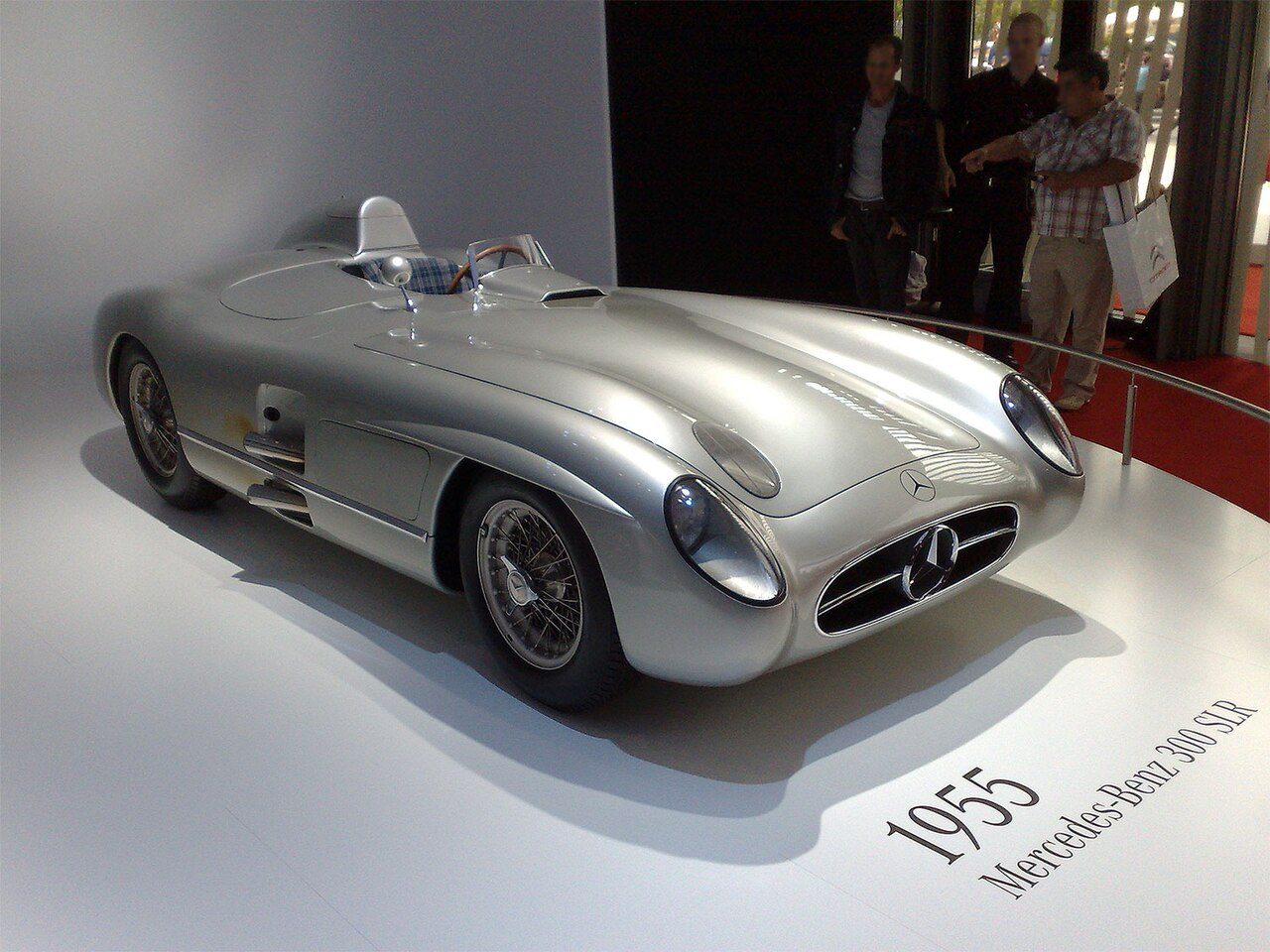
The 1955 24 Hours of Le Mans was meant to be a showcase for the fastest sports cars ever built. Mercedes-Benz had returned to racing with its 300 SLR, a straight-eight machine derived from its Formula One car, and was fighting Jaguar and Ferrari for the lead in front of a crowd estimated at a quarter of a million people. Just under two and a half hours into the race, in the early evening of 11 June, that contest produced the deadliest accident in motor racing history.
The chain of events took seconds. Mike Hawthorn's Jaguar, slowing for the pits, cut across in front of Lance Macklin's much slower Austin-Healey. Macklin swerved — directly into the path of Pierre Levegh's Mercedes, travelling at roughly 150 miles per hour. Levegh's car struck the Austin-Healey's rear, was launched into the air, and somersaulted into the packed spectator enclosure opposite the pits. The car broke apart and its lightweight magnesium bodywork caught fire, burning with an intense white heat that water only made worse. Levegh was thrown clear and killed; the engine, axle and other heavy debris scythed through the crowd.
The death toll, as HISTORY records it, was 83 people including Levegh himself, with well over a hundred more injured; some accounts put the number of spectators killed higher still. Astonishingly, the race was not stopped — officials feared that a quarter of a million spectators leaving at once would block the roads for ambulances. Hawthorn's Jaguar went on to win. In the small hours, Mercedes withdrew its two remaining cars, then running first and third, as a mark of respect, and at the end of the season the company withdrew from motor racing altogether, not returning for more than three decades.
The consequences reshaped the sport. Switzerland banned circuit racing outright, a prohibition that lasted for decades, and other countries imposed temporary bans while circuits were rebuilt with proper separation between cars and crowds. The disaster forced racing to confront the danger its speed now posed to spectators, and the modern architecture of barriers, debris fencing and setback grandstands descends directly from the lessons of that evening. It remains, by a grim margin, the worst accident motor sport has ever known.
Why this date matters
June 11 is a day on which the twentieth century kept colliding with itself. In a single day in 1963 it produced a governor defying integration in Alabama, a president promising civil rights on television, and a monk's self-immolation in Saigon — three scenes that between them mapped the decade to come. Eight years earlier it had produced motor racing's darkest hour at Le Mans, and eight years later its most profitable fantasy, E.T. It is a date that holds protest, catastrophe and consolation in unusually equal measure, and rarely lets any one of them have the day to itself.
Sources
- Encyclopaedia Britannica — On This Day: June 11
- HISTORY — What Happened on June 11
- HISTORY — Buddhist immolates himself in protest
- Mercedes-Benz Public Archive — Sports Car World Championship, 1955
- Wikimedia Commons — Mercedes-Benz 300 SLR 1955

The facts on this page were checked against these sources on 19 November 2026. The History Trail's permanent pages are researched and written for this site; the live profiles elsewhere on The History Trail are assembled automatically from Wikipedia and Wikidata.
About the Author
Researched and written by the The History Trail Editorial Team — the accountable editorial function behind this site's permanent story pages. The team works from the published sources cited on each page; it does not invent historians, reviewers or credentials, and it corrects errors openly.
Fact Check
Every load-bearing fact on this page traces to one of the sources listed above, and significant claims link to their source in the text. Our checking method is described on the methodology page; errors can be reported via the corrections page.
Sources & Citations
Cite this page as: The History Trail Editorial Team, The History Trail — this article's title, publication and update dates are shown beneath its headline. The full source list appears under Sources above; the site's source standards are on the sources page.