
On This Day
June 1 in History
On 1 June 1533 Anne Boleyn was crowned Queen of England at Westminster Abbey, four months after her secret marriage to Henry VIII and days after his marriage to Catherine of Aragon was annulled — the ceremony that confirmed England's break with Rome. June 1 is also the day Kentucky and Tennessee joined the Union, Superman first appeared in print, and CNN began broadcasting.
Choose another date: open the On This Day calendar to browse events, births and deaths for any day of the year.
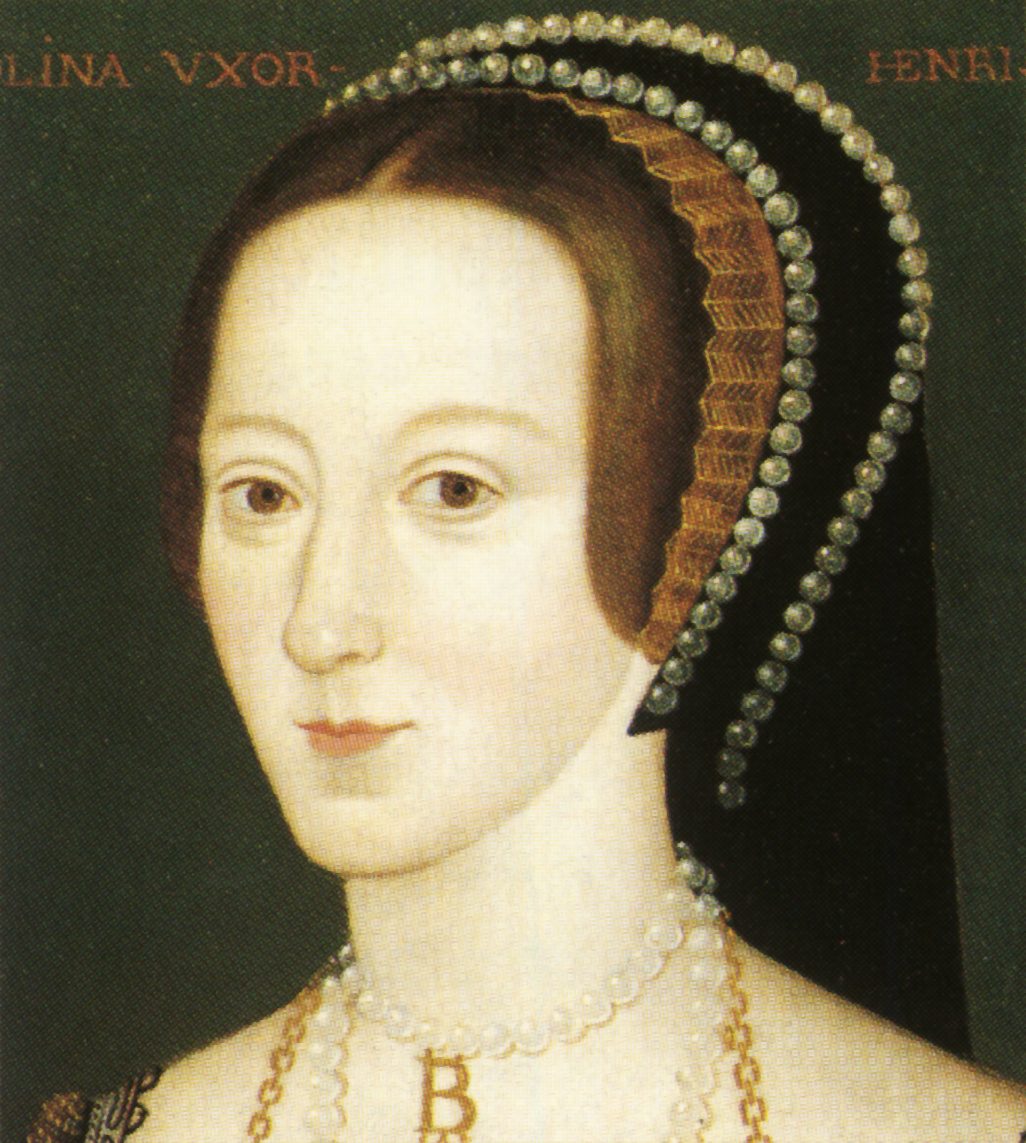
At a Glance
- Crowned
- 1 June 1533, at Westminster Abbey, by Archbishop Thomas Cranmer
- Marriage recognised
- Cranmer annulled Henry VIII's marriage to Catherine of Aragon on 23 May 1533 and declared his marriage to Anne valid on 28 May
- The crown used
- St Edward's Crown, normally reserved for a reigning monarch
- Her condition
- Anne was pregnant with the future Elizabeth I, born on 7 September 1533
- The setting
- The first coronation of an English queen consort after England's break with the Roman Catholic Church
- Her fall
- Anne was executed on 19 May 1536, less than three years after her coronation
Events on this day
- 1215Genghis Khan's Mongol forces capture Zhongdu, the Jin dynasty capital on the site of modern Beijing, after a long siege.
- 1533Anne Boleyn is crowned Queen of England at Westminster Abbey, four days after her marriage to Henry VIII was declared valid — the featured story above.
- 1792Kentucky is admitted to the Union as the 15th state, the first state west of the Appalachian Mountains.
- 1796Tennessee is admitted to the Union as the 16th state.
- 1831The explorer James Clark Ross reaches the North Magnetic Pole on the Boothia Peninsula in the Canadian Arctic.
- 1938Superman makes his first appearance, in Action Comics No. 1 — the debut of the modern superhero.
- 1941German forces complete the capture of Crete, driving Allied troops from the island after a fierce airborne invasion.
- 1967The Beatles release Sgt. Pepper's Lonely Hearts Club Band, soon hailed as a landmark in popular music.
- 1980CNN, the Cable News Network founded by Ted Turner, begins broadcasting from Atlanta — the first 24-hour television news channel.
- 1990Presidents George H. W. Bush and Mikhail Gorbachev agree in Washington to end the production of chemical weapons and cut stockpiles.
- 2008A fire at Universal Studios in California destroys the King Kong attraction and a famous backlot street, along with a vault of historic videotapes.
- 2009Air France Flight 447, an Airbus A330 flying from Rio de Janeiro to Paris, crashes into the Atlantic Ocean; all 228 people on board are killed.
Born on this day
- 1801Brigham Young — American religious leader who led the Mormon pioneers to Utah and founded Salt Lake City.
- 1842Satyendranath Tagore — Indian civil servant, poet and composer, the first Indian admitted to the Indian Civil Service.
- 1907Frank Whittle — English engineer who invented the turbojet engine, transforming air travel.
- 1926Marilyn Monroe — American film star, the defining screen icon of the 1950s.
- 1937Morgan Freeman — American actor celebrated for his voice and roles from The Shawshank Redemption to Million Dollar Baby.
Died on this day
- 1830Swaminarayan — Indian religious leader and founder of the Swaminarayan tradition of Hinduism.
- 1868James Buchanan — 15th president of the United States, the only president from Pennsylvania and the last before the Civil War.
- 1952John Dewey — American philosopher and educational reformer, a founder of pragmatism.
- 1968Helen Keller — American author and activist, deaf and blind from infancy, who became a worldwide symbol of overcoming disability.
- 2008Yves Saint Laurent — French fashion designer who reshaped women's clothing in the second half of the 20th century.
The featured story: Anne Boleyn is crowned Queen of England, 1 June 1533
Anne Boleyn's coronation was the public climax of a revolution in English religion and politics. Henry VIII had spent six years trying to annul his marriage to Catherine of Aragon, who had borne him a daughter, Mary, but no surviving son. When the Pope refused, Henry broke with Rome: Parliament barred appeals to the papal court, and in January 1533 the king secretly married Anne, who was already pregnant. In May 1533 Archbishop Thomas Cranmer declared the marriage to Catherine null and the marriage to Anne valid. The coronation that followed was staged to leave no doubt about who England's queen was.
The celebrations lasted four days. On 29 May Anne travelled by river from Greenwich to the Tower of London in a pageant of barges, and on 31 May she processed through streets hung with tapestries to Westminster. On Whit Sunday, 1 June, in Westminster Abbey, Cranmer crowned her with St Edward's Crown — the heavy crown of a reigning monarch, not the lighter crown usually placed on a queen consort — and she was anointed and presented with sceptre and rod. A great banquet followed in Westminster Hall. The message was deliberate: this was no temporary favourite but a crowned and consecrated queen, and the child she carried was presented to London as the heir.
That child was expected to be a prince; the court's astrologers and physicians had promised a son. Instead, on 7 September 1533, Anne gave birth to a daughter, Elizabeth. Further pregnancies ended in miscarriage, and as Anne's position weakened her enemies at court — and the king's wandering eye, now drawn to Jane Seymour — closed in. In May 1536 she was arrested, tried by a jury that included her own uncle, and convicted of adultery, incest and treason on evidence historians have long doubted.
Anne Boleyn was beheaded on Tower Green on 19 May 1536, less than three years after her coronation, and her marriage was annulled two days before her death. Yet the coronation of 1 June 1533 had permanently changed England: it sealed the break with Rome, advanced the English Reformation, and placed on the throne, in time, her daughter Elizabeth I, whose 45-year reign became one of the most celebrated in English history. The queen crowned in triumph in 1533 was destroyed by the same court politics that had raised her — but the settlement her marriage forced endured.
Why this date matters
June 1 is a day of beginnings ratified in public: a queen crowned to found a dynasty, two new states admitted to a young republic, a superhero launched in a ten-cent comic, and a news channel that never switched off. Again and again the date marks the moment something private — a marriage, a manuscript, a business plan — was presented to the world as permanent. The irony at the date's heart is that its grandest ceremony, Anne Boleyn's coronation, founded a settlement that outlasted the woman it celebrated by centuries: she was dead within three years, but the England her marriage created endured.
Sources
- Encyclopaedia Britannica — On This Day: June 1
- HISTORY — What Happened on June 1
- Wikipedia — June 1
- World History Encyclopedia — Anne Boleyn
The facts on this page were checked against these sources on 19 November 2026. The History Trail's permanent pages are researched and written for this site; the live profiles elsewhere on The History Trail are assembled automatically from Wikipedia and Wikidata.
About the Author
Researched and written by the The History Trail Editorial Team — the accountable editorial function behind this site's permanent story pages. The team works from the published sources cited on each page; it does not invent historians, reviewers or credentials, and it corrects errors openly.
Fact Check
Every load-bearing fact on this page traces to one of the sources listed above, and significant claims link to their source in the text. Our checking method is described on the methodology page; errors can be reported via the corrections page.
Sources & Citations
Cite this page as: The History Trail Editorial Team, The History Trail — this article's title, publication and update dates are shown beneath its headline. The full source list appears under Sources above; the site's source standards are on the sources page.