
On This Day
July 19 in History
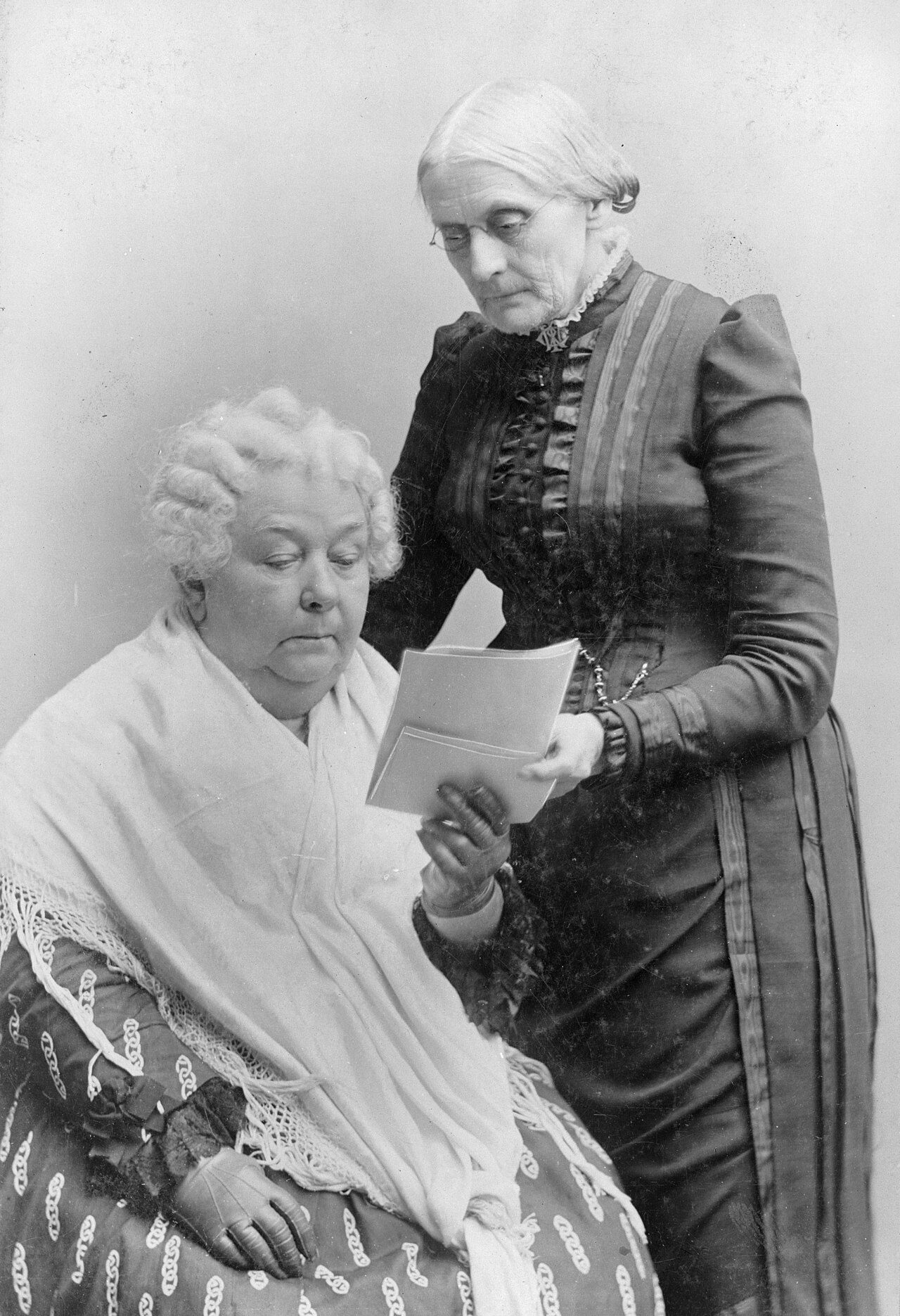
On 19 July 1848, in the Wesleyan Chapel at Seneca Falls, New York, the first women's rights convention in American history opened — and Elizabeth Cady Stanton read a Declaration of Sentiments demanding, among much else, the vote. July 19 is also the day the Mary Rose sank, Rome burned, and Apollo 11 arrived at the Moon.
Choose another date: open the On This Day calendar to browse events, births and deaths for any day of the year.
At a Glance
- The place
- The Wesleyan Chapel, Seneca Falls, New York, on 19–20 July 1848
- The organisers
- Elizabeth Cady Stanton, Lucretia Mott, Martha Coffin Wright, Mary Ann M'Clintock and Jane Hunt — abolitionists who had conceived the meeting nine days earlier
- The document
- The Declaration of Sentiments, modelled on the Declaration of Independence, opening 'all men and women are created equal'
- The attendance
- About 300 people; 100 of them — 68 women and 32 men — signed the Declaration
- The hardest resolution
- The ninth, demanding women's suffrage, was the only one not passed unanimously; Frederick Douglass spoke for it
- The outcome
- The convention launched the organised women's rights movement; American women won the constitutional right to vote with the Nineteenth Amendment in 1920
Events on this day
- AD 64The Great Fire of Rome breaks out in the merchant quarter by the Circus Maximus; it burns for six days and devastates much of the city.
- 1545Henry VIII's warship Mary Rose sinks in the Solent during a battle with the French, with the loss of more than 400 men.
- 1553Lady Jane Grey, queen of England for nine days, is deposed in favour of Mary I.
- 1848The Seneca Falls Convention, the first women's rights convention in the United States, opens in New York — the featured story above.
- 1870France declares war on Prussia, beginning the Franco-Prussian War that will end with German unification and the fall of Napoleon III.
- 1947Burma's independence leader Aung San is assassinated in Rangoon with six of his cabinet colleagues, months before independence.
- 1969Apollo 11 enters orbit around the Moon, the day before Armstrong and Aldrin's landing.
- 1989United Airlines Flight 232 crash-lands at Sioux City, Iowa, after catastrophic engine failure; 112 of the 296 people aboard die, in a landing long used as a case study in crew teamwork.
- 2024A faulty software update from the security firm CrowdStrike crashes millions of Windows computers worldwide, grounding flights and closing services in one of history's largest IT outages.
Born on this day
- 1814Samuel Colt — American inventor and manufacturer whose revolver and mass-production methods reshaped the firearms industry.
- 1834Edgar Degas — French artist of dancers, racetracks and Parisian cafés, a founder of Impressionism who preferred to be called a realist.
- 1860Lizzie Borden — American woman tried and acquitted for the 1892 axe murders of her father and stepmother, and never cleared in the public mind.
- 1947Brian May — English guitarist of Queen, astrophysicist, and builder of his own famous guitar.
- 1976Benedict Cumberbatch — English actor of Sherlock, The Imitation Game and the Marvel films.
Died on this day
- 1374Petrarch — Italian scholar and poet whose sonnets and letters helped found Renaissance humanism.
- 1850Margaret Fuller — American journalist and author of Woman in the Nineteenth Century, drowned in a shipwreck off Fire Island with her husband and child.
- 2014James Garner — American actor of Maverick and The Rockford Files, dead at 86.
- 2019Rutger Hauer — Dutch actor whose improvised 'tears in rain' speech closed Blade Runner, dead at 75.
The featured story: the Seneca Falls Convention opens, 19 July 1848
The convention was arranged in nine days, over tea. On 9 July 1848, five women — Lucretia Mott, the Quaker preacher and abolitionist, visiting from Philadelphia; her sister Martha Coffin Wright; Jane Hunt; Mary Ann M'Clintock; and Elizabeth Cady Stanton — met at Hunt's house in Waterloo, New York, and poured out years of frustration at the legal position of women: no vote, no property rights in marriage, no custody rights, no access to higher education or the professions. Mott and Stanton had been waiting eight years for this moment: in 1840, at the World Anti-Slavery Convention in London, women delegates had been barred from the floor and made to watch from behind a curtain. They had resolved then to hold a convention on the rights of women. Now, in Stanton's home town of Seneca Falls, they called one — with a newspaper notice giving the public barely a week's warning.
Some 300 people, most of them local, crowded into the Wesleyan Chapel on the morning of Wednesday 19 July — so many that the chapel door had to be unlocked by a child lifted through a window, the key having gone missing. The first day was reserved for women. Stanton read the document she had drafted with the M'Clintocks at a tea table in Waterloo: the Declaration of Sentiments, deliberately built on the Declaration of Independence, with its famous insertion — 'all men and women are created equal' — followed by a catalogue of grievances against 'man' as the new George III, and twelve resolutions demanding the overturning of women's legal subordination.
On the second day men were admitted, and the resolutions were debated and passed — eleven unanimously. The ninth, Stanton's demand for the elective franchise, nearly failed: even Mott feared it would make the movement ridiculous, and it carried largely because Frederick Douglass, the great abolitionist orator, rose to argue that a cause of universal rights could not stop halfway. One hundred attendees signed the Declaration — 68 women and 32 men. The press response ranged from amusement to outrage, and several signers, stung by ridicule, withdrew their names. Stanton counted the outrage a success: the argument had begun.
Seneca Falls was followed two weeks later by a larger convention at Rochester, and from 1850 by national women's rights conventions. The movement it launched took 72 years to win its central demand: the Nineteenth Amendment, ratified in August 1920, constitutionally secured women's suffrage across the United States — by which time only one of the hundred signers, Charlotte Woodward, was still alive to hear of it. The Wesleyan Chapel, long used as a laundry and a garage, is now preserved within the Women's Rights National Historical Park, a few streets from Stanton's house.
Why this date matters
July 19 is a day of documents and disasters in uneasy company. A fire that remade Rome, a flagship that went down within sight of its king, and a nine-days' queen losing her throne share the date with a two-day meeting in a small chapel that remade citizenship. The Seneca Falls women worked in the American grain — petition, declaration, resolution — and their document outlasted the century's empires. Around the centrepiece, the date keeps the same tension between fragile vessels and durable words: aircraft and computers failing in 1989 and 2024, a spacecraft arriving safely at the Moon in 1969, and a declaration from 1848 still being argued from today.
Sources
- Encyclopaedia Britannica — On This Day: July 19
- HISTORY — Seneca Falls Convention begins
- US Census Bureau — July 2023: 1848 Women's Rights Convention
- Encyclopaedia Britannica — Seneca Falls Convention
- Wikimedia Commons — Elizabeth Cady Stanton and Susan B Anthony

The facts on this page were checked against these sources on 19 November 2026. The History Trail's permanent pages are researched and written for this site; the live profiles elsewhere on The History Trail are assembled automatically from Wikipedia and Wikidata.
About the Author
Researched and written by the The History Trail Editorial Team — the accountable editorial function behind this site's permanent story pages. The team works from the published sources cited on each page; it does not invent historians, reviewers or credentials, and it corrects errors openly.
Fact Check
Every load-bearing fact on this page traces to one of the sources listed above, and significant claims link to their source in the text. Our checking method is described on the methodology page; errors can be reported via the corrections page.
Sources & Citations
Cite this page as: The History Trail Editorial Team, The History Trail — this article's title, publication and update dates are shown beneath its headline. The full source list appears under Sources above; the site's source standards are on the sources page.