
On This Day
July 18 in History
On 18 July 1976, at the Montreal Olympics, a 14-year-old Romanian gymnast named Nadia Comaneci performed an uneven-bars routine so flawless that the scoreboard — never programmed for perfection — flashed 1.00: the first perfect 10 in Olympic history. July 18 is also Nelson Mandela's birthday, the day Jane Austen died, and the day the Black Sox trial opened.
Choose another date: open the On This Day calendar to browse events, births and deaths for any day of the year.
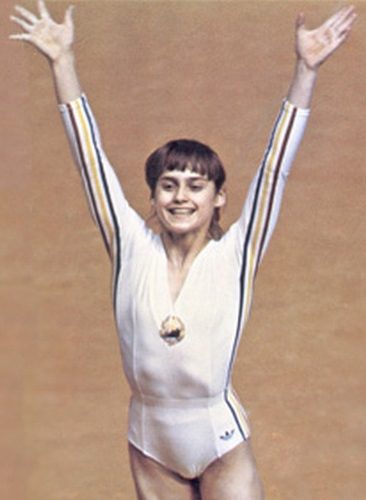
At a Glance
- The date
- 18 July 1976, the opening day of gymnastics competition at the Montreal Olympics
- The gymnast
- Nadia Comaneci of Romania, 14 years old, coached by Bela Karolyi
- The apparatus
- The uneven bars, in the team compulsory round
- The score
- 10.00 — the first perfect score in Olympic gymnastics; the Omega scoreboard, not programmed above 9.99, displayed 1.00
- The haul
- Comaneci earned seven perfect 10s at Montreal and won three gold medals, a silver and a bronze
- The effect
- Her routines reset what judges, gymnasts and audiences believed the sport could be
Events on this day
- 1863Union troops of the 54th Massachusetts, one of the first Black regiments, assault Fort Wagner in South Carolina; their colonel, Robert Gould Shaw, is killed with many of his men.
- 1925The first volume of Adolf Hitler's Mein Kampf is published in Germany.
- 1940Franklin D. Roosevelt is nominated for an unprecedented third presidential term by the Democratic convention in Chicago.
- 1947President Harry Truman signs the Presidential Succession Act, placing the Speaker of the House next in line after the vice president.
- 1966Gemini 10 launches from Cape Kennedy with John Young and Michael Collins, on a mission that includes the first spacewalk from one spacecraft toward another.
- 1969The Football War between El Salvador and Honduras ends in a ceasefire after four days of fighting inflamed by World Cup qualifying matches.
- 1969Senator Edward Kennedy drives off a bridge at Chappaquiddick Island; his passenger, Mary Jo Kopechne, drowns, and he does not report the accident for ten hours.
- 1976Nadia Comaneci scores the first perfect 10 in Olympic gymnastics — the featured story above.
- 1986The first close-up video of the wreck of the Titanic, filmed by the submersible Alvin and its robot Jason Jr., is released to the public.
- 2013Detroit files for Chapter 9 bankruptcy, the largest municipal bankruptcy in American history.
Born on this day
- 1811William Makepeace Thackeray — English novelist of Vanity Fair, born in Calcutta.
- 1918Nelson Mandela — South African anti-apartheid leader, prisoner for 27 years and his country's first democratically elected president; his birthday is now UN Mandela Day.
- 1921John Glenn — American astronaut, the first American to orbit the Earth, and later a United States senator.
- 1967Vin Diesel — American actor of the Fast & Furious films.
- 1980Kristen Bell — American actress of Veronica Mars and the voice of Anna in Frozen.
Died on this day
- 1792John Paul Jones — Scottish-born naval hero of the American Revolution, dead in Paris at 45 and buried in an unmarked grave for over a century.
- 1817Jane Austen — English novelist of Pride and Prejudice and Emma, dead at Winchester at 41, with four novels published anonymously in her lifetime.
- 1872Benito Juárez — president of Mexico and national hero of the Reform era, dead in office in Mexico City.
- 1988Nico — German singer of the Velvet Underground's first album and a solo artist of stark, harmonium-driven songs, dead after a bicycle accident on Ibiza.
The featured story: Nadia Comaneci scores the first perfect 10, 18 July 1976
Olympic gymnastics before Montreal had a ceiling, and everyone knew where it was: perfection was not a score judges gave. The equipment of the sport agreed — the Swiss timing company Omega, which supplied the scoreboards, had asked the organisers before the Games what the maximum display needed to be, and was told that 9.99 would suffice; a four-digit 10.00 was, the officials assured them, impossible. Into that assumption stepped a 14-year-old from Onești, Romania, 1.5 metres tall and 40 kilograms, trained since the age of six by Bela Karolyi in a state sports school built around his methods.
On 18 July 1976, the first day of the women's competition, Comaneci mounted the uneven bars for the compulsory routine — the set exercise every gymnast performed identically, judged purely on execution. Her routine was quick, precise and apparently weightless, ending in a clean dismount she stuck without a step. The judges awarded 10.00, the first perfect score in Olympic gymnastics history. The scoreboard, physically unable to show it, displayed 1.00, and the crowd's first reaction was confusion before the announcer explained and the arena erupted. Comaneci herself, famously unsmiling, seemed the least surprised person in the building.
It was not a one-off. Over the following days she collected six more perfect 10s, on bars and beam, and left Montreal with gold medals in the all-around, beam and uneven bars, a team silver and a bronze on floor — at an age when most gymnasts of the era were years from senior competition. The images circled the world: the ponytailed child on the cover of Time, Newsweek and Sports Illustrated in the same week, and the 1.00 photograph became one of the century's defining sports images, a machine confessing it had not imagined the human performance it was built to measure.
Comaneci's Montreal changed her sport's direction — toward younger, smaller, more acrobatic gymnasts, a revolution whose costs as well as triumphs are still debated — and changed her own life utterly. She won two more golds at Moscow in 1980, retired in 1984, and in 1989, weeks before the Romanian revolution, she defected to the United States, where she still lives. The perfect 10 itself did not survive: the scoring system was rebuilt in 2006 and the 10.00 abolished as a maximum. But the standard she set is the one the sport still chases, and the date it was set remains the day gymnastics discovered its ceiling had been imaginary.
Why this date matters
July 18 pairs the extremes of what crowds gather to watch. Its centrepiece is a child achieving, for one measured moment, literal perfection — while the same date carries a doomed assault by Black soldiers fighting for a country that barely recognised them, a dictator's manifesto entering the world, a senator's career sinking in a tidal pond, and a great city's bankruptcy. Against the darkness stand the day's births: Mandela and Glenn, men whose long lives bent toward endurance. The pattern is judgement — of a routine, of a war, of a life's work — delivered in public and impossible to appeal.
Sources
- Encyclopaedia Britannica — On This Day: July 18
- HISTORY — What Happened on July 18
- CNBC TV18 — On This Day: Mandela born, Thackeray born, Jane Austen died
- Wikimedia Commons — Nadia Comaneci at the 1976 Olympics

The facts on this page were checked against these sources on 19 November 2026. The History Trail's permanent pages are researched and written for this site; the live profiles elsewhere on The History Trail are assembled automatically from Wikipedia and Wikidata.
About the Author
Researched and written by the The History Trail Editorial Team — the accountable editorial function behind this site's permanent story pages. The team works from the published sources cited on each page; it does not invent historians, reviewers or credentials, and it corrects errors openly.
Fact Check
Every load-bearing fact on this page traces to one of the sources listed above, and significant claims link to their source in the text. Our checking method is described on the methodology page; errors can be reported via the corrections page.
Sources & Citations
Cite this page as: The History Trail Editorial Team, The History Trail — this article's title, publication and update dates are shown beneath its headline. The full source list appears under Sources above; the site's source standards are on the sources page.