
On This Day
February 2 in History
On 2 February 1943 the last starving remnants of the German Sixth Army surrendered at Stalingrad, ending the bloodiest battle of the Second World War and turning its tide against Nazi Germany. February 2 is also the day the Treaty of Guadalupe Hidalgo redrew the map of North America, Grand Central Terminal opened, and James Joyce was born.
Choose another date: open the On This Day calendar to browse events, births and deaths for any day of the year.
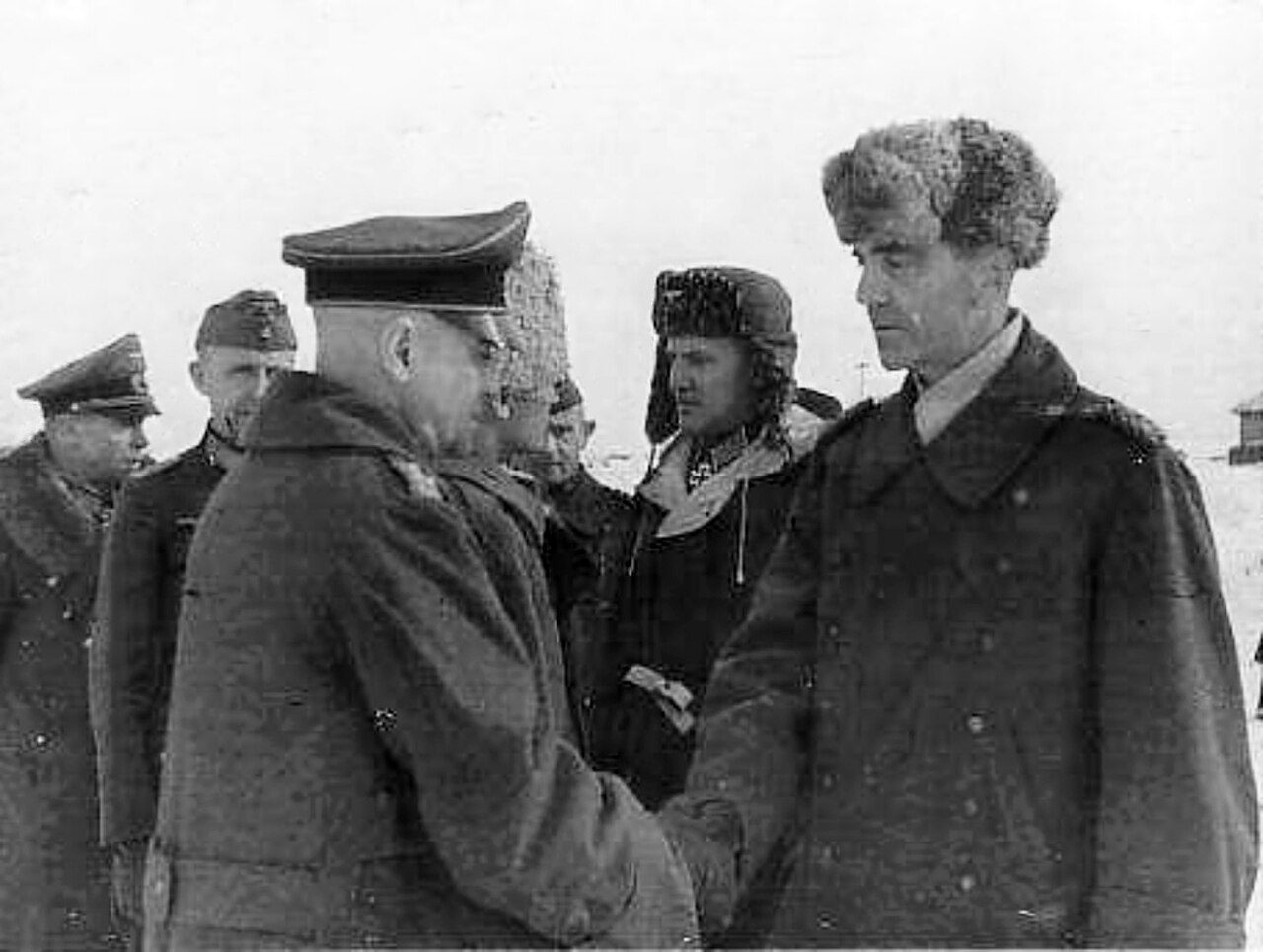
At a Glance
- The battle
- Fought from the summer of 1942 for the Soviet city of Stalingrad, now Volgograd, on the Volga River
- The turning point
- Operation Uranus, the Soviet counteroffensive of November 1942, encircled the German Sixth Army
- The commander
- Friedrich Paulus, promoted to field marshal by Hitler on 30 January 1943 in the hope he would die rather than surrender
- The surrender
- Paulus gave up on 31 January; the last northern pocket surrendered on 2 February
- The prisoners
- Some 91,000 frozen, starving men marched into captivity; only a small fraction ever returned home
- The cost
- Total casualties on both sides approached an estimated two million killed, wounded or captured
Events on this day
- 1848The Treaty of Guadalupe Hidalgo is signed, ending the Mexican-American War; Mexico cedes vast territories including California, Nevada, Utah and Arizona to the United States.
- 1876The National League of Professional Baseball Clubs is founded in New York, the organisation that becomes baseball's National League.
- 1887The first Groundhog Day celebration is held at Punxsutawney, Pennsylvania, where the groundhog Punxsutawney Phil 'predicts' the weather.
- 1897Alfred Cralle patents the first practical ice cream scoop, with a built-in scraper to release the ice cream.
- 1913Grand Central Terminal opens in New York City, the largest railway station in the world at the time.
- 1922Ulysses by James Joyce is published in Paris on his fortieth birthday, the defining novel of literary modernism.
- 1943The last German troops at Stalingrad surrender to the Red Army, ending the battle that turned the Second World War in Europe — the featured story above.
- 1950Klaus Fuchs, a physicist who worked on the atomic bomb, is arrested in Britain for passing secrets to the Soviet Union.
- 1971Idi Amin declares himself president of Uganda a week after seizing power, beginning eight years of brutal rule.
- 1980The FBI's Abscam operation is revealed to the public, exposing a sting that would convict several members of the U.S. Congress of corruption.
- 1990South African President F. W. de Klerk announces the lifting of the ban on the African National Congress and the coming release of Nelson Mandela.
Born on this day
- 1901Jascha Heifetz — Lithuanian-born American violinist, widely considered the greatest violinist of the twentieth century.
- 1829Alfred Brehm — German zoologist and author of the famous illustrated Animal Life.
- 1882James Joyce — Irish novelist, author of Ulysses and Finnegans Wake, the giant of literary modernism.
- 1905Ayn Rand — Russian-born American novelist and philosopher, author of Atlas Shrugged and founder of Objectivism.
- 1926Valery Giscard d'Estaing — president of France from 1974 to 1981 and a key architect of European integration.
- 1927Stan Getz — American jazz saxophonist, the lyrical 'Sound' of cool jazz and bossa nova.
- 1947Farrah Fawcett — American actress, a defining television star of the 1970s in Charlie's Angels.
- 1977Shakira — Colombian singer-songwriter, one of the best-selling Latin music artists of all time.
Died on this day
- 1970Bertrand Russell — British philosopher, logician and Nobel laureate, a founding figure of analytic philosophy, dead at 97.
- 1979Sid Vicious — bassist of the Sex Pistols and emblem of punk rock, dead of a heroin overdose in New York at 21.
- 2014Philip Seymour Hoffman — American actor, Oscar winner for Capote, dead of a drug overdose in New York at 46.
- 1996Gene Kelly — American dancer, actor and director of Singin' in the Rain, dead in Beverly Hills at 83.
The featured story: the end of the Battle of Stalingrad, 2 February 1943
Stalingrad was not supposed to become a byword for catastrophe. When German armies drove east in the summer of 1942, the city on the Volga — an industrial centre bearing Stalin's name — was one objective among several in a campaign aimed at Soviet oil. But Hitler insisted on taking it, Stalin ordered it held at all costs, and from August 1942 the two armies ground each other down in ruins, fighting room by room through factories, grain silos and apartment blocks. Soviet defenders clung to a narrow strip along the river's west bank, supplied by boats under fire, while the German Sixth Army under Friedrich Paulus bled itself white capturing most of a city that no longer functioned.
The trap closed in November. On 19 November 1942 the Red Army launched Operation Uranus, a counteroffensive planned by Generals Zhukov and Vasilevsky that deliberately struck not the Germans but the weaker Romanian armies guarding their flanks. Within days the two Soviet pincers met, and some 300,000 Axis troops were encircled in a pocket — the Kessel — around Stalingrad. Hitler refused to authorise a breakout, trusting Hermann Goering's promise that the Luftwaffe could supply the pocket by air. It could not: the Sixth Army needed hundreds of tons a day and received a fraction of that. Through December and January the encircled men starved and froze as Soviet forces tightened the ring and a German relief attempt failed short of the city.
The end came in stages. On 30 January 1943, the tenth anniversary of his taking power, Hitler promoted Paulus to field marshal — pointing out that no German field marshal had ever surrendered, and clearly expecting suicide. Paulus instead surrendered himself and his southern pocket the next day, telling his captors he had no intention of dying for, as he reportedly put it, 'this Bohemian corporal'. Isolated groups fought on in the northern pocket for two more days. On 2 February 1943 they too laid down their arms, and some 91,000 survivors — all that was left of the Sixth Army and parts of the Fourth Panzer Army — trudged into a captivity from which only a few thousand would return a decade later.
The consequences reached far beyond one ruined city. Germany had lost an entire army group and, with it, the initiative in the east: from Stalingrad onward, the Red Army advanced, with interruptions, all the way to Berlin. Axis casualties in the campaign are estimated at around 800,000, Soviet casualties higher still; total losses on both sides approached two million. In Germany the defeat shattered the myth of invincibility and prompted Goebbels's 'total war' speech. In the Soviet Union, and later Russia, Stalingrad became the defining victory of what is remembered as the Great Patriotic War — commemorated today by the immense Motherland Calls statue above the battlefield.
Why this date matters
February 2 is a day when long struggles end. The Mexican-American War closed with a treaty in 1848, and in 1943 the longest, largest battle of the Second World War closed in the snow at Stalingrad. It is also a literary day: James Joyce was born in 1882 and published Ulysses on his fortieth birthday in 1922, while Ayn Rand, his opposite in almost everything, was born in 1905. Even its folk custom is about waiting for an ending — a groundhog in Pennsylvania deciding, since 1887, whether winter will end soon or drag on six weeks more.
Sources
- Encyclopaedia Britannica — On This Day: February 2
- HISTORY — What Happened on February 2
- Encyclopaedia Britannica — Battle of Stalingrad
- Encyclopaedia Britannica — Timeline of the Battle of Stalingrad
The facts on this page were checked against these sources on 19 November 2026. The History Trail's permanent pages are researched and written for this site; the live profiles elsewhere on The History Trail are assembled automatically from Wikipedia and Wikidata.
About the Author
Researched and written by the The History Trail Editorial Team — the accountable editorial function behind this site's permanent story pages. The team works from the published sources cited on each page; it does not invent historians, reviewers or credentials, and it corrects errors openly.
Fact Check
Every load-bearing fact on this page traces to one of the sources listed above, and significant claims link to their source in the text. Our checking method is described on the methodology page; errors can be reported via the corrections page.
Sources & Citations
Cite this page as: The History Trail Editorial Team, The History Trail — this article's title, publication and update dates are shown beneath its headline. The full source list appears under Sources above; the site's source standards are on the sources page.