
On This Day
December 30 in History
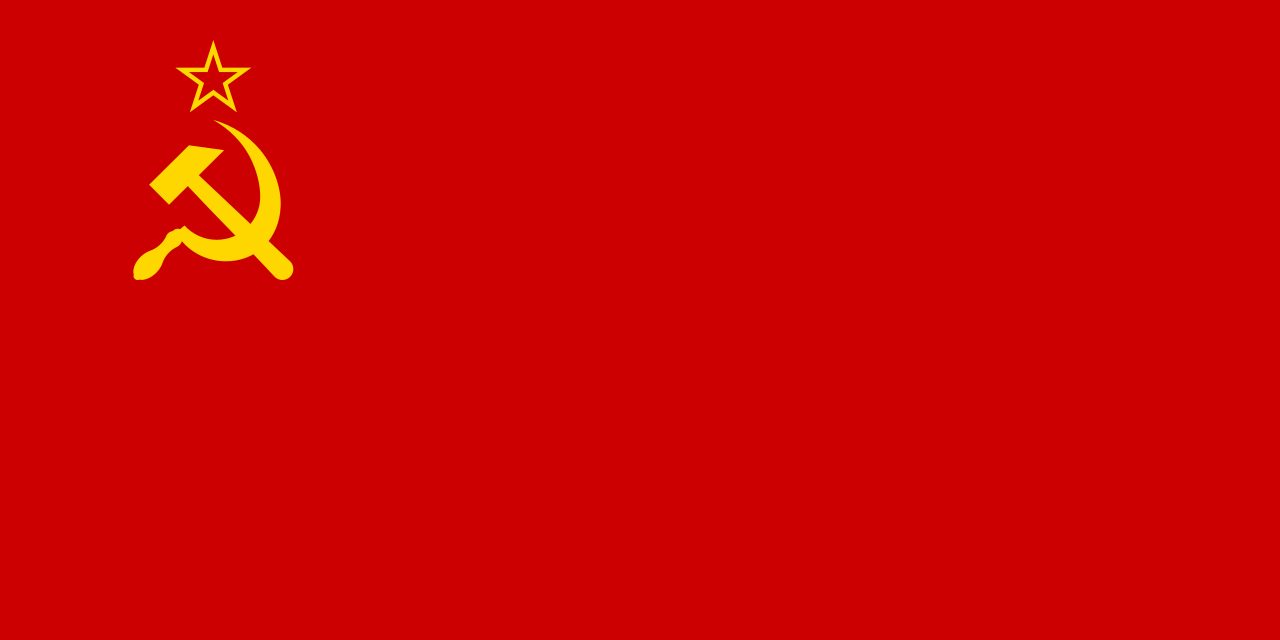
On 30 December 1922, at the Bolshoi Theatre in Moscow, the First All-Union Congress of Soviets approved the treaty and declaration creating the Union of Soviet Socialist Republics — the USSR, a state that began with four republics, grew to fifteen, and lasted just one year short of seven decades. December 30 is also the day Rasputin was murdered, the Gadsden Purchase was signed, and Saddam Hussein was executed.
Choose another date: open the On This Day calendar to browse events, births and deaths for any day of the year.
At a Glance
- The act
- On 30 December 1922 the First All-Union Congress of Soviets, meeting at Moscow's Bolshoi Theatre, approved the Declaration and Treaty on the Formation of the USSR
- Signed the day before
- The founding documents had been concluded by the four republics' delegations on 29 December — the union took legal life on the 30th
- The founders
- Four republics: the Russian SFSR, the Ukrainian SSR, the Byelorussian SSR and the Transcaucasian SFSR
- The argument behind it
- Lenin's federal design defeated Stalin's 'autonomisation' plan, which would have absorbed the republics into Russia
- The growth
- The union eventually comprised 15 republics and more than 290 million people, the largest country on Earth
- The end
- The USSR dissolved in December 1991 — its formal end completed by the Supreme Soviet on 26 December, almost exactly 69 years after its founding
Events on this day
- 533The main elements of the Code of Justinian, the great codification of Roman law, take effect across the Byzantine Empire (some accounts date the second edition's force to 534).
- 1460Richard, Duke of York, is killed at the Battle of Wakefield in the Wars of the Roses, his head displayed at York wearing a paper crown.
- 1853The Gadsden Purchase is signed: the United States buys some 45,000 square miles from Mexico, fixing the southern border of Arizona and New Mexico.
- 1896José Rizal, writer and national hero of the Philippines, is executed by a Spanish firing squad in Manila, hastening the Philippine Revolution.
- 1906The All-India Muslim League is founded in Dhaka, the party that will later lead the movement for Pakistan.
- 1922The Union of Soviet Socialist Republics is formally established by the First All-Union Congress of Soviets in Moscow — the featured story above.
- 1924Astronomer Edwin Hubble's discovery of galaxies beyond the Milky Way is announced, transforming the scale of the known universe.
- 1927Tokyo's Ginza subway line opens, the first underground railway in Asia.
- 1943Subhas Chandra Bose raises the flag of the Provisional Government of Free India at Port Blair in the Andaman Islands.
- 1947King Michael I of Romania is forced to abdicate by the communist government, and the Romanian People's Republic is proclaimed.
- 1953The first colour television sets go on sale in the United States, priced at over $1,000 — a small fortune for a screen of a few inches.
- 1965Ferdinand Marcos is inaugurated as president of the Philippines, beginning a rule of more than twenty years.
Born on this day
- 39Titus — Roman emperor who destroyed the Temple in Jerusalem as a general and reigned, briefly and popularly, from 79 to 81.
- 1847John Peter Altgeld — German-born governor of Illinois whose pardon of the surviving Haymarket defendants defined his career.
- 1865Rudyard Kipling — English writer born in Bombay, author of The Jungle Book and the youngest-ever Nobel laureate in literature.
- 1946Patti Smith — American singer, poet and author of Just Kids, the godmother of punk.
Died on this day
- 1916Grigori Rasputin — Siberian mystic whose influence over the Romanov court ended in his murder by nobles in Petrograd.
- 2006Saddam Hussein — president of Iraq from 1979 to 2003, executed in Baghdad after conviction for crimes against humanity.
- 2022Barbara Walters — American broadcast journalist who redefined the television interview, dead at 93.
The featured story: the USSR is formally established, 30 December 1922
Five years after the Bolsheviks seized power, the map of the former Russian Empire was a patchwork: Soviet republics in Russia, Ukraine, Belarus and the Caucasus, bound to Moscow by bilateral treaties but formally independent, alongside the wreckage of a civil war only just ending. Through 1922 the question of how to fuse them into one state became the last great argument of Vladimir Lenin's life. Joseph Stalin, as commissar for nationalities, proposed 'autonomisation' — the republics absorbed into the Russian federation as subordinate units. Lenin, though failing in health, fought the plan as Great Russian chauvinism and insisted on a union of formally equal, sovereign republics, free in principle to secede.
Lenin's design won. On 29 December 1922, delegations of the four republics concluded the Declaration and Treaty on the Formation of the Union of Soviet Socialist Republics. The next day, 30 December, some 2,200 delegates of the First All-Union Congress of Soviets, assembled in Moscow's Bolshoi Theatre, approved the documents, and the USSR formally came into existence — a federal state with a single foreign policy, army and economic plan, whose member republics kept, on paper, their sovereignty and a right of secession that would matter enormously 69 years later.
The union grew as it consolidated. New republics were carved out in Central Asia in the 1920s and 1930s; the Baltic states, annexed in 1940, brought the total to fifteen. The 1924 constitution regularised the structure the treaty had sketched. Under Stalin the federal forms survived while real power centralised in the Communist Party — the equality of the republics became largely fictive, their secession right a dead letter. Yet the forms were never abolished, and when the centre weakened in the late 1980s, it was through those very forms — republican parliaments, republican borders, the treaty's promise of free exit — that the union came apart.
The end mirrored the beginning with eerie precision. In December 1991 the leaders of Russia, Ukraine and Belarus — three of the four founding republics — declared the USSR dissolved; Gorbachev resigned on 25 December, and on 26 December 1991 the Supreme Soviet completed the formalities. A state proclaimed in the Bolshoi Theatre on 30 December 1922 had lasted one day short of 69 years, and its founding document turned out to contain, all along, the legal machinery of its own dissolution.
Why this date matters
December 30 is the year's day of statecraft at its most extreme: an empire of law codified in Constantinople, a border bought from Mexico, a league founded that would one day partition India, a king forced from his throne in Bucharest — and, above all, a superstate founded in a theatre and dissolved, almost to the day, 69 years later. It is also a day of violent punctuation: a duke's head on a spike in a paper crown, a mystic murdered in a cellar, a dictator on a scaffold. The date specialises in the paperwork and the bloodshed by which states begin and end.
Sources
- Encyclopaedia Britannica — On This Day: December 30
- HISTORY — What Happened on December 30
- HISTORY — USSR established
- Michigan State University, Soviet History Archive — Formation of the USSR (1922)
The facts on this page were checked against these sources on 19 November 2026. The History Trail's permanent pages are researched and written for this site; the live profiles elsewhere on The History Trail are assembled automatically from Wikipedia and Wikidata.
About the Author
Researched and written by the The History Trail Editorial Team — the accountable editorial function behind this site's permanent story pages. The team works from the published sources cited on each page; it does not invent historians, reviewers or credentials, and it corrects errors openly.
Fact Check
Every load-bearing fact on this page traces to one of the sources listed above, and significant claims link to their source in the text. Our checking method is described on the methodology page; errors can be reported via the corrections page.
Sources & Citations
Cite this page as: The History Trail Editorial Team, The History Trail — this article's title, publication and update dates are shown beneath its headline. The full source list appears under Sources above; the site's source standards are on the sources page.