
On This Day
December 19 in History
On 19 December 1843 Chapman & Hall published Charles Dickens's A Christmas Carol — a ghost story written in six weeks whose first edition of 6,000 copies sold out by Christmas Eve and which permanently reshaped how the English-speaking world celebrates Christmas. December 19 is also the day Washington's army entered Valley Forge, Titanic opened in cinemas, and Bill Clinton was impeached.
Choose another date: open the On This Day calendar to browse events, births and deaths for any day of the year.
At a Glance
- Full title
- A Christmas Carol. In Prose. Being a Ghost Story of Christmas
- Written
- In about six weeks from October 1843, much of it composed during Dickens's long night walks through London
- Published
- 19 December 1843 by Chapman & Hall, London, priced at five shillings
- Illustrated
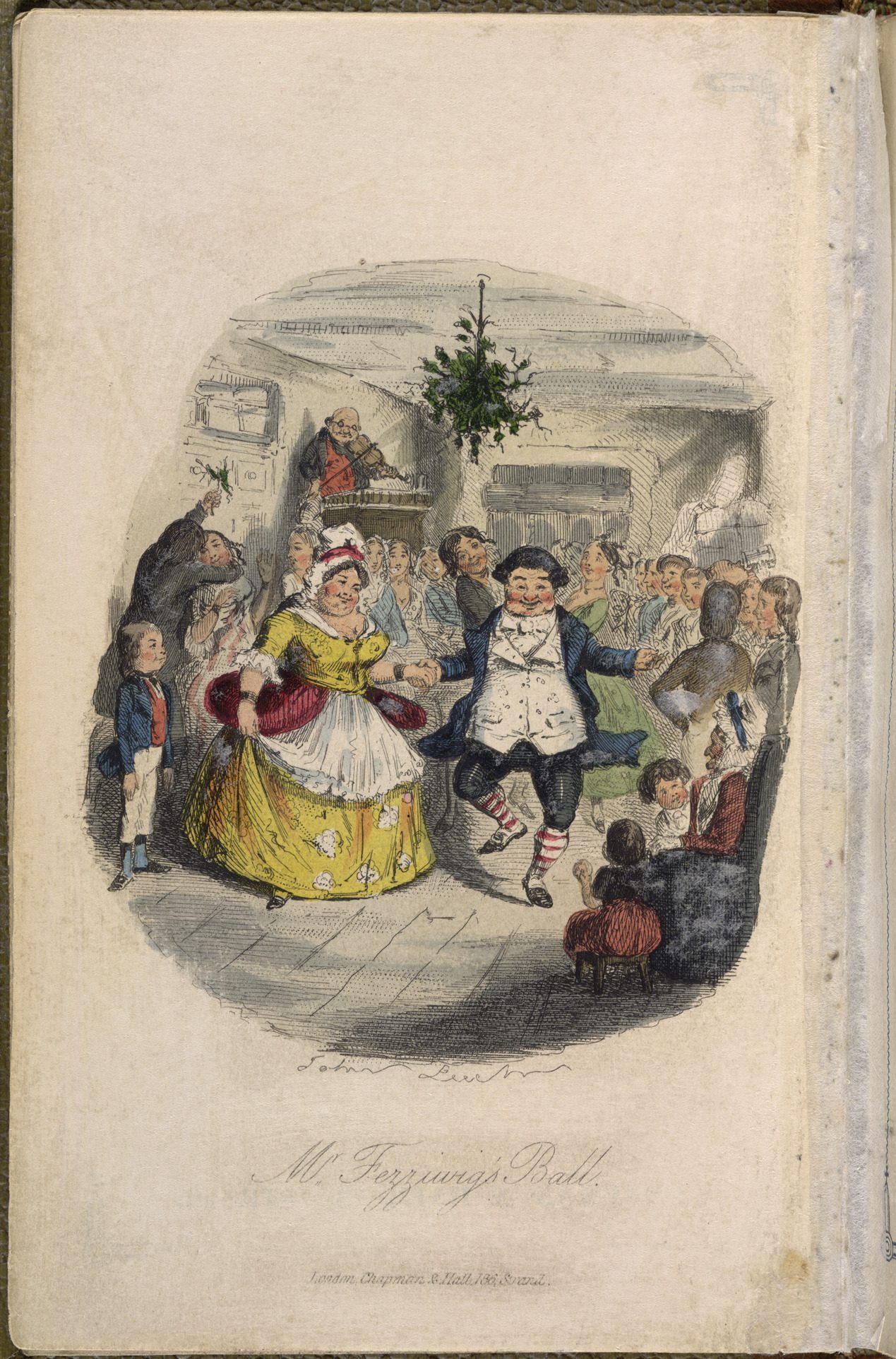
- Four hand-coloured etchings and four wood engravings by John Leech
- First edition
- 6,000 copies, sold out by Christmas Eve; thirteen editions had appeared by the end of 1844
- Dickens's profit
- Only about £230 from the first edition, far below the £1,000 he had hoped for, because of the costly production he insisted on
Events on this day
- 1732Benjamin Franklin publishes the first edition of Poor Richard's Almanack, the bestselling annual that made his fortune and his reputation for wit.
- 1776Thomas Paine publishes the first of The American Crisis essays, opening with 'These are the times that try men's souls', to rally the failing Revolutionary cause.
- 1777George Washington leads the Continental Army into winter quarters at Valley Forge, Pennsylvania, where some 2,000 soldiers will die of disease and exposure.
- 1843Charles Dickens publishes A Christmas Carol — the featured story above.
- 1917The first games of the new National Hockey League are played in Canada, the league's opening night of a history that continues today.
- 1946Ho Chi Minh's Viet Minh attack French forces in Hanoi, beginning the First Indochina War for Vietnam's independence.
- 1974Nelson Rockefeller is sworn in as vice president of the United States, filling the office left vacant when Gerald Ford succeeded Richard Nixon.
- 1997Titanic, James Cameron's film of the 1912 disaster, is released in the United States; it becomes the first film to gross a billion dollars.
- 1998The U.S. House of Representatives impeaches President Bill Clinton on charges of perjury and obstruction of justice; the Senate later acquits him.
- 2012Park Geun-Hye is elected president of South Korea, the country's first woman to hold the office.
Born on this day
- 1875Carter G. Woodson — American historian known as the 'father of Black history', founder of Negro History Week, which became Black History Month.
- 1906Leonid Brezhnev — Soviet leader who ruled the USSR for 18 years, through the era of détente and stagnation.
- 1910Jean Genet — French writer, thief and drifter turned celebrated playwright and novelist of The Balcony and Our Lady of the Flowers.
- 1915Édith Piaf — French singer, the 'Little Sparrow', whose voice in 'La Vie en rose' became the sound of Paris.
- 1924Cicely Tyson — American actress whose portrayals of strong Black women, from Sounder to The Autobiography of Miss Jane Pittman, spanned seven decades.
- 1972Alyssa Milano — American actress of Who's the Boss? and Charmed, later a prominent activist.
- 1980Jake Gyllenhaal — American actor of Donnie Darko, Brokeback Mountain and Nightcrawler.
Died on this day
- 1075Edith of Wessex — queen consort of Edward the Confessor, one of the most powerful women of eleventh-century England.
- 211Geta — Roman co-emperor, murdered on his brother Caracalla's orders within a year of their father's death.
- 1848Emily Brontë — English novelist, dead of tuberculosis at 30, a year after publishing Wuthering Heights under a man's name.
- 1996Marcello Mastroianni — Italian actor, the face of Fellini's La Dolce Vita and 8½, dead in Paris at 72.
- 2012Robert Bork — American judge whose rejected 1987 nomination to the U.S. Supreme Court gave politics the verb 'to bork'.
The featured story: A Christmas Carol is published, 19 December 1843
Charles Dickens wrote A Christmas Carol in a fever of about six weeks in the autumn of 1843, composing much of it during the long night walks through London that were his habit when a book possessed him. He was 31, famous since The Pickwick Papers, but anxious about money and haunted by the poverty he saw around him in London, above all the plight of poor children. The result, published by Chapman & Hall on 19 December 1843, carried the full title A Christmas Carol. In Prose. Being a Ghost Story of Christmas — the story of Ebenezer Scrooge, a miser visited on Christmas Eve by the ghost of his dead partner, Jacob Marley, and then by three spirits who show him his past, his present and the grave that waits if he does not change.
Dickens insisted on making the little book beautiful, and beauty cost money. He demanded a lavish production for a five-shilling gift book: illustrations by John Leech — four hand-coloured etchings and four wood engravings — gilt edges, and a title page printed in red and blue. He quarrelled with his publishers over the endpapers and had the book bound to his own exacting standard, finished only days before publication. The public vindicated his instincts instantly: the first edition of 6,000 copies sold out by Christmas Eve, and thirteen editions had appeared by the end of 1844. But the costly production he had insisted on ate the profit — Dickens made only about £230 from the first edition, against the £1,000 he had hoped for, a disappointment that soured his relations with Chapman & Hall for good.
The book's structure borrowed the shape of a song: Dickens called his chapters 'staves', like the verses of the carol of the title, and wrote it to be read aloud — a practice he later turned into the famous public readings that helped make him the most celebrated author in the English-speaking world. The day before publication he inscribed a presentation copy to his closest friend and future biographer, John Forster, 'from his affectionate friend' — the book already a gift between friends before it became a gift between strangers.
No book of its size has ever cast a longer shadow. A Christmas Carol did not invent Christmas, but it fixed the modern shape of it — the family gathered in, the feast shared, generosity to the poor as the season's test, and the idea that Christmas is a time when even a hardened heart can be recalled to life. Its phrases entered the language — 'Bah! Humbug!', 'God bless us, every one!' — and Scrooge became a common noun. Every December since 1843, through stage plays, films, cartoons and readings, the ghost story Dickens wrote in six weeks has been retold more often than any other tale of the season; its philosophy of generosity and redemption is now simply part of what Christmas means.
Why this date matters
December 19 falls in the year's deep winter, and its history has a winter quality: armies bedding down at Valley Forge to starve and freeze; Paine writing by campfire light to keep a revolution's heart beating; a colonial war beginning in Hanoi's December streets. Against that cold the date sets its counterweight — the most famous warm-hearted book in English, published six days before Christmas and sold out by Christmas Eve. December 19 is the calendar's argument that the darkest week of the year is exactly when stories of generosity, endurance and second chances do their work.
Sources
- Encyclopaedia Britannica — On This Day: December 19
- HISTORY — This Day in History: December 19
- HISTORY — A Christmas Carol is published
- Victoria and Albert Museum — A Christmas Carol, first edition
The facts on this page were checked against these sources on 19 November 2026. The History Trail's permanent pages are researched and written for this site; the live profiles elsewhere on The History Trail are assembled automatically from Wikipedia and Wikidata.
About the Author
Researched and written by the The History Trail Editorial Team — the accountable editorial function behind this site's permanent story pages. The team works from the published sources cited on each page; it does not invent historians, reviewers or credentials, and it corrects errors openly.
Fact Check
Every load-bearing fact on this page traces to one of the sources listed above, and significant claims link to their source in the text. Our checking method is described on the methodology page; errors can be reported via the corrections page.
Sources & Citations
Cite this page as: The History Trail Editorial Team, The History Trail — this article's title, publication and update dates are shown beneath its headline. The full source list appears under Sources above; the site's source standards are on the sources page.