
On This Day
August 13 in History
On 13 August 1521, after a 93-day siege, the Aztec capital Tenochtitlan fell to Hernán Cortés and his indigenous allies, and its last emperor, Cuauhtémoc, was captured — the fall that ended the Aztec Empire and cleared the way for colonial Mexico City. August 13 is also the day the Berlin Wall began and Big Mama Thornton recorded 'Hound Dog'.
Choose another date: open the On This Day calendar to browse events, births and deaths for any day of the year.
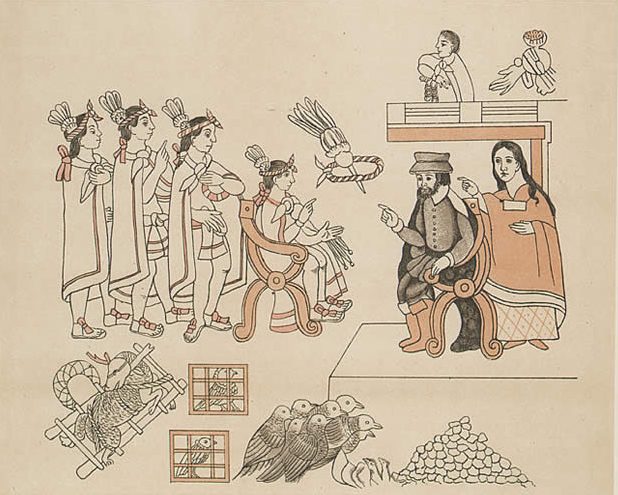
At a Glance
- The siege
- 22 May to 13 August 1521 — 93 days
- The besiegers
- Spanish forces under Hernán Cortés fighting alongside large numbers of indigenous allies, above all the Tlaxcalans
- The city
- Tenochtitlan, the Aztec capital, built on an island in Lake Texcoco
- Disease
- A smallpox epidemic killed about half the city's inhabitants, including the emperor Cuitláhuac
- The end
- The last emperor, Cuauhtémoc, was captured on 13 August 1521 as he tried to flee the city
- Aftermath
- The ruined city was levelled and Mexico City built on the site as the capital of New Spain
Events on this day
- 1521After a 93-day siege, Tenochtitlan, the Aztec capital, falls to Hernán Cortés and his indigenous allies, and the emperor Cuauhtémoc is captured — the featured story above.
- 1878Kate Bionda, a Memphis restaurant owner, becomes the first recorded victim of the yellow fever epidemic that devastates the city that summer.
- 1898United States forces capture Manila from Spain during the Spanish-American War, a day after an armistice had in fact ended the fighting.
- 1918Opha May Johnson enlists as the first woman in the United States Marine Corps.
- 1952Blues singer Willie Mae 'Big Mama' Thornton records 'Hound Dog' in Los Angeles, four years before Elvis Presley makes the song famous.
- 1961East Germany seals the border around West Berlin in the night of 'Barbed Wire Sunday'; the barbed wire is soon replaced by the Berlin Wall, which divides the city for 28 years.
- 1969New York gives the Apollo 11 astronauts a ticker-tape parade, the first celebration of the crew that had landed on the Moon three weeks earlier.
- 1981At his California ranch, President Ronald Reagan signs the Economic Recovery Tax Act, the tax-cutting package that sets the tone of his administration's economic policy.
Born on this day
- 1860Annie Oakley — American sharpshooter, the star marksman of Buffalo Bill's Wild West show.
- 1888John Logie Baird — Scottish engineer who gave the first public demonstration of television.
- 1899Alfred Hitchcock — English film director, the 'Master of Suspense' behind Psycho and Vertigo.
- 1912Ben Hogan — American golfer, winner of nine major championships.
- 1918Frederick Sanger — English biochemist, one of the very few people to win two Nobel Prizes in the same field, Chemistry.
- 1926Fidel Castro — Cuban revolutionary who led Cuba for nearly five decades.
- 1946Janet Yellen — American economist, the first woman to chair the Federal Reserve and later US Treasury Secretary.
Died on this day
- 1863Eugène Delacroix — French Romantic painter, the artist of Liberty Leading the People.
- 1910Florence Nightingale — English reformer who founded modern nursing, dead at 90.
- 1946H. G. Wells — English novelist of The War of the Worlds and The Time Machine.
- 1995Mickey Mantle — American baseball star of the New York Yankees.
- 2004Julia Child — American chef and television presenter who taught her country French cooking, dead two days before her 92nd birthday.
- 2012Helen Gurley Brown — American author and editor who ran Cosmopolitan magazine for three decades.
The featured story: Tenochtitlan falls to Cortés, 13 August 1521
Tenochtitlan, the capital of the Aztec Empire, was one of the great cities of the Americas: an island city in Lake Texcoco, joined to the mainland by causeways, ruled by an emperor and filled with temples, markets and canals. Hernán Cortés and his Spanish expedition had first entered it in November 1519 as uneasy guests of the emperor Moctezuma. Within two years they were driven out with heavy losses, Moctezuma was dead, and Cortés was preparing to return — this time not as a guest but as a besieger, and with an army very different from the one that had first arrived.
For the force that came back in 1521 was mostly not Spanish at all. Cortés had allied himself with the Aztecs' enemies inside Mexico, above all the Tlaxcalans, who supplied the great majority of his fighting men and the labour to haul his ships and supplies overland. The siege began on 22 May 1521 and lasted 93 days. The besiegers closed in along the causeways and fought for the city street by street and canal by canal, demolishing as they advanced, while hunger closed around the defenders inside.
Disease did as much of the killing as weapons. Smallpox, carried across the Atlantic by the Europeans, had swept through the city before and during the siege, killing about half of Tenochtitlan's inhabitants by Britannica's account — among them Cuitláhuac, the emperor who had succeeded Moctezuma and organised the resistance. His successor, the young Cuauhtémoc, led the defence to the end. On 13 August 1521, with the city in ruins, Cuauhtémoc was captured as he tried to flee, and organised resistance collapsed. The Aztec Empire was finished.
What followed was erasure and replacement. The ruined city was levelled, its temples torn down, and on the same island site the Spanish built Mexico City, capital of the colony of New Spain — the cathedral rising where the great temple had stood. The fall of Tenochtitlan did not end the conquest of Mexico, which went on for years in the provinces, but it broke the largest state in the Americas and set the pattern for Spanish America: a colonial capital planted deliberately on the ruins of the indigenous one, where Mexico's capital stands to this day.
Why this date matters
August 13 is a date of endings imposed by force and of barriers thrown up overnight. An empire's capital falls in 1521 after siege and plague; a European capital wakes in 1961 to find itself cut in two by wire. Yet the same date also carries the beginnings of things that outlasted the violence: a blues recording in 1952 that helped invent rock and roll, and a parade in 1969 for men who had just come back from the Moon. Its deepest pattern is the speed with which a familiar world can be replaced — a city levelled and rebuilt under another name, a street divided by morning — and how long the consequences then run.
Sources
- Encyclopaedia Britannica — On This Day: August 13
- HISTORY — This Day in History: August 13
- Encyclopaedia Britannica — Battle of Tenochtitlan
- Wikimedia — On This Day feed: August 13
The facts on this page were checked against these sources on 19 November 2026. The History Trail's permanent pages are researched and written for this site; the live profiles elsewhere on The History Trail are assembled automatically from Wikipedia and Wikidata.
About the Author
Researched and written by the The History Trail Editorial Team — the accountable editorial function behind this site's permanent story pages. The team works from the published sources cited on each page; it does not invent historians, reviewers or credentials, and it corrects errors openly.
Fact Check
Every load-bearing fact on this page traces to one of the sources listed above, and significant claims link to their source in the text. Our checking method is described on the methodology page; errors can be reported via the corrections page.
Sources & Citations
Cite this page as: The History Trail Editorial Team, The History Trail — this article's title, publication and update dates are shown beneath its headline. The full source list appears under Sources above; the site's source standards are on the sources page.