
On This Day
April 26 in History
At 1:23 in the morning of 26 April 1986, during a botched safety test, Reactor No. 4 of the Chernobyl Nuclear Power Plant in Soviet Ukraine exploded, blowing the roof off the reactor hall and starting a graphite fire that burned for ten days — the worst nuclear accident in history. April 26 is also the day Guernica was bombed, John Wilkes Booth was killed, and ornithologist John James Audubon was born.
Choose another date: open the On This Day calendar to browse events, births and deaths for any day of the year.
At a Glance
- The moment
- 01:23 local time, 26 April 1986, during a test of whether a spinning-down turbine could power the cooling pumps through a blackout
- The reactor
- An RBMK-1000, a Soviet graphite-moderated design with a positive void coefficient — unstable at low power
- The immediate toll
- Two workers killed in the explosions; 28 firefighters and plant staff died of acute radiation syndrome in the following weeks
- The evacuation
- Pripyat, the plant's city of about 49,000, was evacuated the next afternoon; some 116,000 people were moved from the 30 km zone during 1986
- The rating
- Level 7, the maximum on the International Nuclear Event Scale — a rating shared only with Fukushima (2011)
- The reckoning
- The IAEA's first report blamed the operators; its 1992 INSAG-7 revision laid the deeper cause on the reactor's design and safety culture
Events on this day
- 1607Virginia Company colonists make landfall at Cape Henry, Virginia; within weeks they found Jamestown, the first permanent English settlement in America.
- 1865Union cavalry corners John Wilkes Booth, Lincoln's assassin, in a Virginia barn; he is shot and dies hours later, twelve days after the assassination.
- 1865Confederate general Joseph E. Johnston surrenders his army to William T. Sherman in North Carolina — the largest surrender of Confederate forces in the Civil War.
- 1933Hermann Göring establishes the Gestapo, the Nazi regime's secret police, in Prussia.
- 1937German and Italian aircraft bomb the Basque town of Guernica on market day during the Spanish Civil War; Picasso's outraged canvas makes it immortal.
- 1954The first mass field trials of Jonas Salk's polio vaccine begin in Virginia, with schoolchildren — the 'Polio Pioneers' — as volunteers.
- 1954The Geneva Conference opens, seeking settlements for Korea and Indochina after years of war.
- 1964Tanganyika and Zanzibar unite to form the United Republic of Tanzania, with Julius Nyerere as its first president.
- 1986Reactor 4 at the Chernobyl Nuclear Power Plant explodes during a safety test — the featured story above.
Born on this day
- 121Marcus Aurelius — Roman emperor and Stoic philosopher, author of the Meditations.
- 1785John James Audubon — French-American ornithologist and artist whose Birds of America set the standard for wildlife art.
- 1822Frederick Law Olmsted — American landscape architect, co-designer of New York's Central Park and the father of his profession in America.
- 1889Ludwig Wittgenstein — Austrian philosopher of the Tractatus, among the most influential thinkers of the twentieth century.
Died on this day
- 1865John Wilkes Booth — actor and assassin of Abraham Lincoln, killed this day in Virginia at 26 (see Events).
- 1986Broderick Crawford — American actor, Oscar winner for All the King's Men, dead at 74 — the day Chernobyl burned.
- 1989Lucille Ball — American comedian and star of I Love Lucy, a pioneer of television as performer and studio chief, dead at 77.
The featured story: the Chernobyl disaster, 26 April 1986
The test was meant to make the plant safer. Reactor 4 at Chernobyl, a Soviet RBMK design, was due for maintenance, and engineers wanted to prove that a turbine coasting to a stop after a power cut could generate enough electricity to run the coolant pumps until the diesel generators started. The test, delayed all day by the grid's demand for power, finally ran after midnight with an inexperienced night shift, a reactor idled far below the test's intended power, and safety systems switched off. The RBMK had a fatal quirk its operators did not know: at low power it was violently unstable, and even its emergency shutdown button could, for a few seconds, add power instead of removing it.
At 01:23 the button was pressed. Within seconds the core surged beyond all control; fuel shattered, steam explosions tore the reactor apart and lifted its thousand-ton upper shield, and the exposed graphite core caught fire. Two plant workers were killed that night. Firefighters climbed onto a roof scattered with radioactive debris to fight an ordinary-looking fire with no idea of the dose they were taking; 28 of them and plant staff died of acute radiation syndrome over the following weeks. The burning core threw radioactive material high into the atmosphere for ten days, and the wind carried it across Ukraine, Belarus and Europe.
For 36 hours the nearby city of Pripyat — 49,000 people, average age 26 — was told nothing. On the afternoon of 27 April its residents were bused out in three hours, told to pack for three days; none ever returned to live there. During 1986 some 116,000 people were evacuated from what became the 30 km Exclusion Zone. The world learned of the accident not from Moscow but from Sweden, where on 28 April radiation alarms at the Forsmark nuclear plant forced a Soviet admission. Hundreds of thousands of 'liquidators' — soldiers, miners, engineers — were conscripted to entomb the reactor in a concrete sarcophagus built in 206 days.
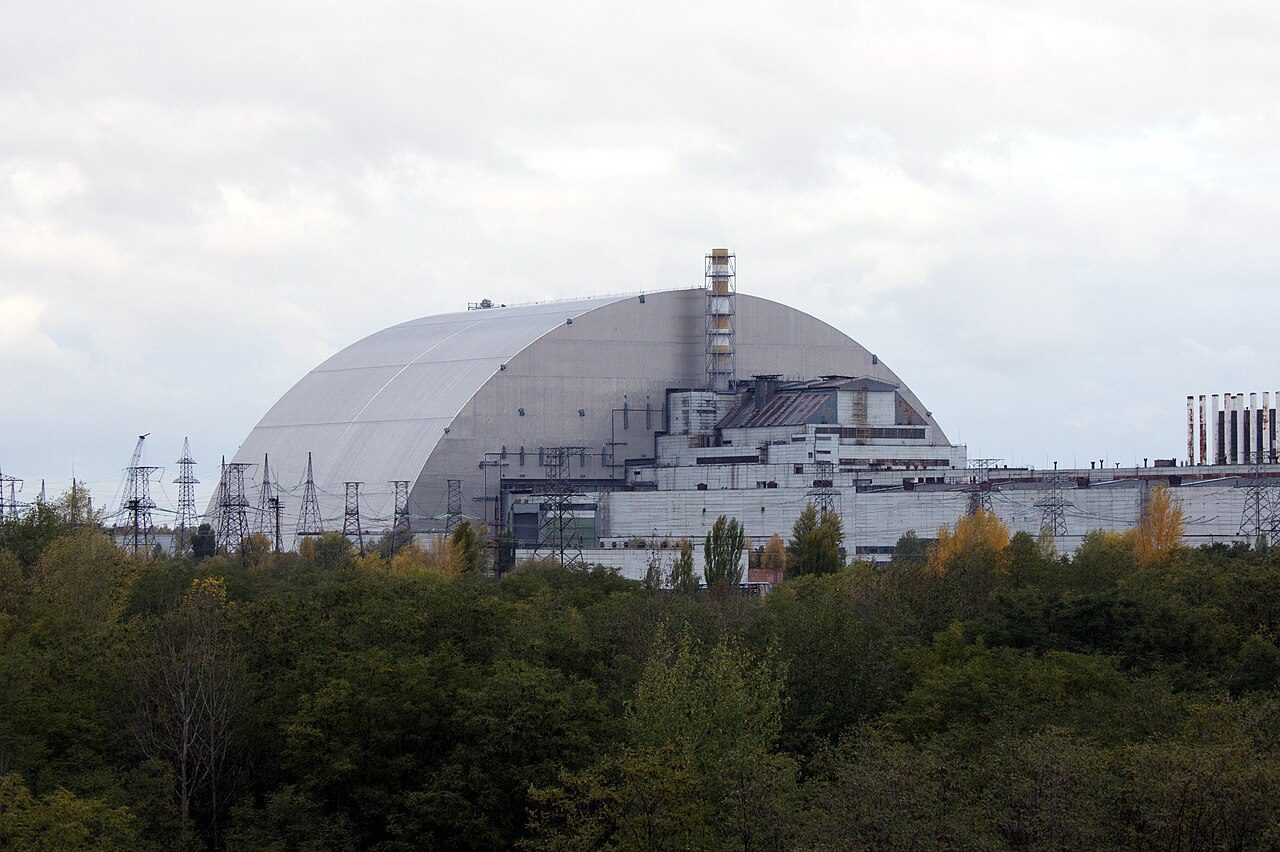
The IAEA's first investigation blamed the operators; its revised INSAG-7 report in 1992 corrected the record: the men had broken rules, but the reactor could be driven into a state where its own shutdown destroyed it, and no manual said so. Chernobyl killed fewer than a hundred people directly, by the UN's count, while projections of eventual cancer deaths among the most exposed range into the thousands and remain contested. Its larger casualty was trust: in the Soviet system that had hidden the accident for two days, in official reassurance everywhere, and in the atom itself. The ruined reactor now sleeps under a steel arch slid into place in 2016, built to hold for a century.
Why this date matters
April 26 is a day of warnings ignored and warnings painted. Guernica's bombing in 1937 announced what air power would do to cities; Picasso turned the announcement into the century's most famous protest. The Gestapo's founding in 1933 and Booth's death in a burning barn in 1865 bracket the politics of terror from both sides. And in 1986 the warning was literal radiation, invisible and denied for two days. Set against them are the day's healers: Audubon cataloguing birds, Olmsted planting parks, and Salk's vaccine going into children's arms in 1954.
Sources
- Encyclopaedia Britannica — On This Day: April 26
- HISTORY — What Happened on April 26
- IAEA INIS — The Other Chernobyl Report (TORCH)
- Chornobyl NPP — Accident and its Elimination
The facts on this page were checked against these sources on 19 November 2026. The History Trail's permanent pages are researched and written for this site; the live profiles elsewhere on The History Trail are assembled automatically from Wikipedia and Wikidata.
About the Author
Researched and written by the The History Trail Editorial Team — the accountable editorial function behind this site's permanent story pages. The team works from the published sources cited on each page; it does not invent historians, reviewers or credentials, and it corrects errors openly.
Fact Check
Every load-bearing fact on this page traces to one of the sources listed above, and significant claims link to their source in the text. Our checking method is described on the methodology page; errors can be reported via the corrections page.
Sources & Citations
Cite this page as: The History Trail Editorial Team, The History Trail — this article's title, publication and update dates are shown beneath its headline. The full source list appears under Sources above; the site's source standards are on the sources page.