
Things
Japanese yen
The yen was created in 1871 to sweep away one of the most complicated money systems in the world — hundreds of clan notes and competing coins — and replace it with a single decimal currency for a modernising Japan. A century and a half later it remains one of the world's most traded currencies.
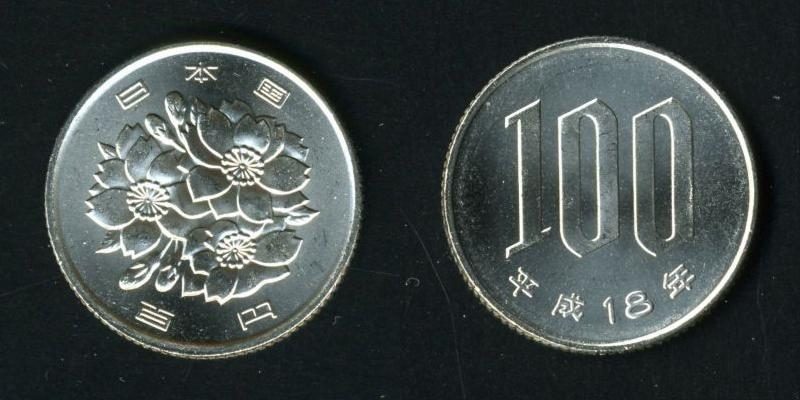
At a Glance
- Introduced
- 1871, by the New Currency Act
- Country
- Japan
- ISO code
- JPY
- Symbol
- ¥
- Issued by
- Bank of Japan (sole issuer of banknotes since 1882)
- Original subdivisions
- 1 yen = 100 sen = 1,000 rin
- Current banknotes
- ¥1,000, ¥2,000, ¥5,000 and ¥10,000
Introduction
Before 1871, paying for anything in Japan meant negotiating a crowd of monies. During the Edo period, gold, silver and copper coins circulated alongside paper notes issued by individual clans in their own regions, and exchange rates between them shifted daily. The Meiji Restoration government, determined to build a modern state, treated money as one of the first systems to fix — and in 1871 its New Currency Act introduced a single new unit, the yen, for the first time.
The name itself was a simplification: yen means 'round', a reference to the round coins of the new system, in contrast to older shapes. The yen was decimal from birth — one yen divided into 100 sen and 1,000 rin — aligning Japan with the emerging international practice of decimal coinage. What followed was a fifty-year struggle to give that tidy unit a stable value and a single issuer, completed when the Bank of Japan took sole control of the note issue.
Background
The reform did not instantly clear the field. In 1872 the government created a system of national banks — private institutions licensed to issue their own notes — and by 1879 there were 153 of them issuing national bank notes alongside government notes. Then the Seinan Civil War of 1877 forced the government to print money heavily to pay for the fighting, and the borrowed bank notes it spent added to the flood. The result was rampant inflation, and a hard lesson: a modern currency needed one issuer with the power to restrain supply.
That lesson produced the Bank of Japan. Founded in 1882 as the country's sole central bank, it became the only issuer of Japanese banknotes; the Convertible Banknote Act followed in May 1884, and in May 1885 the Bank issued its first notes, ten-yen pieces exchangeable for silver. Japan later joined the gold standard in 1897, defining the yen in gold. The architecture of 1871–1885 — one unit, one issuer — has survived every crisis since, including the monetary emergency that followed the Second World War.
Timeline
- 1868
The new Meiji government issues its own government notes as it begins modernising Japan's currency system.
- 1871
The New Currency Act introduces the yen as Japan's currency unit for the first time, divided decimally into sen and rin.
- 1872
A national bank system is created; licensed private banks begin issuing their own national bank notes.
- 1879
The number of note-issuing national banks reaches 153, alongside government notes.
- 1877
Financing the Seinan Civil War by printing notes triggers rampant inflation, discrediting the multi-issuer system.
- 1882
The Bank of Japan is established as the sole central bank and becomes the only issuer of Japanese banknotes.
- May 1885
The Bank of Japan issues its first banknotes — ten-yen notes convertible into silver, under the 1884 Convertible Banknote Act.
- 1946
After the Second World War, a conversion to the 'new yen' is carried out to contain inflation; most pre-war notes lose validity.
- 3 July 2024
The Bank of Japan issues a new series of 10,000, 5,000 and 1,000 yen notes with portraits of Shibusawa Eiichi, Tsuda Umeko and Kitasato Shibasaburo.
Significance
The yen's significance begins at home: it was the monetary half of the Meiji transformation, the reform that let a single price mean the same thing in every province of Japan. A unified, decimal currency made national taxation, national markets and national banking practicable, and the Bank of Japan's monopoly of issue gave the state the instrument it needed to fight the inflation of the 1870s. Few currencies are so directly the product of a deliberate act of state-building.
Internationally, the yen grew into one of the small group of currencies in which the world saves and settles. It is one of the most traded currencies on foreign-exchange markets and one of the five currencies in the International Monetary Fund's Special Drawing Rights basket. Its banknotes are also technical leaders: the Bank of Japan has issued 56 kinds of notes since 1885, and the 2024 series introduced three-dimensional holograms that make the portraits appear to turn as the note is tilted.
Legacy
The yen has now served Japan for more than 150 years under a single name and a single issuing bank — a continuity matched by few currencies created in the nineteenth century. It has passed through the gold standard, wartime finance, post-war reconstruction and decades at the centre of world trade without a redenomination or a change of identity, and the sen and rin subdivisions quietly fell away in 1953 when sub-yen currency was voided.
Its legacy is the template it set for East Asian modernisation: currency reform as nation-building. The round coin of 1871 announced that Japan intended to reckon its money the modern way, in decimals, under one authority. Every ¥10,000 note leaving the Bank of Japan today — Shibusawa Eiichi, the great Meiji entrepreneur, on its face — still carries that founding argument in portrait form.
Sources
- Bank of Japan — Who issues Japanese banknotes?
- Bank of Japan — Are old-design notes still valid?
- Bank of Japan — Remarks on the Introduction of a New Series of Bank of Japan Notes, 3 July 2024
- Wikipedia — Japanese yen
The facts on this page were checked against these sources on 19 November 2026. The History Trail's permanent pages are researched and written for this site; the live profiles elsewhere on The History Trail are assembled automatically from Wikipedia and Wikidata.
About the Author
Researched and written by the The History Trail Editorial Team — the accountable editorial function behind this site's permanent story pages. The team works from the published sources cited on each page; it does not invent historians, reviewers or credentials, and it corrects errors openly.
Fact Check
Every load-bearing fact on this page traces to one of the sources listed above, and significant claims link to their source in the text. Our checking method is described on the methodology page; errors can be reported via the corrections page.
Sources & Citations
Cite this page as: The History Trail Editorial Team, The History Trail — this article's title, publication and update dates are shown beneath its headline. The full source list appears under Sources above; the site's source standards are on the sources page.