
Things
World Health Organization
The World Health Organization (WHO) is the United Nations' specialised agency for health, founded when its Constitution entered into force on 7 April 1948. It defined health as complete physical, mental and social well-being, coordinated the eradication of smallpox in 1980 - still the only human disease ever eradicated - and remains the body through which 194 member states set health standards and respond to outbreaks together.
At a Glance
- What it is
- The United Nations specialised agency for health, directing and coordinating international public health
- Founded
- 7 April 1948, when its Constitution entered into force - the date now marked each year as World Health Day
- The Constitution
- Adopted at the International Health Conference in New York on 22 July 1946 by representatives of 61 states
- Its definition
- Health is a state of complete physical, mental and social well-being and not merely the absence of disease or infirmity
- Headquarters
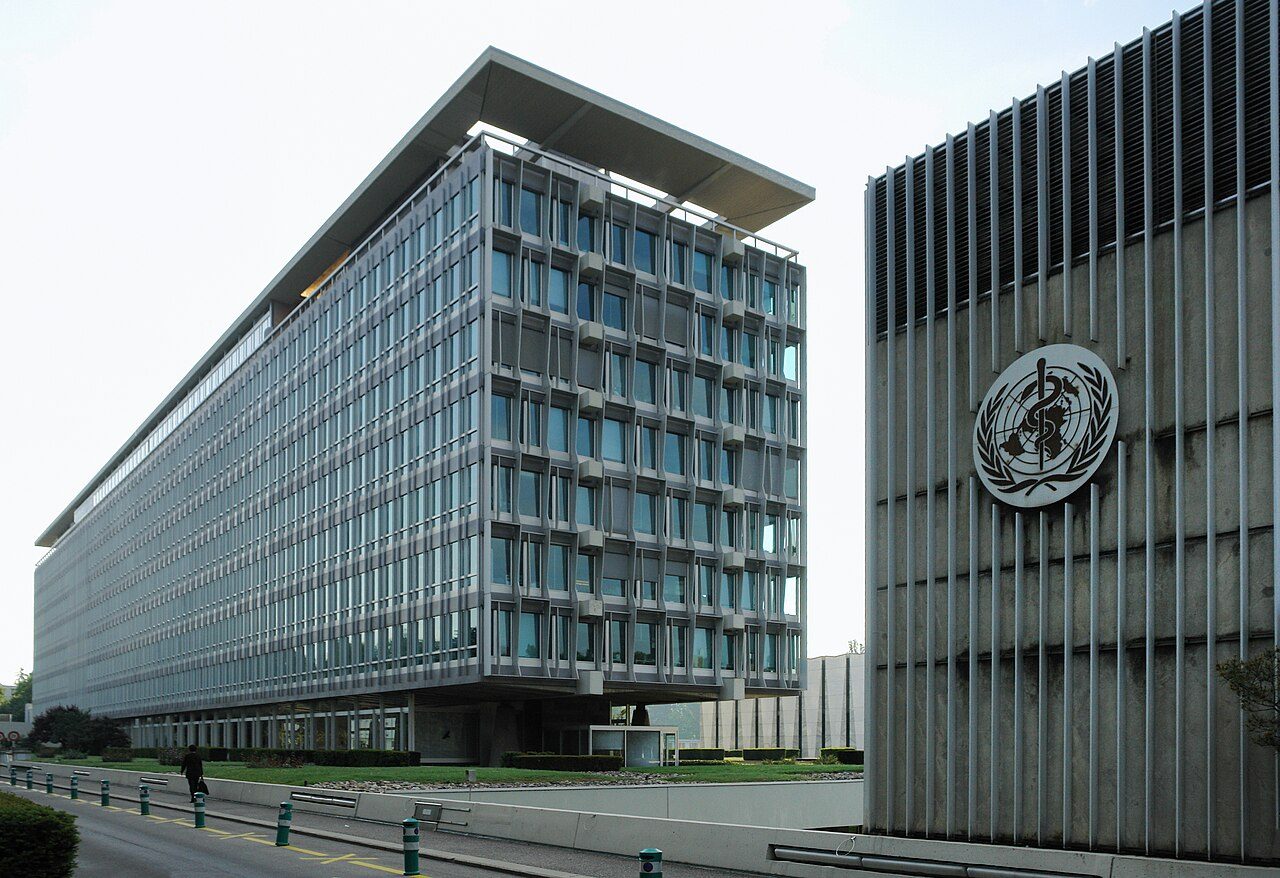
- Geneva, Switzerland, with six regional offices and around 150 country offices
- Greatest achievement
- Smallpox eradicated: last natural case in Somalia in October 1977; eradication declared by the World Health Assembly in 1980
- Governed by
- The World Health Assembly of its member states, an Executive Board, and the Secretariat headed by the Director-General
Introduction
Disease has never respected borders, but governments long treated it as a national problem, meeting only in emergencies to argue about quarantine. The World Health Organization changed that. Britannica describes it as the specialised agency of the United Nations established in 1948 to further international cooperation for improved public health conditions. Behind that plain description sits an ambitious idea: that health is a shared global responsibility, that standards should be set once for everyone, and that a disease anywhere is a concern everywhere.
WHO is not a world health service: it runs no hospitals. Its power is coordination - surveillance networks that spot outbreaks, classifications every country's statistics share, vaccine campaigns organised across continents, and the International Health Regulations, by which states promise to report dangers early. On those terms its record holds both the greatest triumph in public health history and some of its hardest lessons.
Before WHO: Quarantine Conferences and a League Experiment
International health cooperation began defensively. From the mid-nineteenth century, states held sanitary conferences to coordinate quarantine against cholera and plague, more to protect trade and their own ports than to improve health abroad. The League of Nations ran a Health Organization between the wars. Each effort was partial: limited membership, narrow mandates, no permanent universal body.
The Second World War made the gap undeniable, and the diplomats who gathered in San Francisco in 1945 to form the United Nations decided a global health organisation was needed - WHO's own history records that they agreed collaboration between countries to control dangerous diseases had been insufficient. In June and July 1946 the International Health Conference met in New York, and on 22 July representatives of 61 states signed WHO's Constitution. It needed 26 ratifications to take effect. The twenty-sixth arrived on 7 April 1948, and WHO existed. The first World Health Assembly met in Geneva that June, and Geneva became the permanent home.
A Constitution That Redefined Health
The Constitution's preamble made two moves that still define the organisation. First, it defined health positively and broadly: a state of complete physical, mental and social well-being and not merely the absence of disease or infirmity. Second, it declared the enjoyment of the highest attainable standard of health one of the fundamental rights of every human being, without distinction of race, religion, political belief or economic or social condition. WHO's objective, in Article 1, is the attainment by all peoples of the highest possible level of health.
The breadth was deliberate, and set WHO apart from a mere anti-epidemic bureau: mental health, child development, nutrition and social conditions all fell inside the mandate from the first day. It also created WHO's permanent tension - a mandate covering almost everything human, pursued through member states that fund it, govern it, and remain free to ignore its advice. WHO began with mass campaigns against tuberculosis, malaria, yaws, syphilis, smallpox and leprosy, the disease-tracking service pioneered by telex in 1947, and custodianship of the International Classification of Diseases, adopted in 1948 and still the world's common language for causes of death.
Smallpox, Alma-Ata and the Long Fight Against Polio
WHO's defining campaign began in 1967, when it intensified the effort to eradicate smallpox - a disease that had killed for millennia - combining mass vaccination with surveillance and containment of every outbreak. The last naturally occurring case was a hospital cook, Ali Maow Maalin, in Merca, Somalia, in October 1977. After two more years of worldwide verification, the World Health Assembly declared smallpox eradicated in May 1980. It remains the only human disease ever eradicated, and the campaign - run with both Cold War superpowers cooperating - is still the proof that global coordination can finish a disease entirely.
A year before that declaration, the 1978 conference at Alma-Ata, in what is now Kazakhstan, set the aspirational goal of Health for All and put primary health care - local, preventive, community-based - at the centre of WHO's philosophy, groundwork for today's call for universal health coverage. WHO published its first Essential Medicines List in 1977, defining what a basic health system needs. In 1988 the World Health Assembly launched the Global Polio Eradication Initiative, when polio was paralysing more than 350,000 children a year in over 125 countries; incidence has since fallen by more than 99 per cent, and by 2022 only two countries remained endemic for wild poliovirus. The organisation's emergency role also grew teeth: in January 2020 its Director-General declared the novel coronavirus outbreak a Public Health Emergency of International Concern, the highest alarm the International Health Regulations provide.
Timeline
- 1945
Diplomats forming the United Nations at San Francisco agree a global health organisation is needed.
- 22 July 1946
Representatives of 61 states adopt and sign the WHO Constitution in New York.
- 1947
WHO establishes the first global disease-tracking service, transmitting information by telex.
- 7 April 1948
The Constitution enters into force on the twenty-sixth ratification; WHO is founded. The date is now World Health Day.
- 1948
The World Health Assembly adopts the International Classification of Diseases, with WHO as custodian.
- 1967
WHO launches the intensified smallpox eradication programme, pairing vaccination with surveillance and containment.
- 1977
The first Essential Medicines List is published; in October, Somalia records the last natural smallpox case.
- 1978
The Alma-Ata conference sets the goal of Health for All and champions primary health care.
- May 1980
The World Health Assembly declares smallpox eradicated - the first and still only human disease eradicated.
- 1988
The Global Polio Eradication Initiative launches; polio incidence later falls by more than 99 per cent.
- 2003
The World Health Assembly adopts the Framework Convention on Tobacco Control, WHO's first global public health treaty.
- January 2020
The Director-General declares the novel coronavirus outbreak a Public Health Emergency of International Concern.
Significance
WHO's significance is that it made health a standing subject of international law and cooperation rather than a series of emergency conferences. Its classifications let a death in one country be counted the same way in another; its eradication campaign rewrote what medicine believed possible; Alma-Ata shifted the world's idea of health care from hospitals toward prevention for everyone. Even its failures instruct: the malaria eradication campaign of its early decades was abandoned as unachievable with the tools then available - a lesson in the difference between a disease that can be cornered, like smallpox, and one woven into ecology and poverty.
Questions readers ask
Is WHO a global health police force? No - and this page states it plainly because the misconception drives much argument about the organisation. WHO cannot order a government to lock down, vaccinate or open its borders; the International Health Regulations are commitments states made to each other, and enforcement rests with the states themselves. WHO's instruments are information, standards, technical help and persuasion. Its defenders call that the only design sovereign states would accept in 1948; its critics answer that the COVID-19 pandemic showed how slowly information and persuasion can move in a crisis. Both points are documented parts of the record.
Is its definition of health realistic? That dispute is as old as the Constitution. Critics have long argued that complete physical, mental and social well-being describes a state almost no one fully occupies, making everyone permanently unwell by definition. Defenders reply that the definition was never a clinical test but a direction of travel: a refusal to measure health only by the absence of diagnosed disease. The text has never been amended, and the argument continues in medical journals today - a genuine, unresolved dispute, flagged here as such rather than settled.
Legacy
WHO's legacy is written into ordinary life: the cause-of-death categories on every death certificate, the essential medicines in every basic clinic, the fact that no child today needs a smallpox vaccination because there is no smallpox. Its unfinished business is equally clear. Polio, promised for eradication within years of 1988, remains tantalisingly unfinished decades later - proof that the last fraction of a disease is the hardest. The organisation founded in 1948 endures as the world's health parliament: imperfect, dependent on its members, and still the only table at which every country sits to face diseases none can face alone.
Sources
- World Health Organization - Public health milestones through the years
- World Health Organization - Constitution of the World Health Organization
- Encyclopaedia Britannica - World Health Organization
- World Health Organization - Constitution (Basic Documents, 49th edition)
The facts on this page were checked against these sources on 19 November 2026. The History Trail's permanent pages are researched and written for this site; the live profiles elsewhere on The History Trail are assembled automatically from Wikipedia and Wikidata.
About the Author
Researched and written by the The History Trail Editorial Team — the accountable editorial function behind this site's permanent story pages. The team works from the published sources cited on each page; it does not invent historians, reviewers or credentials, and it corrects errors openly.
Fact Check
Every load-bearing fact on this page traces to one of the sources listed above, and significant claims link to their source in the text. Our checking method is described on the methodology page; errors can be reported via the corrections page.
Sources & Citations
Cite this page as: The History Trail Editorial Team, The History Trail — this article's title, publication and update dates are shown beneath its headline. The full source list appears under Sources above; the site's source standards are on the sources page.