
Comparisons
Ford Model T vs Volkswagen Beetle
Two cars, built an ocean and a generation apart, chased the same democratic idea: a simple, affordable machine that ordinary families could actually own.
Ford Model T
The car that put America, and then the world, on wheels
- Launched
- 1 October 1908, Detroit, USA
- Built
- 1908–1927
- Total produced
- 15,007,034
- Engine
- 2.9-litre four-cylinder, 20 hp, front-mounted
- Launch price
- $850 in 1908, falling below $300 by 1922
- Nickname
- Tin Lizzie
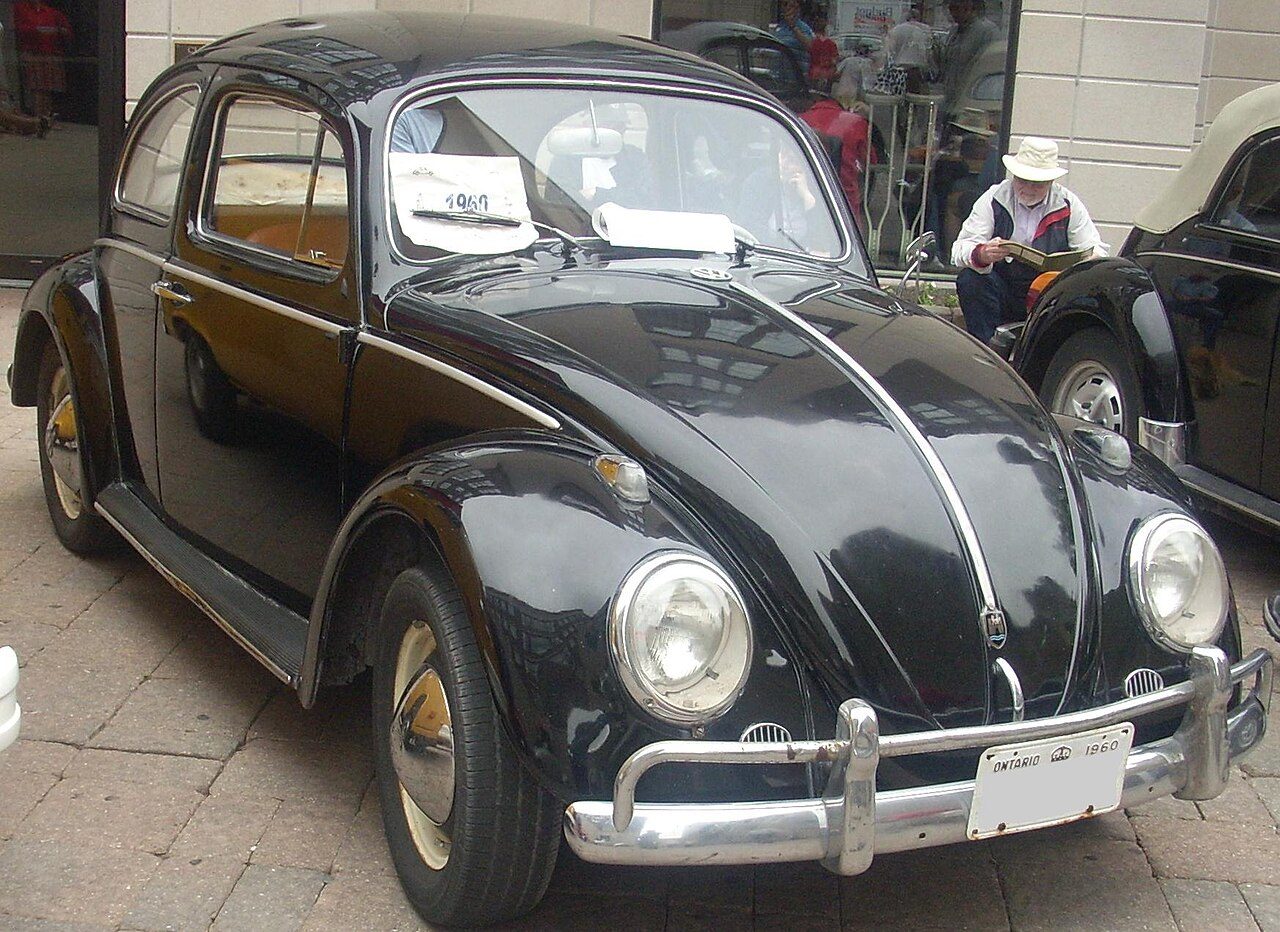
Volkswagen Beetle
The little car that outlived empires and out-sold them all
- Designed
- 1930s, by Ferdinand Porsche's team
- Built
- 1938–2003
- Total produced
- 21,529,464
- Engine
- Air-cooled flat-four, rear-mounted, 1.1–1.6 litres
- Final car
- 30 July 2003, Puebla, Mexico
- Official name
- Volkswagen Type 1
Both subjects of this comparison are introduced above, side by side, before either story begins.
Introduction
Most cars are answers to a market. The Ford Model T and the Volkswagen Beetle were answers to a social question: what would it take for people who had never owned anything mechanical to own a car? Henry Ford approached it from the factory floor, reasoning that if a car could be built simply enough, and in large enough numbers, its price would fall within reach of the workers building it. Volkswagen's founders approached it from a brief: a small, economical family car, tough enough for new motorways and cheap enough for a savings scheme.
The parallels are uncanny. Both cars used the simplest engineering their makers could defend, both stayed in production with their basic shape barely changed, and both became so common that they stopped looking like machines and started looking like furniture of everyday life. In February 1972 the Beetle even took the Model T's own crown, passing its production total to become the best-selling single design in history. Comparing them is really comparing two eras of mass motoring: the one that invented it, and the one that carried it to every continent.
Side by Side: Like for Like
| Compared | Ford Model T | Volkswagen Beetle |
|---|---|---|
| Era | 1908–1927, the pioneer age of motoring | 1938–2003, from dictatorship to globalisation |
| Years built | 19 years | 65 years — the longest run of any single car generation |
| Total produced | 15,007,034 | 21,529,464 |
| Engine | 2.9-litre water-cooled four-cylinder, front-mounted | Air-cooled flat-four, rear-mounted, 1.1 to 1.6 litres |
| Power | 20 hp | 25 hp in early post-war cars, rising to around 50 hp in later 1.6-litre cars |
| Top speed | About 40 mph — the Model T's top speed | About 100 km/h (62 mph) — the original 25 hp car's designed top speed |
| Affordability idea | $850 at launch, cut to under $300 by 1922 as production grew | Offered at 990 Reichsmarks under the pre-war KdF savings scheme |
| Cultural role | Symbol of American mass production and rural freedom | Symbol of post-war recovery, then of 1960s counterculture |
| Why it ended | Design became obsolete against more comfortable, stylish rivals | Demand faded; output fell from a 1.3 million peak in 1971 to about 30,000 a year by 2003 |
| Legacy | Proved mass production could make a car for the multitude | Took the Model T's production record in 1972 and made the small car a world car |
Like for like: every row compares the same measure for both subjects, on the basis stated in the row.
The Ford Model T story
Ford introduced the Model T on 1 October 1908 as the fulfilment of Henry Ford's long-held ambition: a car inexpensive, efficient and reliable enough to put ownership within reach of far more people. It was thoroughly modern for its moment, with a 20-horsepower four-cylinder engine, a top speed of about 40 mph and a reputation for surviving the rough, unmade roads of rural America, where its high ground clearance and simple construction were genuine advantages rather than compromises.
The decisive breakthrough came in late 1913, when Ford's Highland Park plant perfected the moving assembly line, adapting the interchangeable-parts methods long used for watches and sewing machines to something as complex as an automobile. Prices fell relentlessly: a car that cost $850 at launch could be bought for under $300 by October 1922, and Ford held around half of the American market. Model Ts were eventually assembled in nineteen other countries. Yet success froze the design. When the 15 millionth car left Highland Park on 26 May 1927, it was, underneath, fundamentally the car of 1908 — and rivals offering more comfort, style and power had overtaken it.
The Volkswagen Beetle story
The Beetle began in 1930s Germany as a state-backed project for a people's car: a brief, handed to Ferdinand Porsche, for a vehicle carrying two adults and three children at 100 km/h while using little fuel. The resulting car, with its air-cooled engine mounted at the rear and its rounded, beetle-like body, was ready by 1938 — but war intervened, the Wolfsburg factory turned to military production, and only a few hundred civilian cars were built before 1945.
The car's real life began after the war, when the damaged Wolfsburg plant restarted under British occupation; series production of the saloon began on 27 December 1945. From there the Beetle spread with extraordinary patience. It was exported worldwide, then built worldwide, becoming a fixture from Mexico City to Lagos. In the United States it turned into an unlikely countercultural emblem, helped by witty advertising and Disney's Herbie films. German production ended in the 1970s, but manufacture continued abroad until 30 July 2003, when the final Type 1 — number 21,529,464 — rolled out of the Puebla plant in Mexico, sixty-five years after the design first appeared.
Historical Significance
The two cars divide the historical honours. It did not merely sell well; it reorganised how industry worked, and its falling price is still the cleanest demonstration ever given that manufacturing method, not marketing, creates a mass market. The Beetle, by contrast, won on endurance. Its design was already old-fashioned when post-war production began, yet its simplicity, toughness and repairability kept it useful in places where newer cars were expensive to buy and hard to maintain. Ford changed the factory; Volkswagen's little car changed the map.
What they share matters more than what separates them. Neither was the fastest, the most comfortable or the most beautiful car of its day, and both were criticised for exactly the stubbornness that made them succeed. Each treated the car not as a luxury object but as a tool for ordinary life — and each was rewarded with a production run its maker never planned. The Model T taught the world to build cars for everyone. The Beetle proved everyone, everywhere, actually wanted one.
Sources
- The Henry Ford — Ford's Model T: A Car for the Great Multitude
- Encyclopaedia Britannica — Automotive industry: Ford and the assembly line
- Volkswagen — A History of the Volkswagen Beetle (manufacturer)
The facts on this page were checked against these sources on 18 November 2026. The History Trail's permanent pages are researched and written for this site; the live profiles elsewhere on The History Trail are assembled automatically from Wikipedia and Wikidata.
About the Author
Researched and written by the The History Trail Editorial Team — the accountable editorial function behind this site's permanent story pages. The team works from the published sources cited on each page; it does not invent historians, reviewers or credentials, and it corrects errors openly.
Fact Check
Every load-bearing fact on this page traces to one of the sources listed above, and significant claims link to their source in the text. Our checking method is described on the methodology page; errors can be reported via the corrections page.
Sources & Citations
Cite this page as: The History Trail Editorial Team, The History Trail — this article's title, publication and update dates are shown beneath its headline. The full source list appears under Sources above; the site's source standards are on the sources page.