
Things
Tokyo
Tokyo is Japan's capital, but until 1868 it was Edo - the shogun's city, and already one of the largest cities on Earth, with more than a million people. Renamed Tokyo, eastern capital, when the emperor moved there in 1868, it was devastated by the Great Kanto Earthquake in 1923 and by firebombing in 1945, which halved its population. It rebuilt both times, passing ten million people in 1962 and fourteen million in 2019 on the Tokyo Metropolitan Government's figures.
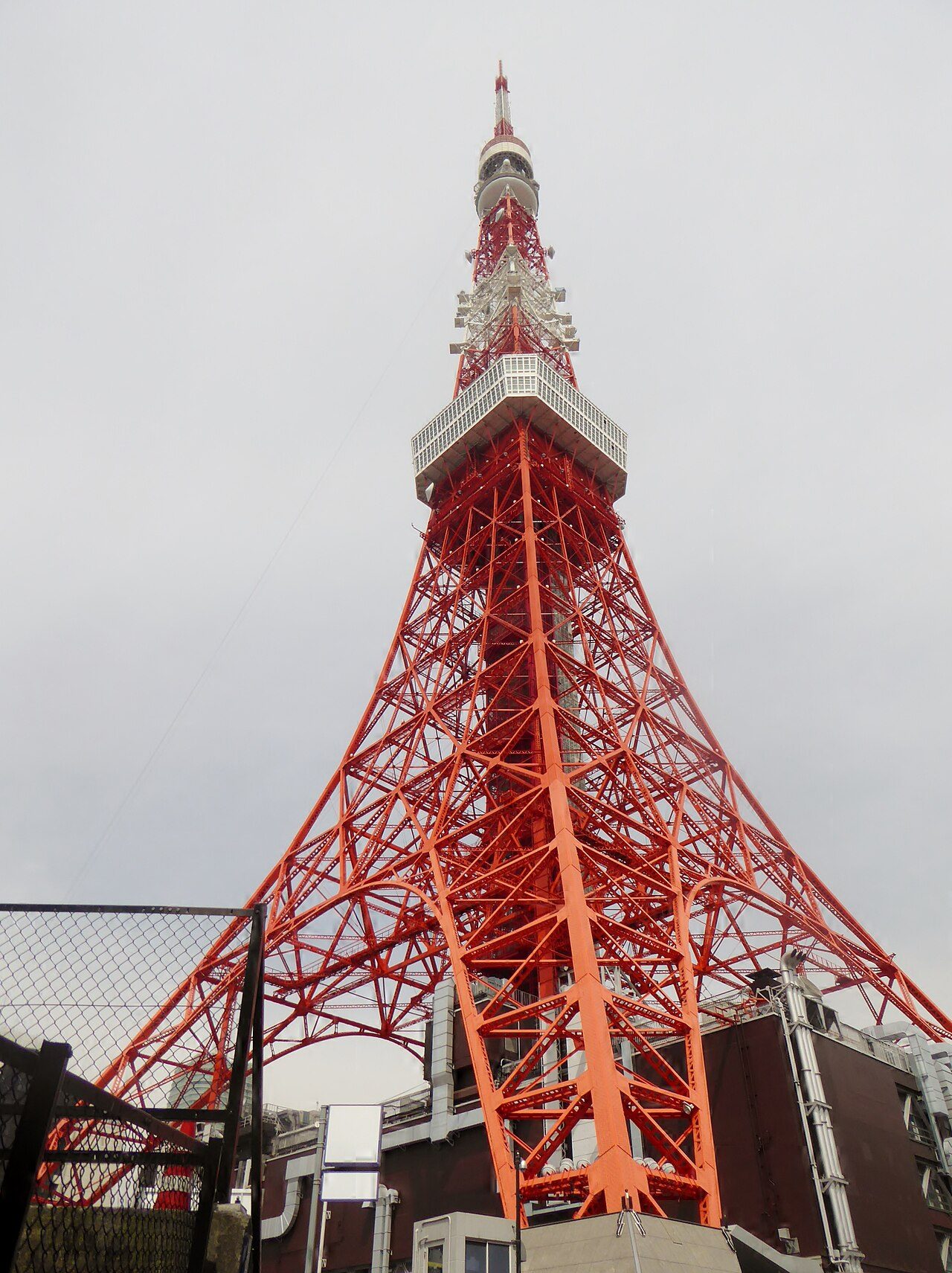
At a Glance
- Former name
- Edo, until 1868, when the emperor moved there, the city was renamed Tokyo - eastern capital - and it became Japan's capital
- The shogun's city
- Tokugawa Ieyasu established his shogunate at Edo in 1603; the shogunate ruled Japan from there for nearly 260 years while the emperor stayed in Kyoto
- Edo's size
- Over a million people by the mid-eighteenth century, and about 1.3 million at the first census in 1721, on Tokyo Metropolitan Government figures
- 1923
- The Great Kanto Earthquake of 1 September 1923, estimated magnitude 7.9: the Metropolitan Government reports over 140,000 dead or missing and 300,000 houses destroyed
- 1945
- Tokyo was bombed 102 times in the war's final phase; by October 1945 its population had fallen to 3.49 million, half its 1940 level
- The rebuild
- Population broke 10 million in 1962; the 1964 Olympics, the Shinkansen and the Metropolitan Expressway followed; 14 million was surpassed in 2019
- Disaster Prevention Day
- 1 September, designated by the Japanese government in 1960 in memory of the 1923 earthquake, is marked by nationwide disaster drills every year
Introduction
Originally named Edo, the city started to flourish after Tokugawa Ieyasu established the Tokugawa shogunate there in 1603. For nearly 260 years Edo was Japan's centre of politics and culture, while the emperor resided in Kyoto, the formal capital. By the mid-eighteenth century Edo had grown into a huge city of over a million people - the Tokyo Metropolitan Government's first census, in 1721, already counted about 1.3 million - making it one of the largest cities in the world.
It was also a wooden city, and fire was its oldest enemy. The great fire of 1657 claimed over 100,000 lives, according to the Metropolitan Government's timeline, and firefighting organisations were established in 1718. Again and again in Tokyo's history, the pattern repeats: a city built of wood burns, and a new city is planned on the ashes.
1868: Edo Becomes Tokyo
The Edo period ended with the Meiji Restoration in 1868, when the Tokugawa shogunate fell and imperial rule was restored. The emperor moved to Edo, which was renamed Tokyo - the name means eastern capital - and Tokyo became the capital of Japan. What followed was one of the fastest deliberate modernisations any city has undergone. Japan's first telecommunications line opened between Tokyo and Yokohama in 1869, and its first steam locomotive ran from Shimbashi to Yokohama in 1872. Brick and stone buildings rose on the sites of feudal lords' mansions, a zoo opened at Ueno in 1882, the cabinet system was adopted in 1885, and the Constitution of the Empire of Japan was promulgated in 1889.
Growth compounded. Japan's first subway line opened between Asakusa and Ueno in 1927, Tokyo Airport was completed at Haneda in 1931, and by 1935 the resident population had reached 6.36 million, comparable to the populations of New York and London.
1923: The Great Kanto Earthquake
On 1 September 1923, just before noon, an earthquake of estimated magnitude 7.9 struck the Kanto region. In Tokyo the shaking was only the beginning: the fires caused by the earthquake burned the city centre to the ground. The Tokyo Metropolitan Government's history reports over 140,000 people dead or missing and 300,000 houses destroyed; Japanese government disaster-prevention materials summarise the toll as more than 100,000 dead or missing. The difference between the figures is itself part of the record, and this page returns to it below.
A city reconstruction plan was formulated after the earthquake. Not all of it was realised, because the projected costs exceeded the national budget, but the Metropolitan Government records that the effort established the basic framework of Tokyo's current urban infrastructure. The Cabinet Office's centenary review of the disaster treats the Great Kanto Earthquake as the starting point of Japan's modern disaster management: in 1925 an Earthquake Research Institute was established at Tokyo Imperial University, charged with research on earthquakes and the prevention of earthquake disasters.
1945: Firebombing, and the Second Rebuilding
War brought the second destruction. For wartime efficiency the dual system of Tokyo prefecture and Tokyo city was abolished and the two were merged into the Metropolis of Tokyo in 1943. In the final phase of the war Tokyo was bombed 102 times. The heaviest raid came on the night of 9-10 March 1945, when, Smithsonian Magazine records, 334 B-29 bombers dropped 1,667 tons of napalm-filled incendiary bombs on the capital, killing more than 100,000 people in a single strike and burning some 15 square miles of the city - the highest death toll of any air raid of the war. By October 1945 Tokyo's population had fallen to 3.49 million, half its level in 1940.
The recovery was again deliberate and fast. In May 1947 the new Constitution of Japan took effect, Seiichiro Yasui was elected the first governor of Tokyo by popular vote, and in August the present 23 special-ward system began. Television broadcasting started in 1953, rapid economic growth followed in the 1960s, and in 1962 the population broke the 10 million mark. In 1964 the Olympic Games were held in Tokyo, the Shinkansen bullet-train line began operations and the Metropolitan Expressway opened - forming, in the Metropolitan Government's words, the foundation for Tokyo's current prosperity.
Timeline
- 1603
Tokugawa Ieyasu establishes the Tokugawa shogunate at Edo; the Edo period begins.
- 1657
A major fire in Edo claims over 100,000 lives, in the Metropolitan Government's timeline.
- 1721
The first population census counts Edo's population at about 1.3 million.
- 1868
The Meiji Restoration ends the shogunate; the emperor moves to Edo, which is renamed Tokyo and becomes the capital.
- 1872
Japan's first railway opens between Shimbashi in Tokyo and Yokohama.
- 1 September 1923
The Great Kanto Earthquake, estimated magnitude 7.9, devastates Tokyo; fires burn the city centre to the ground.
- 1927
Japan's first subway line opens between Asakusa and Ueno.
- 1943
Tokyo prefecture and Tokyo city are merged to form the Metropolis of Tokyo.
- 9-10 March 1945
The heaviest air raid of the war on Tokyo: more than 100,000 people are killed in a single night, Smithsonian Magazine records.
- 1947
The new constitution takes effect; Yasui Seiichiro is elected Tokyo's first governor by popular vote, and the 23 special-ward system begins.
- 1962
Tokyo's population breaks the 10 million mark.
- 1964
The Olympic Games are held in Tokyo; the Shinkansen and the Metropolitan Expressway open.
Significance
Tokyo's deepest legacy may be a habit of mind. September 1, the anniversary of the 1923 earthquake, was designated Disaster Prevention Day by the Japanese government in 1960, and every year large-scale disaster drills are held across Japan on and around that date - in schools, where children practise sheltering under their desks, in workplaces and in whole neighbourhoods. The government's disaster-management white paper, published for the earthquake's centenary in 2023, traces a century of Japanese disaster policy back to 1923 as its starting point.
The discipline is not ceremonial. When the Great East Japan Earthquake struck the Tohoku region in March 2011, Tokyo, far from the epicentre, was still seriously affected, with vast numbers of people unable to return home and significant power shortages; the Metropolitan Government records that the city responded by updating its earthquake response plans to improve resilience. A capital that has been destroyed twice within living memory treats preparation as part of ordinary life.
Questions readers ask
What does the name Tokyo mean? Eastern capital. Edo was renamed in 1868 when the emperor moved there from Kyoto, the older capital to the west; the new name stated the city's new rank.
Why do the 1923 death figures differ? Because the counters counted differently. The Tokyo Metropolitan Government's history reports over 140,000 people dead or missing, and some 300,000 houses destroyed. The Japanese government's own disaster-prevention pages summarise the same disaster as leaving more than 100,000 people dead or missing. Figures shift according to whether the missing are included with the dead, and whether the count covers Tokyo alone or the wider stricken region - and in a city consumed by fire, exact counting was impossible. This page therefore gives both attributed figures rather than one false precision.
Was Edo really one of the world's largest cities? On the Metropolitan Government's figures, yes: over a million inhabitants by the mid-eighteenth century, about 1.3 million at the 1721 census, at a time when few cities anywhere approached that size.
Legacy
Tokyo's population reached 12 million in 2000, 13 million in 2009 and surpassed 14 million in 2019; the Metropolitan Government puts the metropolis at about 14.27 million people as of October 2025. In 2021 it hosted the Olympic and Paralympic Games for a second time, a year late and without spectators because of the COVID-19 pandemic - a quieter echo of 1964, when the Games announced the rebuilt city to the world.
Twice in twenty-two years the capital was reduced to ruins, by earthquake and fire in 1923 and by bombing in 1945, and twice it was rebuilt larger than before. What survives from Edo is not its buildings but its pattern: a great city on Tokyo Bay that expects disaster, plans for it, and rebuilds.
Sources
- Tokyo Metropolitan Government — Tokyo's History, Geography, and Population
- Cabinet Office, Government of Japan — White Paper on Disaster Management 2023, Special Feature: The Great Kanto Earthquake and Disaster Management
- Smithsonian Magazine — The Deadliest Air Raid in History
- Highlighting Japan, Government of Japan — Disaster Prevention Drills
- Tokyo Metropolitan Government — The History of Tokyo's Development (timeline)
The facts on this page were checked against these sources on 19 November 2026. The History Trail's permanent pages are researched and written for this site; the live profiles elsewhere on The History Trail are assembled automatically from Wikipedia and Wikidata.
About the Author
Researched and written by the The History Trail Editorial Team — the accountable editorial function behind this site's permanent story pages. The team works from the published sources cited on each page; it does not invent historians, reviewers or credentials, and it corrects errors openly.
Fact Check
Every load-bearing fact on this page traces to one of the sources listed above, and significant claims link to their source in the text. Our checking method is described on the methodology page; errors can be reported via the corrections page.
Sources & Citations
Cite this page as: The History Trail Editorial Team, The History Trail — this article's title, publication and update dates are shown beneath its headline. The full source list appears under Sources above; the site's source standards are on the sources page.