
Things
Sapphire
Sapphire is corundum, aluminium oxide, coloured blue by iron and titanium - the same mineral that, coloured red by chromium, is called ruby. Prized since about 800 BCE, it has been dug from Ceylon's gravels for two thousand years, blazed briefly from a landslide in Kashmir in the 1880s, and been grown in a laboratory flame since 1902. Its history is a history of sources, crowns and, finally, synthesis.
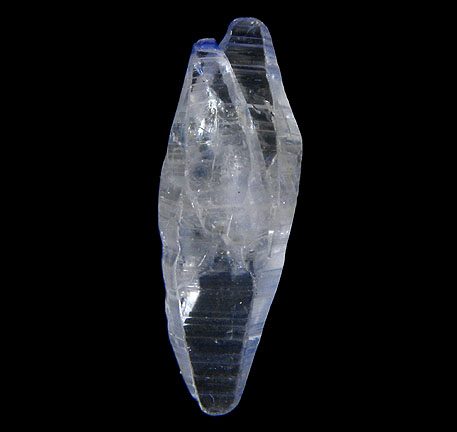
At a Glance
- What it is
- Gem corundum - aluminium oxide (Al2O3); blue from traces of iron and titanium. Red corundum is ruby; all other colours are sapphire
- Hardness
- 9 on the Mohs scale - after diamond, the hardest natural gem material, and highly resistant to scratching
- Prized since
- About 800 BCE, according to Britannica; the most valued colour is a medium-deep cornflower blue
- Ceylon
- Sri Lanka's gem gravels around Ratnapura have yielded sapphires for at least 2,000 years; its stones are typically lighter, brighter blue
- Kashmir
- A landslide exposed the Paddar deposit c. 1881; the Old Mine was worked intensively c. 1882-1887 and its velvety blue stones remain the benchmark
- St Edward's Sapphire
- Set in the Imperial State Crown; tradition links it to Edward the Confessor's coronation ring (1042), a history the Royal Collection presents as reputed, not proven
- Synthetic sapphire
- Produced commercially from 1902 by Auguste Verneuil's flame-fusion process, growing corundum boules from alumina powder
Introduction
Sapphire is corundum - aluminium oxide, Al2O3 - coloured blue by traces of iron and titanium. Britannica records that it has been highly prized as a gemstone since about 800 BCE, and that the most valued colour is a medium-deep cornflower blue. It is one of the hardest of all gems: corundum scores 9 on the Mohs scale, second only to diamond among natural materials, which is why a sapphire can be worn daily for a lifetime and why its industrial forms are used where surfaces must not scratch.
The same mineral, in red, is ruby: red corundum takes ruby's name, and every other colour - blue, yellow, pink, violet, green, colourless - is a sapphire. That single fact organises sapphire's whole history. Its story runs through the gem gravels of Ceylon, worked for some two thousand years; a Himalayan landslide that briefly exposed the most admired blue stones ever found; the crowns of kings; and a Paris laboratory flame that, in 1902, learned to grow the crystal from powder.
One Mineral, Two Names
Pure corundum is colourless. Chromium makes it red, and red makes it ruby; iron and titanium together make it blue, and blue makes it sapphire. The boundary is a human convention laid over a continuous mineral family, and it was only around the turn of the nineteenth century that science settled the matter in print: work published in 1798 by Charles Greville and Jacques-Louis de Bournon in the Philosophical Transactions of the Royal Society argued that corundum, ruby and sapphire are one mineral. The ancient world had used the word sapphire - from Greek sappheiros - for blue stones it could not reliably tell apart, very likely including lapis lazuli, so early references to sapphire cannot always be read as corundum.
What the ancients could do was trade it. Sri Lanka - Ceylon to the trade, Taprobane to classical geographers - has produced sapphires from its gem gravels, especially around Ratnapura, for at least two thousand years, and stones from the island reached Roman, Persian and Chinese markets. Ceylon sapphires are typically a lighter, brighter blue than stones from most other sources, and the island remains a classic source today.
Kashmir, Ceylon and Madagascar
Around 1881, a landslide in the Paddar region of Kashmir, high in the northwestern Himalaya, exposed sapphire-bearing rock near the village of Sumjam. The deposit's richest workings, the Old Mine, were exploited most intensively between about 1882 and 1887, and were effectively exhausted within years; later workings yielded far less. The stones from those few seasons set the standard by which blue sapphires are still judged: a saturated cornflower blue softened by microscopic inclusions into a velvety, slightly sleepy appearance. Genuine Kashmir stones of that period are now exceptionally scarce, and laboratories test claimed origins carefully, because the name alone commands the highest regard in the trade.
The twentieth century's map was drawn elsewhere. Burma's Mogok valley, famous for ruby, also produced fine deep-blue sapphires. Then, at the end of 1998, sapphires were discovered around Ilakaka in southern Madagascar; the Gemological Institute of America describes Ilakaka as one of the world's largest sapphire deposits and among the most active, in an area where potential deposits cover roughly 120 by 100 kilometres. Madagascar and Sri Lanka are geological cousins - both were part of the ancient supercontinent Gondwana - and Madagascar has since become one of the world's leading sapphire producers, supplying much of the modern market that Kashmir's brief bonanza never could.
Timeline
- c. 800 BCE
Sapphire is prized as a gemstone from about this date, according to Britannica; blue stones travel the Indian Ocean trade routes.
- Ancient era
Sri Lanka (Ceylon) supplies sapphires from gem gravels around Ratnapura - a trade documented over some 2,000 years.
- 1042 (tradition)
Edward the Confessor ascends the English throne; tradition holds that the sapphire later called St Edward's was set in his coronation ring.
- 1163 (tradition)
Edward's body is re-interred at Westminster Abbey; tradition says the ring's sapphire was removed and kept with his relics.
- 1798
Greville and de Bournon argue in print, in a Royal Society paper, that corundum, ruby and sapphire are the same mineral.
- 1838
Queen Victoria has St Edward's Sapphire set into her new Imperial State Crown, in the cross above the monde.
- c. 1881
A landslide exposes the Kashmir sapphire deposit near Sumjam in the Paddar valley; the Old Mine is worked intensively from about 1882 to 1887.
- 1902
Auguste Verneuil's flame-fusion process produces synthetic corundum commercially; Britannica dates commercial synthetic sapphire from this year.
- 1998
Sapphires are discovered at Ilakaka, Madagascar, sparking a rush; the area becomes one of the world's largest sapphire deposits.
Crowns and Laboratories
Sapphire's royal history is best told through one documented object handled with care. St Edward's Sapphire, an octagonal rose-cut stone, sits today in the centre of the cross at the top of the Imperial State Crown, on display with the Crown Jewels at the Tower of London. It is described as the oldest gemstone in the Royal Collection. The tradition attached to it is older than the documentation: it is thought to have been set in the coronation ring of Edward the Confessor, who came to the throne in 1042, to have been buried with him in 1066, and to have been taken from the ring when his body was re-interred in 1163. How it survived the abolition of the monarchy in the seventeenth century is not clear; it was most likely re-cut into its present form for Charles II after the Restoration, and Queen Victoria placed it in her crown in 1838.
In 1902 the French chemist Auguste Verneuil published his flame-fusion process: powdered alumina, with colouring oxides added, is melted in an oxy-hydrogen flame and built up, drop by drop, into a synthetic crystal boule. Verneuil sapphires and rubies were chemically and physically corundum, grown in hours rather than geological ages. The process made corundum cheap enough for watch bearings, instruments and, later, industrial windows and electronics - and it permanently divided the gem trade into natural and synthetic, with disclosure of the difference becoming a basic duty of honest selling.
Myths and disputes
Two cautions belong on any honest sapphire page. The first is St Edward's Sapphire: its link to Edward the Confessor is tradition, not proof. The ring story - including the legend that Edward gave his ring to a beggar who proved to be St John the Evangelist, and that pilgrims returned it - comes from later medieval writing, and no document traces this individual stone across the Civil War years. The crown, the stone and its present setting are documented; the eleventh-century origin is what the Royal Collection itself presents as the stone's reputed history, and it is labelled as such here.
The second caution is the word itself. Ancient and biblical references to sapphire were written before mineralogy existed, and scholars caution that sappheiros in Greek sources often meant lapis lazuli, a different blue stone entirely. A sapphire in an ancient text is evidence that blue gems were treasured - not proof of where corundum was mined or when.
Legacy
Sapphire's legacy is a double identity that few gems share. As a jewel it carries the memory of Ceylon's gravels, Kashmir's five brief seasons and a stone in a crown that may - or may not - have rested on an Anglo-Saxon king's hand. As a material it is an industrial workhorse: synthetic corundum's hardness and transparency serve in watch glasses, scanner windows, scientific instruments and semiconductor work. The laboratory did not cheapen the natural stone's history; it clarified it, by making origin, treatment and disclosure the questions every serious buyer and museum now asks first.
Sources
- Encyclopaedia Britannica - Sapphire
- Encyclopaedia Britannica - Corundum
- Gemological Institute of America - GIA Field Gemology Team Explores Sapphire Mines at Ilakaka, Madagascar
- Royal Central - The ancient stone that sparkles on a crown filled with history
The facts on this page were checked against these sources on 19 November 2026. The History Trail's permanent pages are researched and written for this site; the live profiles elsewhere on The History Trail are assembled automatically from Wikipedia and Wikidata.
About the Author
Researched and written by the The History Trail Editorial Team — the accountable editorial function behind this site's permanent story pages. The team works from the published sources cited on each page; it does not invent historians, reviewers or credentials, and it corrects errors openly.
Fact Check
Every load-bearing fact on this page traces to one of the sources listed above, and significant claims link to their source in the text. Our checking method is described on the methodology page; errors can be reported via the corrections page.
Sources & Citations
Cite this page as: The History Trail Editorial Team, The History Trail — this article's title, publication and update dates are shown beneath its headline. The full source list appears under Sources above; the site's source standards are on the sources page.